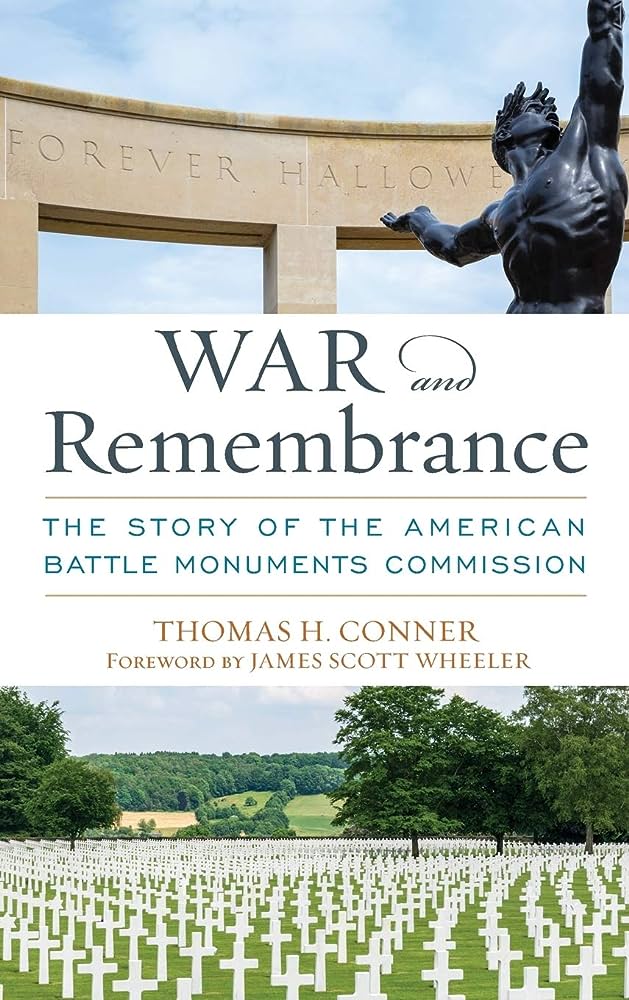
On “War and Remembrance”

Historian Thomas H. Conner has accomplished the authoritative account of the American Battle Monuments Commission (ABMC). Conner’s thorough history underscores how influential the leadership of the 1920s remains in framing the criteria for many institutions and cultural traditions, including the overseas memorialization and provision for the thousands of Americans who went to fight for the liberation of millions of strangers but never returned home. The Commission, constructed by President Harding in 1923, was a diverse collaboration from the outset, including General John J. Pershing, Gold Star mother Josephine L. Cody Bentley, and the remaining five members from state or federal service who had also worn the uniform in the Great War. It remained an adroit team, a devoted family of colleagues, even as the years saw a second wave of barbaric repression descend on the world. The first round of sites (eight cemeteries and eleven memorials) commenced construction in the mid-1920s and saw completion by the twentieth anniversary of that War’s conclusion with the dedication of the Montfaucon memorial by President Roosevelt in 1937.

In those first critical years, President Coolidge, despite tasking General Pershing to a diplomatic assignment in South America for a time, encouraged the continuation of their work, helping them overcome Budget Bureau constraints, and an ongoing assault by Congress on the ABMC’s autonomy. Coolidge’s appointment of three military officers launching the Commission’s Historical Section, made possible an invaluable record of the War through a team of researchers under then-Major Dwight D. Eisenhower, publishing A Guide to the American Battle Fields in Europe ahead of the tenth anniversary of the Armistice in 1927. Pershing ensured this was followed by an updated and revised Guide by Ike in the ten years that followed.

The Commission’s collaboration, under Pershing then Marshall and beyond, even while navigating the political and diplomatic mine fields between Capitol Hill, the White House, and the nations of Europe, is remarkable and attested in the quality and restraint shown in the structures and layout of each site. The minute attention to detail, the exact care of design, the vision for each of the eight cemeteries and eleven memorials, down to the tasteful design of the headstones, the choice of materials, the skill of the architects, and the devotion through the many practical and personal risks of maintaining and preserving each location speaks, especially as the grounds on which they were built became combat zones again in the Second World War.

The challenges of their work, since there was no prior template for anything like it, had to be worked out with sound judgment, aesthetic skill, and a clear sense of proportion to bequeath an honorable, tasteful, and enduring collection of memorials and final resting places for those who liberated those places but in doing so paid all they had to give, never making it home themselves. The superlative achievement wrought by the ABMC continues to live in the creation of the Commission’s second generation of cemeteries and memorials in Europe, Africa, and Asia even before the close of hostilities in 1945. They demonstrate a continuity of vision and creative excellence to leave beautiful sites that endure despite the lapse of time.

Keenly aware of the way so many markers, inscriptions, and monuments, distasteful or overdone at the outset do not age well, becoming liabilities, even embarrassments to their original sponsors, and reflecting negatively on America and Americans for generations, the Commission resolved to do better by those who had sacrificed overseas and the families who saw them go. The ABMC’s work, its discrete emphasis on minimalism, its reverence for the living and the dead, its judicious investment of political will, wise diplomacy, and an instinct for magnificent craftsmanship are evident at every site, from Pointe du Hoc to Manila, Tunis to Flanders Field, Meuse-Argonne to Normandy.

As the distance in time from these two seismic conflicts increases, we are reminded to reflect again that each of those markers is a life still in service to great ideals. Spielberg’s 1998 film, Saving Private Ryan, opening and closing at Normandy’s American cemetery, brings this moving truth back to sharp relief. The Niland brothers, Patton, and both Quentin and Theodore Roosevelt, Jr., fallen brothers from both wars, are resting in these cemeteries. The ABMC cemeteries and memorials call upon us, the living, to live worthy of what those many comrades in arms unselfishly leave for us in the hills, fields, and beaches they marched upon and fought for in order to liberate millions an ocean away they would never meet. Conner’s War and Remembrance rescues the story little known and less told behind a small but determined team of Americans and overseas friends who led that initiative to give future generations at home and around the world a simple but powerful reminder that these soldiers, sailors, Marines, and Airmen, known and unknown, continue to answer a call which cannot die: the summons to serve.

On the Debt to Honor

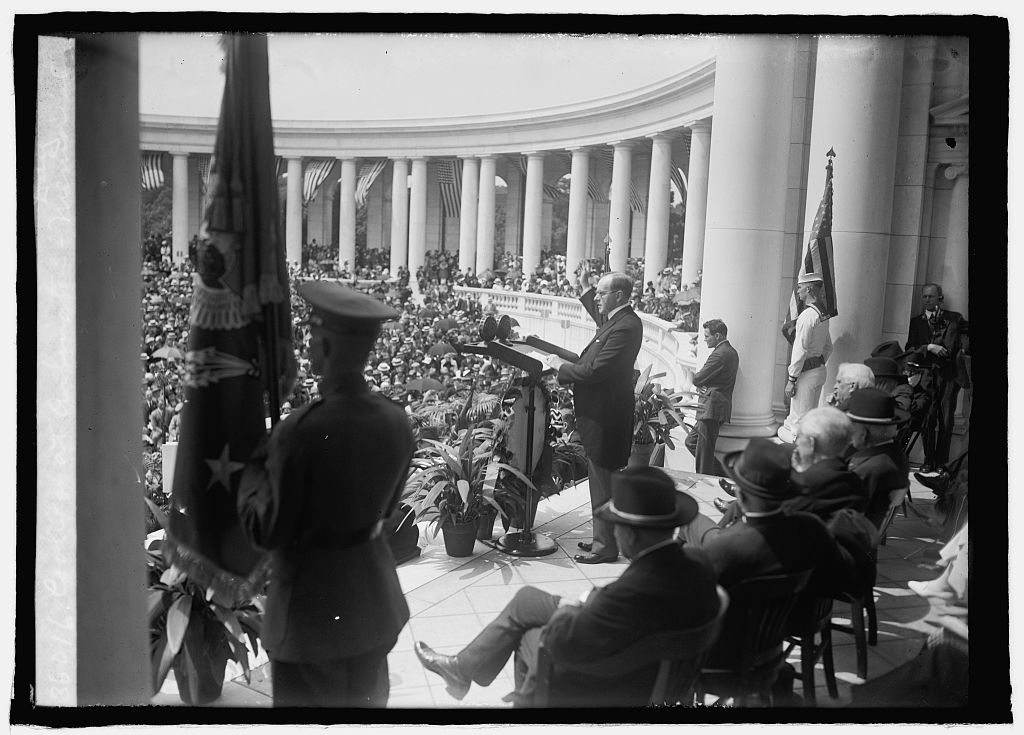
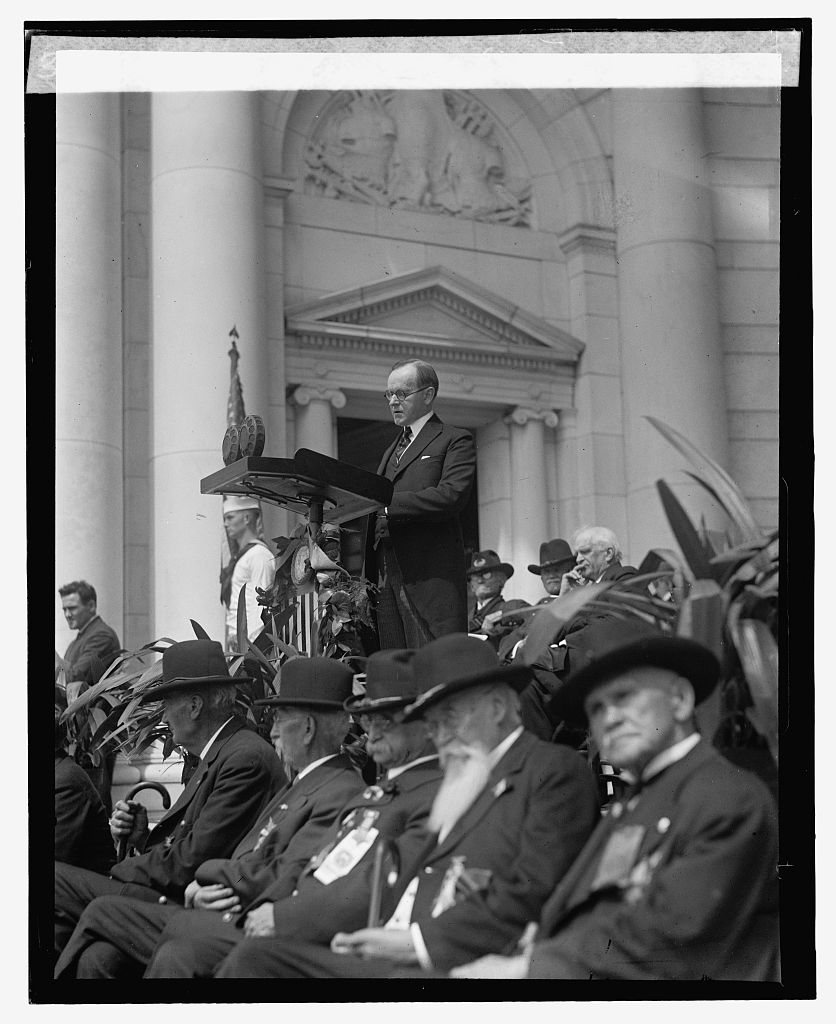
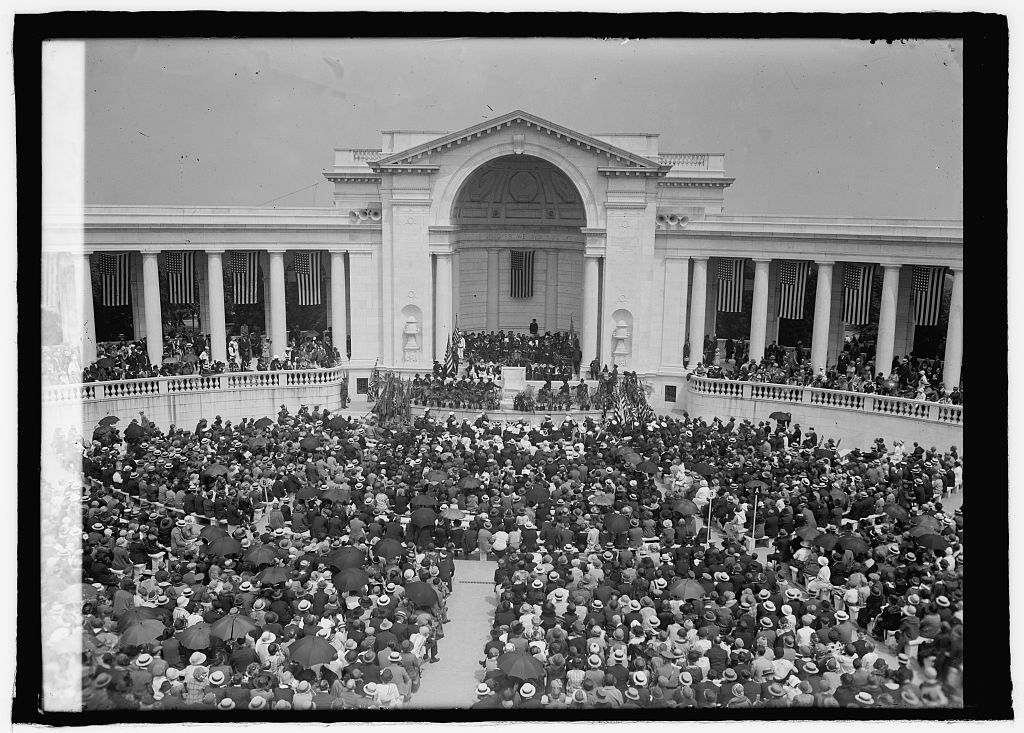
Arlington Amphitheater, May 30, 1925. Photo credit: Library of Congress.

“For those who are the inheritors of a noble estate and a high place in the world, it is a good thing to pause at intervals and consider by what favor of fortune and of ancestry their lines have fallen in such pleasant places. Thus to meditate on that course of events, which has given them what they have and made them what they are, will tend to remind them how great is their debt and how little is their share of merit.

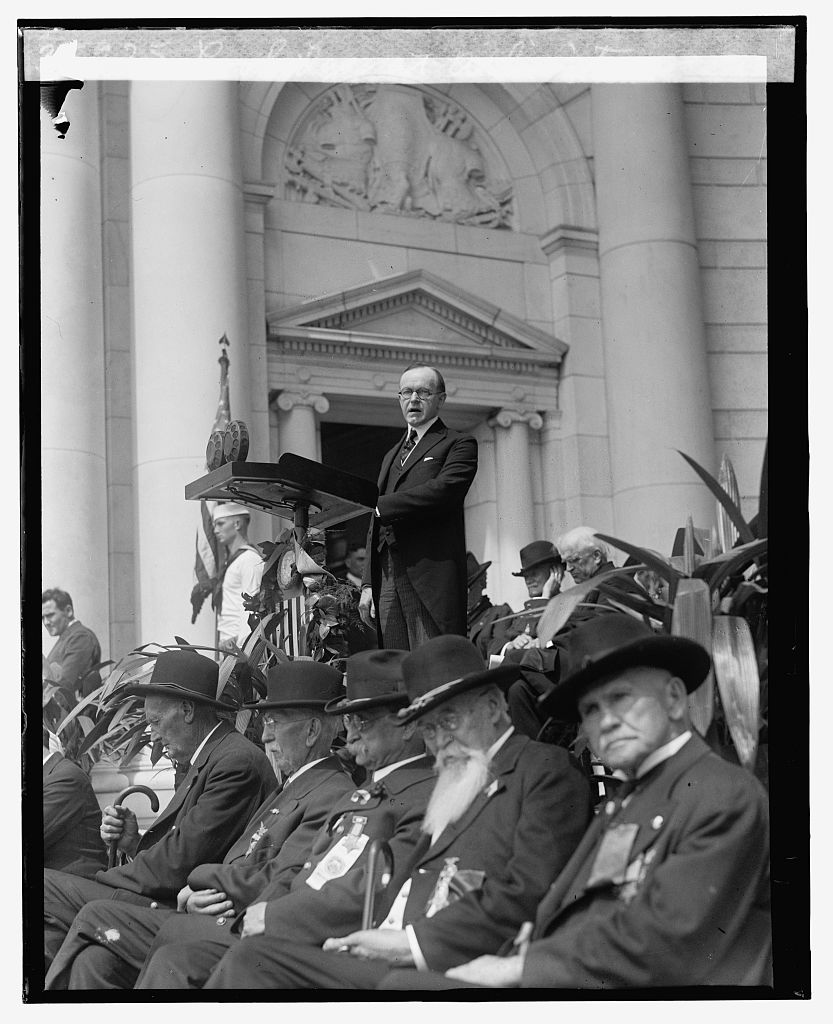
President Coolidge addresses the gathering on Memorial Day, 1925. Photo credit: Library of Congress.

“This is the day on which the American people each year acknowledge that they have such a debt. It has been set aside that a grateful Nation may do fitting honor to the memory of those who have made the greatest and most voluntary contribution to it. Here about us, in this place of beauty and reverence, lies the mortal dust of a noble host, to whom we have come to pay our tribute, as thousands of other like gatherings will do throughout our land. In their youth and strength, their love and loyalty, those who rest here gave to their country all that mortality can give. For what they sacrificed we must give back the pledge of faith to all that they held dear, constantly renewed, constantly justified. Doing less would betray them and dishonor us.

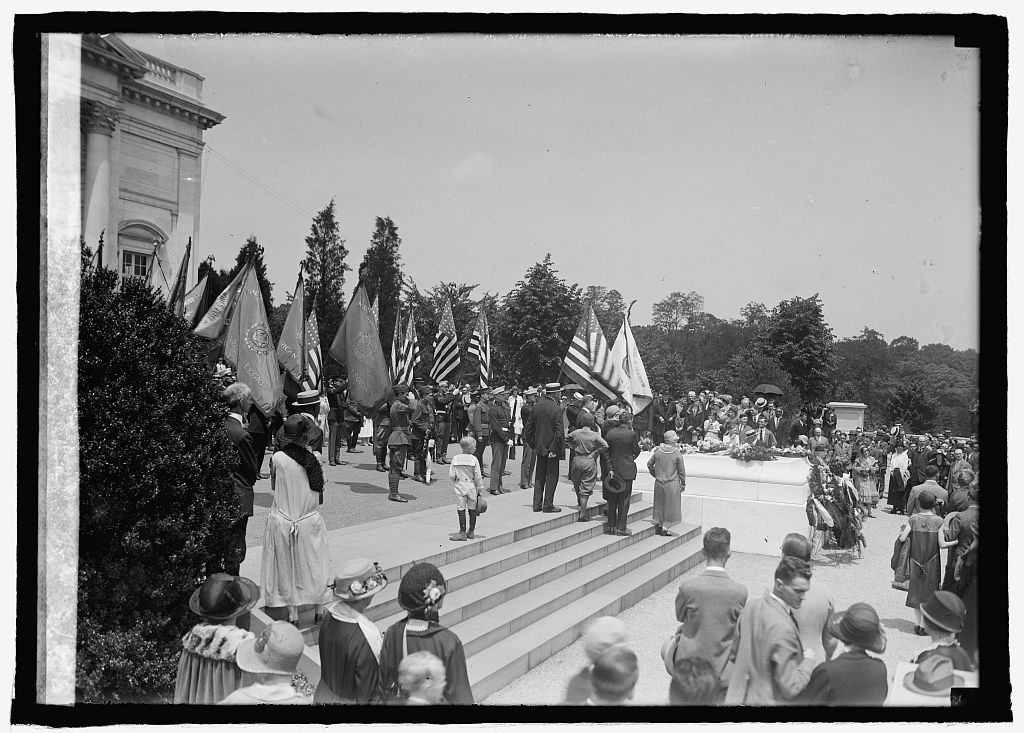
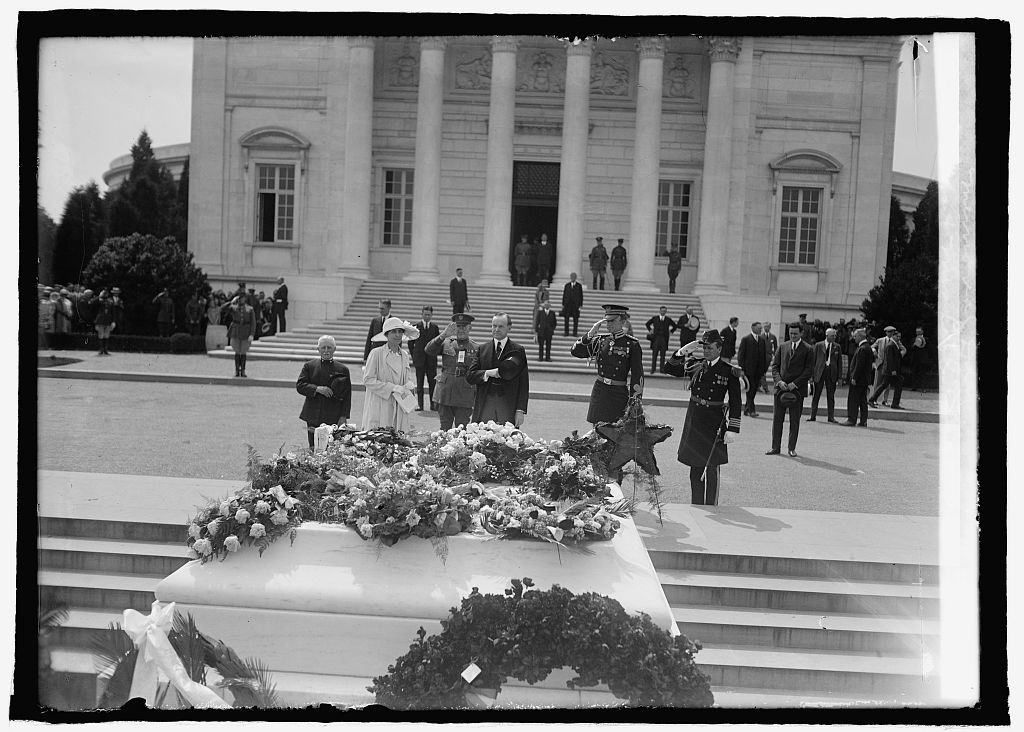
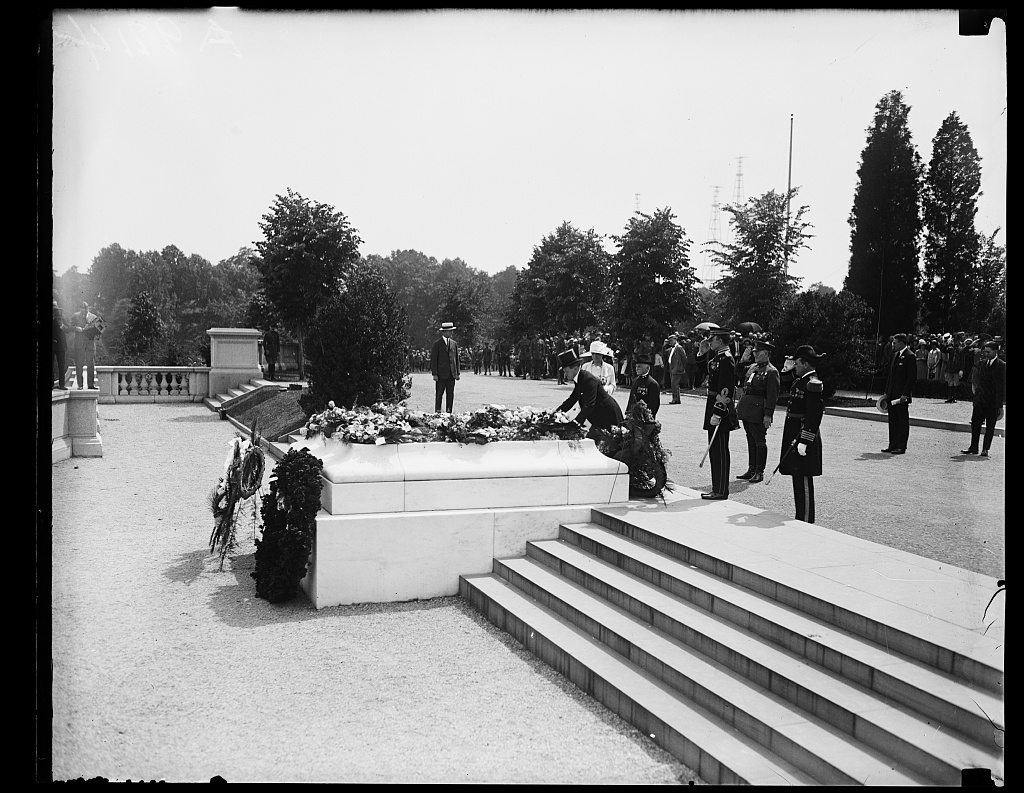
Honoring the Unknown Soldier, Arlington, Memorial Day, 1925. Photo credit: Library of Congress.
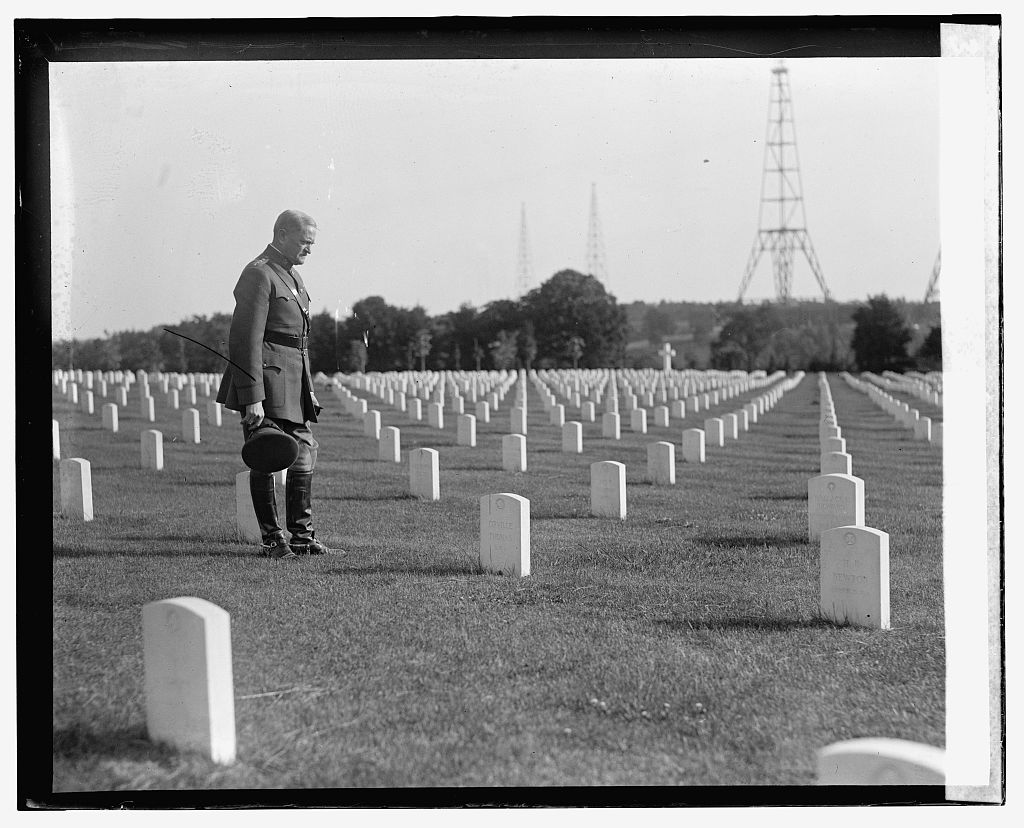
General Pershing among the stones at Arlington, May 1925. Photo credit: Library of Congress.

“To such a memorial as exists here we can only come in a spirit of humility and of gratitude. We can not hope to repay those whom we are assembled to honor. They were moved by a noble conception of human possibilities and human destiny. But we can undertake to find what was their inspiration and seek to make it our guide. By that they will be recompensed…

Photo credit: Library of Congress.

“We live far enough away from those times of test and trial to know that sincerity and honesty did not all lie on either side. We know the conflicts of loyalties, traditions, ancestry, and interest which drew men to one side and the other. I doubt if there ever was another so great and elemental a conflict from which men emerged with so much of mutual respect, with so little of bitterness and lingering hostility. The struggle brought the whole Nation at last to see that its only assurance was in unity. United, it could go its way in all security; divided, both sections becoming the prey of jealousy and intrigue, would have dissipated all the power they now have for good in the world.

Photo credit: Library of Congress.

“Our generation has recently lived through times still so vivid as to seem but as yesterday, which have taught us deeply to appreciate the value of union in purpose and effort. We have come to see as through a crystal that in the national variety of talents and resources, of cultures and capacities, of climates and of soils, of occupations and of interests, lies the guarantee of both our power and our authority. More than that, they have taught us how heavy and important is our responsibility in the world…

Bestowing flowers and salute to the Unknown Soldier, Arlington, Memorial Day, 1925. Photo credit: Library of Congress.

“Our gathering here today is in testimony of supreme obligation to those who have given most to make and preserve the Nation. They established it upon the dual system of State government and Federal Government, each supreme in its own sphere. But they left to the States the main powers and functions of determining the form and course of society. We have demonstrated in the time of war that under the Constitution we possess an indestructible Union. We must not fail to demonstrate in the time of peace that we are likewise determined to possess and maintain indestructible States. This policy can be greatly advanced by individual observance of the law. It can be strongly supplemented by a vigorous enforcement of the law. The war which established Memorial Day had for its main purpose the enforcement of the Constitution. The peace which followed that war rests upon the universal observance of the Constitution. This Union can only be preserved, the States can only be maintained, under a reign of national, local, and moral law…” – President Calvin Coolidge, Arlington National Cemetery, May 30, 1925

Photo credit: Library of Congress.

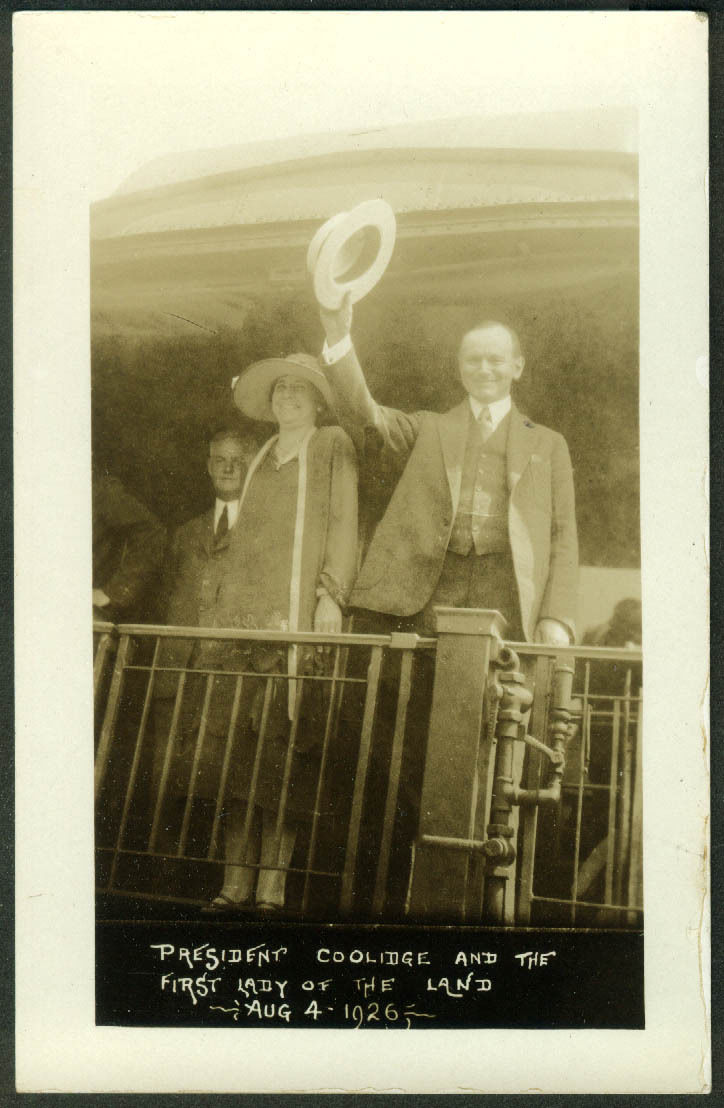
On the Road Again, August 4, 1926

On the Road Again, August 4, 1926

En route back to the Homestead at Plymouth, the President and Mrs. Coolidge are reconnecting with family roots, leaving most of the artificial world of Washington behind and keeping closer to realities, where the country lives, works, worships and creates. Here rested the body of his father, recently buried in March, his youngest son, who passed two years before, his stepmother, sister and mother, surrounded by the generations who preceded them of the Coolidge family. Here was a wholesome relief from the political mentality of the District to the comfort of hearth, surrounded by the family he loved, the hills he cherished and the tasks awaiting solutions on the farm.

As much they desired to the contrary, they ceased to be “ordinary” citizens and could no longer “use the regular trains which are open to the public.” Looking back on the years, he once wrote, “While the facilities of a private car have always been offered, I think they have only been used once, when one was needed for the better comfort of Mrs. Coolidge during her illness. Although I have not been given to much travel during my term of office, it has been sufficient, so that I am convinced the government should own a private car for the use of the President when he leaves Washington. The pressure on him is so great, the responsibilities are so heavy, that it is a wise policy in order to secure his best services to provide him with such ample facilities that he will be relieved as far as possible from all physical inconveniences. It is not generally understood how much detail is involved in any journey of the President” (Autobiography pp.217-8). These intricate arrangements meant expense to the rest of the country, costs of going long distances with the Presidential retinue which made it prohibitive in Calvin’s high sense of propriety and moral obligation to the people for his office. It was not simply okay that gratuitous travel was chargeable to the public Treasury, even when prosperous times could have handled the burden. It was enough to escape from the National Capital every summer, to get away to Plymouth as often as possible and to keep other travel limited to specific destinations instead of the flagrant spending of continual cross-country tours or incessant vacations to luxurious places. It is telling that the Coolidges, who wanted to travel more, would not take that coast-to-coast trip until in retirement as private citizens again.

However, there is something more compelling than the singular dimension of a President morally committed to economy at its most practical, personal and ideal. What prompts him to support a government-owned private car for Presidential use is not to enhance official dignity, endorse government ownership in general nor is it to live grander than the hoi polloi, but it is to “secure his best services.” We have, after all, hired him to accomplish a task of leadership, we have delegated power for a limited time with specific ends, contractually obligating ourselves and the President to obtain the best within him while we exercise the best within us as citizens. It is for this reason he is compensated with such means of private travel, not to abuse it but in pouring it back into better and better public service, he is upholding the terms of that sacred agreement. By obtaining “the best of his ability” he upholds his oath to God and man and justifies the public faith entrusted to his care.

Leaving the social dramas and political flurries of Washington for the comfort of being at home surrounded by America’s people and countryside, is it any wonder that they are smiling?