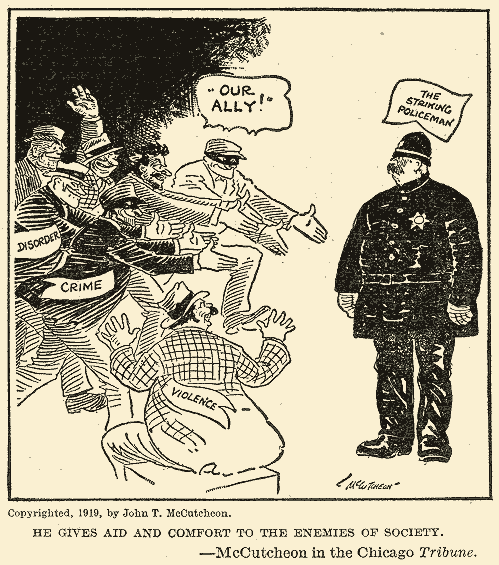
The same could be said of government, when it fails to uphold our laws, preserve order and protect the lives, liberties and property of citizens.
“There is a just government. There are righteous laws. We know the formula by which they are produced. The principle is best stated in the immortal Declaration of Independence to be ‘the consent of the governed.’ It is from that source our Government derives its just powers and promulgates its righteous laws. They are the will of the people, the settled conviction derived from orderly deliberation, that take on the sanctity ascribed to the people’s voice. Along with the binding obligation to resist tyranny goes the other admonition, that ‘obedience to law is liberty,’–such law and so derived.
“These principles, which I have but lightly sketched, are the foundation of American institutions, the source of American freedom and the faith of any party entitled to call itself American. It constitutes truly the rule of the people. It justifies and sanctifies the authority of our laws and the obligation to support our Government. It is democracy administered through representation.
“There are only two other choices, anarchy and despotism–Russia, present and past. For the most part human existence has been under the one or the other of these. Both have failed to minister to the highest welfare of the people. Unless American institutions can provide for that welfare the cause of humanity is hopeless. Unless the blessings of prosperity, the rewards of industry, justice and liberty, the satisfaction of duty well done, can come under a rule of the people, they cannot come at all. We may as well abandon hope and, yielding to the demands of selfishness, each take what he can.
“We had hoped these questions were settled. But nothing is settled that evil and selfish men can find advantage for themselves in overthrowing. We must eternally smite the rock of public conscience if the waters of patriotism are to pour forth. We must ever be ready to point out the success of our country as justification of our determination to support it” — Calvin Coolidge, Governor of Massachusetts, address at Tremont Temple, Saturday, November 1, 1919, 8PM.
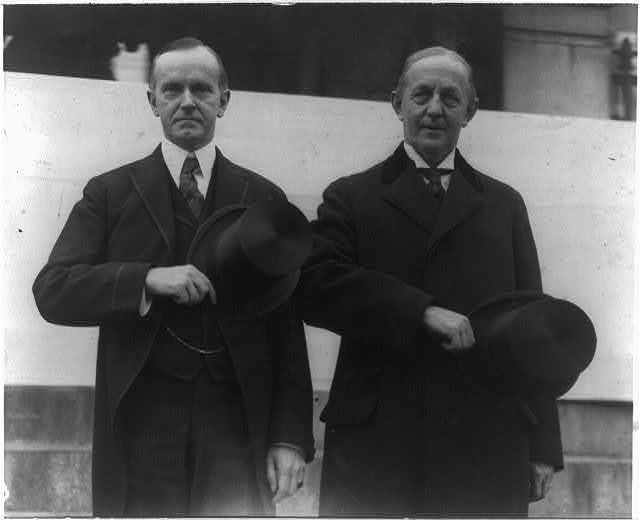
Governor Coolidge with Police Commissioner Edwin U. Curtis


 The Importance of the Obvious