“Character is the only secure foundation of the State. We know well that all plans of improving the machinery of government and all measures for social betterment fail, and the hopes of progress wither, when corruption touches administration…For us, we propose to follow the clear, open path of justice. There will be immediate, adequate, unshrinking prosecution, criminal and civil, to punish the guilty and to protect every national interest. In this effort there will be no politics and no partisanship. It will be speedy, it will be just. I am a Republican but I can not on that account shield anyone because he is a Republican. I am a Republican, but I can not on that account prosecute anyone because he is a Democrat. I want no hue and cry, no mingling of innocent and guilty in unthinking condemnation, no confusion of mere questions of law with questions of fraud and corruption…I ask the support of our people, as chief magistrate, intent on the enforcement of our laws without fear or favor, no matter who is hurt or what the consequences” — President Coolidge, February 12, 1924.
“The President is responsible to the people for his conduct relative to the retention or dismissal of public officials. I assume that responsibility, and the people may be assured that as soon as I can be advised so that I may act with entire justice to all parties concerned and fully protect the public interests, I shall act. I do not propose to sacrifice any innocent man for my own welfare, nor do I propose to retain in office any unfit man for my own welfare. I shall try to maintain the functions of the government unimpaired, to act upon the evidence and the law as I find it, and to deal thoroughly and summarily with every kind of wrongdoing” — President Coolidge, on the previous day, February 11, 1924.
On February 16, five days later, President Coolidge appointed the special counsel team who would meticulously investigate the substance of the charges made against Secretary of the Interior Albert Fall, Secretary Denby and Attorney General Daugherty. Evidence would confirm only Fall was guilty of criminal wrongs, accepting bribes from business friends in exchange for contracts. Denby had naively granted transfer of the lands but had not broken the law. Daugherty, when he attempted to withhold documents from the investigators was shown the door by President Coolidge, March 28th. The process to trial would take years and yet prosecution came swiftly and decisively thanks to the President’s resolve to have the truth revealed and uphold justice, whatever the political cost or personal risk.
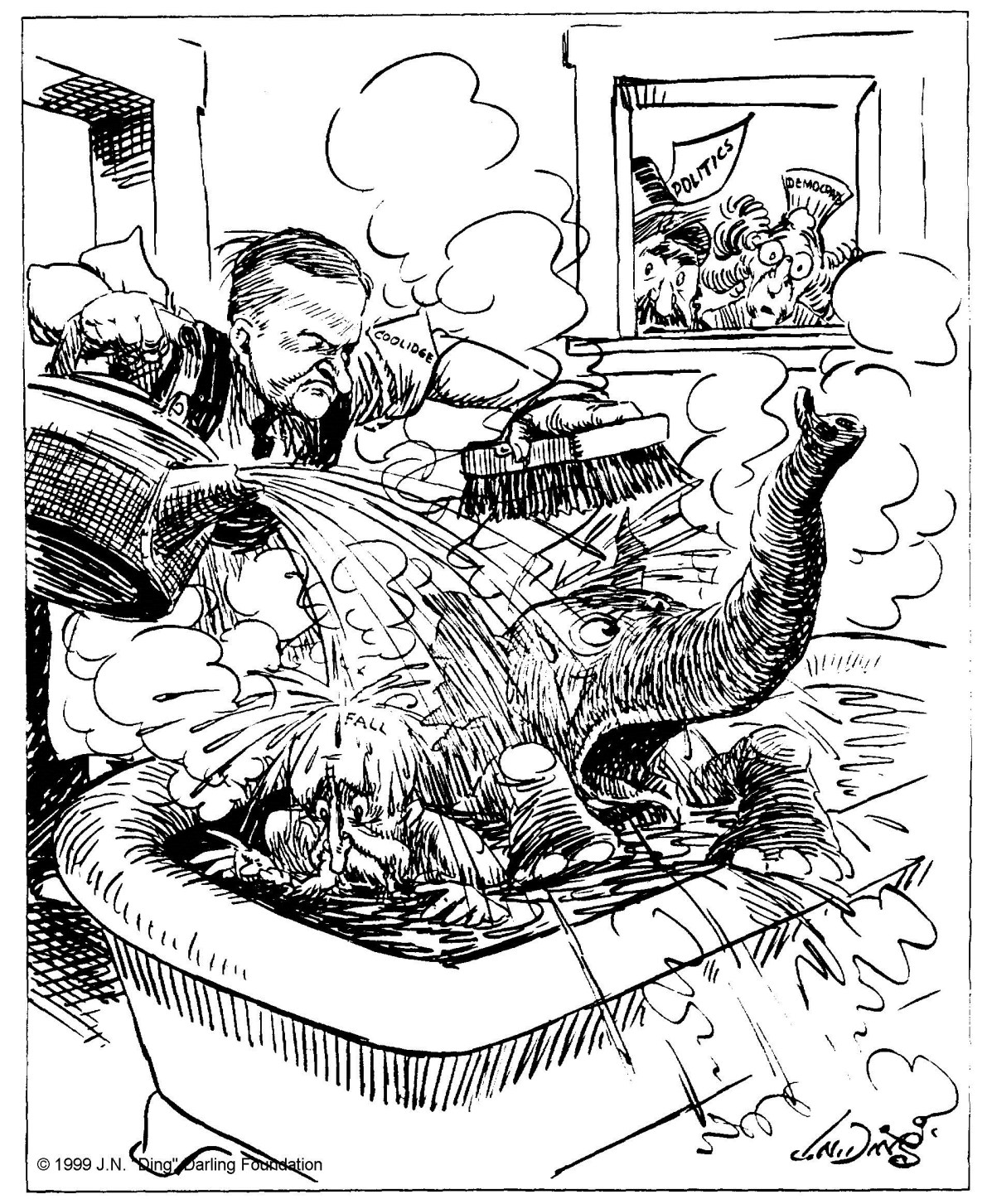
“Ata boy, Cal, if you want it done well do it yourself,” by “Ding” Darling, Des Moines Register, January 31, 1924


 The Importance of the Obvious