On Public Image and the Press

     “Whenever any section of our press turns on America and on American institutions, and assumes a foreign attitude, every informed person knows it has fallen from the high estate which is our common heritage, and becoming no longer worthy of regard is destined to defeat and failure. No American can profit by selling his own country for foreign favor” — Calvin Coolidge, April 25, 1927, Messages and Papers of the Presidents p.9689. Cited in “Silent Cal’s Almanack” by David Pietrusza, p.90.


Among the most striking ironies of the Coolidge years is the rapport that persisted between the President and the press. It was observed as extraordinary at the time and it is no less fascinating now. Even so, more animosity for Coolidge among the press rose up in later generations than existed at the time. The man known for placing substance above appearances, handled the members of the Fourth Estate shrewdly and sincerely. It is interesting that while Harding, a newspaperman himself, never quite mastered the relationship between his administration and reporters, Coolidge did. It is not as though Coolidge was forcing a fake “public image” on the country, he was merely adept at preempting problems with his own excellent skills in public relations. As John L. Blair has noted, an extensive public relations staff was not there in the 1920s. Coolidge, through a consistent and attentive approach, succeeded in politics where most have failed: the battle of perception. Policy fights could be waged with Congress but it could all be lost if “the artificial” things as Coolidge would describe the Washington mindset in his Autobiography (p.229), were neglected. He wisely understood that if the best results were to be obtained, he had to succeed in marketing what he was trying to “sell,” be it constructive economy in government, income tax reductions, war debt reparations, or the Kellogg-Briand Treaty. All of this took cultivation in advance. Coolidge, as any good marketer knows, sold his audience without telling them he was doing so. Coolidge would not pretend to be someone he was not.

As one veteran journalist urged at the beginning of the Harding administration, “Don’t slap us on the back and call us ‘old man,’ as did that genial fellow, Elihu Root [T.R.’s legendary Secretary of State].” Journalists were not naive, ready to be duped, or to be treated with condescension. An examination of the record before and after Coolidge makes this clear. Nor was the Coolidge era without public relations problems. It had more than one conflict between the “White House spokesman” (as the President was to be known in print, at least until Coolidge discontinued the policy in 1927) and the press. What distinguished the Coolidge approach was its even-handed respect for news work and its sincere transparency in explaining what the government was doing. Coolidge’s unprecedented 520 press conferences over the course of five and a half years outranks all previous and many subsequent Chief Executives, including the three terms of F. D. R.

While Coolidge required questions in advance — at times only answering the inconsequential or giving vague answers — he consistently allowed thorough follow-up questions on policies that remained unclear. This enabled the press to fulfill their constitutional obligation of “interpreting the administration to the country” (Coolidge, March 1, 1929 in “The Talkative President,” p. 34). At times, the press violated their mutual agreement, such as publishing speeches ahead of time, citing President Coolidge directly, or defending foreign countries against the policy of their own. Each met with Coolidge’s consternation but were well-handled so that the press knew where he stood and respected the clarity of his consistency. Coolidge surmised the press handled him so favorably because of this approach (“The Autobiography,” pp.185-6). Whether they agreed or not, they knew principles motivated him. Even the fearless crusader, William Randolph Hearst, mustered his publications to favorably expound Coolidge to readers.

At the same time, Coolidge observed in his address to the National Press Club that the news business was changing. News reporting had its constitutional protection but it also had responsibilities. It was coming to the realization that journalism was not mere demagoguery but there were obligations to be upheld as a business in the service of the American people. In light of today’s failing newspapers, struggling ratings and the self-deluded cloak of “objective journalism,” perhaps it is time to look back to what works instead of replicating what fails. This is why the sympathies for foreign institutions and their political decisions against those of the United States never sat well with Coolidge. It undermined the very basis for sound judgment which journalists are to exercise as they report the news. Honest journalism suffers when reporters dispense with a respect for truth and the pursuit of the ideal. It was not for himself that Coolidge opposed this unhealthy trend in news coverage, for he “often said that there was no cause for feeling disturbed at being misrepresented in the press.” What concerned Coolidge far more was the prospect of actually doing wrong, not the mere reporting of wrongdoing. The press was not there to serve him personally, they were there to serve America. Defense of the ideals that made America compelled Coolidge to take a firm resistance to a journalist who discarded his attachments to America’s founding principles in favor of what is both incompatible and hostile to those ideals.

He was not in blissful denial of where Americans had erred from time to time. On the contrary, knowing those missteps were made provoked a keen awareness in him for what America had done right. In one hundred and fifty years America had accomplished more through the power of ideals and the moral force behind them than others had achieved over thousands of years. These ideals were valid because they were universals, not exclusive to Americans. Americans had simply discovered them, not been born to deserve them through their superiority to others. Still, these ideas were welcome in America unlike most of the world for principled reasons. As a result, the press must serve the American people, giving expression to those timeless ideals instead of ridiculing and dismantling them. Some have poked fun at this “patriotic journalism” but in light of current affairs, Americans are better informed and better served when diligent journalists, committed to her ideals, report the news.
                         Image

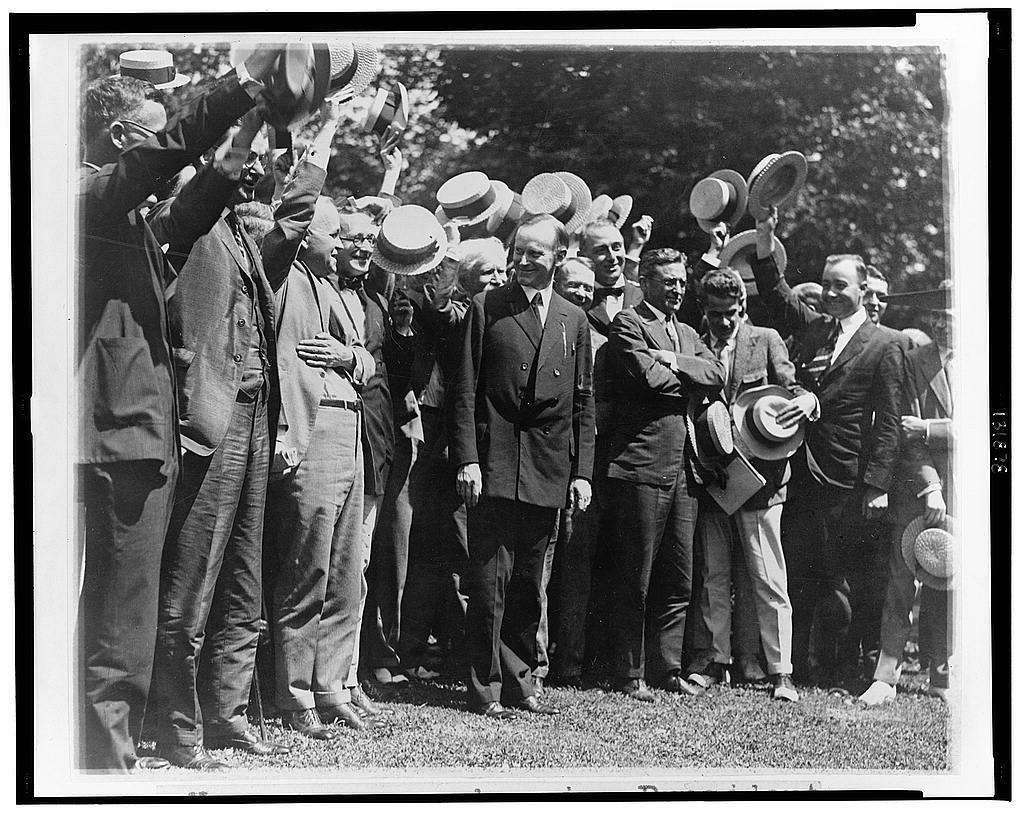
On the occasion of President Coolidge’s first press conference (August 1923), which met with spontaneous applause. The press knew with Coolidge things were changing for the better of all.

For further reading, see Blair, John L. “Coolidge and the Image-Maker: The President and the Press, 1923-1929,” The New England Quarterly XLVI (December 1973): 499-522; Brayman, Harold. “The President Speaks Off the Record: Historic Evenings with America’s Leaders, the Press, and Other Men of Power at Washington’s Most Exclusive Club–the Gridiron.” Princeton: Dow Jones Books, 1976; Quint, Howard H. and Robert H. Ferrell, eds. “The Talkative President: The Off-the-Record Press Conferences of Calvin Coolidge.” Amherst: University of Massachusetts, 1964.

On Thoughtfulness

One of the best insights into a person comes from the honest assessments of those with whom one works. President Coolidge had many such witnesses. Not everyone accurately understood him nor did they all respect what they did not “get” about him. Still, there remain many whose firsthand experience with the man emphatically contradict the popular image of Coolidge as a cold, unfeeling and callous individual. On the contrary, Ira Smith, the director of the White House mailroom for fifty-one years (including the entire Coolidge era), has one of many such examples of Coolidge’s spontaneously given kindness. His thoughtfulness was not unexpected because it was rare but because it manifested a degree of attention and regard the recipient never thought a President would deign to feel let alone show. Underestimated all his life, Mr. Coolidge enjoyed doing the unexpected. More than this, though, he was a kind man. He noticed the small things and took care to express concern, be it little Anne Morrow’s hurt finger, “old man” Mellon’s morale in the midst of the tax cut fights or a complete stranger as in the case recounted here:


     “He had a temper that could make itself felt in high places, but he always felt a strong sympathy for the ordinary citizen and frequently went out of his way to perform some little act of thoughtfulness for a stranger. One Sunday morning when I was at the office trying to catch up with a heavy flood of mail he came over from the White House and stood beside my desk while I opened a large pile of letters. One of them was a special delivery letter from a woman who wanted to know what church the President would attend that day and at what time he would be there. She explained that she was in Washington only for a few days and that she wanted her small son to get a glimpse of the President while he was in the capital because it would be something he would remember always and could tell his friends about. She asked whether it would be possible to telephone her at her hotel and tell her which church Mr. Coolidge would attend. I handed him the letter and he read it carefully. Without saying anything, he picked up a pencil and wrote: ‘Phone 10:30 A.M. Monday.’ He handed the notation to me and went abruptly away. Such notes were typical of Mr. Coolidge, and I understood that he meant for me to telephone the woman and tell her to bring her son to the White House on Monday at 10:30 A.M. for a visit with the President. This I did, and the delighted mother and son were received by Mr. Coolidge.”


Some may cynically dismiss this as mere political calculation but to those who knew and understood him well, he was simply thinking of others. Conscious of his limitations as President, he exercised the power he held as a moral example that should inspire with humble service, not arrogant disdain for people. When he declined to use the powers he could have wielded as President, he did so with respect for his Constitutional oath and the rightful exercise of state and local governance. To blame Coolidge for the silence toward Charles D. Levy, a Jew facing boycott and expired leases in Ohio from the Klan, overlooks that the President was acting — to both preserve local self-government from federal good intentions and to set the moral example of presiding. The President presides, he does not take all powers into his hands to intervene on behalf of select citizens. To do so, would have undermined the freedoms of others and compromised the purpose of the Office. It would have been unjust, a variation of “picking winners and losers.” It would only help legitimize the Klan for a President to treat them seriously with a public statement. Ignored as insignificant, the lack of attention would defeat them. It had nothing to do with a lack of compassion and everything to do with an overriding concern for what was fair to all and respectful of liberty. He knew the disaster of good intentions and so the situation Mr. Levy faced was referred to the Bureau of Investigation, under the Justice Department led by Attorney General Stone. This was the Coolidge way: to take care of issues if they are his to handle; If not, to delegate to the proper person what is their responsibility. To explain to Mr. Levy, or anyone else what he was doing, would have undermined his actions and undone the effectiveness of addressing the problem versus discussing what one intends to do about it. In this way, Mr. Coolidge imparts even greater thoughtfulness for Mr. Levy (safeguarding his lawful liberties and the freedoms of all concerned) than his sharpest critics understand or will admit.

On the Equality of Women

Image

Coolidge was not one to join the latest popular movement awarding privileges to one group while denying them to others. To do so is the opposite of equality. Suppressing the differences between men and women not only denies each one’s unique role but it thwarts the realization of equality. As Coolidge would say, “Women have a natural and indisputable place in the affairs of state. We do not want solely a man’s or a woman’s world — we want a human world and we are rapidly achieving it. This does not mean that men and women are to become alike. Rather it requires each of us to make his or her peculiar contribution. Fortunately no two of us are alike. Our civilization will be sturdy and satisfying, rich and dependable…in proportion as we deepen rather than decrease the difference between men and women.” Coolidge did not see people as monolithic groups. He ably measured the individual by his or her character. In fact, he saw more potential in people than they usually saw in themselves.

Coolidge was among those who believed women, naturally conservative in outlook “not only for themselves but for their posterity,” would render a “great benefit” by voting with sound moral values. Suffrage, to Coolidge, was not about placating a demographic. “Nothing can be safer…than the informed judgment of the mothers of the land.” Notice, what made the country secure was not empathy with or identity as a woman but informed judgment. The voter must understand how his and her decisions impact the future. Progress comes through the moral character each individual possesses. Skin color, gender, and party affiliation were unessential to genuine equality. This standard was illustrated by those with whom Coolidge worked.

Image

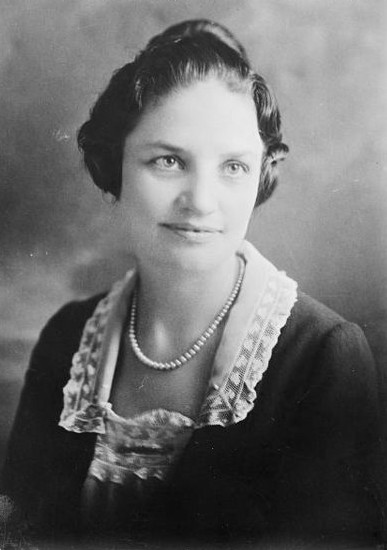
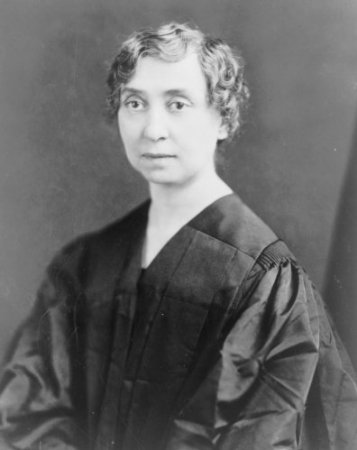
Though the first President to nominate a woman to the Federal Judiciary, Coolidge was not seeking symbolism. His choice was Genevieve Cline, a self-taught expert in customs law who adroitly surveyed the complex terrain of tariff policy. She had developed this fascination as a young lady and, after many years of hard work, had established her own private practice in Cleveland. She eventually took on the challenging work of merchandise appraiser for the Treasury Department until her confirmation to the U. S. Customs Court in May 1928. Through it all, she consistently refused special treatment for herself, expecting the quality of her work, not her gender, to measure justice. She bravely asserted in 1949 that, “There is no gender in the law. No one says ‘man lawyer’ so why say ‘woman lawyer?’ ” For Judge Cline, justice must remain blind to incidentals to remain just.

Image

Though appointed before Coolidge rose to the Presidency, Mabel Walker Willebrandt was retained and encouraged to keep doing her duty. After she took heat for criticizing certain federal district attorneys over selective enforcement of the law, Coolidge encouraged, “Keep plugging away at ’em.” Willebrandt was the Assistant Attorney General of the United States. Her unshakeable commitment to the law meant setting aside any personal reservations about the Volstead Act. Prohibition enforcement, enacted by the people through Constitutional amendment, applied impartially to everyone alike. For Willebrandt, the law did not depend upon having empathy for people’s plights. The law remained fair when it was blind to those particulars.

Image

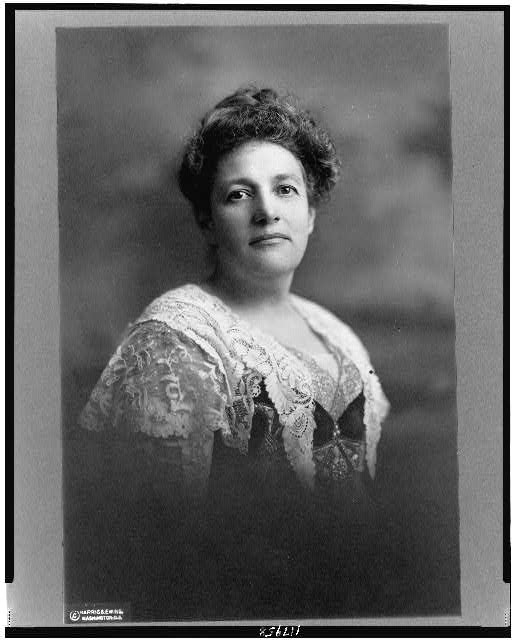
One of seven Republican women to serve during the Harding-Coolidge years, Florence Kahn demonstrated that faithful public service can be accomplished without catering to “women’s issues.” Mrs. Kahn, having supported her husband in his Congressional work, decided to run for his seat after his sudden death in 1924. Her sense of obligation prompted her to serve, forging a strong conservative record representing San Francisco over six terms. At any time, she could have appealed to her identity as a woman, or even a Jewess, to engender support for legislation. She refused. The merits of each issue must stand or fall on their own. While she believed women should serve, Kahn never accepted the premise that women needed special legislation for their “issues.” Asked why not, she said: “I am not specifically interested in so-called women’s questions, as all national positions are sexless.” Kahn did not represent women, she would say, she represented her district. Building strong military preparedness, enabling constructive economy, and meeting national obligations to veterans and their families were important policies for everyone. Governmental affairs are not segmented into gender-specific issues. They are borne by all and pertain to all. Therein lies equality.

For Representative Kahn, Assistant Attorney General Willebrandt, Judge Cline, and President Coolidge, what the nation required was not special allowance for irrelevant differences, but a deeper appreciation for the ways our distinct gender roles complement each other. When men and women exercise informed judgment as citizens, contributing together toward common goals, a vibrant liberty under an impartial and truly equal law can be preserved for the next generation.

 Further Reading

Brown, Dorothy M. “Mabel Walker Willebrandt: A Study of Power, Loyalty and Law.” Knoxville, TN: University of Tennessee Press, 1984.

“Florence Prag Kahn,” in “Women in Congress, 1917-2006. Prepared under direction of Committee on House Administration by Office of History and Preservation, U.S. House. Washington: Government Printing Office, 2006.

Fowler, Russell. “Coolidge and the Supreme Court.” Journal of Supreme Court History 25 (November 2000): 271-295.

Goodhue, Norman H, “No Gender in Law, Says Woman Judge,” LA Times, April 17, 1949, p. C1.

Keyes, Frances Parkinson, “Seven Successful Women,” Delineator (July 1928): 16.

Levstik, Frank R. “Cline, Genevieve, Rose.” Notable American Women: The Modern Period: A Biographical Dictionary. Cambridge: Harvard University Press, 1986.

Willebrandt, Mabel Walker. “The Inside of Prohibition.” Indianapolis: Bobbs-Merrill, 1929.