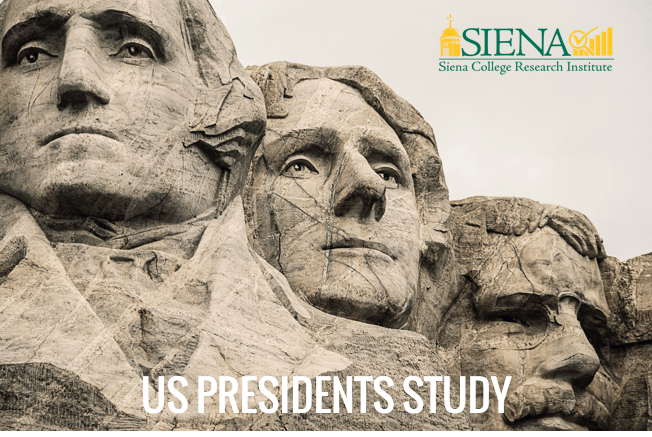
Siena College US Presidents Survey, 2018

Picture4-652x437

Since 1982, about the time that Reagan had replaced the portrait in the Cabinet Room with that of Calvin Coolidge, Siena College in New York State has conducted a survey of various scholars and historians asking them to rate the Presidents of the United States along a broad range of factors and qualities. In what is the sixth and just released survey, 157 participants took part assessing the forty-four men who have served, ranking them along twenty categories of attributes, abilities and accomplishments on a scale of 1 (poor) to 5 (excellent). The results, for the first time in Siena rankings, have found George Washington in first place. Other findings are equally as surprising since the last survey in 2010.

No different from many of the surveys that have been done through the years by different institutions, this latest also reflects a number of assumptions in favor of those who have ostentatiously wielded Presidential power in the twentieth century. It is to be expected that those who have held the Office in the recent memory of any survey’s participants should hold a more pronounced place in the rankings. It is simply human nature to do so. This is partly what makes the Presidential rankings game so appealing because it offers this instructive mirror to our assessments and valuations of leadership. It is not so much history then as how history is interpreted and perceived at a given time. Taken together over the last thirty-seven years, the Siena rankings follow the interesting ebb and flow in several respects of the American electorate, with equally insightful deviations. The 1994 survey, the year Republicans took back the Congress after forty years of Democratic Party majorities, reflects that kind of reaction: downgrading a type of Republican perceived to be weak, middling, and passive (like Ford and Bush 41) while boosting activist Presidents in both parties (like Nixon and LBJ). Naturally, the most recent survey has seen boosts for those contemporary but increasingly reappraised Chief Executives, again Ford and even Carter in categories like Integrity. Taft’s ascendance in that category of the 2018 Survey is one of the most overdue surprises in the results.

None of the categories, as confirmed by Dr. Donald Levy, Director of the Siena College Research Institute, were defined for the participants, leaving each to define the terms for him or herself.

doris-ulmann-portrait-of-president-calvin-coolidge-[and]-------variant-portrait-of-coolidge-[ca -1924]

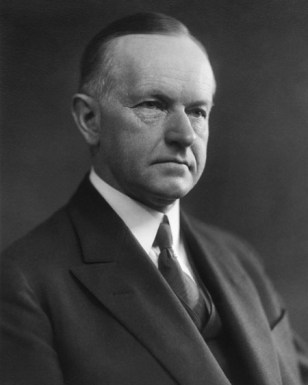
Photo by photographer Doris Ulmann, 1924.

When we zero in on three categories through the years: Luck, Integrity, and Avoid Crucial Mistakes, we find high marks for Calvin Coolidge. Much has been said over the years about “Coolidge Luck.” It baffled contemporaries. It was often an attempt to account for Coolidge’s remarkable ability to rise beyond numerous challenges and become one of the most popular Presidents in history, in defiance of just about every conventional precept believed necessary for life in politics. According to those norms, he never would have reached the White House let alone been elected in his own right or achieved so many policy goals once he got there. In that category, Coolidge has actually dropped in the rankings over time as recognition, we believe, of the realization that the results Cal attained were not merely due to sheer chance. Instead, they were the product of extensive preparation. As biographer Robert A. Woods would observe, “Calvin Coolidge went through a more consistent and complete preparation for the presidency than any previous incumbent of the office.” Coolidge himself would put it this way, humbly attributing his rise to a combination of unseen years of hard work that gave him the qualifications to be ready when the need for leadership came his way:

Surprisingly few men are lacking in capacity, but they fail because they are lacking in application. Either they never learn how to work, or, having learned, they are too indolent to apply themselves with the seriousness and the attention that is necessary to solve important problems.

Any reward that is worth having only comes to the industrious. The success which is made in any walk of life is measured almost exactly by the amount of hard work that is put into it…

Had I been chosen for the first place [in 1920], I could have accepted it only with a great deal of trepidation, but when the events of August, 1923, bestowed upon me the presidential office, I felt at once that power had been given me to administer it.

A correspondent for the Minneapolis Tribune connects his luck with both work and integrity when he wrote, “What is called Coolidge luck is the result of a character strong and sturdy, a New England conscience and will. He did not shine out, on account of excessive shyness, mistakenly thought to be reserve and coldness. Opportunity knocked — he was there, and all these qualities came out in splendor. Without the guide of precedent, taking the initiative in one of the most unusual and trying situations, he laid a course so representative of the common will that he apparently reached fame in a day. But conscience, virtue, and courage do not grow overnight.”

CC with fedora 1925

Like Coolidge’s integrity itself, his ranking in that category has remained solid. This is all the more impressive as others have moved around widely since 2010 and in the intervening years following 1982. It is also perhaps one of the most subjective categories in the Survey, especially since no standard definition has been presented for the participants by Siena College. Nevertheless, as firm as granite, Coolidge integrity, defined by Oxford English Dictionary, remains “whole and unified,” an undeviating practice of consistent honesty and moral uprightness.

The third category, Avoid Crucial Mistakes contains some of the most interesting rankings across the six surveys. Here, Washington has remained fixed at the top. It seems participants over the years agree with Calvin Coolidge that our first President never made a mistake. Coolidge began at #11 in 1982 but has come down in the estimation of participants since that time. Since Cal has not actually made any errors of judgment or embarrassing gaffes over the last forty years, this category is one of the most revelatory for drastic flux, not only for Coolidge but for Cleveland and Taft, Chief Executives who remain in the middle-of-the-pack overall but are experiencing noticeable shifts in perception since 1994.

CC-8-14-1923

Photo credit: Library of Congress.

When all has been said, we know this is by no means the final word on Presidential Rankings but it contributes new fuel (some might say, kindling) for the ongoing debate on good leadership and how we view it.

But, as indicated by Washington’s return to the top, this signals a step in the right direction for Presidents who embody greater principles than the unrestrained personalities who defined so much of the twentieth century. It is a move back to self-control and restraint in our leaders, a nod for Presidents who prioritized character above power and personal discipline over prestige. Washington set the pattern that Coolidge, Taft and Cleveland, among others, would follow, placing service over self and the betterment of the whole country against that of party or politics. It is thus encouraging to see a return to the fountainhead of these virtues and we look forward to seeing it continue. It is wholesome that the discussion keep going and we welcome the ongoing reappraisal of Presidential worth, holding this reminder always in view:

It is a great advantage to a President, and a major source of safety to the country, for him to know that he is not a great man. When a man begins to feel that he is the only one who can lead in this republic, he is guilty of treason to the spirit of our institutions.

Calvin Coolidge, Us President 1923

Happy President’s Day 2019!

February is a busy month for Presidential history. For more than two centuries the birth of George Washington remained at the forefront, as did the man himself, of ceremonies and festivities honoring the central institution that was largely conceived for and given life by his wise leadership, supreme character, and practical experience.

Since that time forty-three successors have come after him. Depending on how they are counted, he was the first of ten generals to serve as Commander-in-Chief and Chief Executive, including: Andrew Jackson, William Henry Harrison, Zachary Taylor, Franklin Pierce, Ulysses Grant, Rutherford Hayes, and Dwight D. Eisenhower. Another eleven serving in the regular military but not rising to equal rank include: James Monroe, Chester Arthur, Harry Truman, John F. Kennedy, Richard Nixon, Jimmy Carter, and George H. W. Bush. Others like William McKinley, Theodore Roosevelt and Abraham Lincoln would serve briefly with units of volunteers.

Washington was the first of those who farmed the land, practiced a trade or worked a business but also participated in the decisions of local government, helping first to contribute as public servants to each one’s neighborhood, region, and home state before serving on the national stage. In fact, without Washington, would there have been a national stage at all? For he saw not only the local welfare of his community but envisioned what America could become when it was still a set of small, struggling colonies clustered along the Atlantic seaboard. With him in that similarity would be men like John Adams, John Tyler, and Andrew Johnson.

Washington came to the Presidency with not only legislative and executive experience but also judicial, including service as a county judge. In that regard, he would enjoy a conversant range of skills in all three forms of government, not unlike William Howard Taft. He built much of his prior executive ability in field command while nineteen Presidents would gain it as state governors, including Thomas Jefferson, Grover Cleveland, Woodrow Wilson, Franklin D. Roosevelt, Ronald Reagan, Bill Clinton and George W. Bush. Calvin Coolidge would also be among them. Others like Martin Van Buren, James Polk, James Garfield and Lyndon B. Johnson would come to the Presidency already established as front-row leaders of their political parties. Others would come to the Office through the Cabinet like James Madison and Herbert Hoover or, even more rarely, the Senate like Benjamin Harrison, Warren Harding or Barack Obama. A few would emerge out of the Vice Presidency after serving in Congress like Millard Fillmore and Gerald Ford.

Washington had superlative diplomatic skills but he was no career diplomat like John Quincy Adams or James Buchanan. He had a shrewd sense of human potential and its limitations which enabled him to make excellent appointments and delegate effectively, qualities that a number of his successors would have done well to emulate. Those who did, like Calvin Coolidge, are not often compared to the man who led the way as our first President. Yet, Coolidge and Washington share several of the same qualities, a fact not incidental to their success as leaders. Coolidge, like seven others, would succeed to the Office from the Vice Presidency but both he and Washington began in their fifties.

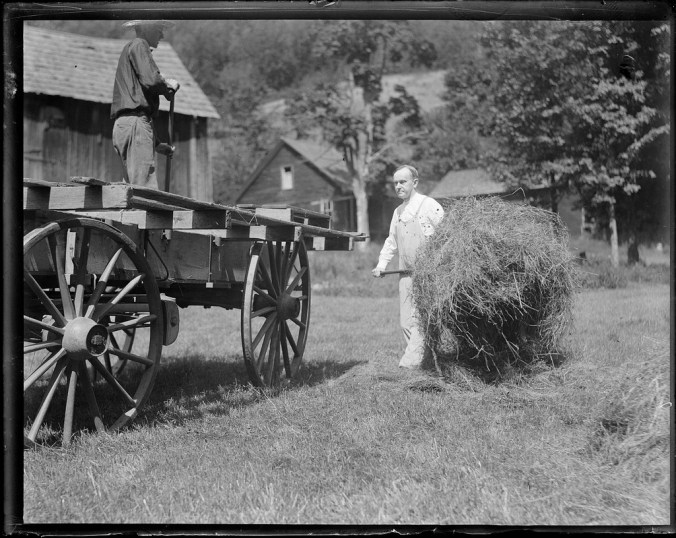
Of those forty-four who have followed Washington, he is not among the twenty-six who began their careers in the law, however. Coolidge was. Can you identify (minus Coolidge, of course) who the twenty-six are? Washington, on the other hand, was trained as a surveyor and soldier, began life with an aptitude for the soil and innovator of agriculture in all its fields. Coolidge and Washington would share a connection to the land and both would, during the time of their public careers, experience the challenges and satisfactions of farming from afar, entrusting the daily management of crops and animals to attentive stewards. They would also advance slowly, unlike some Presidents who have shot to the top almost overnight. Washington and Coolidge made the steady march from the lowest levels of local governance. In Coolidge’s case, even more thoroughly than his predecessor.

Both retained an abiding humility that they were instruments of Providence in the unfolding of events much larger than themselves. They did not see themselves as great men. The best men never do. Yet, they were constantly on guard against arrogance and pride. Neither were brilliant students, standing at the head of their peers in academic achievement. Yet, both poured themselves entirely into the strenuous work of preparing for whatever life might bring. The intensity of their preparation equipped them in ways that neither anticipated but when the obligation arose, they were ready. The quietly grueling exertion they invested as young men made the results look almost effortless when the occasion for national office was brought to them.

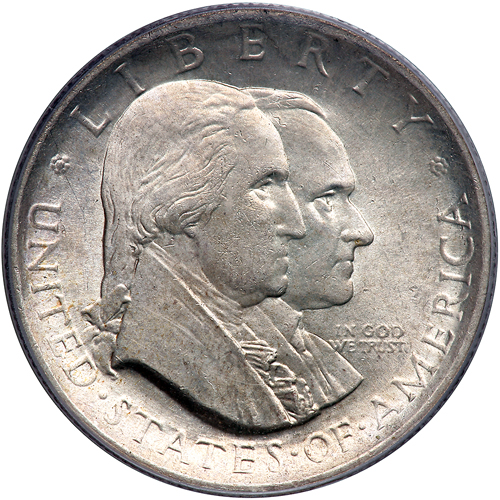
Photo credit: Smithsonian Institute.

Neither courted the limelight but higher and still higher duties (and the honors that attended success) came their way. They saw the fields of leadership full of talented individuals, many of whom they regarded as far better equipped than themselves. This must not be confused with a paralyzing timidity or lack of necessary confidence. They knew what each was capable of doing and rose when responsibility was needed. As such, they were not afraid of their deficiencies but surrounded themselves with strong personalities at every stage of life. This enabled them also to step aside willingly when the vast powers of the Presidency could have been theirs even longer. They both understood the dangers of reposing too much power in one person, a lesson more than one successor has flouted to his peril. They kept an abiding faith in the right judgment of their fellow citizens and in the enduring vitality of self-government. The government would fail and the country be betrayed if Presidents attempted to be all and do all for the people. In their own eyes, Coolidge and Washington were merely chosen for a short time and then surrendered that office to others, gladly returning to quiet, private life like any other American when the task was done. In fact, Coolidge would find that his famous “I Do Not Choose To Run” announcement bore striking resemblance to Washington’s choice of words as he prepared for retirement.

Both men promised little but delivered much. They both placed a premium on keeping their words few, their actions respectful, and their involvement spare and to the point, saying only what each meant and engaging in none of the back-slapping informality, social excess or constant meddling in minutiae that cheapens Presidential decisions and brings the Office into disrepute. They knew the value of keeping one’s powder dry for greatest impact when most needed. While only Washington knew military service firsthand, both he and Coolidge possessed the focus and inner discipline of good generals. For Coolidge, it meant outflanking the vast – sometimes even more subtle – forces given to waste resources and spend money others had worked to earn. Washington and Coolidge both knew that every dollar expended came out of someone’s hard work. The more government wasted, the harder people would need to labor to replace what was lost. Both knew debt was morally repugnant. Government, to both of them, had the highest obligation – above all else – to live within its means. If it did not do that, it had not accomplished anything meaningful.

Both men were not egotistical either, able to distinguish between their own personal comforts, seeing past the praise showered upon them to the central importance of obedience due the law. A personal insult or tribute could meet with forbearance but not an affront to the authority of the Constitution or public order. Such kindled a ferocity in their natures that even friends dared not approach. They both had intense tempers, emanating from a deeply instilled indignation at injustice. They emptied themselves, however, in order to serve others to the fullest. They knew that self got in the way and so subordinated it on a thousand, unseen fronts for the good of the country. Neither man was cold or unfeeling but possessed a deep and thoughtful love for people, yet retaining a shyness that often prevented them from revealing those sentiments as freely as others did. It was that genuine regard for people that brought them to public service and kept them there. Both married good ladies, which proved founts of blessing to them and the people they served. However, the devotion they held for their wives was intensely personal, not to be shared with the world at large since it was exclusively their own. Physically, there were obvious differences between the two men as well: Washington at over six feet and Coolidge at five ten. Washington had a robust and athletic physique. Coolidge remained thin and took little strenuous exercise aside from walking. However, both were redheads, Washington growing his natural hair long but powdering it as was customary. Both, nevertheless, had an innate sense of style and absolutely never underdressed for any occasion.


Gettysburg, PA May 30, 1928
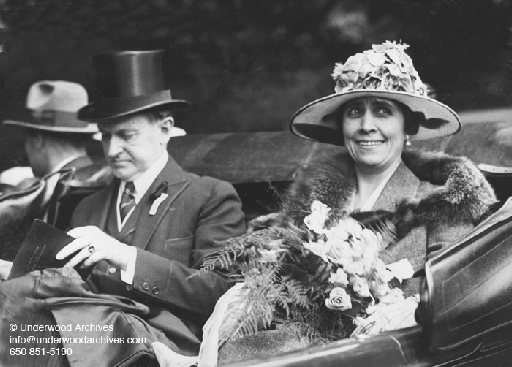
President Calvin Coolidge and his wife arriving at Gettysburg to lead the nation in the observance of Memorial Day. Photo credit: Underwood.

Washington would not have a lengthy post-presidency and neither would Coolidge but both packed an exceptional range of accomplishments in less time than many, including some Presidents. Washington would only see one successor’s experience in the office. Coolidge could benefit from the example of twenty-nine, living contemporaneous with twelve (Grant through Hoover), personally knowing six (TR, Taft, Wilson, Harding, Hoover and FDR), and surviving only long enough to see one successor of his own (Hoover). However, it is in the defining depth of integrity that Coolidge bears the most resemblance to Washington. He would note that the first President never made a mistake, a clear jab at himself but a product of the same self-deprecation that Washington would certainly share.

As we have contemplated some of the most significant similarities of Washington and Coolidge on this President’s Day, what else comes to your mind?

Of the twenty-six Presidents who have trained as lawyers, most received their legal educations not in majestic academic halls but at rough-hewn desks beside low lamplight sitting at the feet of now undeservedly anonymous mentors who laid before their pupils the practical nature of their chosen work, guiding them to sink or swim by their own rugged perseverance and self-discipline. Blackstone was usually the text, an intimidating tome for any age, but necessary to spark the fiery trial through which every student must pass – with no shortcut – to master not abstract theorems but the daily application of law in human life. The process of reading the law made most of these twenty-six what they were and it is Coolidge who gravitated to this study because “its reasonableness appealed to my mind as the best method of securing justice between man and man.” On that point as well, Washington would surely agree.

Happy Hat Day!