“1920” at the Notch

1920-jacket-1

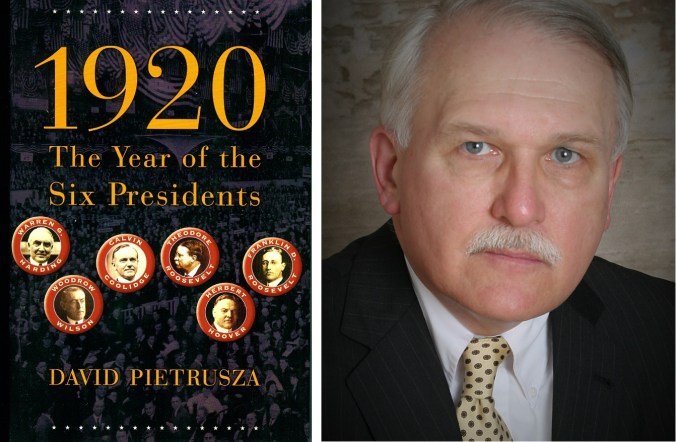
In just five days, on February 17th (President’s Day), historian David Pietrusza will be speaking at an open-house event hosted by the Coolidge Foundation in Plymouth Notch to discuss his excellent book, “1920: The Year of the Six Presidents.” The first 15 guests receive a free copy of the book and all will have an opportunity to learn how full that year was, not only with the six Presidents we meet within Mr. Pietrusza’s narrative but to mark the centennial of that historic year which culminated in the election of Harding and Coolidge to national leadership.

If you have not done so, please check out Mr. Pietrusza’s “1920” and, for that matter, his many other books on election history, baseball, and not so quiet Cal. It is always enriching to hear Mr. Pietrusza. Hope you will be able to attend.

On Orson Bean

orsonbean

Orson Bean (1928-2020). Photo credit: Lente Conservador.

Another remarkable life came to an unfortunate close this past week with the death of Orson Bean on Friday. Like US News and World Report editor Marvin L. Stone, Bean was born in Grace Coolidge’s Burlington, Vermont, when young Marvin was 4 years old. Orson came into the world as Dallas Frederick Burrows on July 22, 1928, sharing (as often happens) the names of his maternal grandfather (Dallas Pollard) and middle name of his own father (George Frederick Burrows). Long an icon of TV and film, it seems he not only was President Calvin Coolidge’s first cousin twice removed but inherited a measure of the Coolidge-Moor-Pollard sense of humor and, perhaps, a bit of the orneriness too. The great grandson of Coolidge’s Aunt Sarah Pollard, who was the sister of Calvin’s mother Victoria, Orson no doubt shared in the abundant family lore. Orson related at one point the first time he met Cal, when young Dallas was 6 months ago. “They said I took a leak on his necktie. When asked about it later I couldn’t recall. The president hasn’t said anything to me.” There is that famous family wit.

Creating his stage name came from his own ingenuity despite that Orson Welles remained convinced Bean stole it from him. For Orson Bean, it was the perfect combination of (as he put it) the “pompous” (Orson) and “silly” (Bean). At least it got laughs, so he kept it.

Orson’s life and influences had a marvelous meshwork that truly is replete everywhere we turn. We are rarely all one thing and the attempt to force people through the cattle chutes of this or that political label routinely fail and falter. His dad was a Democrat, a respected member of the ACLU, yet his daughter was married to the brilliant Andrew Breitbart, the fearless lightning rod many still love to hate. He was among the blacklisted by the Democrat-chaired House of Un-American Activities Committee in the 50s (for liking a Communist girl for a time) and yet he was Calvin Coolidge’s cousin. Orson was a reminder of Cal’s observation: We really all are in the same boat. Pretending we are not will certainly land us both in the drink but maybe that is what the sharks among us have been wanting all along.

Orson, we are sad to see you go but glad to have had you with us for the time we did.

Craig Fehrman’s “Author in Chief”

Fehrman-AuthorinChief

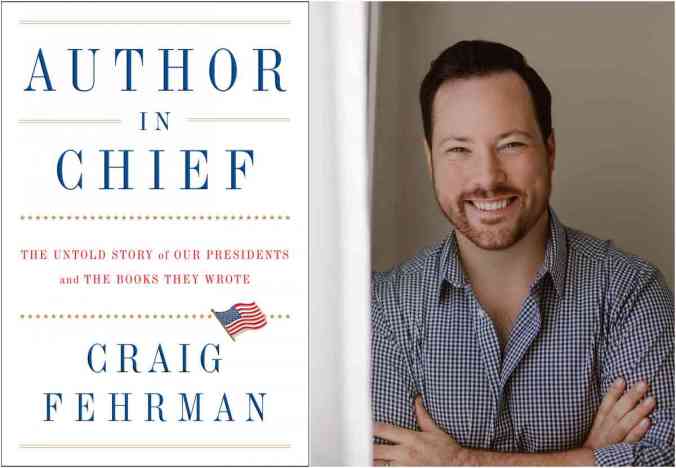
One of our wonderful readers just shared the review offered by Mr. Thomas Mallon, over at the Wall Street Journal, of Craig Fehrman’s new book, Author in Chief, due out on Tuesday (February 11). We certainly look forward to delving into Fehrman’s work here and it is encouraging that inside can be found long-deserved praise for what we know remains the gold standard of Presidential writers: Calvin Coolidge. Many of Coolidge’s speeches, a sampling of his best, were collected in three books: Have Faith in Massachusetts, The Price of Freedom, and Foundations of the Republic but it is his Autobiography that receives in Fehrman’s effort overdue recognition for its excellence and insight. Mr. Mallon writes:

The fortitude and unexpected writerliness involved in the creation of Grant’s book make for an impressive but familiar story. It is decades further on—after dust jackets, department-store bookselling, catalog shopping and Carnegie libraries have further transformed the publishing landscape—that Mr. Fehrman finds the unlikely, taciturn standout of “Author in Chief.” In 1920, Massachusetts Gov. Calvin Coolidge, newly famous for suppressing a labor revolt by the Boston police, secured the Republican vice-presidential nomination in large part by allowing some wealthy backers in business and advertising to promote a collection of his levelheaded, self-written (in pencil) speeches. The sampler concluded with his no-nonsense telegram to the police union: “There is no right to strike against the public safety by anybody, anywhere, any time.”

After ascending to the presidency, Coolidge grudgingly ceded some of its oratorical tasks to speechwriters but retook charge of his own pencil when it came to producing “The Autobiography of Calvin Coolidge” (1929), a mere 45,000 words, a figure by which, in their later memoirs, Truman, Nixon and Clinton have yet to clear their throats. The succinctness of Coolidge’s book was no surprise, but its intimacy was, especially his account of the death of his teenage son in the White House: “In his suffering, he was asking me to make him well. I could not.” Mr. Fehrman is untroubled about bucking history’s progressive snobbism, which typically denies Coolidge much literary status on account of his having pursued policies less liberal and consequential than those of FDR (whom he defeated for the vice presidency in 1920).

We certainly intend to crack open Craig Fehrman’s Author in Chief soon. We hope you will too.