On America’s Source of Power

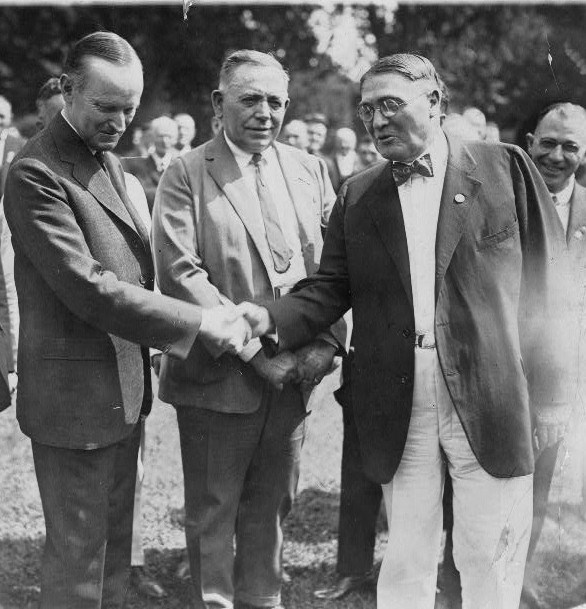
President Coolidge receiving labor leaders at the White House, September 1, 1924.
President Coolidge receiving labor leaders at the White House, September 1, 1924.

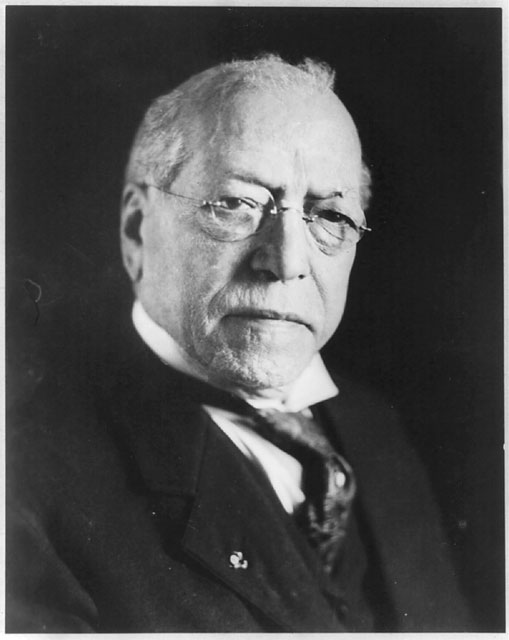
Leader and founder of the American Federation of Labor, the great American Samuel Gompers, who also once said, "The worst crime against working people is a company which fails to operate at a profit," 1908. Cited by Rothschild in Bionomics: Economy as Business Ecosystem. Washington, D.C.: BeardBooks, 1990, p. 115.

Leader and founder of the American Federation of Labor, the great American Mr. Samuel Gompers, who also once said, “The worst crime against working people is a company which fails to operate at a profit,” 1908. Cited by Rothschild in Bionomics: Economy as Business Ecosystem. Washington, D.C.: BeardBooks, 1990, p. 115.

“The power to preserve America is in the same hands to-day that it was when the German army was almost at the gates of Paris. That power is with the people themselves; not one class, but all classes; not one occupation, but all occupations; not one citizen, but all citizens. During the past five years we have heard many false prophets. Some were honest, but unwise; some plain slackers; a very few were simply public enemies. Had their counsels prevailed, America would have been destroyed. In general they appealed to the lower impulses of the people, for in their ignorance they believed the most powerful motive of this Nation was a sodden selfishness. They said the war would never affect us; we should confine ourselves to making money. They argued for peace at any price. They opposed selective service. They sought to prevent sending soldiers to Europe. They advocated peace by negotiation. They were answered from beginning to end by the loyalty of the American workingmen and the wisdom of their leaders. That loyalty and that wisdom will not desert us now. The voices that would have lured us to destruction were unheeded. All counsels of selfishness were unheeded, and America responded with a spirit which united our people as never before to the call of duty.

     “Having accomplished this great task, having emerged from the war the strongest, the least burdened nation on earth, are we now to fail before our lesser task? Are we to turn aside from the path that has led to success? Who now will set selfishness above duty? The counsel that Samuel Gompers gave is still sound, when he said in effect, ‘America may not be perfect. It has the imperfections of all things human. But it is the best country on earth, and the man who will not work for it, who will not fight for it, and if need be die for it, is unworthy to live in it.’

     “Happily, the day when the call to fight or die is now past. But the day when it is the duty of all Americans to work will remain forever. Our great need now is for more of everything for everybody. It is not money that the nation or the world needs to-day, but the products of labor. These products are to be secured only by the united efforts of an entire people. The trained business man and the humblest workman must each contribute. All of us must work, and in that work there should be no interruption. There must be more food, more clothing, more shelter. The directors of industry must direct it more efficiently, the workers in industry must work in it more efficiently. Such a course saved us in war; only such a course can preserve us in peace. The power to preserve America, with all that it now means to the world, all the great hope that it holds for humanity, lies in the hands of the people. Talents and opportunity exist. Application only is uncertain. May Labor Day of 1919 declare with an increased emphasis the resolution of all Americans to work for America” — Governor Calvin Coolidge, speech at Plymouth, Massachusetts, September 1, 1919.

Those calling for the boycott of businesses like Burger King for an “unpatriotic” move out of America due to crushing government penalties are the same ones expecting the golden goose will keep right on laying despite an incessant effort to strangle it. It is by virtue of the few working to support the idle many that government grows while the individual’s power shrinks proportionately. On this Labor Day 2014, it is a reminder of the enduring necessity of an individual’s work, the effort expended by all Americans together, not a truly selfish system of incentivized indolence and rewarded dependence.
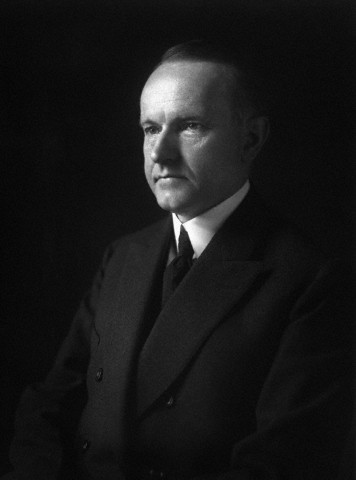
Half-length Portrait of President Calvin Coolidge

On the New Willard Hotel

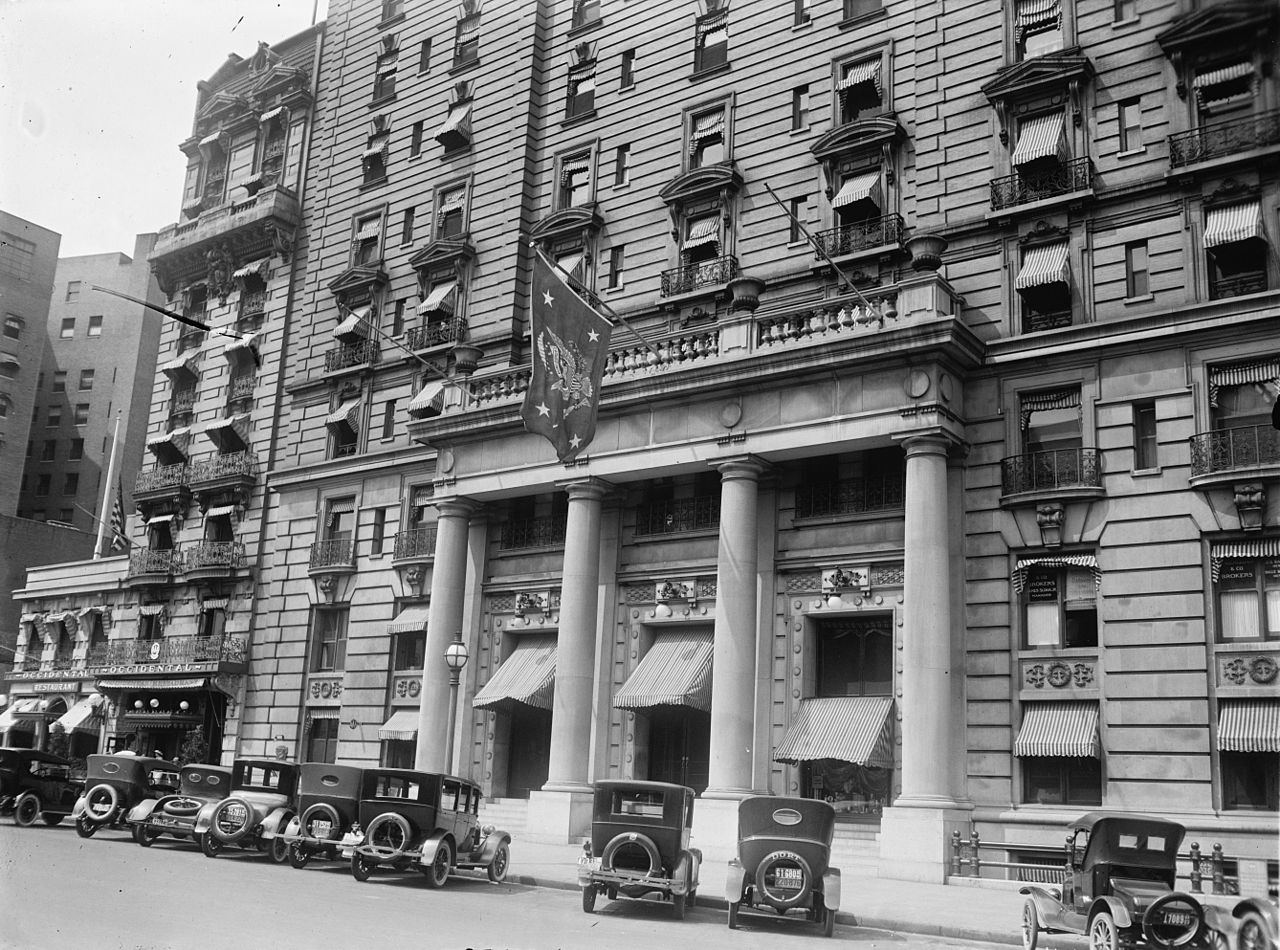
A view of the Willard Hotel during the 1920s. Note the flag out front identifies that the President is staying there.

A view of the Willard Hotel during the 1920s. Note the flag out front identifies that the President is staying there.

“It had been our intention to take a house in Washington, but we found none to our liking. They were too small or too large. It was necessary for me to live within my income, which was little more than my salary and was charged with the cost of sending my boys to school. We therefore took two bedrooms with a dining room, and large reception room at the New Willard where we had every convenience” — Calvin Coolidge, writing of their arrival in Washington in the spring of 1921, The Autobiography, pp.157-8.

Known today as the Willard InterContinental, the hotel which the Coolidges called home from the spring of 1921 through much of August 1923, already enjoyed an illustrious reputation before their arrival. It would continue to function as a central location for several events throughout the Coolidge Era. It had been the host of every president since Franklin Pierce, who staged here before leaving for his inauguration in 1853. It was here that Pinkerton hid President-elect Lincoln, thwarting more than one assassination attempt in the weeks leading up to formal inauguration and subsequent history. Lincoln met leaders in the lobby and carried out business from his room, not unlike what the thirtieth President would do throughout August 1923. It was said that Grant, in his time, frequently sat down in the lobby to enjoy a cigar and drink. Established in 1816, the New Willard had many a story to be told. It would go on to make several occasions in history, such as the place where Martin Luther King composed his “I Have a Dream” speech in 1963, delivered on the steps of the Lincoln Memorial across from the Washington Monument. Yet, some of the hotel’s most dramatic moments happened during the stay of Calvin and Grace Coolidge. The best known of these is the fire that raged on the tenth floor, seven above the Coolidge’s rooms, on April 23, 1922. Incurring over $3.5 million in damage (by 2014 values), the danger was seen too late to avoid demolishing the ballroom on the top floor. Mistaken for the Vice President of the Hotel, Coolidge was first allowed to pass the fire marshal and begin to walk upstairs. Quickly confirming that Cal was the Vice President of the United States, he was kindly told to come back and wait from a safe distance, which he calmly did. The following day, he dispatched a gracious thank you to the officials who handled this unfortunate event so capably.

The ballroom on the top floor, after the fire, April 1922.

The ballroom on the top floor, after the fire, April 1922.

As the fire is put out, the Coolidges and some of their fellow guests watch from below. L to R: Miss J. Letley, A.H. Duerno, of Springfield Mass., O.H. Wigley of New York, Mrs. Coolidge and Vice President. Coolidge. Courtesy of Corbis Images.

As the fire is put out, the Coolidges and some of their fellow guests watch from below. L to R: Miss J. Letley, A.H. Duerno, of Springfield Mass., O.H. Wigley of New York, Mrs. Coolidge and Vice President. Coolidge. Courtesy of Corbis Images.

Another instance, kept from public knowledge for many years, concerned the new President and a burglar, who had sneaked into their room during the night on August 23, 1923. What happened, told by Coolidge to a reporter named Frank MacCarthy who relayed it confidentially years later to Richard C. Garvey, the editor of The Daily News, out of Springfield, Massachusetts, was finally published fifty years later in 1983. MacCarthy would die soon after Mrs. Coolidge in 1957, but not before writing the incident down and passing it on to Mr. Garvey. Garvey brought the incident to light to mark the memory of Coolidge’s passing and remembrance week that year. The account goes like this: Coolidge awoke to see a figure in the room, having climbed through the window, searching through the President’s clothes. Finding his wallet, a watch and a charm, it seemed the thief would obtain what he was seeking with ease. “I wish you wouldn’t take that,” Cal said regarding the charm. Startled, the intruder was told to read the inscription on the piece, “Presented to Calvin Coolidge, Speaker of the House, by the Massachusetts General Court.” “Are you President Coolidge?” the young man asked with astonishment. “Yes…if you want money, let’s talk this over,” the President said coolly. Discovering that the youngster was there to get money for a train fare so that he and his schoolmate could get back to college, the President opened his wallet and gave him a $32 loan, exactly enough to cover the fare. As Garvey recounts, Coolidge called it a loan so that the young man would not have obtained the money by theft. The young man later paid back the amount in full.

The Coolidges in their reception room at the Willard, August 4, 1923.

The Coolidges, in their reception room at the Willard, August 4, 1923. Courtesy of the Everett Collection.

The Coolidges look through some of the correspondence sent to them in recent days. Courtesy of Shorpy.

The Coolidges look through some of the many letters sent to them over the previous two days. Courtesy of Shorpy.

The final instance concerns another night visitor, this time a small bat which flew in through the open window one night, followed quickly by an owl. The bat was “herded” to the bathroom while the owl took up a perch on the mantel. There was no small excitement on the part of Mrs. Coolidge, whose stalwart hero, Cal, took care of their guests without much ado. It certainly brings an interesting element to the 1883 poem placed over their mantel back in Northampton, which read:

“A wise old owl lived in an oak
The more he saw the less he spoke
The less he spoke the more he heard.
Why can’t we all be like that wise old bird?”

On the Election Day Duties of Citizenship

President Coolidge filling out his own absentee ballot to vote in his hometown elections, 1924.

President Coolidge filling out his own absentee ballot to vote in his hometown elections, 1924.

“The right action of all of us is made up of the right action of each one of us. Unless each of us is determined to meet the duty that comes to us, we can have no right to expect that others will meet the duties that come to them. Certainly we cannot expect them so to act as to save us from the consequences of having failed to act. The immediate and pressing obligation for tomorrow is that each one of us who is qualified shall vote. That is a function which cannot be delegated, which cannot be postponed. The opportunity will never arise again. If the individual fails to discharge that obligation, the whole nation will suffer a loss from that neglect…

“If the time comes when our citizens fail to respond to their right and duty, individually and collectively, intelligently and effectively at the ballot box on election day, I do not know what form of government will be substituted for that which we at present have the opportunity to enjoy, but I do know it will no longer be a rule of the people, it will no longer be self government. The people of our country are sovereign. If they do not vote they abdicate that sovereignty, and they may be entirely sure that if they relinquish it other forces will seize it, and if they fail to govern themselves some other power will rise up to govern them. The choice is always before them, whether they will be slaves or whether they will be free. The only way to be free is to exercise actively and energetically the privileges, and discharge faithfully the duties which make freedom. It is not to be secured by passive resistance. It is the result of energy and action.

“To live up to the full measure of citizenship in this nation requires not only action, but it requires intelligent action. It is necessary to secure information and to acquire education. The background of our citizenship is the meeting house and the school house, the place of religious worship and the place of intellectual training. But we cannot abandon our education at the school house door. We have to keep it up through life. A political campaign can be justified only on the grounds that it enables the citizens to become informed as to what policies are best for themselves and for their country, in order that they may vote to elect those who from their past record and present professions they know will put such policies into effect. The purpose of a campaign is to send an intelligent and informed voter to the ballot box. All the speeches, all the literature, all the organization, all the effort, all the time and all the money, which are not finally registered on election day, are wasted.

“We are always confronted with the question of whether we wish to be ruled by all the people or a part of the people, by the minority or the majority; whether we wish our elections to be dominated by those who have been misled, through the presentation of half truths, into the formation of hasty, illogical and unsound conclusions; or whether we wish those to determine the course of our Government who have through due deliberation and careful consideration of all the factors involved reached a sound and mature conclusion. We shall always have with us an element of discontent, an element inspired with more zeal than knowledge. They will always be active and energetic, and they seldom fail to vote on election day. But the people at large in this country are not represented by them. They are greatly in the minority. But their number is large enough to be a decisive factor in many elections, unless it is offset by the sober second thought of the people who have something at stake, whether it be earnings from in vestment or from employment, who are considering not only their own welfare, but the welfare of their children and of coming generations. Our institutions never contemplated that the conduct of this country, the direction of its affairs, the adoption of its policies, the maintenance of its principles, should be decided by a minority moved in part by self-interest and prejudice. They were framed on the theory that decisions would be made by the great body of voters inspired by patriotic motives. Faith in the people does not mean faith in a part of the people. It means faith in all the people. Our country is always safe when decisions are made by a majority of those who are entitled to vote. It is always in peril when decisions are made by a minority…

“But the right to vote is conferred upon our citizens not only that they may exercise it for their own benefit, but in order that they may exercise it also for the benefit of others. Persons who have the right to vote are trustees for the benefit of their country and their countrymen. They have no right to say they do not care. They must care! They have no right to say that whatever the result of the election they can get along. They must remember that their country and their countrymen cannot get along, cannot remain sound, cannot preserve its institutions, cannot protect its citizens, cannot maintain its place in the world, unless those who have the right to vote do sustain and do guide the course of public affairs by the thoughtful exercise of that right on election day. They do not hold a mere privilege to be exercised or not, as passing fancy may move them. They are charged with a great trust, one of the most important and most solemn which can be given into the keeping of an American citizen. It should be discharged thoughtfully and seriously, in accordance with its vast importance.

I therefore urge upon all the voters of our country, without reference to party…that they approach the ballot box in the spirit that they would approach a sacrament, and there, disregarding all appeals to passion and prejudice, dedicating themselves truly and wholly to the welfare of their country, they make their choice of public officers solely in the light of their own conscience. When an election is so held, when a choice is so made, it results in the real rule of the people…” — President Calvin Coolidge, over radio hookup from the White House, November 3, 1924.