Coolidge Landslide!

The Coolidge Campaign Family. L to R, front row: Dawes, Grace, CC, Mrs. Dawes, Frank Stearns, Campaign Chairman William M. Butler, Cal Jr. and John. Courtesy of the Library of Congress.

The Coolidge Campaign Official Family. L to R, front row: Dawes, Grace, CC, Mrs. Dawes; second row: Frank Stearns, Campaign Chairman William M. Butler; back row: Cal Jr. and John. Courtesy of the Library of Congress.

“I haven’t any specific reports about any states. My reports indicate that I shall probably carry Northampton. That is about as far as I can go into details. That is based more on experience” — Calvin Coolidge, when asked about returns for the upcoming election of 1924.

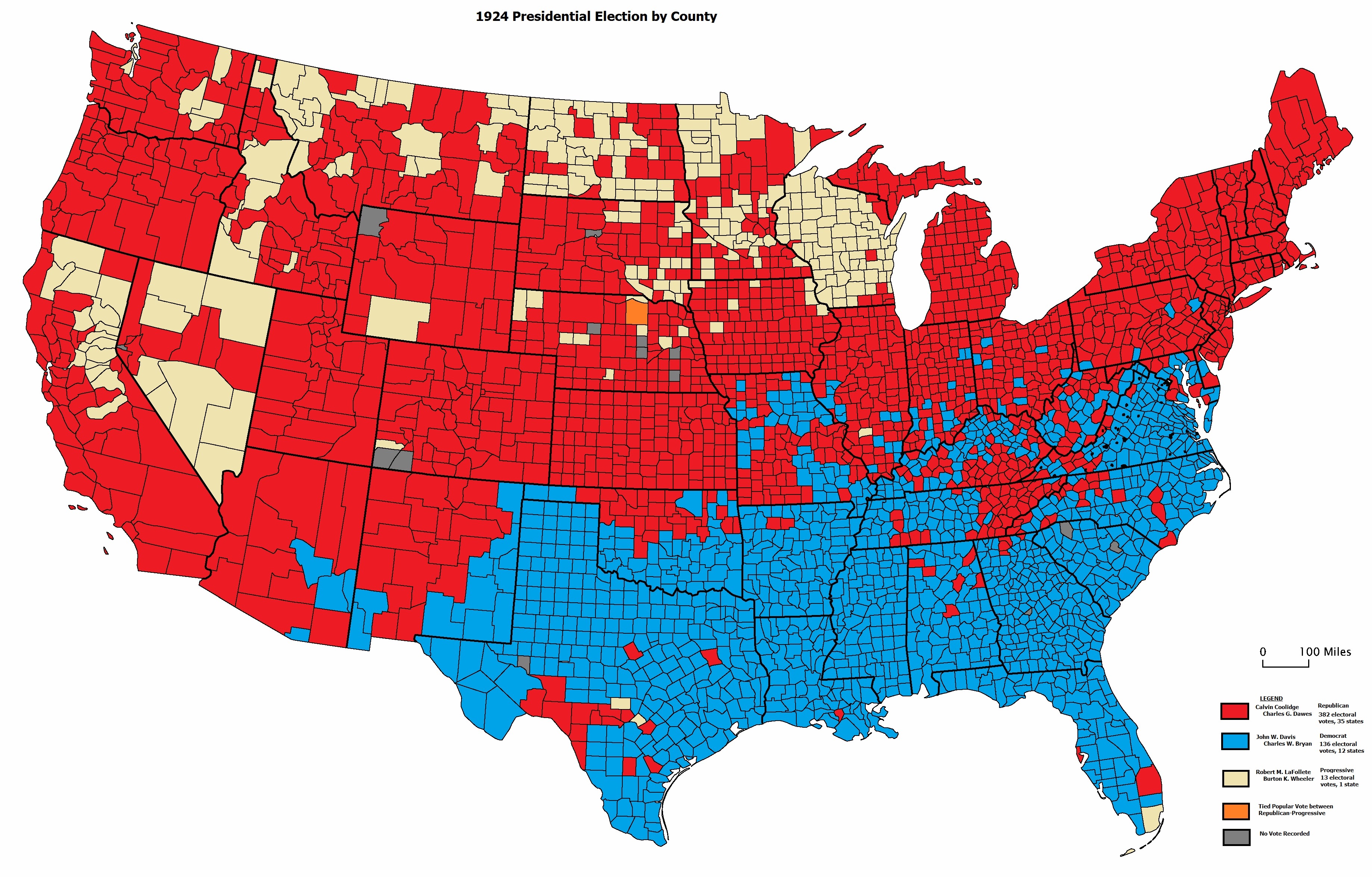
This electoral map not only underscores Coolidge's landslide but also the demographic differences under the 1920 Census from political conditions now. The Solid South, not nearly as solid as it appeared after Harding and Coolidge back-to-back victories, would continue to crack and finally shatter after four more years of Coolidge Prosperity. Hoover, piggybacking on Cal's record, would see six more states added to the "red" column: TX, OK, TN, VA, NC and FL.

This electoral map not only underscores Coolidge’s landslide but also the demographic differences under the 1920 Census compared to political conditions now. The Solid South, not nearly as solid as it appeared after Harding and Coolidge back-to-back victories, would continue to crack and finally shatter after four more years of Coolidge Prosperity. Hoover, piggybacking on Cal’s record, would see six more states added to the “red” column: TX, OK, TN, VA, NC and FL.

County-by-county breakdown of 1924 Election can be found in The Presidential Vote, 1896-1932 by Edgar E. Robinson.

County-by-county breakdown of the 1924 Election can be found in The Presidential Vote, 1896-1932 by Edgar E. Robinson.

As the maps illustrate above, Cal undersold but over-delivered, promising (with characteristic wit) only his adopted hometown, in what experience bears out should have been impossible: A Republican landslide when the vote is split three ways. The fact that this election was neither thrown into the House, as feared by many at the time, nor siphoned to the Democrat Davis speaks to the strength of Coolidge’s victory. Had the Republican vote not been split, the outcome would have been even stronger. It still stands as one of the most decisive electoral wins in our history. America genuinely loved Coolidge and what he stood for — debt and tax reduction, limited government, return to the normalcy of constitutional law and order, and economic growth — resonating with voters across the spectrum. Women, participating in their second Presidential election since the passage of the Nineteenth Amendment four years before, maintained a fifty-percent turnout rate (Encyclopedia of American Political Parties and Elections, Sabato and Ernst 476), while American Indians, enfranchised nationwide for the first time, also participated in the vote. Coolidge continued to exploit the fissures in the Solid South, winning Kentucky for the GOP for the first time since 1896. This is all the more impressive considering Coolidge’s prospects were dismissed by the establishment of his day a year before.

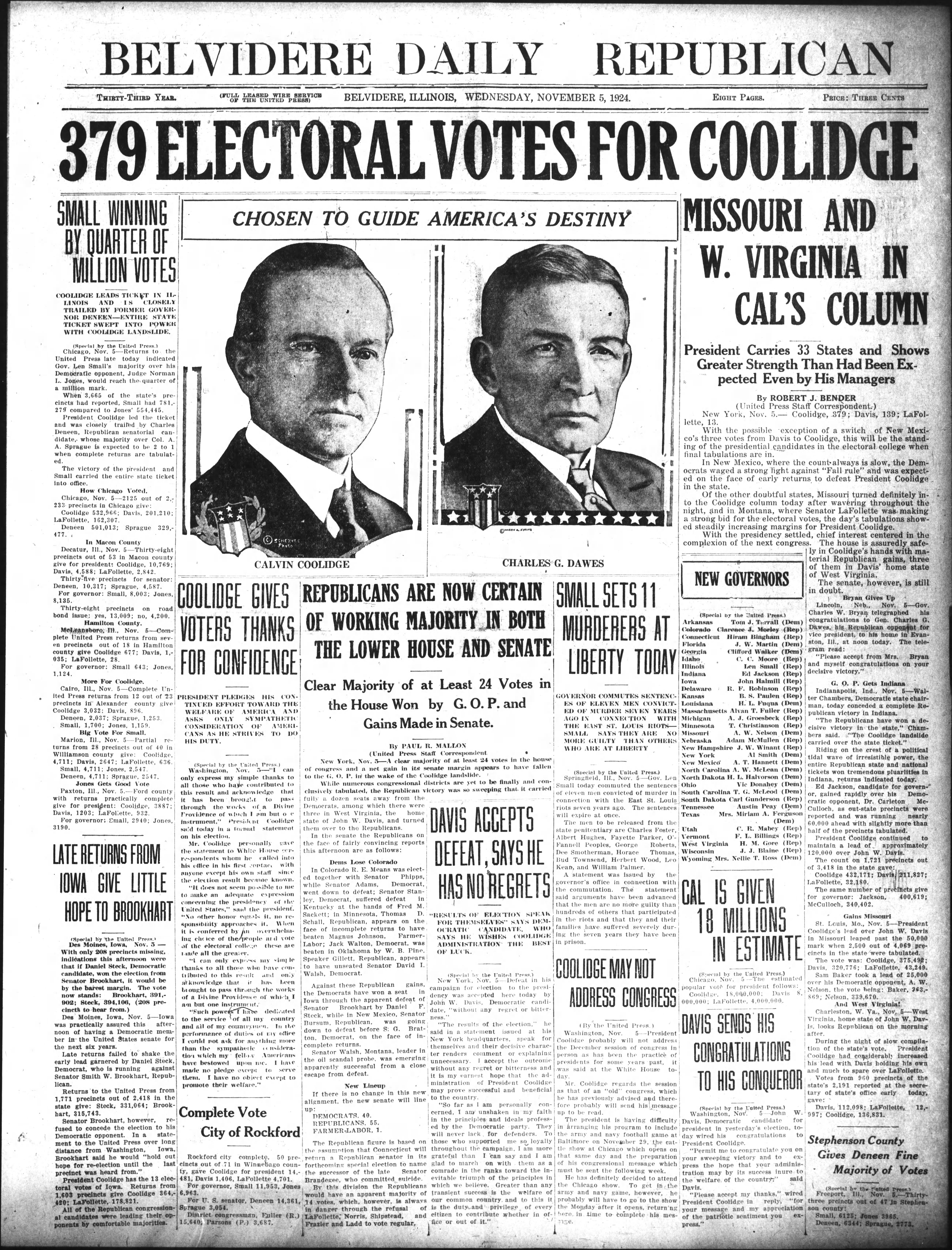
Courtesy of Newspapers.com.

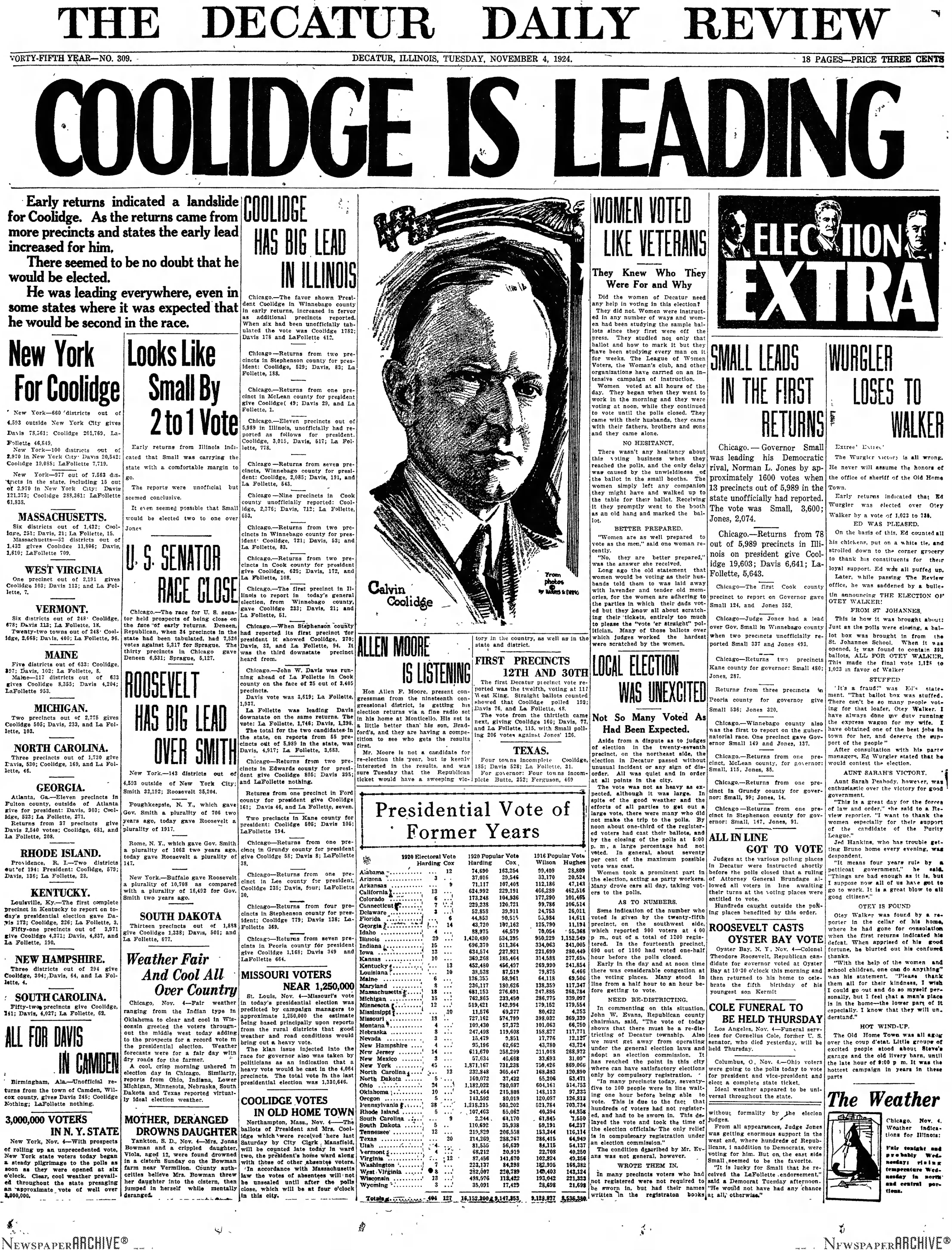
The paper, rushed to print before Nevada’s outcome was known, would not include 3 more electoral votes (11,243 votes statewide for Coolidge) until the following day. Courtesy of Newspapers.com.

Courtesy of Newspapers.com.

Courtesy of Newspapers.com.

On Our Time for Choosing

Governor Coolidge at formal ceremonies on Boston Common, 1919. Courtesy of Leslie Jones Photography.

Governor Coolidge at formal ceremonies on Boston Common, 1919. Courtesy of Leslie Jones Photography.

It was on this day in 1919 that Governor Calvin Coolidge stood before voters and framed the central principles at issue in the election the following Tuesday. His ability to both identify and distill down the essential components of public problems was renowned. He possessed a talent for cutting through the peripheral and inconsequential minutiae to isolate the material facts in otherwise complicated political conflicts. As he humbly put it in his Autobiography, no doubt with this particular address on his mind, “The issue was nothing less than whether the law which the people had made through their duly authorized agencies should be supreme. This issue I took to the people in my campaign for reelection as Governor…I felt at the time that the speeches I made and the statements I issued had a clearness of thought and revealed a power I had not before been able to express, which confirmed my belief that, when a duty comes to us, with it a power comes to enable us to perform it…My faith that the people would respond to the truth was justified.”

On the evening of November 1, 1919, before those gathered at Tremont Temple in downtown Boston, the Governor spoke these most timely words, not only to the people of Massachusetts but for the people of all the States. It is important to keep in mind that when Coolidge refers to government, his first thought is not to Washington but foremost to the governance of the States and our authority at its most local, and personal, level. Living under the Wilson-Palmer regime, however, Coolidge understood that the truth of his observations reached even to those residing in the Nation’s Capital lured in by the President’s false notions of progress. He said,

“Revelation has not ceased. The strength of a righteous cause has not grown less. The people of Massachusetts are patriotic before they are partisan, they are not for men but for measures, not for selfishness but for duty, and they will support their Government. Revelation has not ceased and faith in men has not failed. They cannot be intimidated, they cannot be coerced, they cannot be deceived, and their sovereignty is not for sale.

“When this campaign is over it will be a rash man who will again attempt to further his selfish interests by dragging a great party name in the mire and seeking to gain the honor of office by trafficking with disorder. The conduct of public affairs is not a game. Responsible office does not go to the crafty. Governments are not founded upon an association for public plunder but on the cooperation of men wherein each is seeking to do his duty.

“The past five years have been like an earthquake. They have shaken the institutions of men to their very foundations. It has been a time searchings and questionings. It has been a time of great awakenings. There has been an overpowering resolution among men to make things better…We have a deep conviction that ‘resistance to tyranny is obedience to law.’ And on that conviction we have stood for three centuries. Time and experience have but strengthened our belief that it is sound.

“But like all rules of action it only applies to the conditions it describes. All authority is not usurped authority. Any government is not tyranny. These are the counterfeits. There are no counterfeits of the unreal. It is only of the real and true that men seek to pass spurious imitations.

“There are among us a great mass of people who have been reared for generations under a government of tyranny and oppression. It is ingrained in their blood that there is no other form of government. They are disposed and inclined to think our institutions partake of the same nature as these they have left behind. We know they are wrong. They must be shown they are wrong.

“There is a just government. There are righteous laws. We know the formula by which they are produced. The principle is best stated in the immortal Declaration of Independence to be ‘the consent of the governed.’ It is from that source our Government derives its just powers and promulgates its righteous laws. They are the will of the people, the settled conviction derived from orderly deliberation, that take on the sanctity ascribed to the people’s voice. Along with the binding obligation to resist tyranny goes the other admonition, that ‘obedience to law is liberty’ — such law and so derived.

“These principles, which I have but lightly sketched, are the foundation of American institutions, the source of American freedom and the faith of any party entitled to call itself American. It constitutes truly the rule of the people. It justifies and sanctifies the authority of our laws and the obligation to support our Government. It is democracy administered through representation.

“There are only two other choices, anarchy and despotism–Russia, present and past. For the most part human existence has been under the one or the other of these. Both have failed to minister to the highest welfare of the people. Unless American institutions can provide for that welfare the cause of humanity is hopeless. Unless the blessings of prosperity, the rewards of industry, justice and liberty, the satisfaction of duty well done, can come under a rule of the people, they cannot come at all. We may as well abandon hope and, yielding to the demands of selfishness, each take what he can.

“We had hoped these questions were settled. But nothing is settled that evil and selfish men can find advantage for themselves in overthrowing. We must eternally smite the rock of public conscience if the waters of patriotism are to pour forth. We must ever be ready to point out the success of our country as justification of our determination to support it…

“Will men realize their blessing and exhibit the resolution to support and defend the foundation on which they rest? Having saved Europe are we ready to surrender America? Having beaten the foe from without are we to fall victim to the foe from within? All of this is put in question by the issue of this campaign. That one fundamental issue is the support of the Government in its determination to maintain order. On that all of these opportunities depend.

“There can be no material prosperity without order. Stores and banks could not open. Factories could not run, railways could not operate. What was the value of plate glass and goods, the value of real estate in Boston at three o’clock, A.M., September 10? Unless the people vote to sustain order that value is gone entirely. Business is ended. On order depends all intellectual progress. Without it all schools close, libraries are empty, education stops. Disorder was the forerunner of the Dark Ages.

“Without order the moral progress of the people would be lost. With the schools would go the churches. There could be no assemblages for worship, no services even for the departed, piety would be swallowed up in viciousness.

“I have understated the result of disorder. Man has not the imagination, the ability to overstate it. There are those who aim to bring about exactly this result. I propose at all times to resist them with all the power at the command of the Chief Executive of Massachusetts.

“Naturally the question arises, what shall we do to defend our birthright? In the first place everybody must take a more active part in public affairs. It will not do for men to send, they must go. It is not enough to draw a check. Good government cannot be bought, it has to be given. Office has great opportunities for doing wrong, but equal chance for doing right. Unless good citizens hold office bad citizens will. People see the office-holder rather than the Government. Let the worth of the office-holder speak the worth of the government. The voice of the people speaks by the voice of the individual. Duty is not collective, it is personal. Let every inhabitant make known his determination to support law and order. That duty is supreme.

“That the supremacy of the law, the preservation of the Government itself by the maintenance of order, should be the issue of this campaign was entirely due to circumstances beyond my control. That anyone should dare to put in jeopardy the stability of our Government for the purpose of securing office was to me inconceivable. That any one should attempt to substitute the will of any outside organization for the authority conferred by law upon the representatives of the people had never occurred to me. But the issue arose by action of some of the police of Boston and it was my duty to meet it. I shall continue to administer the law of all the people…

“Those who are attempting to wrench the scepter of authority from the representatives of the people, to subvert the jurisdiction of her laws, are the enemies not only of progress, but of all present achievement, not only of what we hope for, but of what we have.

“This is the cause of all the people, especially of the weak and defenseless. Their only refuge is the protection of the law. The people have come to understand this. They are taking the deciding of this election into their own hands regardless of party. If the people win who can lose? They are awake to the words of Daniel Webster, ‘nothing will ruin the country if the people themselves will undertake its safety; and nothing can save it if they leave that safety in any hands but their own.’

“My fellow citizens of Massachusetts, to you I commend this cause. To you who have added the glory of the hills and plains of France to the glory of Concord and Bunker Hill, to you who have led when others faltered, to you again is given the leadership. Grasp it. Secure it. Make it decisive. Make the discharge of the great trust you now hold an example of hope for righteousness everywhere, a new guarantee that the Government of America shall endure.”
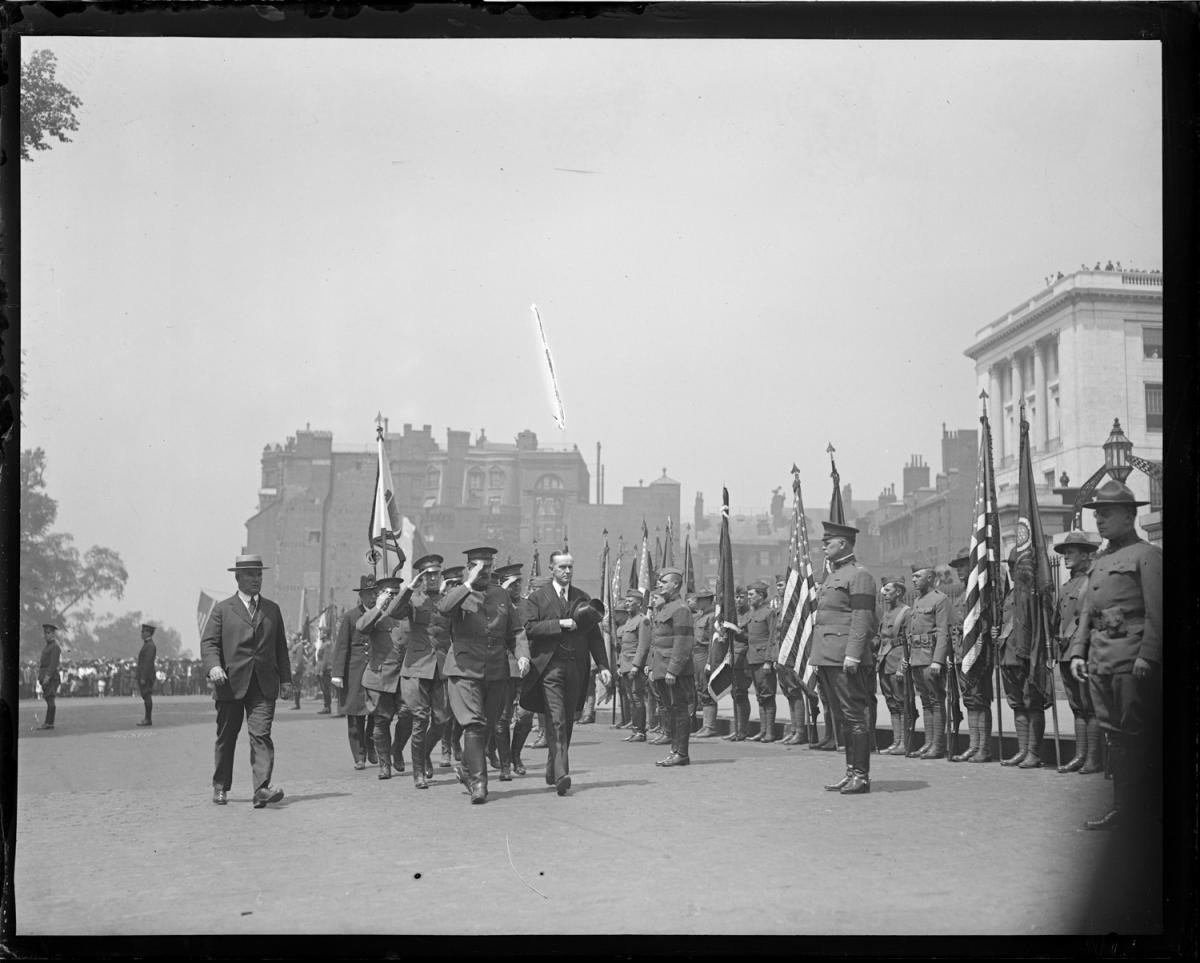
Governor Coolidge marches past the State House, Boston, June 14, 1919. Courtesy of Leslie Jones Photography.

Governor Coolidge marches past the State House, Boston, June 14, 1919. Courtesy of Leslie Jones Photography.
On the Great Legacy of America’s Republics

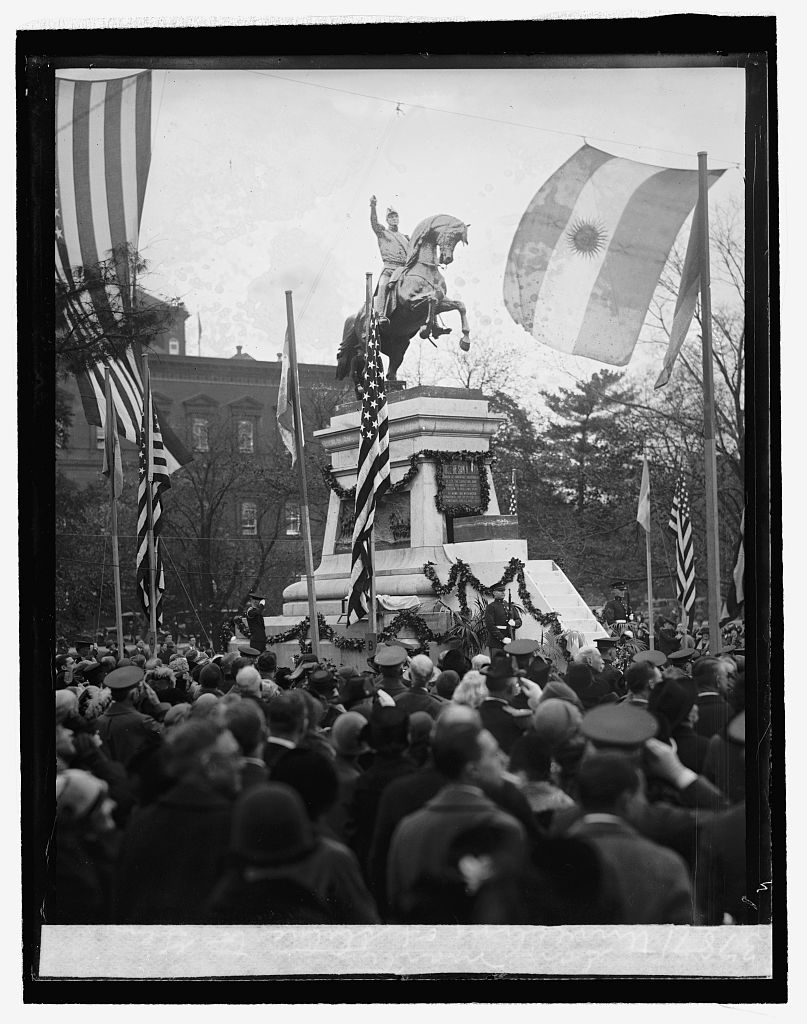
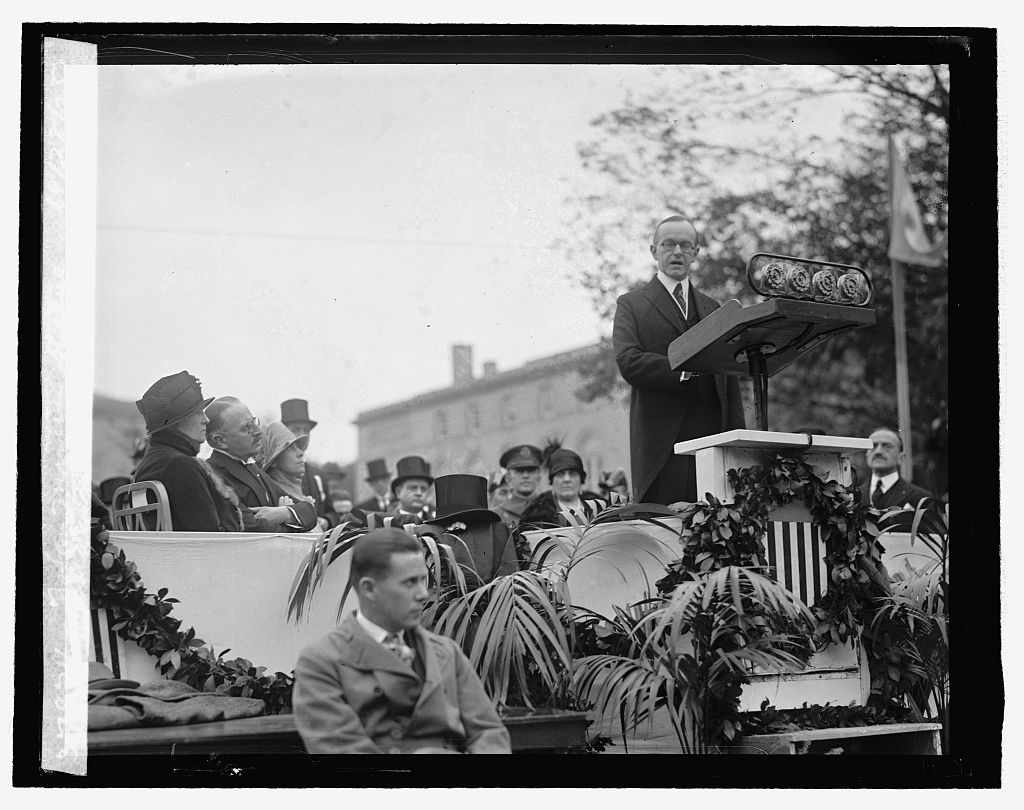
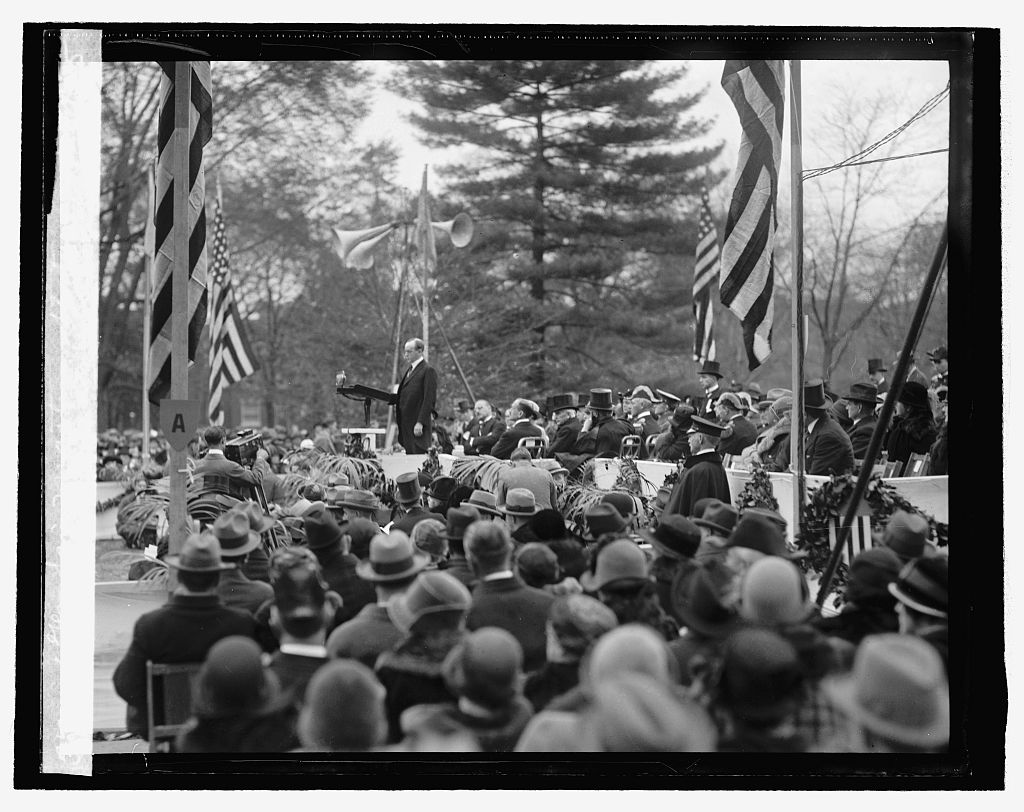
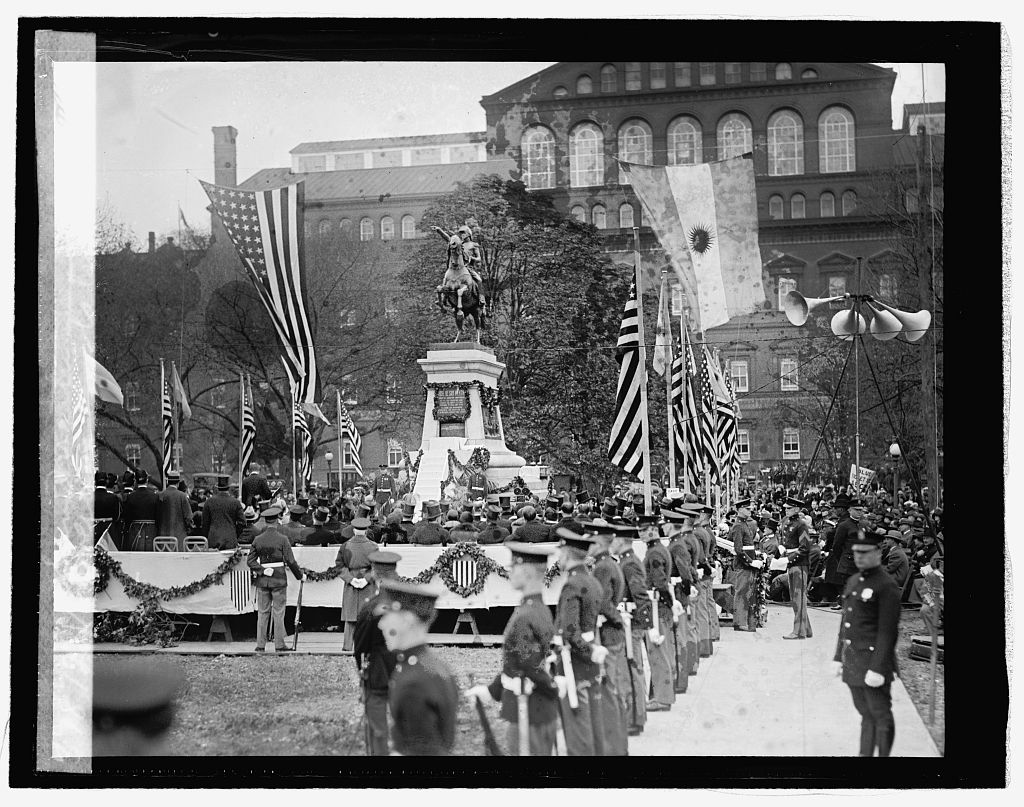
Dedication of the San Martin Statue accepted by President Coolidge on behalf of the American people, October 28, 1925. Courtesy of the Library of Congress.

Dedication of the San Martin Statue accepted by President Coolidge on behalf of the American people, October 28, 1925. Courtesy of the Library of Congress.

While this country and the nations to our south, no doubt influenced by the example of our national leaders, are locked in a race to radicalize, rushing headlong into the morass of centralized government command and control, liberty was expanding in the opposite direction during the Coolidge Era of the 1920s. It was statism that was in retreat in those days. The encouragement of economic growth, trade expansion, fiscal accountability and representative government was experiencing a renaissance from the days since the fight for independence a hundred years before. Certainly, there were clouds on the horizon and nothing utopian about the decade or the development of Latin America’s republican experiments in self-government. This does not remove the fact that America’s partnership with her sister republics to the south was anything but an absorbing focus to Coolidge. In fact, Coolidge was a firm proponent of the Monroe Doctrine, taking every opportunity to keep the Old World norms of results by coercion out of the New World’s ideals of peaceful resolution and institutional liberty. Adopting a revolutionary set of policies would overturn that heritage which we shared with our fellow sojourners in republican institutions.

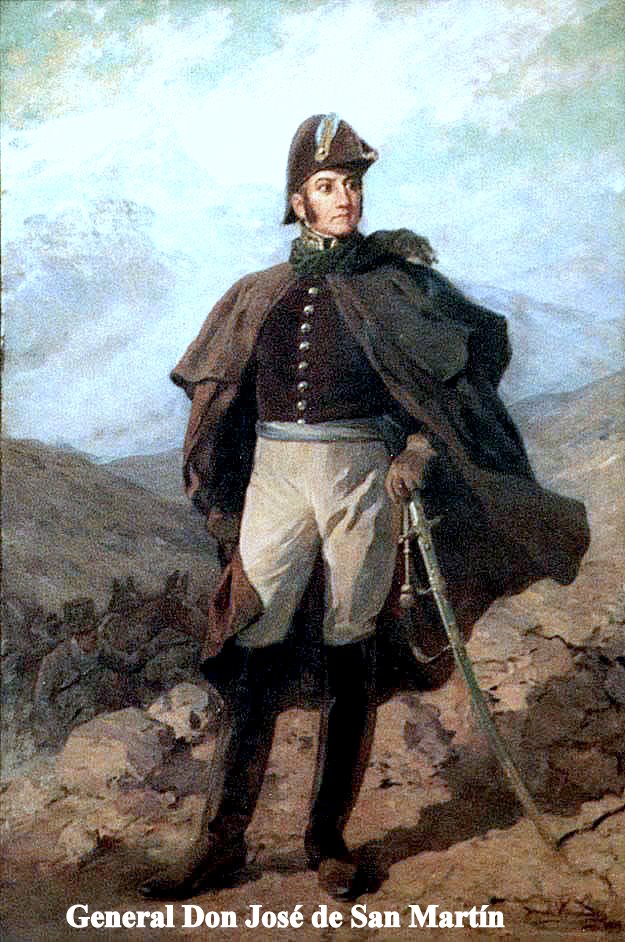
It is no surprise then, when the people of Argentina presented the people of the United States with a statue of the great statesman and soldier, San Martin, that Coolidge gladly accepted so honorable a gift. The President did more than that, however. Coolidge took the occasion to teach, to examine the meaning of and significance behind the system of constitutional freedom begun in the thirteen Colonies and imitated by her neighbors, including the patriots of the Argentine. San Martin symbolized this instructive truth and Coolidge would not let the moment pass without reminding his audience of the historic blessings and great achievements republican institutions have given the people of the New World. Today is no less an occasion to reflect upon and be thankful for what so many have worked to attain in order that we who love liberty continue to enjoy its fruits. As Coolidge recalled on a different occasion, we can only participate in those effects if we maintain and cultivate the spiritual causes which make them possible.

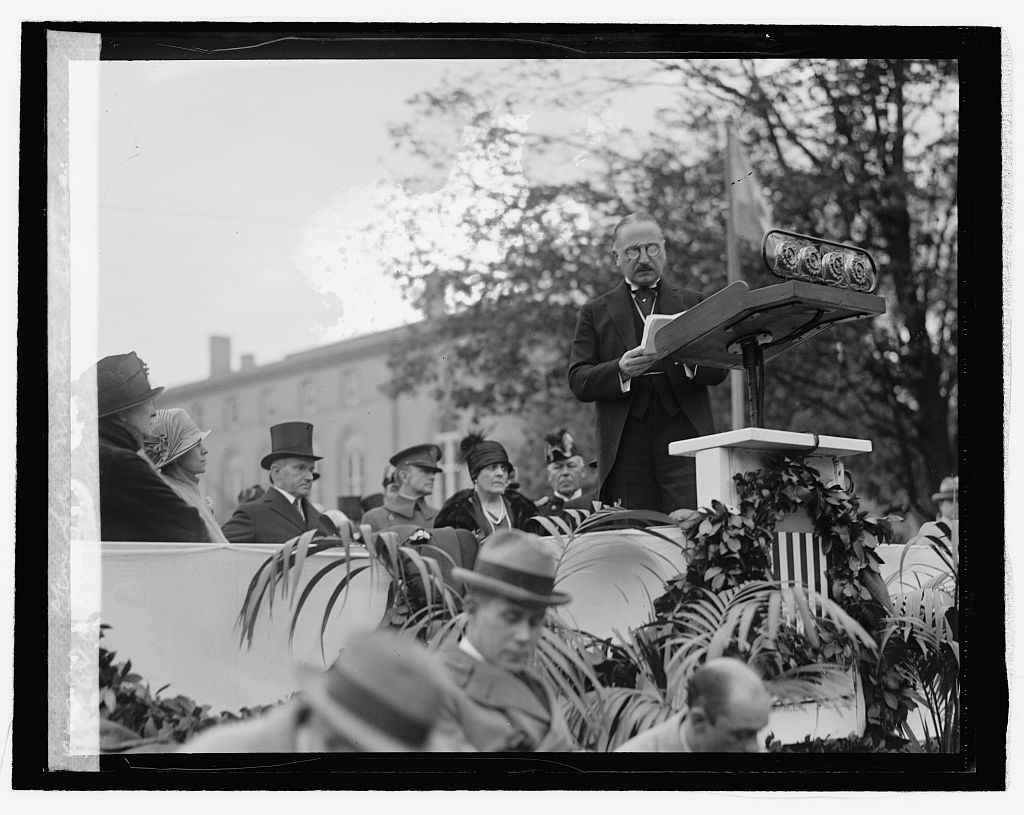
Ambassador Pueyrredon introduces President Coolidge with remarks commending the relationship between our republic and the Republic of Argentina. Coolidge honors the Ambassador in his speech, noting that Pueyrredon, too modest to say so, was an actual descendant of the great patriot San Martin. Courtesy of the Library of Congress.

Ambassador Pueyrredon introduces President Coolidge with remarks commending the relationship between our republic and the Republic of Argentina. Coolidge honors the Ambassador in his speech, noting that Pueyrredon, too modest to say so, was an actual descendant of the great patriot San Martin. Courtesy of the Library of Congress.

President Coolidge dedicating the statue of San Martin. Courtesy of the Library of Congress.

President Coolidge dedicating the statue of San Martin. Courtesy of the Library of Congress.

He said, To the people of the United States it has been a matter of pride and gratification that their ancestors were providentially chosen to initiate the movement for independence in the New World...It was not possible that these sturdy communities should merely contribute to the world a distorted reflection from the light of older states and ancient institutions. The discovery of America to the world was providentially fixed in a time of spiritual and intellectual awakening. It was an epoch of new lights and new aspirations, of mighty clashes between the traditions of the old and the spirit of the new time. The New World proved a fruitful field for testing out the new ideas of man’s relations both to his Creator and to his fellow men, In the warming sunshine of such an opportunity, in the fertility of such a virgin soil, these experiments found that full and fair scope which made possible their triumphant conclusion.

“It may be well to consider for a moment the essential similarities which marked the experiences of all the new American communities during their struggles for independence and later during their trying era of institution building. By doing this we can better realize that the American contribution could not have been made save from the soil of a new country. You can not transplant an ancient and rigid social system to a new country without many and revolutionary modifications. You can not expect that these new institutions will have adequate opportunity for development unless they grow in the light of human independence and spiritual liberty.

San Martin in the countryside of Argentina. Absent from Coolidge's list but no less deserving for his principled stand for a constitutional, term-limited executive is Francisco de Paula Santander, who went into exile for his belief -- even when it meant differing with the great Bolivar.

San Martin, in the countryside of Argentina. Absent from Coolidge’s list but no less deserving for his principled stand on a constitutional, term-limited executive is Francisco de Paula Santander, who went into exile for his opposition — even when it meant differing with the great Bolivar.

“This realization came early to the great leaders of thought in all the American countries. So we find that as North American aspirations produced our Washington, Jefferson, Adams, Hamilton, and Franklin–so the countries to the south of us brought forth their Miranda, their Bolivar, their Hidalgo, their Artigas, their O’Higgins, their Sucré, their Morazan, and finally their San Martin – patriot, statesman, immortal contributor to the founding of three Republics. It is to honor the memory of San Martin, and to acclaim his achievements, that we are gathered to-day.It was the fortune of our thirteen North American Colonies to be first in attaining the fact and recognition of independence. Deeply appreciating their own high fortune, the people of the new United States were from the beginning profoundly sympathetic with every movement for liberty and independence throughout these continents...

“The present is a time when men and nations are all giving heed to the voice which pleads for peace. Everywhere they are yearning as never before for a leadership that will direct them into the inviting paths of progress, prosperity, and genuine fellowship. A clearer vision has shown them not alone the horrors but the terrible futility of war. In such a time as this they will do well to turn their thoughts in all sincerity to these lessons from the statesmanship, the experience, and the constant aspiration of the South American nations. The continent which of all the world has known less of war and more of peace than any other through this trying period is well entitled to pride in the service it has rendered to its own people and in the example which it has set before the rest of mankind.

Courtesy of the Library of Congress.

Courtesy of the Library of Congress.

“So the present occasion has appealed to me not merely as appropriate for the exchange of the ordinary felicitations but as one on which these contributions of Latin America in moral and intellectual leadership might be given something of the recognition they have deserved. It is not possible to do more than suggest the subject. But even so fragmentary an allusion to such an inviting field, I hope may serve a useful purpose. It would be worth the effort of men and women who seek means of preventing wars and reducing armaments to study the experiences of the American Republics. I commend them to the close attention of all who would like to see peace as nearly as possible assured and war as far as possible outlawed from the earth.

“Among the leaders whose courage and genius brought realization of the New World’s dream of liberty with independence, none was moved by a deeper horror of war than San Martin. None among his colleagues would give more ardent approval than he to the work of later statesmen who had a vision of a continent dedicated to peace and the true welfare of its people. To his sagacity, more than that of any other man, is due the distribution of the South American Continent within its present national lines because he possessed the foresight of the statesman along with the qualities of the brilliant soldier and the eager patriot.

“As has happened too often to the foremost benefactors of their fellow men, San Martin was denied during his own life those testimonies of gratitude and reverence which other times and all peoples have been proud to shower upon his memory. I have been told that monuments to him have been dedicated in almost all the capitals of South America. To-day the country which gave him to the cause of freedom is presenting to the Government of my own Nation this statue of him. It is a welcome duty which comes to me, in behalf of the Government and people of the United States, to express their pleasure in accepting it. May it stand through the centuries as an inspiration to all who love liberty. May it ever be an added reminder of the fellowship between the great nation which gives and that which is honored to receive it. May it serve to keep in the minds and hearts of all humankind the realization of the noble and honored place which is held by that republican system of the New World, of which he was one of the foremost creators.”

Courtesy of the Library of Congress.

Courtesy of the Library of Congress.