On Armistice Day Ten Years Later: Preparing for Peace or a World Walking by Force?

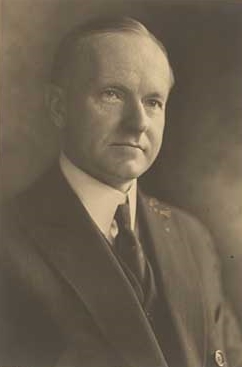
CC signed photo

“Yet, while we are placing our faith in more complete understanding which shall harmonize with the universal conscience, we ought not to forget that all the rights we now possess, the peace we now enjoy, have been secured for us by a long series of sacrifices and of conflicts. We are able to participate in this celebration because our country had the resources, the character, and the spirit to raise, equip, and support with adequate supplies an Army and a Navy, which, by placing more than 2,000,000 men on the battle fields of Europe contributed to the making of the armistice on the 11th day of November, 1918.

“Our first thought, then, is to acknowledge the obligation which the Nation owes to those who served in our forces afloat and ashore, which contributed the indispensable factor to the final victory. Although all our people became engaged in this great conflict, some in furnishing money, some in producing food and clothing, some in making munitions, some in administering our Government, the place of honor will always be accorded to the men and the women who wore the uniform of our country – the living and the dead…

“The eternal questions before the nations are how to prevent war and how to defend themselves if it comes. There are those who see no answer, except military preparation. But this remedy has never proved sufficient. We do not know of any nation which has ever been able to provide arms enough so as always to be at peace. Fifteen years ago the most thoroughly equipped people of Europe were Germany and France. We saw what happened. While Rome maintained a general peace for many generations, it was not without a running conflict on the borders which finally engulfed the empire. But there is a wide distinction between absolute prevention and frequent recurrence, and peace is of little value if it is constantly accompanied by the threatened or the actual violation of national rights.

“If the European countries had neglected their defenses, it is probable that war would have come much sooner. All human experience seems to demonstrate that a country which makes reasonable preparation for defense is less likely to be subject to a hostile attack and less likely to suffer a violation of its rights which might lead to war. This is the prevailing attitude of the United States and one which I believe should constantly determine its actions. To be ready for defense is not to be guilty of aggression. We can have military preparation without assuming a military spirit. It is our duty to ourselves and to the cause of civilization, to the preservation of domestic tranquility, to our orderly and lawful relations with foreign people, to maintain an adequate Army and Navy.

“We do not need a large land force…

“Meantime, the United States and other nations have been successfully engaged in undertaking to establish additional safeguards and securities to the peace of the world by another method. Throughout all history war has been occurring until it has come to be recognized by custom and practice as having a certain legal standing. It has been regarded as the last resort, and has too frequently been the first. When it was proposed that this traditional attitude should be modified between the United States and France, we replied that it should be modified among all nations. As a result, representatives of fifteen powers have met in Paris and signed a treaty which condemns recourse to war, renounces it as a national policy, and pledges themselves not to seek to resolve their differences except by peaceful action.

“While this leaves the questions of national defense and limitation of armaments practically where they were, as the negative supports of peace, it discards all threat of force and approaches the subject on its positive side. For the first time in the world the leading powers bind themselves to adjust disputes without recourse to force. While recognizing to the fullest extent the duty of self-defense, and not undertaking, as no human ingenuity could undertake, an absolute guarantee against war, it is the most complete and will be the most effective instrument for peace that was ever devised.

“So long as promises can be broken and treaties can be violated we can have no positive assurances, yet every one knows they are additional safeguards. We can only say that this is the best that mortal man can do. It is beside the mark to argue that we should not put faith in it. The whole scheme of human society, the whole progress of civilization, requires that we should have faith in men and in nations. There is no other positive power on which we could rely. All the values that have ever been created, all the progress that has ever been made, declared that our faith is justified.

“For the cause of peace the United States is adopting the only practical principles that have even been proposed, of preparation, limitation, and renunciation. The progress that the world has made in this direction in the last ten years surpasses all the progress ever before made…

“It is always plain that Europe and the United States are lacking in mutual understanding. We are prone to think they can do as we can do. We are not interested in their age-old animosities, we have not suffered from centuries of violent hostilities. We do not see how difficult it is for them to displace distrust in each other with faith in each other. On the other hand, they appear to think that we are going to do exactly what they would do if they had our chance. If they would give a little more attention to our history and judge us a little more closely by our own record, and especially find out in what directions we believe our real interests to lie, much which they now appear to find obscure would be quite apparent.

“We want peace not only for the same reason that every other nation wants it, because we believe it to be right, but because war would interfere with our progress. Our interests all over the earth are such that a conflict anywhere would be enormously to our disadvantage. If we had not been in the World War, in spite of some profit we made in exports, whichever side had won, in the end our losses would have been great. We are against aggression and imperialism not only because we believe in local self-government, but because we do not want more territory inhabited by foreign people. Our exclusion of immigration should make that plain. Our outlying possessions, with the exception of the Panama Canal Zone, are not a help to us, but a hindrance. We hold them, not as a profit, but as a duty. We want limitation of armaments for the welfare of humanity. We are not merely seeking our own advantage in this, as we do not need it, or attempting to avoid expense, as we can bear it better than anyone else.

“If we could secure a more complete reciprocity in good will, the final liquidation of the balance of our foreign debts, and such further limitation of armaments as would be commensurate with the treaty renouncing war, our confidence in the effectiveness of any additional efforts on our part to assist in further progress of Europe would be greatly increased.

“As we contemplate the past ten years, there is every reason to be encouraged. It has been a period in which human freedom has been greatly extended, in which the right of self-government has come to be more widely recognized. Strong foundations have been laid for the support of these principles. We should by no means be discouraged because practice lags behind principle. We make progress slowly and over a course which can tolerate no open spaces. It is a long distance from a world that walks by force to a world that walks by faith. The united States has been so placed that it could advance with little interruption along the road of freedom and faith.

“It is befitting that we should pursue our course without exultation, with due humility, and with due gratitude for the important contributions of the more ancient nations which have helped to make possible our present progress and our future hope. The gravest responsibilities that can come to a people in this world have come to us. We must not fail to meet them in accordance with the requirements of conscience and righteousness” — President Calvin Coolidge, excerpts from his address under the auspices of the American Legion, November 11, 1928
On Reverence and Freedom

“…. [R]everence for nature,… reverence for law…. reverence for God. Without the sustaining influence of faith in a divine power we could have little faith in ourselves…Doubters do not achieve; skeptics do not contribute; cynics do not create. Faith is the great motive power, and no man realizes his full possibilities unless he has the deep conviction that life is eternally important, and that his work, well done, is part of an unending plan” — Calvin Coolidge, July 25, 1924 (Foundations of the Republic pp.67-8).

Thanks go out to the Calvin Coolidge Institute for sharing this excellent thought from our thirtieth president.

To that I would add his words before the Holy Name Society in September of that same year when he said, “[R]everence…is the beginning of a proper conception of ourselves, of our relationship to each other, and our relationship to our Creator. Human nature cannot develop very far without it. The mind does not unfold, the creative faculty does not mature, the spirit does not expand, save under the influence of reverence. It is the chief motive of an obedience. It is only by a correct attitude of mind begun early in youth and carried through maturity that these desired results are likely to be secured. It is along the path of reverence and obedience that the race has reached the goal of freedom, of self-government, of a higher morality, and a more abundant spiritual life” (Foundations p.104).

628x471 (2)

On Where the Republicans Go From Here

CC closeup

They can start by returning to Coolidge. This is especially important when it comes to his thoughts on winning. For Coolidge, it was not enough to prevail at the ballot box, the person had to possess a victor’s mindset.

“When a political party has been decisively defeated at the polls, the question naturally arises whether it will ever regain the support of a majority of the voters. The answer to this question depends upon the party itself. Defeat does not destroy a party, nor does success at any particular election insure a long life. If the principles which it represents and the policies which it advocates are sound and timely a party will survive indefinitely” — Calvin Coolidge, “Political Parties,” Saturday Evening Post, published posthumously

Before the new Congress hastens to pass a flurry of new laws, presenting a package of agenda items that are going to “fix” the mess, rather than repeal and stop it, they should consider what Coolidge encouraged his father to do, after being newly elected to the Vermont Senate, “It is much more important to kill bad bills than to pass good ones…See that the bills you recommend from your committee are so worded that they will do just what they intend and not a great deal more that is undesirable. Most bills can’t stand that test.” First, Republicans, do no harm. Stop the bleeding and then we can treat the wounds. The best course of action right now is saying “no,” being a force of negation, a resistance, an opposition, a confrontational stand against the destructive agenda being implemented these last six years. That is more than enough. America doesn’t need new construction before the wrecking ball has first been decommissioned and the debris cleared away. Don’t be afraid to say “no,” whatever others say about you. This, above all else, is what the people of this country both want and need. Take Coolidge’s advice and put first things first.

“Parties do not maintain themselves. They are maintained by effort. The government is not self-existent. it is maintained by the effort of those who believe in it. The people of America believe in American institutions, the American form of government and the American method of transacting business” — Address to the Republican Commercial ‘Travelers’ Club in Boston, April 10, 1920. The real challenge is just beginning with no small work demanded of us, an engaged citizenry, to make sure our employees in Washington do what we sent them to accomplish. We invite disaster if we walk away, tune out and trust someone else to manage our government responsibly for us. Such an attitude is why the country stands at the brink.

“Unless those who are elected under the same party designation are willing to assume sufficient responsibility and exhibit sufficient loyalty and coherence, so that they can cooperate with each other in the support of the broad general principles, of the party platform, the election is merely a mockery, no decision is made at the polls, and there is no representation of the popular will” — Inaugural Address, March 4, 1925

The Republican landslide yesterday must translate into more than magnanimously sharing authority with the losing side, as fired Majority Leader Harry Reid intones. If the electorate wanted these losers to help govern, they would not have lost their elections. Republicans then better act like the principled victors they are. The decisive win witnessed this week is not some plea from voters for more “bipartisan reaching across the aisle,” ending “deadlock,” avoiding “government shutdown” at all costs, and, in short, reverting to business as usual.  Elections mean something. Elections must result in clear direction and disciplined implementation of the principles and policies for which the people send their chosen representatives. Coolidge understood that partisanship had a vital function in our system. Sharp contrast of party principles was just as essential after the election as beforehand. The people had to see practiced what they voted to obtain or else the entire system would be a mockery. To dilute, suppress or ignore the principles to which they pledged is both a betrayal of the election process and a gag imposed on the decisions made by the sovereign people. The popular will has given the GOP a very coherent mandate to repeal Obamacare, defund the President’s agenda, stop amnesty, secure the border and stand unshakable on limited government, economic not bureaucratic growth, religious freedom, individual opportunity, and the integrity of our institutions and traditions.

Coolidge makes it plain: “There are many who are accustomed to consider partisanship and practical politics as something considerably at variance with the public welfare. This may sometimes be true. Parties represent political power, and power is always subject to abuse. But it is a mistake to blame the instrument because it is wrongfully used. If there is blame, it should be attached to those who have been guilty of the wrong and not to the innocent instruments which have been used for such purposes. The organization of parties in the United States has been the means by which the people have preserved their liberties, restrained the arbitrary powers of their governments and made effective the popular will. There is no substitute for their action under a system by which the people rule.”

The same oath which constrains the Executive, also obligates the Legislative Branch. When there is wrongdoing, the duty of all rests squarely on where Coolidge knew it to be: on the support and defense of the Constitution. These are not mere words. When the Constitution is under assault, defending all its provisions is just as necessary when the offender is the President himself. The power of impeachment is the legal and Constitutional remedy sanctioned by our system. It is hardly some recent device conceived in racism, animated by bigotry. It is a lawful check upon anyone who would claim arbitrary or dictatorial powers over the consent of the governed and the other co-equal branches of the government we have established. As Coolidge said when the scandals of his predecessor came to light, “I do not propose to sacrifice any innocent man for my own welfare, nor do I propose to retain in office any unfit man for my own welfare. I shall try to maintain the functions of the government unimpaired, to act upon the evidence and the law as I find it, and to deal thoroughly and summarily with every kind of wrongdoing.”  The incoming Congress should likewise adopt that Coolidgean resolve.

No American election can ever be a real victory for the whole people of this country — the only demographic which counts — if it fails, as Coolidge warned, to implement the agenda for which the victors, not the losers, were sent. This may mean excluding the other side from committee chairmanships and other spoils of victory, it may mean principled criticism of administration policy, and it may even mean a resolute prosecution of genuine wrongdoing in very high places, at great personal cost. Yet, it would mean a victory for law and liberty — perhaps, even for the future of the country — and that is no greater a price paid already by generations living and dead who fought to be worthy of the name “American.”