In the Christmas Steps of Coolidge

The Coolidges and the Coffins at Cabin Bluff, December 1928. Courtesy of the Georgia Archives.

The Coolidges and the Coffins sit by the fireplace at Cabin Bluff, December 1928. Courtesy of the Georgia Archives.

Following Christmas Day, 1928, the Coolidges boarded a train out of Union Station in Washington headed for coastal Georgia, where they would bring in the new year as the guests of the entrepreneurial auto Howard and Matilda Coffin on Sapelo Island. Arriving at the depot in Brunswick, the Coolidges would meet their hosts at the Sea Island Yacht Club. They would dedicate the still-standing “Constitution Oak” at The Cloister, enjoy an oyster roast and singing at Cabin Bluff, view the tabby Sugar House ruins, hunt deer and fowl on Sapelo Island, watch a rodeo and turtle race on the island’s beach, each sit for portraits by their fellow traveler and English painter, Frank O. Salisbury, travel by water aboard the Zapala to see the monument marking the Battle of Bloody Marsh and finally, attend services at Christ Church, where the renowned Wesley brothers and George Whitfield preached the first sermons heard here, a site in continuous use for worship since the time of Ogelthorpe in 1736.

The Coolidges viewing the Monument at Bloody Marsh, Sea Island, overlooking the salt marshes where the battle was fought in 1742. Courtesy of the Georgia Archives.

The Coolidges viewing the Monument at Bloody Marsh, Sea Island, overlooking the salt marshes where the battle was fought in 1742. Courtesy of the Georgia Archives.

Visiting the monument at Bloody Marsh this past fall, Sea Island, Georgia.

Visiting the monument at Bloody Marsh this past fall, Sea Island, Georgia. Notice how much the topography has changed.

Here is the inscription on the marker at Bloody Marsh.

Here is the inscription on the marker at Bloody Marsh.

Preparing to do some Coolidge reconnaissance on the coastal side opposite Sapelo Island.
Preparing to do some Coolidge reconnaissance on the coastal side opposite Sapelo Island.

Peering into the distance for Sapelo Island, where Coolidge stayed with the Coffins at what is now known as the Reynolds Mansion.

Peering into the distance for Sapelo Island, where Coolidge stayed with the Coffins at what is now known as the Reynolds Mansion.

Admiring the oaks at Fort Frederica, where the British repelled Spanish attack in 1742.
Admiring the oaks at Fort Frederica, where the British repelled Spanish attack in 1742.

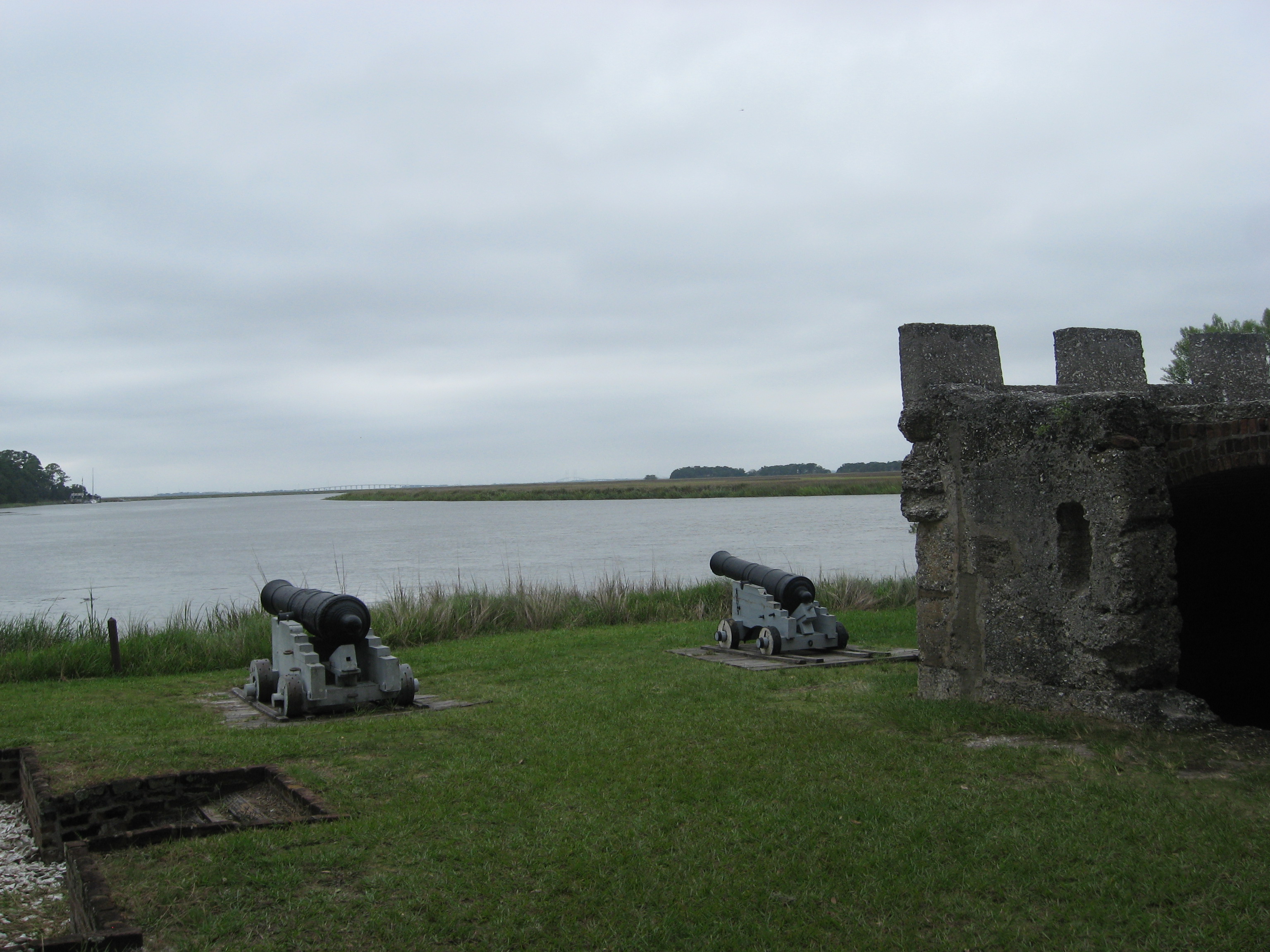
The forward walls are all that remain of the fort today.

The forward walls are all that remain of the fort today.

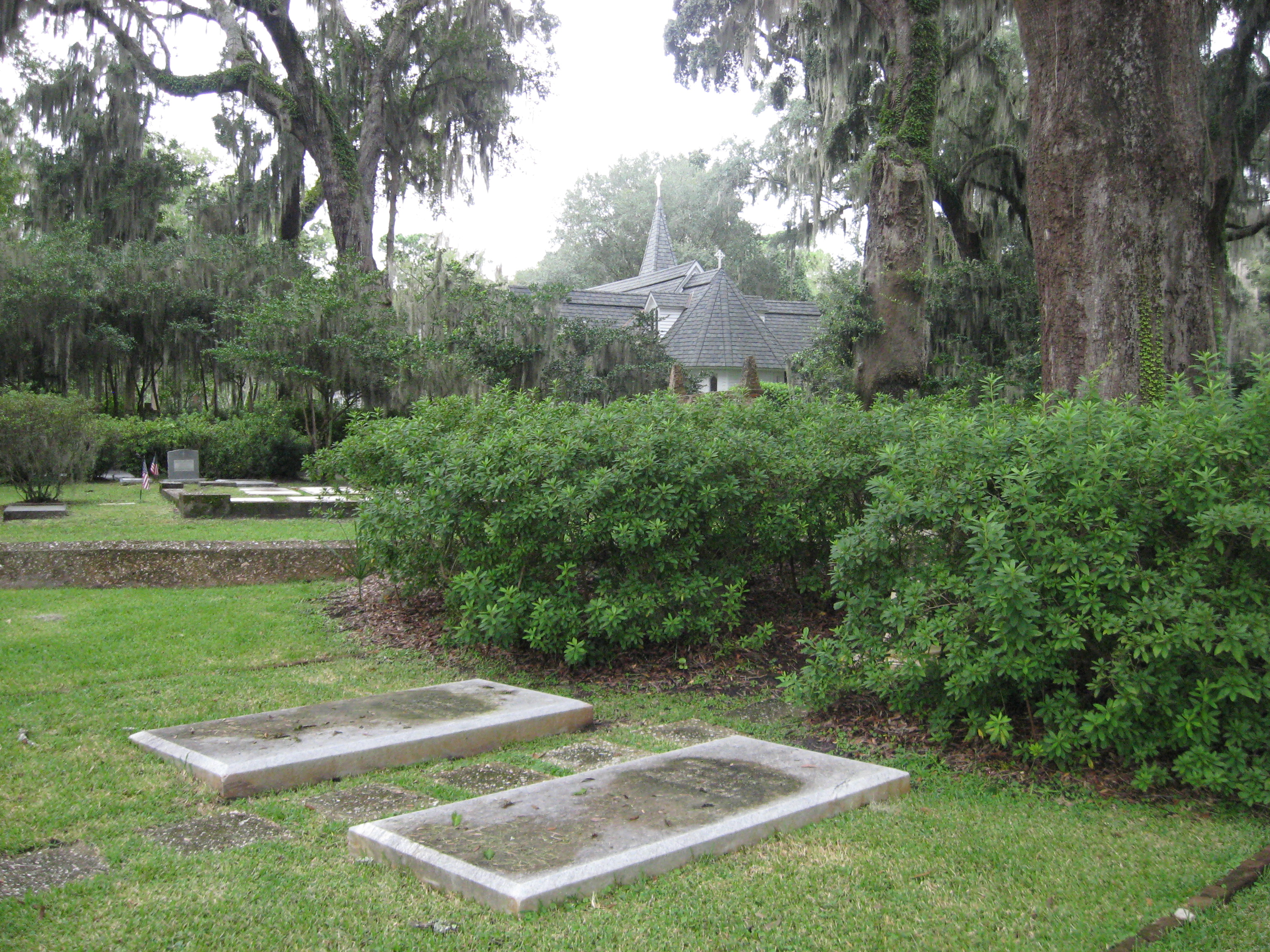
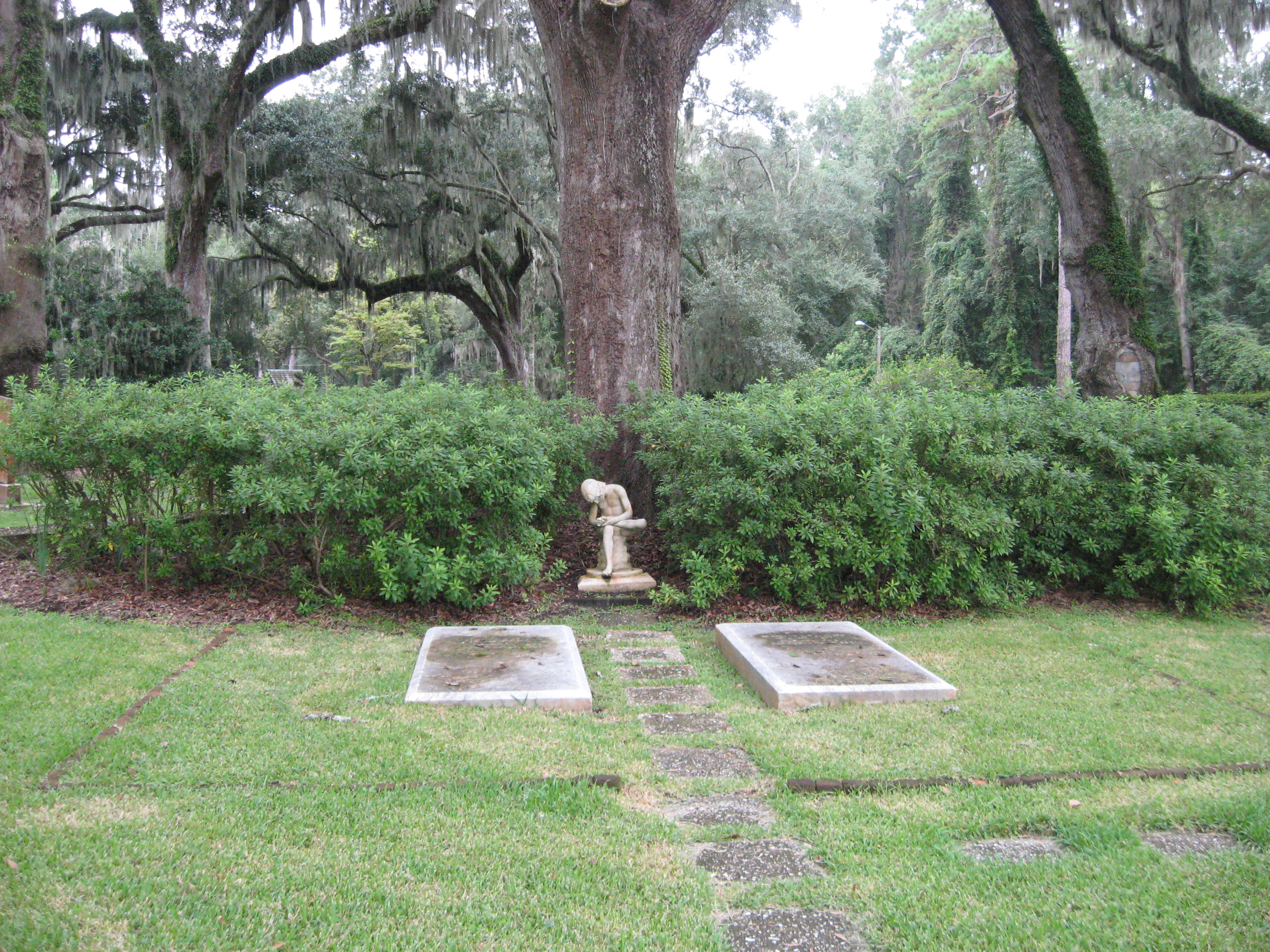
Christ Church, Sea Island, where the Coolidges attended worship and where the Coffins are laid to rest.

Christ Church, Sea Island, where the Coolidges attended worship and where the Coffins are laid to rest.

Matilda and Howard Coffin with Grace and Calvin Coolidge at their home on Sapelo Island. Tiny Tim stands beside the President.

Matilda and Howard Coffin with Grace and Calvin Coolidge at their home on Sapelo Island. Grace’s film camera and Tiny Tim also pose beside the President.

Howard E. Coffin, auto industry pioneer and instrumental developer of the Golden Isles economy along coastal Georgia, Coffin was appointed by President Coolidge for his expertise on aviation to the Morrow Board to study and report recommendations on the improvement of air technology. This portait, painted by Frank O. Salisbury was done at the request of Calvin Coolidge, who wanted to honor, if not repay, his kind hosts after so enjoyable a stay in Georgia.

Howard E. Coffin, auto industry pioneer and instrumental developer of the Golden Isles economy along coastal Georgia, Coffin was appointed by President Coolidge for his expertise on aviation to the Morrow Board to study and report recommendations on the improvement of air technology. This portrait, painted by Frank O. Salisbury, was done at the request of Calvin Coolidge, who wanted to honor, if not repay, his kind hosts after so enjoyable a stay in Georgia.

Matilda Coffin, wife of Howard. Like Salisbury's companion portraits of the Coolidges, the Coffins were done with the setting of Sapelo Island in the background.
Matilda Coffin, wife of Howard. Like Salisbury’s companion portraits of the Coolidges, the Coffins were done with the setting of Sapelo Island in the background.

IMG_1664 IMG_1665 IMG_1666 IMG_1667 IMG_1670

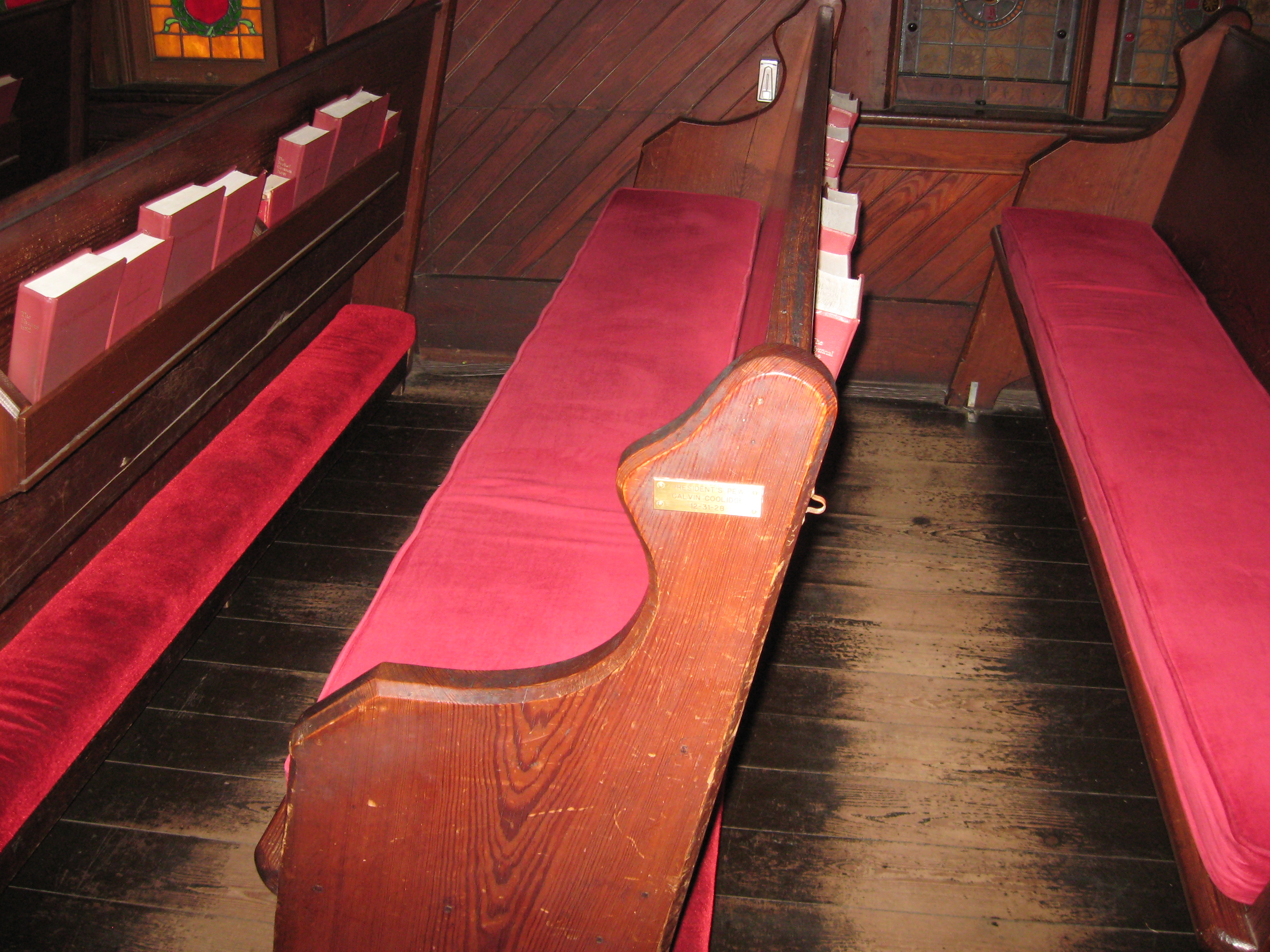
The Coolidge Pew, where the President and Mrs. Coolidge sat during the services. The plaque is mismarked, dating the service on a Monday instead of Sunday, December 30.

The Coolidge Pew, where the President and Mrs. Coolidge sat during the services. The plaque is mis-marked, dating the service on a Monday instead of Sunday, December 30.

The view seen by the Coolidges as they stood to worship.

The view seen by the Coolidges as they stood to worship.

IMG_1677

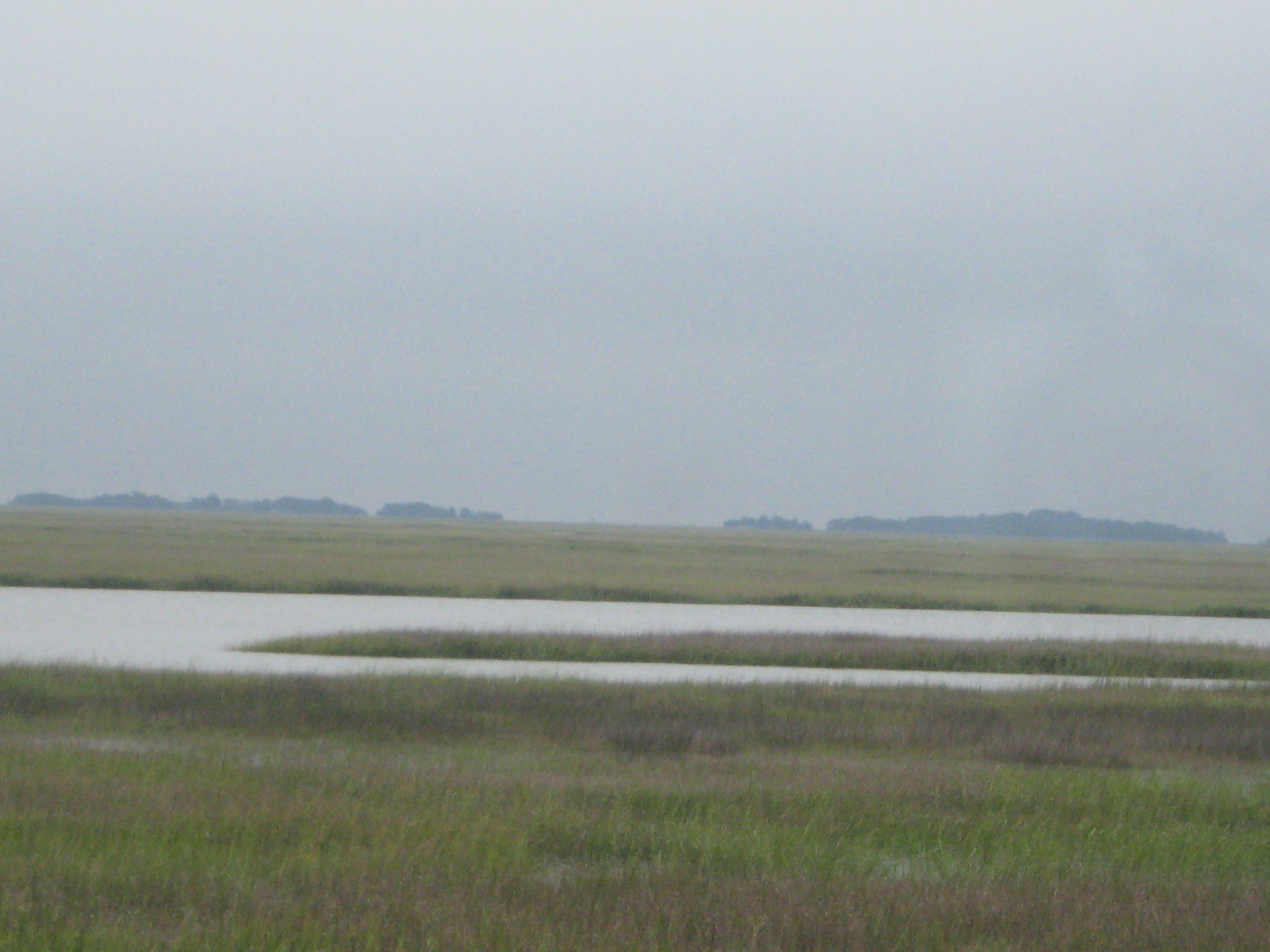
The salt marshes where Bloody Marsh was fought, as they look today.

The salt marshes where Bloody Marsh was fought, as they look today.

The road toward The Cloister, where Coolidge dedicated the Constitution Oak. Where will our travels in the steps of Coolidge go next? Where would you like us to go, readers?

The road toward The Cloister, where Coolidge dedicated the “Constitution Oak.” Where will our travels in the steps of Coolidge go next? Where would you like us to go, readers?

Visiting Georgia recently, we happened upon some of these steps left by the Coolidges when they were here during the Christmas of eighty-six years ago. It is especially memorable to have followed in the steps of their last two stops, the historical significance of Bloody Marsh — which ended Spanish ambitions to absorb Georgia into the imperial fold — and the spiritual significance of Christ Church, where the Great Awakening, ushering in the American Restoration Movement and the move back to simple Biblical Christianity, found three of its earliest and most influential harbingers. It is revealing that with all remaining on his mind that Christmas season: the press of public affairs and unresolved political questions, the loss of his son and father, the health of his wife, and the uncertainties of what the next year would bring, Calvin Coolidge took the time to place essentials first, attending to the nourishment of the soul and the soundness of intangible things.

It is a reminder of what he had written the previous December, in the President’s forty-nine word Proclamation, December 25, 1927:

“Christmas is not a time nor a season, but a state of mind.

“To cherish peace and goodwill, to be plenteous in mercy, is to have the real spirit of Christmas.

“If we think on these things, there will be born in us a Savior and over us will shine a star sending its gleam of hope to the world.”

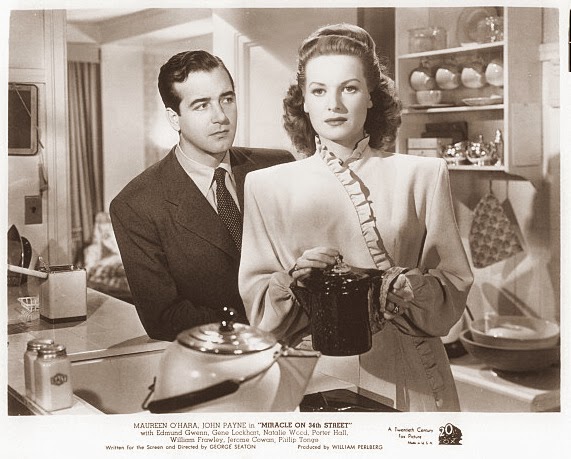
It was this thought from President Calvin Coolidge that would continue resonating powerfully for the next twenty years with a young playright from New York by the name of Valentine Davies. Mr. Davies would meet future collaborator George Seaton during the 1920s and together they would develop one of the finest Christmas screenplays ever written, The Miracle on Thirty-Fourth Street. Coolidge’s impression on Mr. Davies is evident throughout what would become the 1947 film, but no where more apparent than in the dialogue of its two heroes, Kris Kringle played by superb British actor Edmund Gwenn and Mr. Gailey played by John Payne. It was a labor of love for all involved in the project and it remained Mr. Payne’s favorite movie because it genuinely reflected his spiritual convictions. Despite repeated attempts to remake it, all have fallen far short of the original. Davies, impacted by Coolidge, hit upon something that simply could not be redone or upon which improvement could be made. While the movie’s definition of faith leaves something to be desired, the film is excellent. This year make a point to see The Miracle on Thirty-Fourth Street, if you haven’t already — or see it again, if you have. Enjoy Cal’s distinct imprint on the film, reflecting on the state of mind that is Christmas. Have a Merry Christmas, dear readers and Coolidge friends!

"I said Calvin Coolidge was the first president, I can imagine what they think of me for saying that..." Edmund Gwenn as Kris to Mr. Gailey, played by John Payne. One can imagine Cal chuckling at that line.

“I said Calvin Coolidge was the first president, I can imagine what they think of me for saying that…” — Edmund Gwenn as Kris to Mr. Gailey, played by John Payne. One can imagine Cal chuckling at that line.

Gwenn, Natalie Wood and Payne behind the scenes of Miracle playing piano together.
Gwenn, Natalie Wood and Payne behind the scenes of Miracle playing piano together.

"Look Doris, someday you're going to find that your way of facing this realistic world just doesn't work. And when you do, don't overlook those lovely intangibles. You'll discover those are the only things that are worthwhile..." John Payne's Mr. Gailey to Maureen O'Hara's Doris Walker.

“Look Doris, someday you’re going to find that your way of facing this realistic world just doesn’t work. And when you do, don’t overlook those lovely intangibles. You’ll discover those are the only things that are worthwhile…” John Payne’s Mr. Gailey to Maureen O’Hara’s Doris Walker.


On Who Really Owned America

While the latest claim making the rounds of academic circles touts the return of a wealth gap between the richest and poorest not seen since… you guessed it, the time of Calvin Coolidge, namely the year 1928, it falls short of what is actually going on now and what was happening then. The case of Picketty, Saez and Zucman, relying on a couple statistics on which to build an entire template of interpretation, omits the full picture in order to make their argument. Predating the welfare state, as Burtless observes, and discounting the role of a very different governmental social and tax policy in place today, the claim stripped of its scholarly veneer falls more into the realm of policy recommendation, even historical wishful thinking, than an accurate comparison to the supposedly greedy, wasteful and vapid “Gatsby” Twenties.

The following charts illustrate a fuller sense of the people behind America’s wealth in the Twenties. It was the last time a sustained growth was paired with fiscal discipline and the combination made for an exceptional progress reaching into even the poorest neighborhoods in the land.

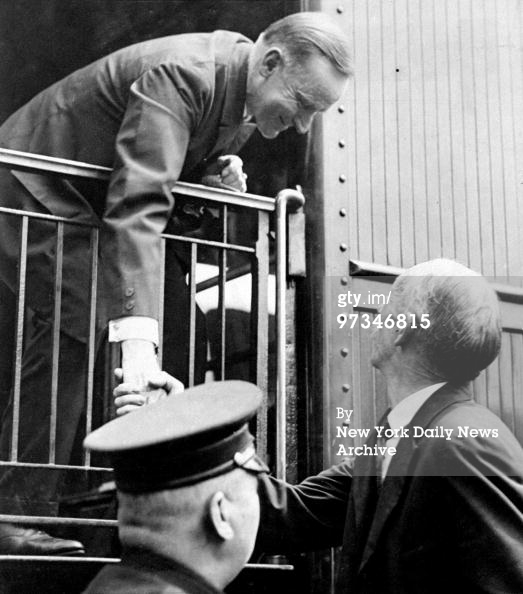
Coolidge shaking hands with a fellow citizen, as he boards a train for New York, February 3, 1924. Courtesy of Getty Images.

Coolidge shaking hands with a fellow citizen, as he boards a train for New York, February 3, 1924. Courtesy of Getty Images.

Coolidge, ever aptly, places this key distinction between then and now, in perspective. The wealth of America belonged to the people. It was not a flagrantly rich few exploiting the Ninety-Nine percent, it was a nation of owners, millions experiencing opportunity and higher living standards than Americans had ever known before. It was no less real because more regular folks were buying stocks on margin or engaging in installment purchases as the decade came to a close. Coolidge’s constructive economy enabled less money be taken for government, and more kept in the hands of people to save, produce, risk, and consume, as they saw fit. Just as the roar of the decade began to ramp up, he declared, “Our country is an exceedingly good example of the fact that if production be encouraged and increased, then distribution fairly well takes care of itself. Other countries, by their actions in stopping production, in penalizing industry and economy, and rewarding indolence and extravagance, have been able to bring about a very general and equal distribution of misery, but no other country ever approached ours in the equal and general distribution of prosperity” (June 19, 1923). By 1928, in his last annual message, he would note without hyperbole, “The country is in the midst of an era of prosperity more extensive and of peace more permanent than it has ever before experienced. But, having reached this position, we should not fail to comprehend that it can be easily lost…The end of government is to keep open the opportunity for a more abundant life. Peace and prosperity are not finalities; they are only methods. It is easy under their influence for a nation to become selfish and degenerate. This test has come to the United States. Our country has been provided with the resources with which it can enlarge its intellectual, moral and spiritual life. The issue is in the hands of the people.” Finally, in retirement, Coolidge maintained the soundness of ownership by the people, writing in 1932, “If there is anything to criticize about the property rights of this country it does not seem that it can be claimed they have been too exclusive. Whatever advantages they carry have been open to all the people. When we examine the development of modern business we find the great corporations. But they are no longer the property of a few large stockholders. They are divided up into shares so numerous as to be beyond comprehension, by which the people at large can and do become owners and partners in these enterprises…” The Twenties had proven the proliferation of ownership to levels not known before. This work would continue but only after many hard years learning the truth of Coolidge’s warning in 1928: the spiritual and moral must come first. Responsibility accompanies prosperity.

To compare the gap between rich and poor, closing in Coolidge’s day, to the widening distance underway now hardly defines how dire conditions are — inferring we are in for another decade like those obviously disastrous and failed Twenties (wink, wink). We all know it is bad now, Saez seems to say, but it is simply a throwback to those despicable Twenties when the “filthy rich” owned everything off the backs of the “regular guy.” Saez and company conveniently avoid the high tax burden progressively placed upon those comprising the top quarter of income earners while the lowest incomes paid little or nothing at all. Never mind that this latest criticism of the wealth gap implicitly blames the Obama administration. To paint with so broad a brush about the past, leaving out essential particulars, is but the latest attempt to malign the genuine accomplishments of the Coolidge Era with a prejudiced correlation to our current situation. It may be a comforting reaffirmation to academia, but it is hardly a faithful appraisal of what Burtless, Steinbaum, Samuelson, and many more, know the Coolidge years teach.

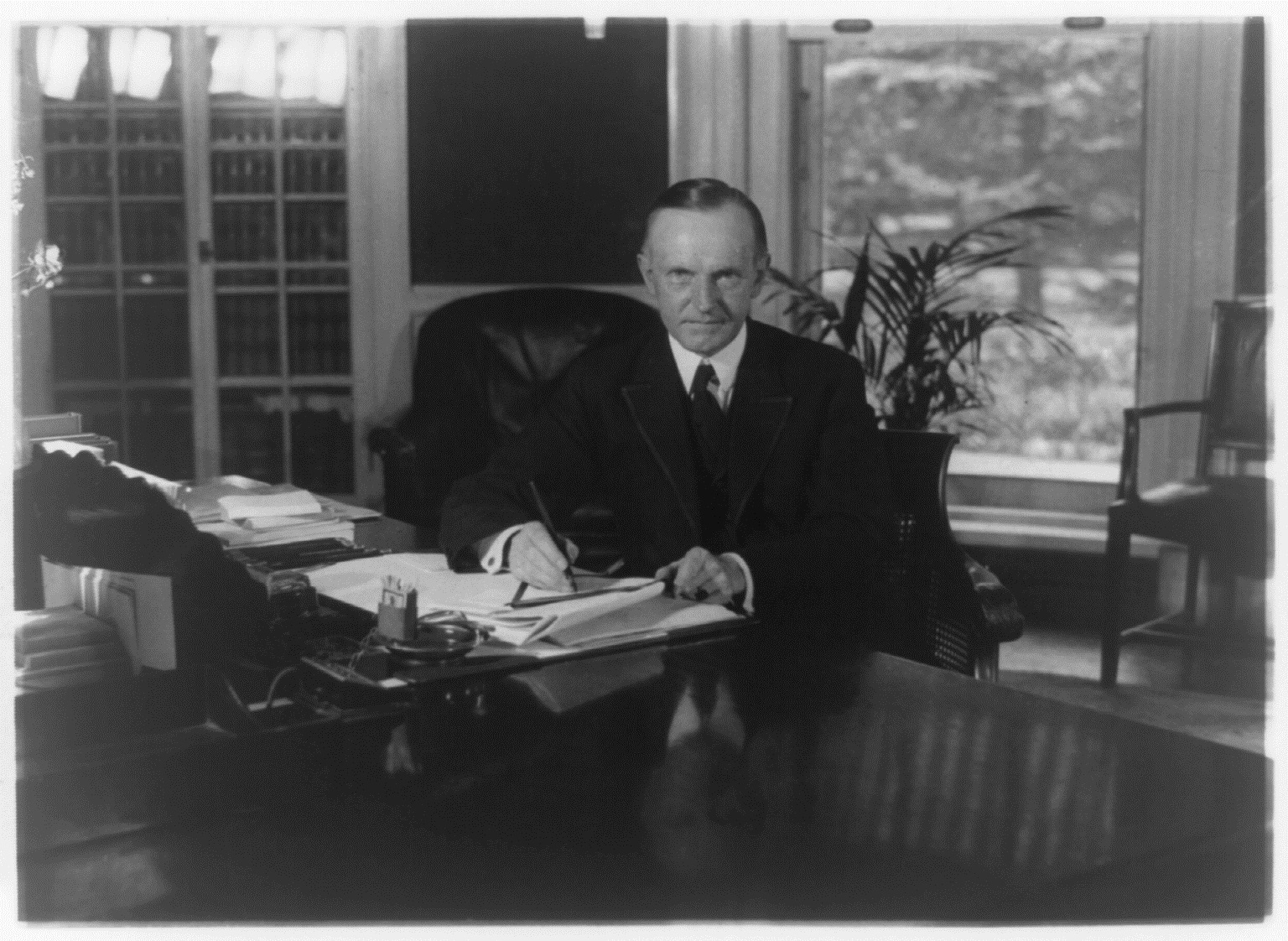
The President working at his desk, August 1923.

The President working at his desk, August 1923.

“Here’s What Happened the Last Time a US President Visited Cuba”

Courtesy of the Associated Press.

Courtesy of the Associated Press.

A prosperous and vastly freer Cuba greeted President Coolidge when he arrived on the island nation in 1928, to address not only the Pan-American delegates assembled in Havana but also to deflate the rumblings in his day to marginalize American influence and roll back her exchange of goods and services here and throughout Latin America. This was the last time a sitting President visited the island ninety miles to our south. Coolidge’s position, emphatically declared in his speech and through the American delegation led by Charles Evans Hughes, won the argument in his day. It would be another thirty years until the curtain fell on freedom, public order and due process, the openness that had been a hallmark of Cuba’s extraordinary rise from squandered Spanish conquest to sovereign republic. To condone the repression of the Cuban people by her own rulers — lifting America’s embargo without concessions — is a betrayal of our responsibilities, another occasion to debase the heritage of trust, independence and sound leadership on which our nation’s credibility has been built. America’s role in this hemisphere aspired to greater principles, against suppressive regimes and socialist economics. Instead Coolidge is part of the honorable legacy that stood for liberty, civil rights under the law, and freedom through capitalism for so long…until now. Yet, by displaying our new enforced condition as an “average,” unexceptional country, we are actualizing the current President’s concept of reality, the identity he has had in mind for us all along, a nation which has had it too good at the world’s expense for too long. Never mind that so many unprecedented opportunities for success and upward mobility exist by virtue of America’s answer to the call of service. Coolidge truly would not recognize these times.

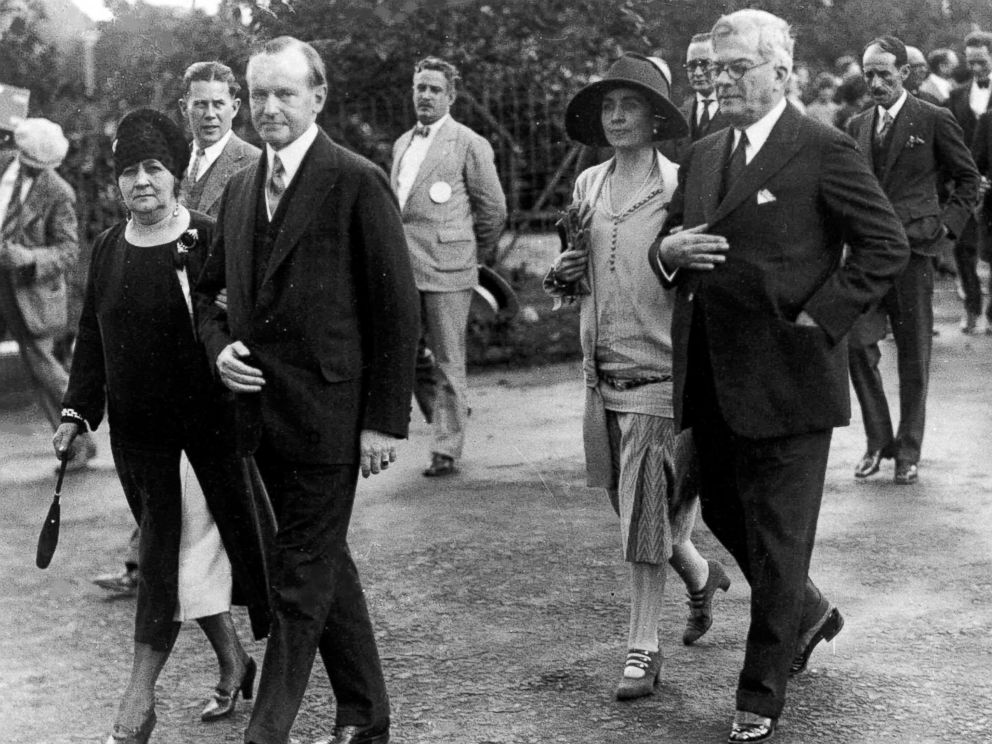
President and Mrs. Coolidge, visit the estate of Cuba's president at the time, General Gerardo Machado y Morales, whose wife, Elvira, stands to Coolidge's right, January 19, 1928. Courtesy of the Associated Press.

President and Mrs. Coolidge visit the estate of Cuba’s president at the time, General Gerardo Machado y Morales, whose wife, Elvira, stands to Coolidge’s right, January 19, 1928. Courtesy of the Associated Press.

Commenting on this visit in his press conference the following day, President Coolidge summarized his impressions, “There is nothing I can say about the Pan American Conference that occurs to me, that has not already been said. Naturally our Government is pleased with my reception at Havana. One of the most pleasant opportunities that I had there was going out to the country place of the President, which gave me an opportunity to drive through quite a number of miles of Cuban territory where I had a chance to observe the people and see something of the progress they are making. As I left there it seemed to me that the conference was in a position to do very much excellent work” — January 20, 1928 (The Talkative President, Quint and Ferrell, p.251).