On Displaying the Orphan’s Rug

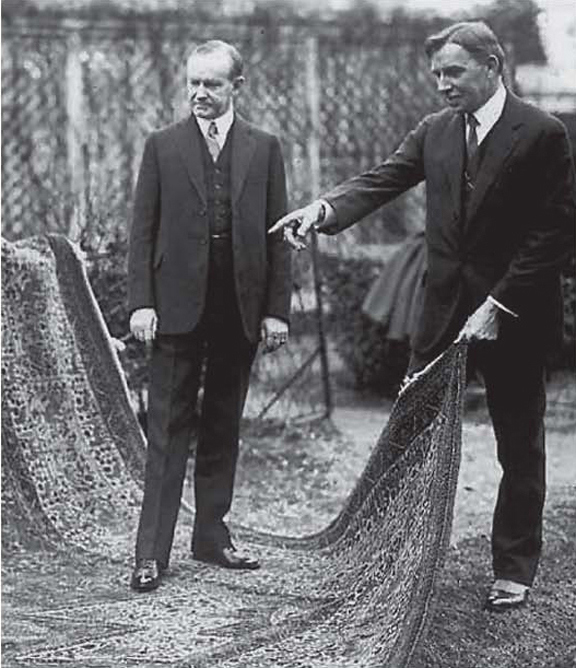
President Coolidge with Dr. Finley as the massive rug is unfurled on the White House lawn.

President Coolidge with Dr. Finley as the massive rug is unfurled on the White House lawn. Coolidge would write, “The rug has a place of honor in the White House, where it will be a daily symbol of good-will on earth.”

At long last, the gift presented to the United States, received by President Calvin Coolidge, has been displayed and should be a permanent reminder of the generosity and selfless service that Americans gave freely as they learned of the massacre of Armenians perpetrated by Turkish authorities living within the Ottoman Empire after 1915. Scores of volunteers helped treat and rescue the children orphaned by the killings and, in gratitude, two rugs were woven by the young people and presented to the Coolidges at the White House in December 1925. Vartoohi Hovsepian and Galena Kehyaian, both having witnessed their parents’ murders, were evacuated and, representing all the weavers, were introduced to the President and First Lady on the following year, November 5, 1926.

As indispensable author Hagop Martin Deranian recounts, fifteen-year old Vartoohi recalled how kind Mr. Coolidge was. Expecting to find him sitting upon some ornate chair, like a king’s throne, she was amazed and impressed to learn how simple, kindly and even boy-like he was. They had their picture taken and then went to see Mrs. Coolidge, at her husband’s suggestion (Deranian’s President Calvin Coolidge and the Armenian Orphan Rug, Arlington, MA: Armenian Cultural Foundation, 2013, pp.24-6).

With equal feeling for the sentiment and seriousness of occasion surrounding the gift, Coolidge wrote to the Vice Chairman of the Near East Relief Executive Committee, Dr. John H. Finley, the night of the rug’s arrival, December 4, 1925.

Reprinted in the New York Times, December 4, 1925. Courtesy of the NYT Archives.

Reprinted in the New York Times, December 4, 1925. Courtesy of the NYT Archives.
If there has to be a “Nationalized” Christmas Tree, keep in the heart of America, not in Washington, Coolidge reminds us.

gouverneurmorris's avatarThe Importance of the Obvious

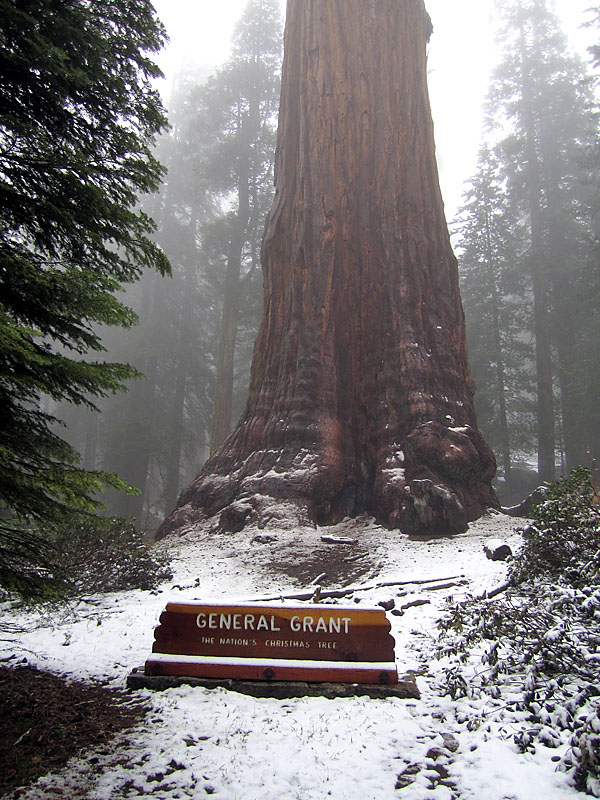
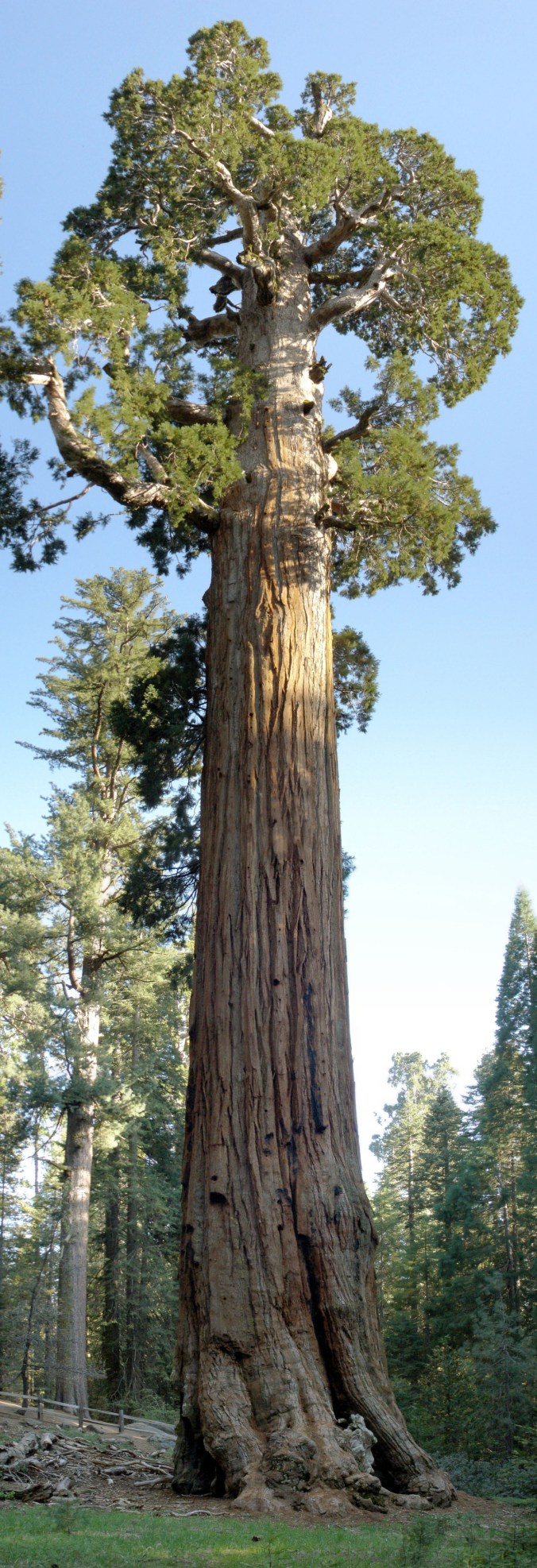
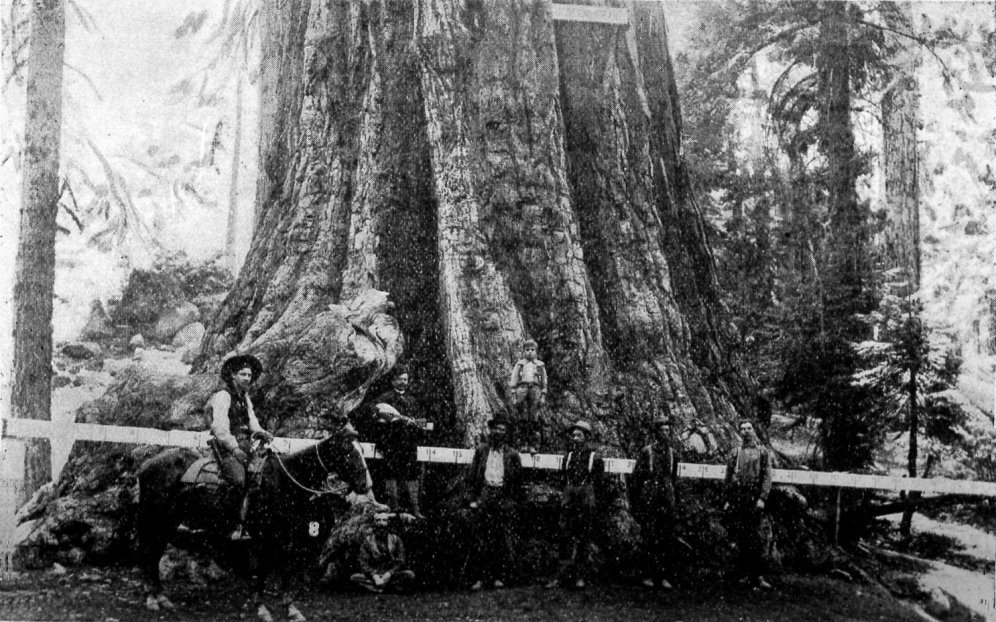
No, it is not in Washington, D.C., but rests across the continent among the ancient forests of California. Declared by President Calvin Coolidge in 1926 to be the “Nation’s Christmas Tree” the “General Grant” sequoia in California’s Kings Canyon National Park is the third largest tree in the world, behind “General Sherman” and “President,” named for Warren Harding in 1923. This very deliberate designation for a tree as far removed as possible from the Nation’s capital underscores where our thirtieth President placed American identity: among the People themselves, not under an omnipresent shadow of Government. Estimated at over 1600 years of age, the tree stands 267 feet in height and 107.6 feet in circumference.

Base of the tree, photo taken in 1907. Base of the tree, photo taken in 1907.

The "Nation's Christmas Tree" in the middle of summer. The snow on the ground reminds us how aptly named it was by President Coolidge. It is here, in the beauty of America's sequoias that the Christmas Tree finds its most distinctive representation. The “Nation’s Christmas Tree” in the middle of summer. The snow on the ground reminds us how aptly named it was by President Coolidge. It is here, in…

View original post 88 more words

“The Nation’s Christmas Tree,” 1926

Looking back on the Coolidge influence on Christmas, keeping it local and personal.

gouverneurmorris's avatarThe Importance of the Obvious

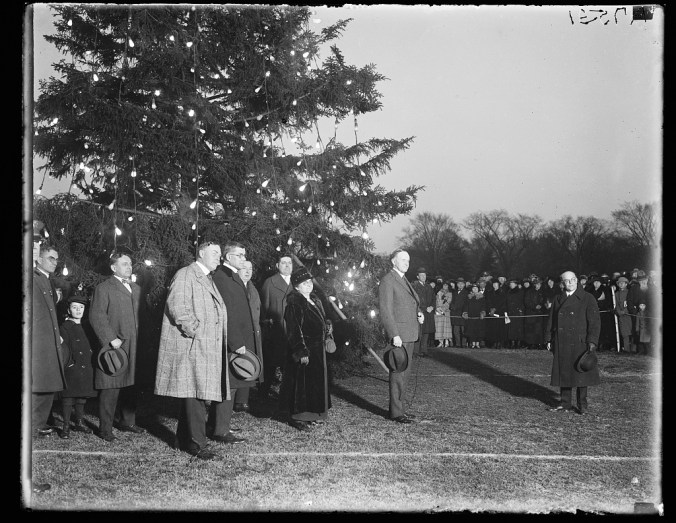
The National Christmas Tree, 1923

Long known as the “White Lot” for the whitewashed fencing which went along its undeveloped property lines, the Ellipse was laid out in 1791 by the District of Columbia’s designer, Pierre L’Enfant. The current home of what is dubbed, the “National Christmas Tree,” the Ellipse served as the location for this historic first: the original lighting of the Christmas Tree, a tradition begun by none other than President Calvin Coolidge on December 24, 1923.

This historic first was the result of a collaborative effort by the Washington area Community Center Department of the public schools who launched the event, the Society for Electrical Development and the Electric League of Washington who engineered the battery power source and button (at the end of the long cord in the President’s hand) which illuminated 2,500 red, white and green bulbs, Paul D. Moody of Middlebury College and Senator Greene of Vermont who donated…

View original post 1,068 more words

The “National Christmas Tree,” 1923