Walter McDougall, over at The Imaginative Conservative, has a thought-provoking piece on our traditional commitment to remain sovereign and independent, seeking peace with all while just as determinedly avoiding the permanent alliances against which Washington warned in his First Inaugural Address. Jefferson likewise intoned against the danger of “entangling alliances,” a principle guarded, however imperfectly, until the end of the nineteenth century from Jackson and Lincoln to Cleveland and Benjamin Harrison. Abandoned under McKinley with the rise of the Progressive Movement in this country, the commitment to working out our own problems rather than campaigning to fix those of everyone else, found an eloquent and principled advocate once more in Calvin Coolidge.
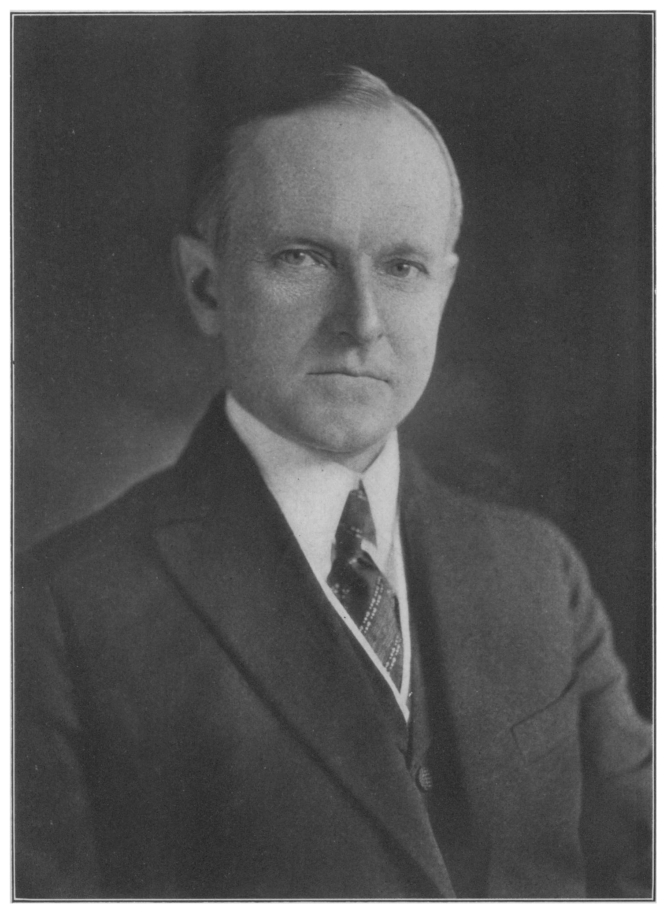
While his era has been mischaracterized as “isolationist,” Coolidge’s foreign policy articulated a fidelity to ending the global crusade that aspired to “save civilization” through projected militarism abroad introduced after 1897. Coolidge did not always succeed in navigating America free of the troubles inherited in Nicaragua, Mexico, the Philippines, China, Russia, and much of Europe, but he summoned the Nation back to earlier ideals which had preserved it a Republic, held it responsible in its sphere, and understood its source of strength rested on the moral and spiritual rather than the ambitions of military prowess. Coolidge continued the honorable continuity of peace and independence maintained by most of his predecessors in the face of an intensifying call to militarize. Coolidge knew that America’s great rise to world power carried a lofty responsibility but he also understood that this would only be squandered if it became a limitless warrant for our participation. He would not leave the country defenseless but neither would he be co-opted into placing the American people and its resources at the disposal of the world’s every quarrel, the security guard of the nations, expanding the scope of our interests beyond all rational meaning.
Coolidge appealed, “America stands ready to bear its share of the burdens of the world, but it cannot live the life of other people, it cannot remove from them the necessity of working out their own destiny. It recognizes their independence and the right to establish their own form of government, but America will join no nation in destroying what it believes ought to be preserved or in profaning what it believes ought to be held sacred” (speech delivered at Johns Hopkins University, Baltimore, Maryland, January 22, 1922, included in The Price of Freedom p.148).
He would go on to declare on another occasion, “Ultimately nations, like individuals, cannot depend upon each other but must depend upon themselves. Each one must work out its own salvation. We have every desire to help. But with all our resources we are powerless to save unless our efforts meet with a constructive response. The situation in our own country and all over the world is one that can be improved only by hard work and self-denial. It is necessary to reduce expenditures, increase savings, and liquidate debts. It is in this direction that their lies the greatest hope of domestic tranquility and international peace. Our own country ought to furnish the leading example in this effort. Our past adherence to this policy, our constant refusal to maintain a military establishment that could be thought to menace the security of others, our honourable dealings with other nations, whether great or small, has left us in the almost constant enjoyment of peace…While we desire always to cooperate and to help, we are equally determined to be independent and free. Right and truth and justice and humanitarian efforts will have the moral support of this country all over the world. But we do not wish to become involved in the political controversies of others” (Message at the opening of the Second Session of Congress, December 3, 1924, cited in The Mind of the President pp.22-23).
Coolidge, yet again, got it right.

 The Importance of the Obvious