On the Source of What Comprises Life

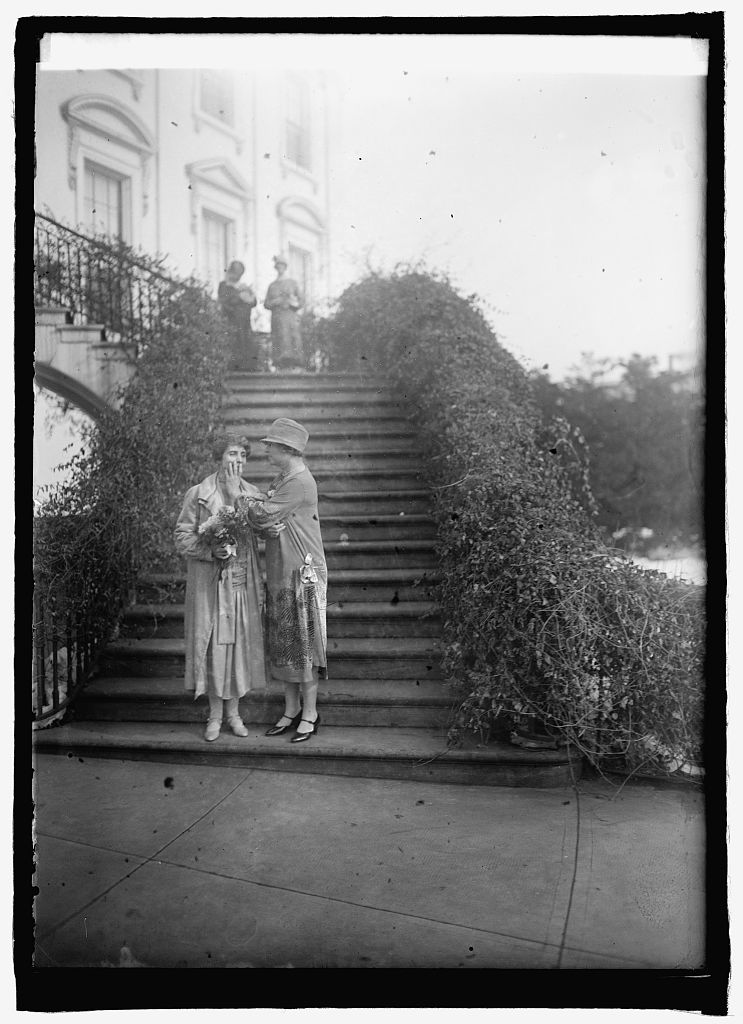
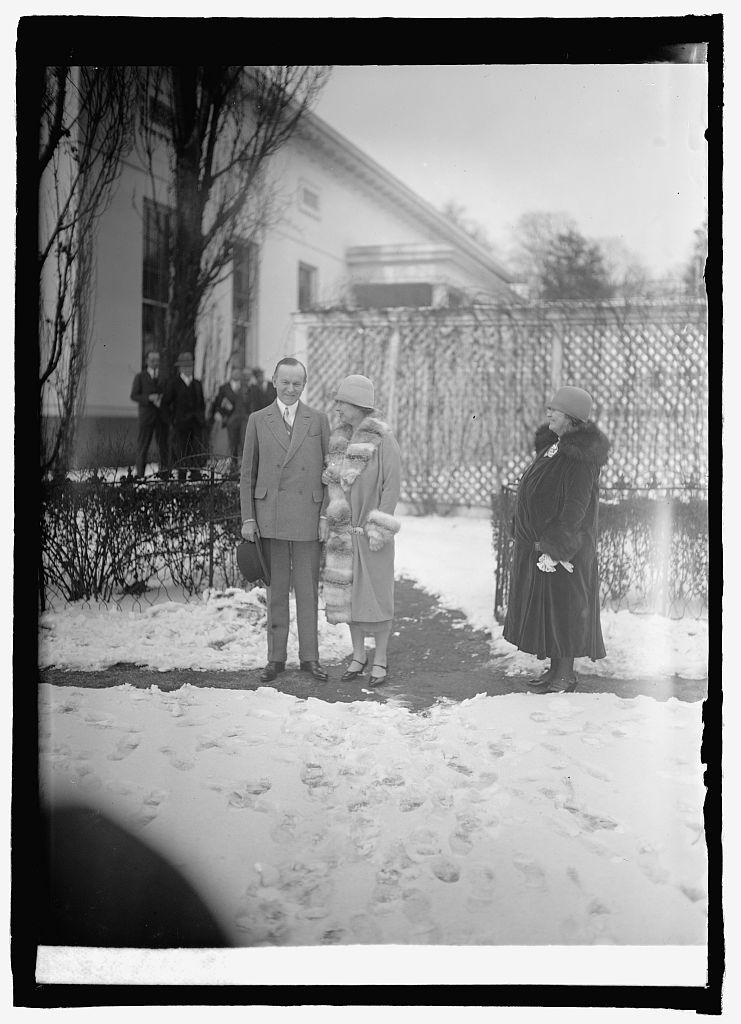
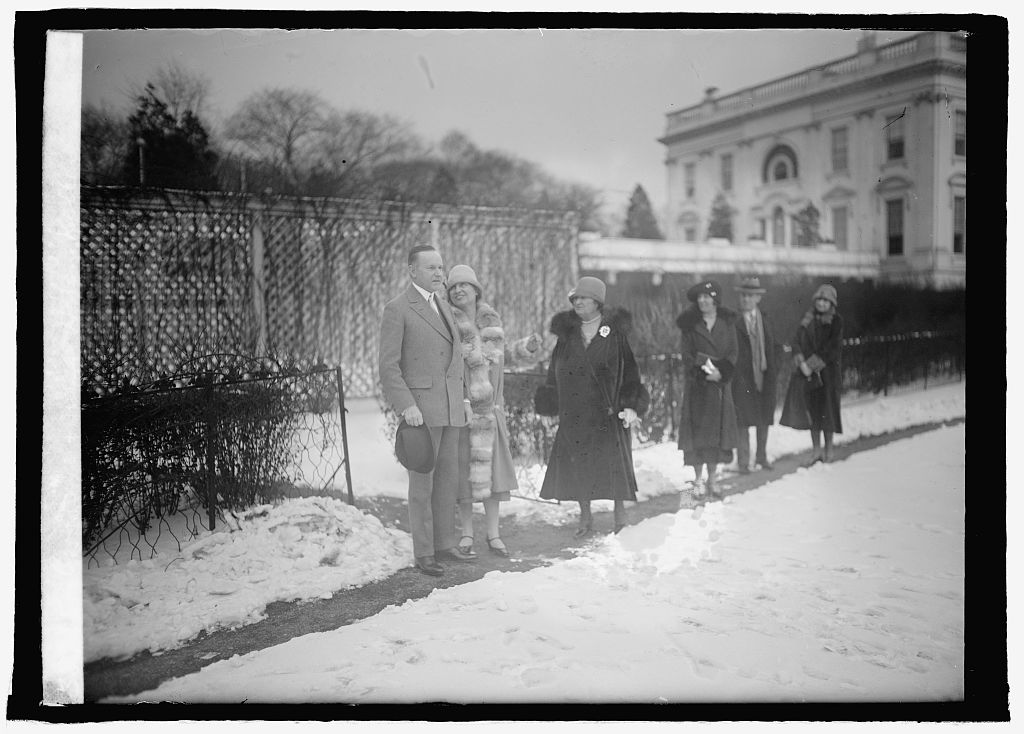
President Coolidge and the First Lady have their picture taken with members of the Advertising Association in 1924, two years before the speech cited below. Courtesy of the Library of Congress.

President Coolidge and the First Lady have their picture taken with members of the Advertising Association in 1924, two years before the speech cited below. Courtesy of the Library of Congress.

Addressing the American Association of Advertising Agencies meeting in Washington on October 27, 1926, President Coolidge took stock of the various components that made up life in the country. Society was rapidly modernizing, methods and culture were accelerating life at an incredible pace, and it was necessary not to lose sight of the values or the years of hard work that went behind each part of existence. Lest Americans take for granted the success of our free market system, the citizenship that makes Government work, or the cultural health of society, Coolidge recalls that none of these run themselves, none operate automatically, none go on indefinitely without a dedicated participation, continual maintenance, and strengthening of character. It was necessary then to look behind what made so much stellar success possible and perpetuate it far into the future. If the values informing and supporting this success did not remain grounded on firm, nurtured foundations the results visible in all our affluence, prosperity, and opportunity would dry up just as surely as the flowing mountain spring would were it cut off from its headwaters.

In more modern political terms, Coolidge was arguing that the social issues (grounded in the Judeo-Christian truth of the Ten Commandments and the Golden Rule) came first, not merely smart economic policy. Don’t discard the social issues, Coolidge asserts, thinking that we can reap the rewards with a system shorn of fundamental values and gutted of its moral meaning. The moral preceded and made possible the system that had advanced America in less than two centuries to heights not even millennia-old civilizations had reached. Those older empires had no less a grasp of shrewd trade or financial principles to dominate the world in their times. The Spanish Empire, Dutch Republic, and Great Britain had ruled commerce on a global scale in no too distance an age. America was different not because her people were genetically superior, intellectually better, or even morally purer. What made America different rested in her ideals. In fact, America had been entrusted with the same heritage of civilization which had been many generations in the building, to which many nations and peoples had contributed, sacrificed and toiled. It was in the moral convictions that life, liberty, and the pursuit of happiness are derived not from government authorities but from our Creator, and that governments are instituted among men not to despoil or possess the very life and property of subjects but to promote the general welfare of the whole people, not merely a part of it, that America had revolutionized and revitalized civilization. This was a dearly-learned truth and it was too precious to be jettisoned by a short-sighted, indifferent political expediency pawned off on a complacent citizenry.

Said another way, it is not enough to be for economic liberty while rationalizing away the deprivation of life to the most vulnerable. It is not enough to endorse tax reduction and balanced budgets without also decrying the immorality inflicted on the home and family by the divorce rate and redefinition of marriage, which both more profoundly impact prosperity than budgetary or monetary policy do. We cannot run from the cause, refusing to ever touch those dreaded “social issues” campaign after campaign, year after year, expecting job creation, expenditure reduction, and tax reform to furnish the exclusive focus for future political problem-solving. Our problems run far deeper than fine economic adjustments and while the array of social ills that we face is far smaller than in Coolidge’s day, he beckons us back to the importance of fundamentals. The spiritual must come first.

Coolidge expressed it this way, “Sometimes it seems as though our generation fails to give the proper estimate and importance to the values of life. Results appear to be secured so easily that we look upon them with indifference. We take too many things as a matter of course, when in fact they have been obtained for us only as the result of ages of effort and sacrifice. We look at our economic condition upon which we are absolutely dependent for the comforts and even the necessaries of life, and forgetting that it all rests on industry, thrift, and management, dismiss it lightly as a matter that does not concern us. Occasionally our attention is directed to our political institutions, which have been secured for us through the disinterested exertion of generations of patriotism, and, going along oblivious to the fact that they are the sole guarantees of our rights to life and liberty, we turn away with the comforting thought that we can let some party committee attend to getting out the vote and that probably the Government will run itself all right anyway. Then perhaps we are attracted by the buildings erected for education, or the temples dedicated to religious worship, and without stopping to realize that these are the main source of the culture of society and the moral and spiritual life of the people we pass them by as the concern very largely of schoolmasters and clergymen. We have become so accustomed to the character of our whole, vast, and intricate system of existence that we do not ordinarily realize its enormous importance.”

As he stated it in his Autobiography, “Unless men live right they die. Things are so ordered in this world that those who violate its law cannot escape the penalty. Nature is inexorable. If men do not follow the truth they cannot live” (p.53). Mr. Coolidge helps us remember that moral truth is the most practical reality we have. Without it, all else fails.

On the Danger of Living in the Show-Window

“That young chap Coolidge certainly has more stuff on the shelves and outs less in the show-window than any fellow I’ve ever seen” — Northampton shopkeeper on the future President.

We all know someone who, upon learning of new information or undergoing an event important to him or her, immediately dashes off to “share” it on social media, text it to friends, and generally advertise whatever it is, was, or will be, however trivial, to the rest of the known world. Good and fun-loving people otherwise turn what could be an enjoyable time alone (gasp!) or in the company of friends, family, and those actually present, into a communal experience of imposed participation. Not everyone wants to know where your new tattoo is located. The web is not anticipating with whom you had a picture taken tonight. Not everyone is waiting breathlessly for your next cryptic reference to the latest chapter of self-imposed drama in your life. Social media is no less immune to those old-fashioned standards of polite, considerate, and discreet behavior that used to govern all relationships. Life is fraught with difficulty and exciting things happen to us all from time to time but we seem to abhor ever going through any moment of it alone, in the solitude of our God-given individuality! Of course, we all desire to be important — an achievement that seems even more all-consuming these days with the globe a click away. Also, it is not to detract from life-changing occurrences that can now be communicated without ever picking up a telephone. It seems that rather than leaven a balance into one’s perspective, however, all manner of news items become open season to disclose to everyone within range that you know about this or that, you feel such and such concerning it, or you have a comment on something about which you have an opinion, whether it is informed or not.

Calvin Coolidge was not this kind of person. He did not display all he was for just anyone to see. He didn’t wear his heart on his shirtsleeves either. This hardly means, as some have interpreted his silence to mean, that Cal simply buried his head in a pillow, closed his eyes and slept through life, oblivious to what was going on in his world. He knew a great deal more than he admitted. He observed everything and little could escape his notice, however small or insignificant it might be to others. He had a way of discovering who people were – what made them tick – and what was going on in their lives, without all the effort of lengthy conversations. When something exciting, like the arrival of Mrs. Longworth’s new baby hit the news and Mrs. Coolidge learned of it, she discovered that he not only already knew, he had projected the due date from listening to others. When people sought to know how Cal had enjoyed a certain theatrical performance, after he and Mrs. Coolidge attended one in Boston, they could be left wondering for quite some time until he would acknowledge that he had been back to see it several times since.

One of his teachers when Calvin was little, Miss C. Ellen Dunbar, describes this incredible aptitude Coolidge had for both a discretion and, at the same time, a complete awareness of what was transpiring around him. She helps put this quality of his personality in perspective, recalling,

“I taught Cal when he was eight years old. He looked as sedate then as he does today…If you had called him ‘Judge’ when he was a little boy it would have fitted him well. He had a deeply thoughtful mind almost from babyhood. I knew his parents before he was born. Those who meet Cal today speak of his apparent aloofness. He was the same with his schoolmates.

“I never knew Calvin to get into mischief. He didn’t play much with the other boys, not because there was any unfriendliness, but what appealed to them didn’t appeal to him. Calvin was trained not to bring his troubles to his mother. He kept them to himself. His mother was sick and mustn’t be worried. John Coolidge was wonderful to his women. Calvin’s sister died in her father’s arms, of what would be called appendicitis today.

“Calvin gets a lot of his characteristics from his grandmother, Almeda Coolidge. As school teacher I used to board around. I lived for a long time with Calvin’s parents and also with his grandmother. Almeda Brewer Coolidge was a widow when I knew her and had a wonderfully friendly personality. She had the greatest way of finding out all you knew; Cal’s that way, too. I wasn’t in Almeda’s house three days before she had me turned inside out–knew everything I knew. Cal’s like her that way. And I never heard Almeda Coolidge criticise her neighbors…

“With him ‘to be a man’ was the thing, not to be CALLED a man. When he was a little boy he was Calvin Coolidge of today in miniature, except that now his mouth shuts down a little tighter. Calvin Coolidge can’t dodge his heredity or his long years of training. He wouldn’t lie to save himself from the gallows” (Horace Green, The Life of Calvin Coolidge, New York: Duffield & Company, 1924, pp.18-19).

He was not given to effusive reaction, it was simply his nature. This did not mean he did not care. A calm restraint and disciplined discretion defined all of his life, with friends and strangers alike. His reputedly expressionless exterior concealed a genuinely caring and observant man. Secrets, however great, were always safe with him. If anything, it illustrated his respect for people that he would not violate a confidence – even when one had not been expected. It confirmed his regard that each person has sovereign right to do what they wish with what is their own property, including one’s experiences. Not only is each individual to be master of his or her own speech but personal information was no less sacrosanct to him. Some folks seem all too eager to abdicate that sovereign power and distribute it in ways that prove harmful to themselves and to others, actions or words that can never be undone or reversed. Freely giving away this kind of control over one’s life, mind, and person was simply undisciplined, illustrative of bad judgment, and foisted an absence of thoughtfulness toward others in public. It was not walking in love (i.e., the Golden Rule) to which Calvin appealed time and again.

This is not to say we become “silent as the grave” or take up monastic living from henceforth in all our dealings to somehow realize what we mistake Cal to be saying. It is an irony noted by Coolidge biographer Claude M. Fuess that Cal did not like to be alone yet he did not need the interaction that is usually thought to be inseparable from it (The Man from Vermont p.470). He had that way of learning what a person knew without divulging his own thoughts and feelings, without leading a life lived in what he would call, “the Show Window,” where everything in our makeup is on display out front for all passersby to see. Cal did not live that way yet he still learned who people were, sometimes, better than they knew themselves. He made good use of the silence.

Coolidge understood that there is a time to speak and a time to be silent. Our right to speak and be heard is no more absolute than the rights of others not to listen or be compelled to take part whatever we want to share. This is but a reminder from wise Mr. Coolidge that respect never be lost in the way we relate to each other and that discretion for how others are “hearing” us is just as important. Let our speech give grace to those who hear and our ability to listen be improved in the quiet times. Being alone in our thoughts is not always an intolerable prison from which to escape, it can be a refuge and comfort, an occasion to rally strength and prepare for doing better by others than we have done. We will find that much of what we feel compelled to say, especially in the heat of the moment, does not improve upon the silence and we would avoid a great deal of trouble by talking less. This may be obvious to many, but thank you, Mr. Coolidge, for reminding us of its importance.

President Coolidge at his desk in the Executive Offices, August 15, 1923.

President Coolidge at his desk in the Executive Offices, August 15, 1923.

“We need more of the Office Desk and less of the Show Window in politics. Let men in office substitute the midnight oil for the limelight” — Calvin Coolidge. What he says here of elected officials could just as readily apply to each of us.

On Kindness

CC and HK 1-11-1926Of his character traits, Calvin Coolidge’s reticence is perhaps the most misunderstood by those reared on the “Silent Cal” persona. Even today tour guides will rail against Coolidge’s mean-spirited curtness, his abrupt manner, and even rude handling of people and situations, yet they never seem to wonder how if all these stories actually occurred in the person of Calvin Coolidge, how could he possibly have secured so many life-long friends, risen to the highest authority in the land, and wooed one of our most affectionate and outgoing First Ladies? Misinterpreted, even by some at the time, as a callous lack of feeling or an ingrained Yankee ambivalence to everything and everyone, it is a serious oversight that he has been so defined by a stereotype grounded on a profound ignorance of all the facts by those who are supposed to be specialists of history. Rather than seek to understand the situation or the man, they simply fill in what they do not know with baseless speculation. Meanwhile, one story after another illustrating his supposed intransigent obtuseness are presented as incontrovertible fact by those who never challenge the received conclusion that Cal was cold-hearted because he said “no” to the Federal rescue of farmers and other suffering groups or for no reason at all other than being simply a perpetual crank, end of story.

This is what makes going back to the primary sources so rewarding to anyone willing to push ahead those extra few steps rather than swallow whole the claims of those eager to take a hatchet to Coolidge’s reputation for one reason, sometimes both personal and political, or another.

When Helen Keller came to visit the Coolidges at the White House in January 1926, she was eager to meet the man who had accepted the offer to become honorary President of her organization, the American Foundation for the Blind. In his his letter of acceptance, he made it clear he was making an exception to a steadfast rule not to lend his name to organizations requesting endorsement for this or that cause. Cal make clear that he was breaking his own restriction because he believed the work being done by the AFB was truly benefiting those it was created to help, in contrast to so many entities launched to raise money but never really accomplish much for its targeted cause.

GC and HK 1-11-1926When she was directed into the Executive Offices, she found Coolidge at his desk underway with the day’s tasks. He quickly became embarrassed, however, when she asked for a few moments to read his lips with her fingers. He nevertheless assented and they exchanged kind regards. It was when visiting with Mrs. Coolidge that the subject of her husband’s perceived reputation for coldness was raised. The First Lady said, “The President thought I was the only woman in the world who knew he had a warm heart and you seemed to sense it the moment you touched his hand.” It is in Helen Keller’s response, a woman whom none could say sympathized in any way with the Coolidges politically, that we find a glimpse into the real Cal, the man as he was not the caricature created for readership of The Nation or for later apologists of the New Deal.

Keller told Mrs. Coolidge, “I feel in the hand what the eye cannot see…I knew the President was really glad to see me. Your dear husband thinks many things he doesn’t tell to everyone and there are wonderful things in his heart.” Such was no isolated case. Coolidge would leave this impression on a great many of his contemporaries determined to see beyond the outer cover his professional formality and personal shyness to the thoughtful, kindly, and loving heart he had for people.

The casual observer may be forgiven this oversight, but there is no excuse to perpetuate so intellectually dishonest and politically convenient a falsehood among those transmitting the historical record of the Coolidge Era to present and future generations. History demands more and Coolidge deserves better.

27406v CC and Keller 1-11-1926