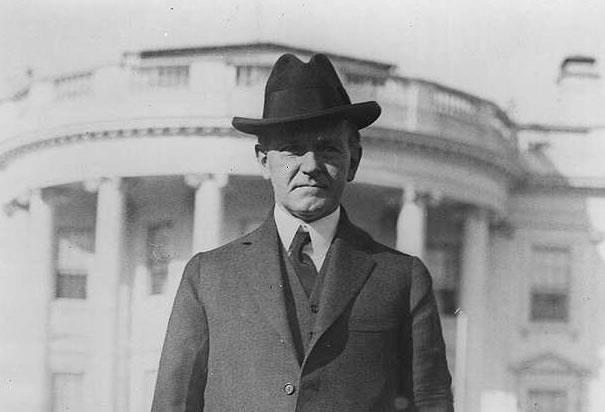
Some Favorites from the Leslie Jones Collection, Boston

Image

 This one is entitled, “Penny for his Thoughts…” What was on his mind? Image
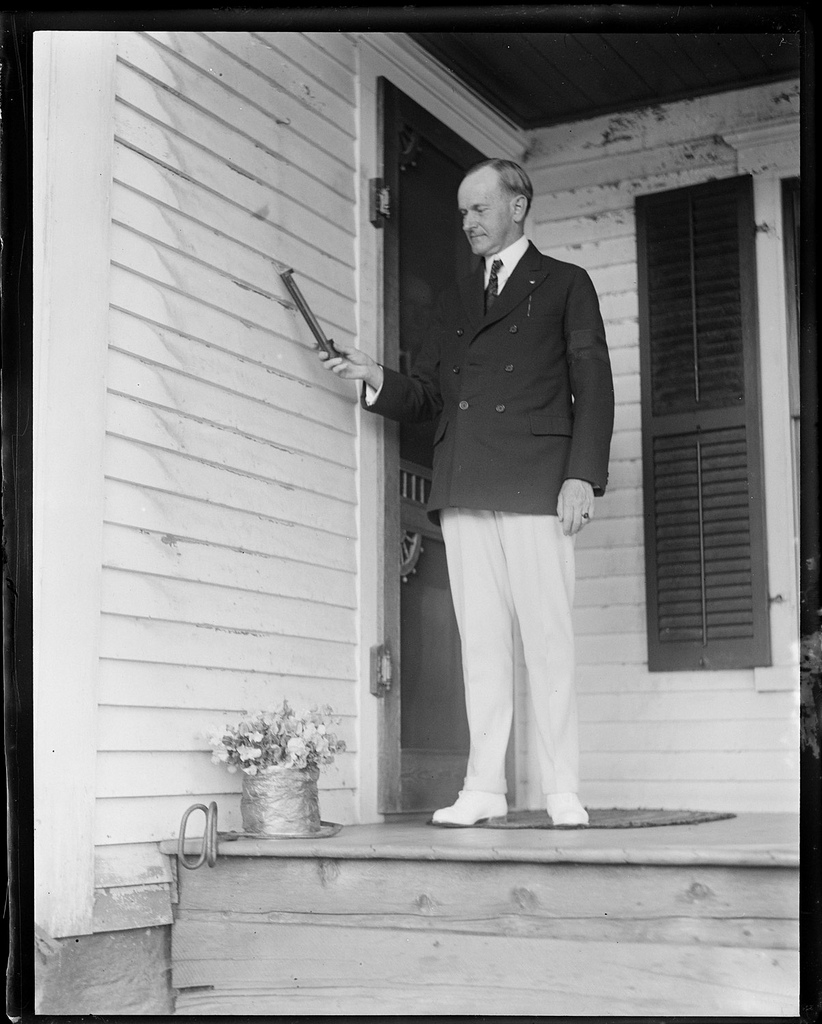
Mr. Coolidge checking the temperature at the Homestead, which was 98 degrees.
Image

Image

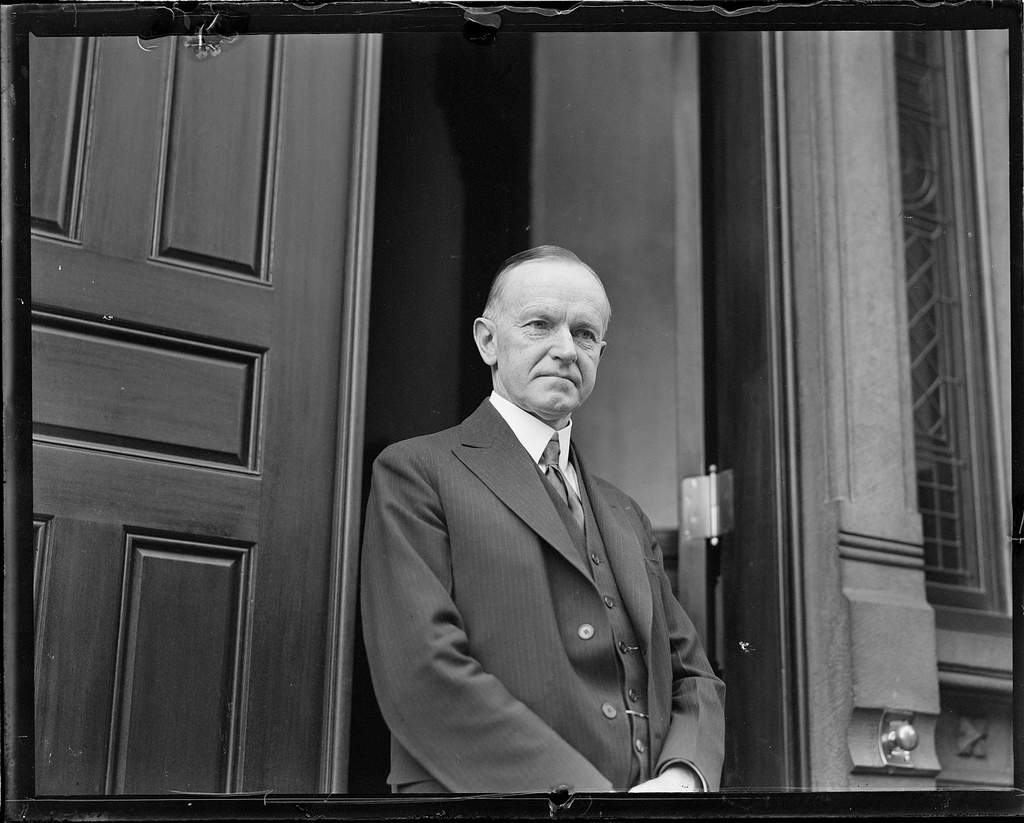
Former President Coolidge leaving the Academy of Arts and Sciences, April 15, 1931. Is it me or does it appear he is looking a bit “gangster-esque” in this shot?

Image

The Coolidge Family, taken while he served as Governor in the Executive Offices, Boston.

Image

The Coolidges are researching some family history in Watertown Cemetery.
Image

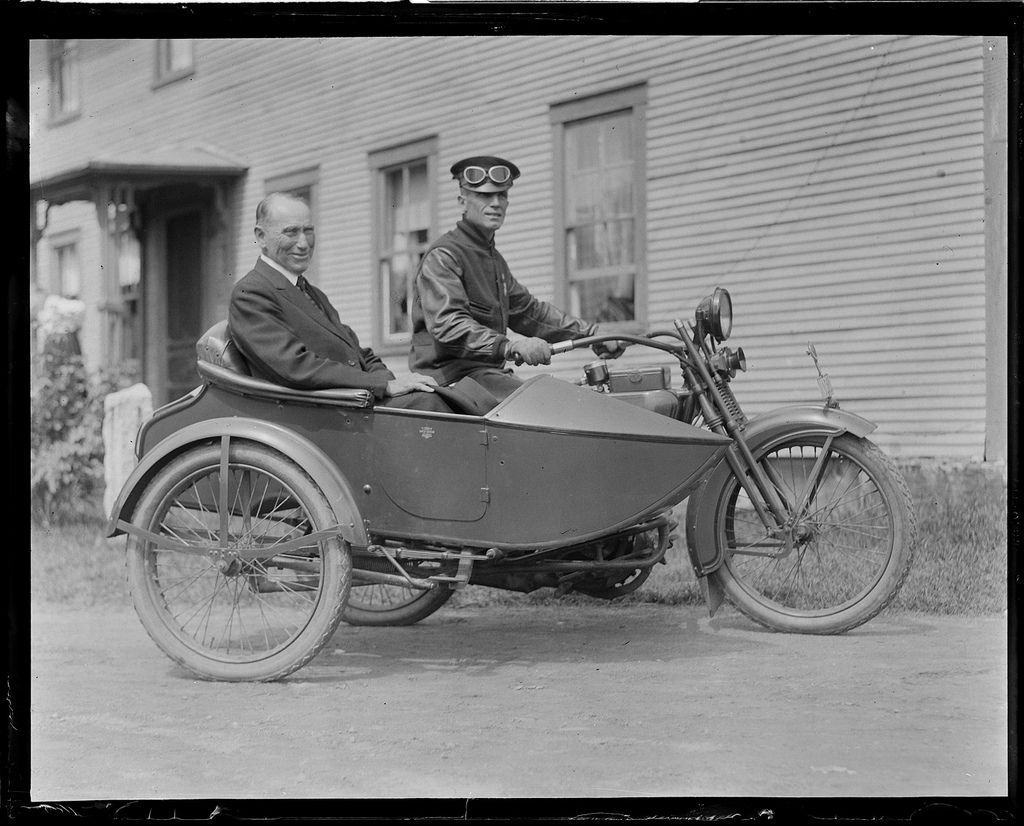
Colonel Coolidge enjoys a ride in a sidecar.
Image

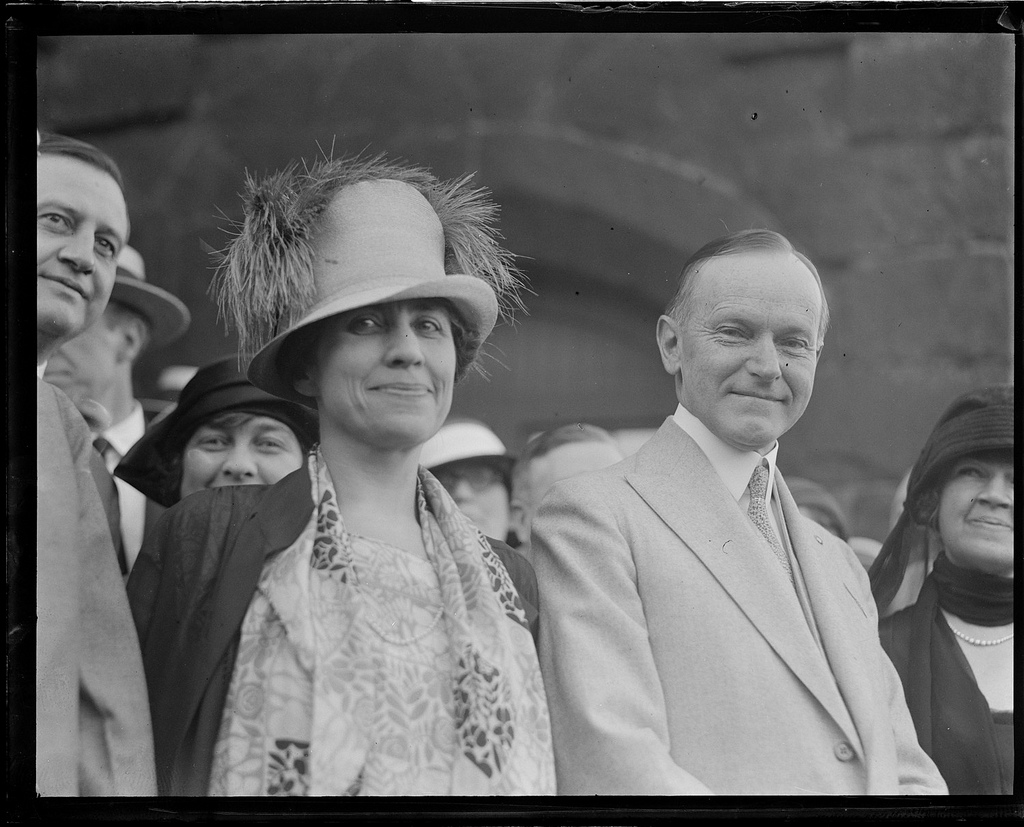
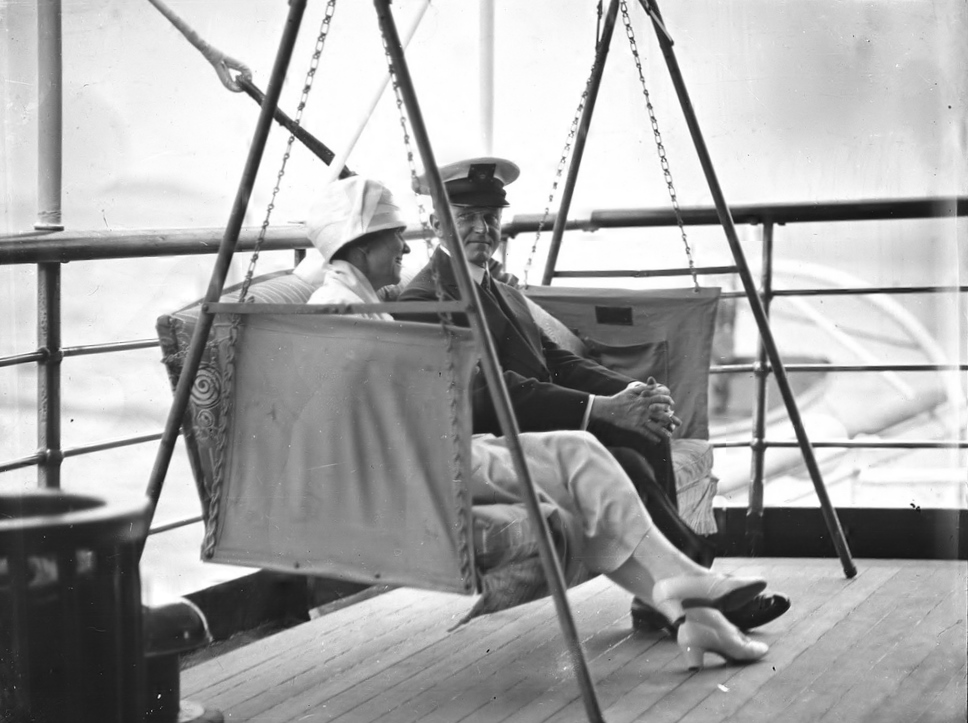
The Coolidges enjoy a quiet moment on The Mayflower.

Image

This was said to be one of Mr. Coolidge’s favorite cartoons in retirement, 1931. The caption reads, “Now We’ll Have a Little Quiet Around Northampton.”
Image

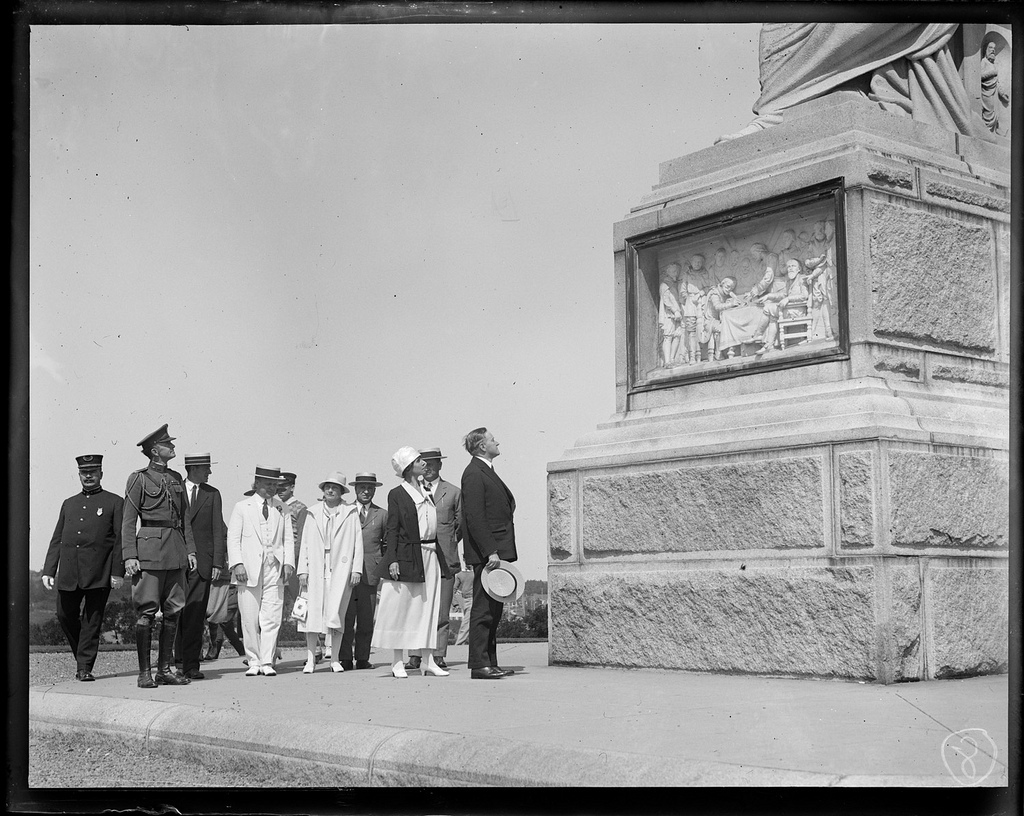
The Coolidges visit the Monument to the Pilgrims, Plymouth.
Image

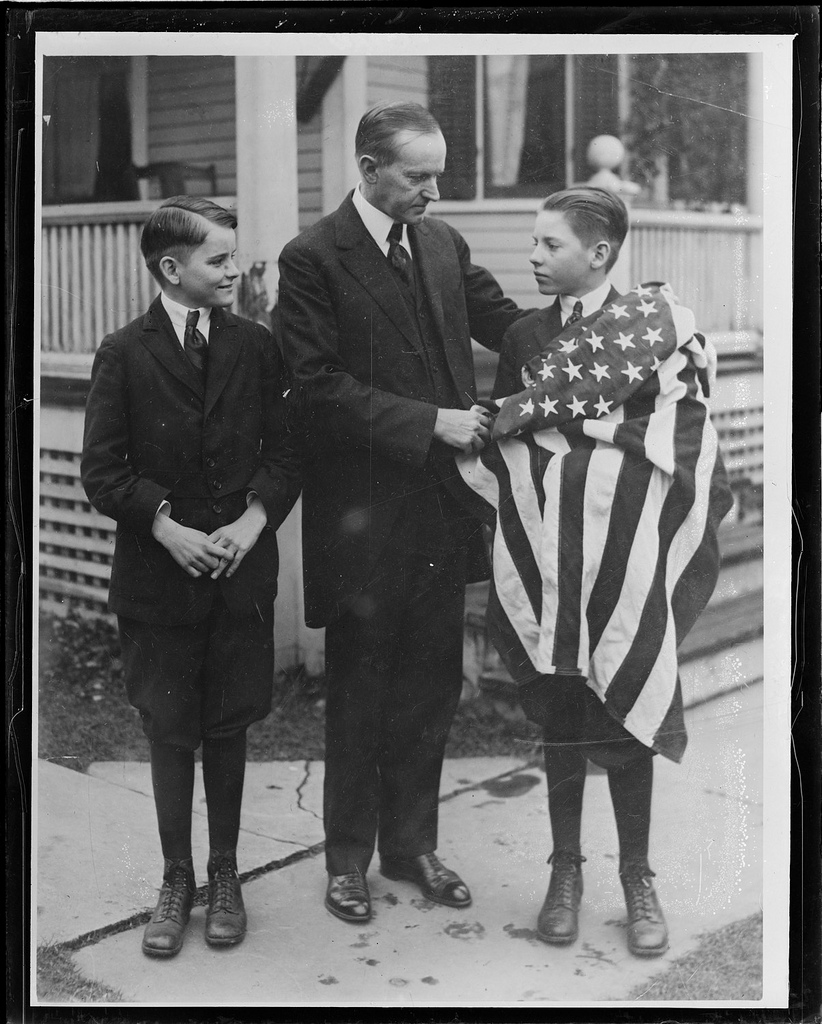
Governor Coolidge with his boys, 21 Massassoit Street, Northampton.

Image

President Coolidge at the Governor Bradford Tablet in Plymouth.
Image

The Coolidges outside their newly acquired home, “The Beeches,” Northampton, summer 1930.

Image

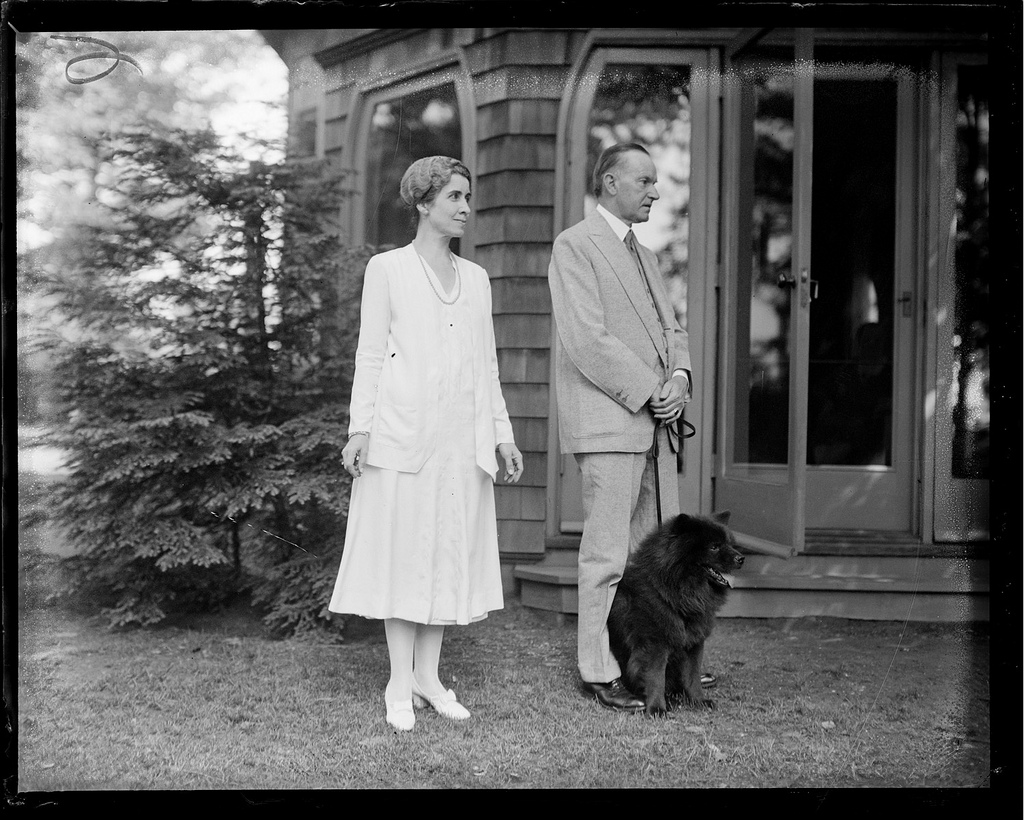
Calvin and Grace walk the grounds of “The Beeches,” June 1930, with their dogs.
Image

Coolidge, once more a private citizen.

On the Boy Scouts

                         Image

Reflecting on the purpose of this long-standing private organization, especially in light of the recent change in admission standards, it is important to recall what Calvin Coolidge had to say about them. Writing in his daily column on February 9, 1931, he said,

“Millions of our young men have had the benefit of the physical, mental and moral discipline that results from Scout training. When the evil reports of a few gangsters make us wonder if society and government are about to disintegrate and revert to the law of the jungle, we can turn with assurance to the humanizing and civilizing effect of the Boy Scouts. Under the old life in the country every boy was something of a Scout. But in the modern city many boys live on a narrow street or alley. The buildings make it impossible for them to see; in the constant roar they cannot hear. With the lack of healthful and life-giving impulses from without they are turned back on themselves. When they need action and companionship in order to secure a natural growth of body and mind, they are unable to find anything but an artificial, dwarfing substitute. The profitable and patriotic remedy for these conditions is the Boy Scout movement. Under the influence of a considerable body of citizens so trained our republic is fairly secure.”

Considering the Boy Scouts accomplished all of this for decades before the latest round of complaints against it, the policy change rings hollow. Volunteer and civic-minded organizations, like what the Scouts have been, represent certain moral standards and no force in the world can rightfully tell them to abandon that ennobling purpose in order to enact the amorphous values of someone else. The Boy Scouts are not about sexual orientation, but about instilling character and competence in our young men. That used to be an asexual blessing to society–not anymore. Sexual identity trumps all other values. Now, one by one, organizations like the Boy Scouts have to concede their purpose to an intolerant minority unwilling to grant the existence of any organization that chooses its own standards of membership. So much for the good old fashioned virtue of living and letting live. This latest coerced participant in reordering society to please a few is only the most recent effort to keep Pandora’s box open, whatever it will cost (in lives or public morals) down the road.

On Renovating the White House

              Image

                                                                    (National Archives)

America in 1927 felt the effects of rain in a number of historic ways. The floods of the Mississippi and in Vermont were two such ways. Between them, heavy rains made the need for renovation of the White House vital. This involved strengthening the roof, expanding the attic into a third floor of eighteen rooms and clearing away the wood compromised since the burning of this House by the British in 1814. Arthur A. Sloane in his book “Humor in the White House: The Wit of Five American Presidents” recounts the tour of the attic, initially cleared by Presidents Roosevelt and Wilson for further use, by the chief architect, the contractor and Coolidge. Shown the extent of the damage exposed by the rains and the sections burnt over a century before, Coolidge was asked which he would approve: wood supports or steel girders? Closely examining the damaged wood, he answered in his typical dead-pan style, “All right. Put in the steel beams and send the bill to the king of England.”

                         Image

P. S. While the choice of steel would help alleviate the weakness of the attic and roof, it would prove too much for the older foundations and would require emergency rescue by 1949 in what is dubbed the “Truman Renovation.” Short-term fixes, using small amounts of public money to maintain it, has been the history of this House for most of its illustrious life. For Coolidge, steel was worth the money but to overhaul the entire structure would take from the people what is theirs on a scale that was unnecessary at a time when clamor for spending was at fever pitch already. The President conscientiously resolved that the money belonged through tax cuts and reduction of expenditures in people’s hands instead of government coffers.