On the Mystery of Coolidge

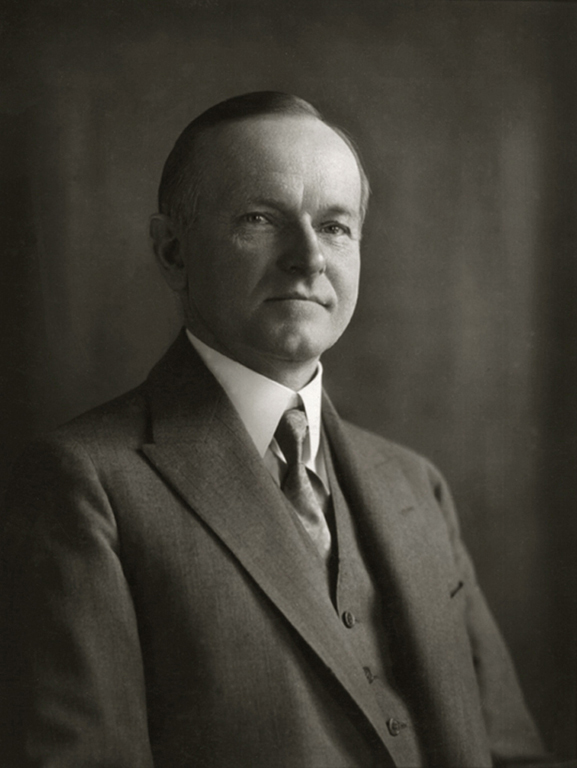
Dr. Elihu Grant, who taught literature at Smith College, lived directly across from “Mr. Coolidge” for ten years. He was a prolific writer and “groundbreaking” excavator of areas around ancient Jerusalem. He offers this appraisal of the neighbor who would become President of the United States,

     “I never was one of those who felt free to call him ‘Cal,’ but always thought of him as ‘Mr. Coolidge’…Others had their ups and downs in the political game. He was always going up. People had confidence in him and he never went backwards from any position which he held in the respect of his fellow-townsfolk. He always seemed to have his object clearly in mind and went straight for it. His method was one of industry and persistence. If a nomination was to be secured, he often made his major efforts before the possible opposition had begun. By the time of the election, he seemed to have the whole matter discounted in his own mind so that he was full ready to attend to business as soon as he was invited to take charge.

     “He has often been referred to as a man of mystery. It seems to me that there is no special mystery about him. Men of his type are not infrequently seen in New England. One finds them in the law, in the ministry and other professions, in business, and in the town-meetings. The remarkable thing about Mr. Coolidge is that he has so many of the characteristics of the type and that he has them in such perfect blend. He seeks nothing mysterious, and he neither says nor does anything mysterious. He is straight and strenuous in his quiet way. There is not a trace of affectation about him. He is natively modest. He simply does not care for unreality. He does care tremendously for the real, a real job, a real achievement. His actions always run far ahead of his words, and they are in the same direction.”

What to some appeared mysterious was not a mystery at all. It was simply a man who lived with full awareness and confidence in reality. Pursuit of the artificial substitutes work for intentions and accomplishment with wishful promises. The artificial denies what is really there and is too weak a basis on which to lead one’s life. Living in reality takes courage and discipline. That is what makes creating a world of blissful ignorance without responsibilities so alluring to many. Coolidge, by choosing to live in reality, demanded more than so flimsy a foundation as that.
                         Image

On Morrow and Coolidge

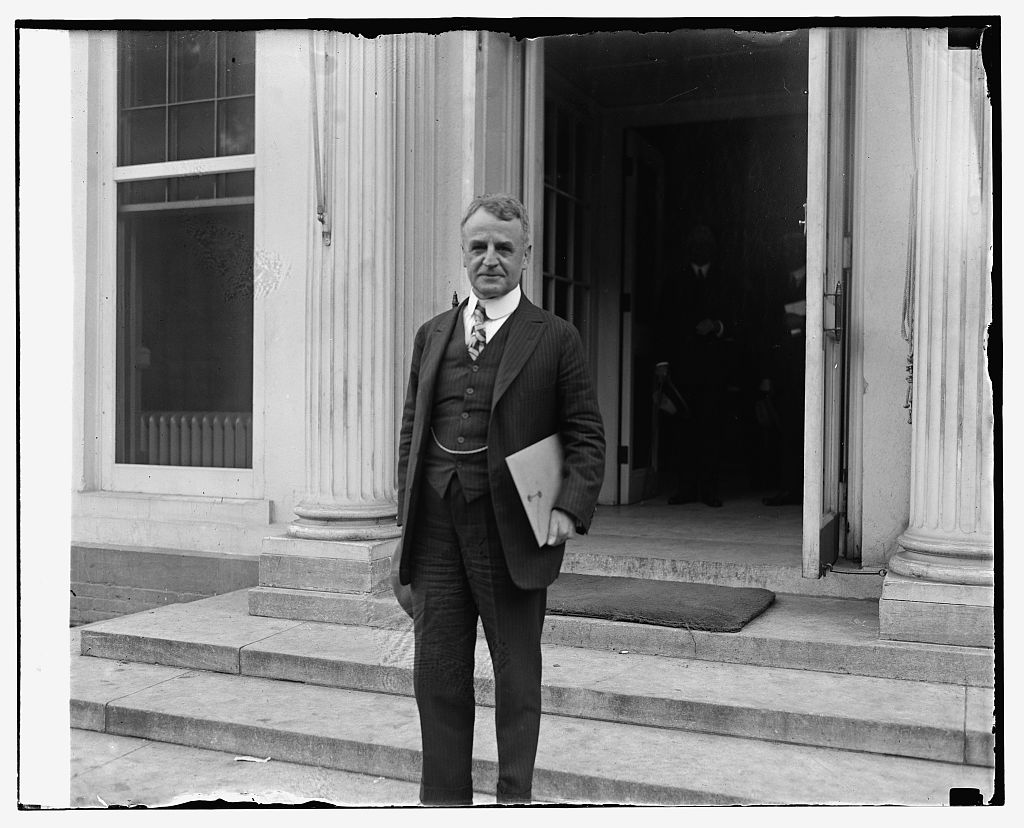
     Dwight Morrow, Amherst classmate and one of Coolidge’s earliest supporters, was mistakenly assumed to be among a small, select group of close advisers to the President. He, like Stearns (and nearly everyone else considered “close”) was kept at a distance because Coolidge respected their abilities but knew that the final decision rested with him alone. Coolidge would not entertain favoritism nor allow the perception that he was appointing “friends” to positions over considerations of merit. That is why he refrained from using Morrow’s great abilities for years. When he did appoint Morrow, it was to seemingly insignificant and temporal tasks, such as an Aeronautics Defense Commission or as Ambassador to Mexico. In each case, Morrow acquitted himself better than before. In the process, he established a reputation of sound judgment, unimpeachable character and preparedness for the next task. He was loyal all of his life to Coolidge. In one of the few conversations he had with “Calvin” in college, the future president told him something he never forgot and to which he aspired the rest of his life,

“One should never trouble about getting a better job. But one should do one’s present job in such a manner as to qualify for a better job when it comes along (Nicholson, ‘Dwight Morrow: A Biography,’ p. 87).”

Morrow would keep that perspective with him, even seeing it manifested in Coolidge’s incredible rise. When a friend expressed his amazement at what has been called “the Coolidge luck,” Coolidge’s rising to top positions by sheer “good fortune,” Morrow retorted, “but, he always reaches the second place by sheer merit.” Writing to the new President immediately upon hearing of Harding’s death, he said,

“Three years ago in Worcester I told you in all sincerity that I was convinced that you were better equipped in character and in training to serve this nation as its President than any of the other possible candidates that were being discussed. That conviction was based upon your character as I knew it and your long training in public affairs. I have never changed that belief. The greatest responsibility that rests upon any man in the world has now come to you. No former Vice President who succeeded to the Presidency by the death of the President was confronted with responsibilities as great. Your whole life’s training fits you for your mighty task; and the faith that you expressed in the closing line of your short statement made in Vermont is the faith that all your real friends will share…”

Similar to Coolidge, Morrow was inspired to public service by Professor Garman at Amherst. Morrow would be a competent observer of people all of his life. He was not far behind Frank W. Stearns in seeing more to Coolidge than most did. Coolidge, as he prepared to leave the Presidency, would give his finest tribute of Morrow’s abilities by recommending to Herbert Hoover that Morrow become the next Secretary of State. Coolidge would never interject his preferences on Hoover, save this one time. The fact that it was for Morrow speaks volumes. It underscored the sharp differences between Coolidge and Hoover that the latter imprudently refused.

Years before, however, Morrow would try to explain himself to Stearns before giving some advice he knew Stearns could relay to Coolidge, “You may look upon me, because of my associations, as a conservative, but I really think I have been all my life something of a radical. I have tried, of course, to be radical along lines that would help instead of along lines that would simply throw the existing machinery out of gear.” A reminder to many a modern “activist” that one does not need to “scrap the foundations” to best improve current conditions. Morrow continued, explaining to the businessman, that there are two basic types of people, in a way far more fundamental than Party allegiance or even political alignment,

“For the last year I have been abroad dealing with all sorts of government officials. Some of them have been Socialists like [Albert] Thomas, the great Socialist leader in France. Some of them have come from old conservative families, like Lord Robert Cecil, son of the Marquis of Salisbury. I have about come to the conclusion that the division of the people of the world is not really between conservative and radical, but between people that are real people and people that are not. Calvin is one of the fellows who is real. He really wants to make things better, not to pretend to make them better…” (Nicholson 231).

Image

Dwight W. Morrow in 1925. His sudden death in the fall of 1931 would be a profound loss to the country, and lay an even heavier grief upon one of his oldest friends, Calvin Coolidge.

On Good Business

Mr. Coolidge recognized the essence of good business was in strengthening ties of service and collaboration with others. He never saw the validity of an adversarial system, such as Bentham and the socialist economists espoused. Profit was important, of course, but not the supreme purpose of good business relations. He understood that business was about more than “crushing the competition.” It was about building bridges, not burning them. That is why he demanded a meeting with an apprehensive editor one afternoon. The editor had not published the entire number of articles agreed upon and written by the former President. Still, Mr. Coolidge had been paid for the entire set. The editor, bracing for confrontation, was shocked to find the former president wanted to meet in order to return the balance of the money due for the articles not published. To Coolidge, if they were not “good enough” to warrant publication, it would not be right to take money for them. In this way, good business is preserved.

The former President, writing another article on June 17, 1931, observed the necessity for “good business” to continue, especially as folks struggled to keep commerce going,

“It is a very sound business principle to let the other fellow make a profit. That was the essence of the slogan we heard a few years ago about passing prosperity around. The same thought is involved in paying good wages and fair prices. Cutting prices calls for cutting wages in the end.

“This is often the basis of the complaint against large concerns. When they control a large percentage of production they control the prices of the raw and unfinished materials used in that trade. They become almost the sole market for them. Under this condition there is a strong tendency in the name of efficiency and good management to squeeze out the small concerns furnishing these materials. But it is not usually good business.

“We are all so much a part of a common system of life that the business world is not healthy unless we all have a chance. A profit made by squeezing some one else out of a livelihood will almost surely turn up later as a loss. The great asset in trade is good will. The best producer of good will is the profit which others make” (emphasis added).