On the Individual

It was on Memorial Day in Northampton, 1923, that Vice President Coolidge said,

“…[I]f our republic is to be maintained and improved it will be through the efforts and character of the individual. It will be, first of all, because of the influences which exist in the home, for it is the ideals which prevail in the home life which make up the strength of the nation. The homely virtues must continue to be cultivated. The real dignity, the real nobility of work must be cherished. It is only through industry that there is any hope for individual development. The viciousness of waste and the value of thrift must continue to be learned and understood. Civilization rests on conservation. To these there must be added religion, education, and obedience to law. These are the foundation of all character in the individual and all hope in the nation.”

When Coolidge spoke of conservation here, he was speaking of its broad sense, the preservation of not merely material resources but moral ones. If the Republic is to continue, it will be due to the moral resources of the individual, not the powers of Government. He was no libertarian nor sympathetic to objectivism, both notions that would have struck him as self-defeating and short-sighted. He knew the individual was not liberated from public responsibilities to his or her neighbor. He also knew the government had a clear role to legislate and demand obedience to law. No man was absolutely free in the exercise of one’s rights or duties. Such was a responsibility to each other as we live together in society. His outlook was rooted in a far more resilient foundation, the example of service set by Christ.

It is the individual with the real power to uphold the soundness of our future. It was the deep reservoir of an individual’s moral capital that make civilization possible, the value of whom is bestowed by God, nurtured by the instructions of the home, instilled with virtues like thrift, strengthened by religious faith, and developed with an informed mind that retains reverence for the supremacy of the law upon all people. It was the individual that would keep Benjamin Franklin’s warning from fulfillment. A Republic, with duty-minded individuals such as Coolidge describes (as opposed to the self-centered or hedonistic) would find faithful men and women through whom to entrust its legacy to the next generation. Devoid of such individuals, no civilization is secure.

On Leading By Example

Example is the heart of leadership. Anyone can tell someone what to do, how it should be done and what will happen when instructions are not followed. In short, anyone can be a bureaucrat. Possessing leadership is something entirely different. While it is not always, and some would say not usually, an official position, the approach of successful leaders follows the same course every time. Without a conscientious commitment to duty manifested in example, one is merely “that jerk” in the office. By throwing one’s weight around, reminding people of your authority, and refusing to put hand to the wheel and work, especially when conditions burden everyone, it only breeds resentment and exposes an utter lack of one’s qualifications to lead. Without the keen sense of moral obligation tempered with humility, even Presidents reveal their mettle.

Leadership is not simply who has the most ideas, consider Herbert Hoover. Leadership is not simply who has the most amiable personality, consider Warren Harding. Leadership, especially of Chief Executives, is a profound call to serve, not be served. The inconsistency between one’s words and one’s actions could not be hidden forever and for honest leaders, such is never tolerable. For men like Coolidge, the oath and the office were serious responsibilities to be exercised with utmost respect and self-discipline. Those who lack such qualities are never able to conceal them completely from the people.

The inception of the Budget Bureau illustrates the strength of Coolidge’s leadership. The Bureau was the result of some nine years of persistent effort to bring about responsible budgeting at the national level. In the latter half of the nineteenth century, some twenty-eight consecutive years had kept balanced budgets, ensuring that government expenditures were carefully met within revenues. Surpluses defined these years and it was simply a matter of good sense to so manage the public household. That began to change with the feckless habits of the Benjamin Harrison years and when deficits hit six years in a row, from 1904-1910, something had to be done. It was President Taft who advocated replacing the piecemeal approach with a coordinated and deliberate budgeting process for all government departments. They would go through a formal system that prioritized cutting waste and practicing the strict economy it preached to others. It would be sidelined during the Wilson administration, underscoring how those considered the most “forward-thinking” today would be left in the dust by conservatives such as Taft, Harding and Coolidge, the latter being the most tenacious advocate of modern budgeting. It would be under Harding that the two Congressional bills for this concept would find effective support and quick passage into law as the Budget and Accounting Act of 1921. The Bureau found realization with Harding’s prudent selection of General Charles Dawes, as its first Director. Suitably, Dawes would serve alongside Coolidge as his bold and flamboyant Vice President.

It would be Coolidge, however, (with Bureau Director, General Herbert Mayhew Lord) who would bring both a meticulous and relentless approach to cutting down the debt and restoring surpluses. Continuing to hack away at every possible area of waste, the President, General Lord and his staff of 45 people, ensured that government spending was kept down despite constant efforts to the contrary. At the end of six straight years of surpluses, the nation’s debt had dropped to $16.9 from $22.3 billion at the beginning of Coolidge’s Presidency. Directing those growing surpluses toward productive ends became more and more difficult as Congress sought increased spending levels rather than returning those surpluses to taxpayers in the form of tax cuts, as Coolidge sought.

The Coolidge Administration, and his team of Mellon and Lord did more than talk about benefiting people with these policies, they lived them. Lord’s Bureau was proud of the fact that it used every supply until it wore out. Mellon would give $52 million of his personal income to charity, giving to people generations in the future, not including his generous gifts to the National Gallery of Art and the Smithsonian. Coolidge, ever conscious of his moral duty to Americans, saved much of his Presidential salary and, when his friends sought to establish his official library (before such entities were funded by public money), he gave it all to help the blind. These were leaders not by virtue of their position in government or their campaign rhetoric but by virtue of their genuine demonstration of service toward others. It is time for a renewed commitment to leadership by example.

Image

On Luck

“There are people who complain that they do not have any luck. These are the opportunists who think that their destiny is all shaped outside themselves. They are always waiting for something to happen. Not only is nothing very good likely to happen to this class, but if some fortune seems to come it tends to turn out disastrously. They are usually ruined by success.

“Our real luck lies within ourselves. It is a question of character. It depends on whether we follow the inward light of conscience. Such men rise above the realm of temporary circumstance. They are great even in defeat.

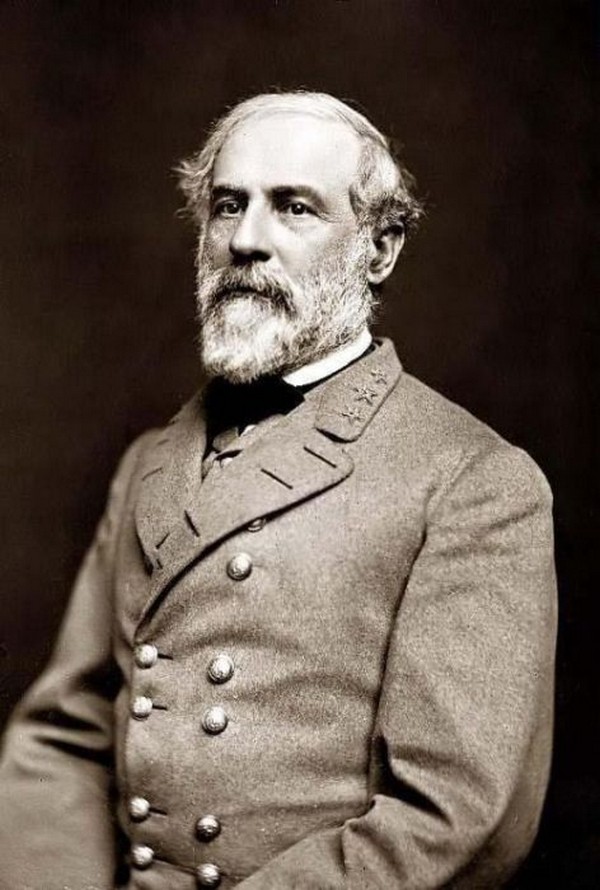
“Napoleon following his star, seeking luck outside himself, was great only in victory. But in Egypt, at Moscow, at Waterloo, his glory departed. General Lee, sacrificing himself for what he felt was his duty, was no less great after Appomattox. Poverty, obscurity, assassination, only revealed the greatness of Lincoln. The wrath of man praised him. if we cannot entirely control our environment, we can control ourselves and our destiny. The man who is right makes his own luck”
— former President Calvin Coolidge, August 29, 1930.

civil_06ingres_napoleon_on_his_imperial_throneimg_429394_9292903_1