On Racial Equality and Opportunity

Image

More than twenty years before the Supreme Court mandated desegregated schools and forty years before the Civil Rights Act, blacks and whites were already moving toward a non-segregated existence throughout the country. Moreover, sound economic principles were helping everyone to experience opportunity and the results of upward mobility in America across the entire spectrum. Blacks, finding greater opportunities “voted with their feet,” and began the “Great Migration” to the North. Wages rose in both North and South, home ownership grew 300% percent in the 1920s among blacks. Lynchings plummeted and adjustment of one’s new neighbors, rough at first, adjusted on its own — without the need for government direction of social behavior. It was the incessant social policy of the 1930s and 1940s that retarded, even erased, the progress made in previous decades.

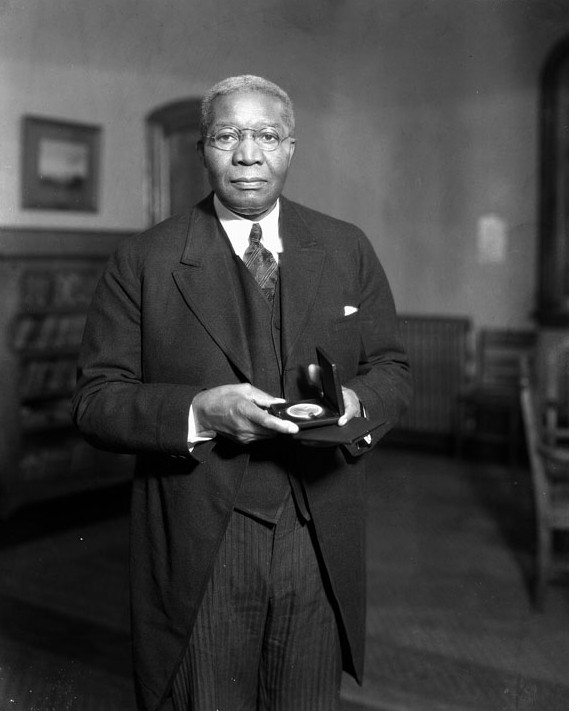
Dr. Moton of Tuskegee Institute studied the progress of his fellow blacks in America for many years, including the Coolidge Era, and he found conditions to be moving steadily toward voluntary desegregation as well as political and economic opportunity. Freedom and equality were marching hand in hand decades before federal involvement. He observed that in sixty years since emancipation, blacks owned 22 million acres of land across the country, 600,000 homeowners (a figure which would rise throughout the remainder of the decade) and ownership of 45,000 church buildings. Blacks owned and operated over 50,000 businesses with a combined capital value of more than $150 million ($2.1 million today), including banks and other “white collar” work. There were over 60,000 in professional fields, 44,000 school teachers and 400 newspaper and media publications operated by blacks. Literacy had dropped twenty percent and would continue to improve with “Coolidge Prosperity.”

Moton would summarize, “Still the Negro race is only in the infancy of its development, so that, if anything in its history could justify the sacrifice that has been made, it is this: that a race that has exhibited such wonderful capacities for advancement should have the restrictions of bondage removed and be given the opportunity in freedom to develop its powers to the utmost, not only for itself, but for the nation and for humanity. Any race that could produce a Frederick Douglass in the midst of slavery, and a Booker Washington in the aftermath of reconstruction has a just claim to the fullest opportunity for developments.”

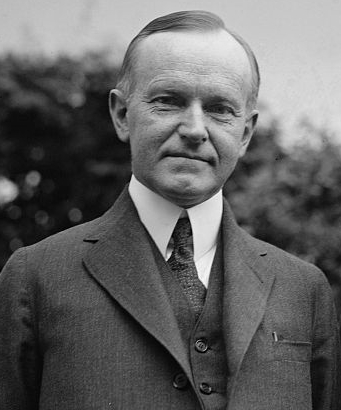
Writing to Dr. Moton in August 1924, Calvin Coolidge would enthusiastically commend the tangible progress made over so short a timeframe, “My dear Dr. Moton…Only a few weeks ago, I had the pleasure, at the Commencement of Howard University, of reviewing briefly and inadequately the material evidences of the progress of the coloured people…I wish to tell you of the deep impression that was made upon me by my studies of the Negro race’s achievements. In the accumulation of wealth, establishment of material independence, and the assumption of a full and honorable part in the economic life of the nation, it may fairly be said that the coloured people themselves have already substantially solved these phases of their problem. If they will but go forward along the lines of their progress in recent decades, and under such leadership as your own and many others among their excellent organizations are affording, their future will be well cared for.”

We mark the fiftieth anniversary of Dr. King’s speech on steps of the Lincoln Memorial, echoing not only the actions of Dr. Moton, who spoke there in 1922, but the faith in America to hold true to its founding ideals. It was not government to do for us, it was not the solution to give place to either despair or perpetual animosity, it was for us to return to the foundation already laid by the Framers. It is a testament to America’s virtue that Moton and King conclude their speeches with mirroring themes. America is not the problem, its ideals furnish the solution and give a conscience for fairness and justice. By aspiring to those ideals, we renew our pride as American citizens, that “fair and goodly land,” as Moton calls it. As Moton, King and Coolidge looked out over the problems and possibilities of living together a united people, they each saw the answer not in advertising the services of government to fix the human heart, not in fueling class and racial inequities but in appealing to be better than we have been by reclaiming “a dream deeply rooted in the American dream.” A dream that traces back to a shared Creator who sees beyond the externals and non-essentials to the individual’s character and soul. That dream, championed by the Founders and commended by King, Moton and Coolidge point us not to the halls of Washington for answers but to our own love for our neighbor.
Image

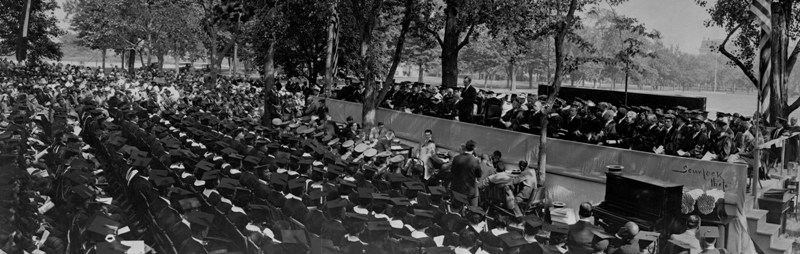
President Coolidge addressing Howard University, June 1924

On What is Missing in Education

In all the discussion over the years concerning the deficiencies of modern education, from the improvement of testing standards, the adoption of new curricula, or even the construction of expansive facilities, the most fundamental component is missing. The purpose of education, for most of America’s existence, has been encouraging the student’s grasp of morality and sense of service to others. So it was for the last classically educated President in our history, Calvin Coolidge.

For all the concern over school shootings, sexual misconduct, drugs, violent outbursts, and other self-destructive behavior, the basics continue to be neglected as incapable of addressing the “complexity” of the issues. This is a refusal to live in reality. It is a decided effort to run from the hard decisions of maturity, allowing immature and unhealthy impulses to dictate both the lives of individuals and the governance of schools.

No one is born with perfect behavior, impeccable manners, or maturity. These qualities must be taught, for students absorb both the good and the bad. Cut out the moral core and there is no compass to help the individual discern good from evil values. Moreover, the young are no longer taught the most basic virtues of character:  self-control, temperance, kindness, forbearance, patience, charity, and diligence. Instead, moral instruction is ridiculed as an attempt to impose extreme codes of behavior or to establish a state religion. Animalistic behavior is regarded as normal, and any attempt to reaffirm essential standards of conduct is met with organized ostracism from accepted society by politically correct elites. In truth, character has nothing to do with a “separation of church and state” and everything to do with a good and healthy civilization.

We are failing our children egregiously.  The individual is treated as mere biological matter or, at best, mind without conscience, free to respond to any and every stimuli while simultaneously being devoid of a spiritual nature or the needs of the soul. Mere relay of information is not education. Transmitting data, shorn of any idea that truth exists and can be known objectively, does not fulfill a teacher’s obligation.

Coolidge said it best,

“Man is far more than intelligence. It is not only what men know but what they are disposed to do with that which they know that will determine the rise and fall of civilization…The realization of progress that has marked the history of the race, the overwhelming and irresistible power which human nature possesses to resist that which is evil and respond to that which is good, are a sufficient warrant for optimism. If this were not so, teaching would be a vain and useless thing, an ornament to be secured by a few, but useless to the multitude.”

Coolidge thought such a narrow base of informed and truly educated people was not right. Proper education reached as many as it could. Proper education did not abandon certain communities, specific demographics, or particular economic strata. It seems some today have surrendered the standards because too few live up to them. Hence, literacy continues to fall, historical awareness evaporates, and nothing is required of the inmates running the asylum.

Coolidge appealed to higher standards proven by decades of historical experience. People were not richer, wiser, better, or purer than they are now, but they knew the effort to aspire to standards was worth it. Aspiring to the ideal — a character formed and maintained through constant effort — was worthy not because perfection could be realized, but because good character is found in its pursuit.

Coolidge continues,

“Our country…has founded its institutions not on the weakness but on the strength of mankind. It undertakes to educate the individual because it knows his worth. It relies on him for support because it realizes his power…[T]he chief end of it all, the teaching of how to think and how to live, must never be forgotten.

     All this points to the same conclusion, the necessity of a foundation of liberal culture, and the requirement for broadening and increasing the amount of moral intellectual training to meet the increasing needs of a complicated civilization. Free schools and compulsory attendance are a new experience. No power of government can bring them to success. If they succeed, it will be through the genuine effort and support that can come only from the heart of the people themselves. It is this condition that makes the position of the teacher rise to such high importance.”

Without the moral and the spiritual to support and sustain the individual, all the “facts” and material stimuli of modernity will leave the student empty, ill-equipped for the potential life holds. It will squander the great inheritance due the next generation: the wisdom of those who thought great thoughts and did great deeds before us.

Image

On Being Worthy of Freedom

Apprehensions over the future have always remained an ever-present concern for a wise and circumspect people. When Americans stop being concerned for the next generation, it will be because we are no longer free individuals. The prospects for freedom stand in greater doubt than perhaps they have for many years, but a lack of confidence in our system is only new to us, not to generations of Americans who came before us.

Any one of the hardships overcome by prior generations could have halted the experiment of self-government in its tracks. It has certainly had no shortage of critics who proclaimed “failure” and “defeat” only to be proven flatly wrong time and time again. Inequity and unfairness have been present in human history from the outset, but neither has had the power to prevent individuals of determination from accomplishing truly great things despite it. Our time is hardly the first to ask, “who is worthy of freedom?”

The Progressive Era produced an almost overwhelming array of reasons to change the way this country was established. It would answer our question with pessimism: the people were ultimately not to be trusted with freedom. It was an intelligent few who merited such power. Coolidge knew, on the other hand, freedom was safest in the hands of the people.

The charge that our system was both too wild and too unequal, compared to the “enlightened” societies of Europe, led to calls for regulation of human behavior on a scale never before known. The pursuit began to implement an efficient and intelligent approach to government that would mitigate risk, remove inequities and shepherd the people to progress.

These activists, predisposed to intense skepticism about capitalist systems, trusted government implicitly with greater and greater control. Enamored with a lopsided admiration for methods foreign to American ideals of law and liberty, these generally middle class intellectuals failed to appreciate the remarkable nature of our constitutional system. They overlooked the careful balance worked out by the Framers, infusing a disastrous measure of good intentions with a reckless accumulation of new laws.

They entrusted government with the power to supply the shortfalls of human nature with legislation. Each effort undervalued, even ignored, the unquantifiable worth of freedom. Government, endeavoring to be “smart” and “humane,” hurt those it proclaimed to help by robbing them of the dignity of free will, the moral judgment of those given sovereignty in our system.

Ours is a history of accomplishment and success because people were recognized not as subjects in service to the State but individuals whose value comes from a Divine Creator. Made in the image of God, it logically follows that the dreams, aspirations and abilities to create, construct and succeed are within every person’s power. It is that power now being denied our young people as unrealistic and unattainable. This is nothing more than the latest incarnation of those who denied Edison could harness light, the Wrights could fly and Ford could mobilize America.

The avoidable tragedy of all this is that it literally destroys the wholesome yearnings of millions for something better than marginal existence. Instead, the young are told to be content with mediocrity, cease the pursuit of success, and consign all future faith and hopes to Washington’s management. No less self-deluded than the Progressives of Coolidge’s day, this operation dehumanizes humanity. History proclaims it will ultimately fail but the cost to countless lives in the process can never be known.

Coolidge, grappling with these problems, said in 1923,

[T}he motive power of progress and reform has not come from the high and mighty but from the mass of the people…It is not the quantity of knowledge that is the chief glory of man…It is in the moral power to know the truth and respond to it, to resist evil and hold to that which is good, that is to be found the real dignity and worth, the chief strength, the chief greatness. This power, even in the humblest and the most unlettered, rises to a height which cannot be measured, which cannot be analyzed. It is this strength of the people which can never be ignored. Of course it would be folly to argue that the people cannot make political mistakes. They can and do make grave mistakes. They know it; they pay the penalty. But compared with the mistakes which have been made by every kind of autocracy they are unimportant…

…Unless the people struggle to help themselves, no one else will or can help them. It is out of such struggle that there comes the strongest evidence of their true independence and nobility, and there is struck off a rough and incomplete economic justice, and there develops a strong and rugged national character. It represents a spirit for which there could be no substitute. It justifies the claim that they are worthy to be free…

     …Civilization and freedom have come because they are an achievement, and it is human nature to achieve. Nothing else gives any permanent satisfaction. But most of all there is need of religion. From that source alone came freedom. Nothing else touches the soul of man. Nothing else justifies faith in the people.

Like the generation who saw beyond the narrow confines of subsistence imposed upon it by king and Parliament, it is time to refuse to participate in a supervised decline. Being taught to doubt our own judgment is merely a prelude to forfeiting the ability to make our own choices, to strive, to fail, to triumph — in short, to live free. If we are to be worthy of that freedom, we cannot surrender to this latest effort — however organized it is — to train out the moral ideals and intangible dreams of people.

Image