On Books and the Pursuit of Learning

This bookplate was designed by Timothy Cole in 1929 and features an intricate bell-shaped system of roots in which the Plymouth Homestead is depicted in Vermont. The scene includes both of Coolidge's famous white collies, Rob Roy and Prudence Prim. In the foreground, a fishing rod leans against a tree beside a basket, both accessories of his many fishing trips. The flag unfurls on either side of a portrait of George Washington, framing the simple scene above Coolidge's name.

This bookplate was designed by Timothy Cole in 1929 and features an intricate bell-shaped system of roots in which is depicted the Plymouth Homestead in Vermont. The scene includes both of Coolidge’s famous white collies, Rob Roy and Prudence Prim. In the foreground, a fishing rod leans against a tree beside a basket, both accessories of his many fishing trips. The flag unfurls on either side of a portrait of George Washington, framing the simple scene above Coolidge’s name.

What a man reads and the quality of books in his library says as much as any other witness could about his character. From youth, he translated Cicero’s Pro Archia Poeta, the defense of the poet Archias’ citizenship against false accusations. As a man, he translated Dante’s Inferno from Italian. He reveled in the wisdom imparted by the great texts of civilization. In “Calvin Coolidge: At Home in Northampton,” Susan Lewis Well, the author of that excellent little book, recounts:

     Coolidge read before falling asleep at night, and Grace told of the pile of books that were on his bedside table never to be disturbed. The Bible was always there plus the Letters, Lectures, and Addresses of Charles Edward Garman…and two paperback volumes of Paradise Lost. Even when traveling, Coolidge carried the two copies of Milton’s classic.

     Mrs. Coolidge remembered that his library was housed in one small five-shelved oak bookcase ‘with a sateen curtain in front.’ His collection numbered about one hundred books including his college texts plus a leather-bound set of Shakespeare’s plays, three Kipling novels, and a set of Hawthorne’s works. Grace admitted that he seldom bought a book, although friends and writers gave him volumes until they numbered about five thousand by the time his presidential term was over.

The exponential growth of his library was not the only outcome due to the generosity of friends. One of the greatest of friends, Frank W. Stearns, commissioned the design of a bookplate in 1926 for Coolidge’s personal library. By 1928, Stearns had finally secured Sidney L. Smith, a renowned engraver, to complete the task. Smith drew the original work with two panels, the lower window featured the signing of the Mayflower compact in 1620 while the upper window depicted the Homestead at Plymouth. Sadly, Smith fell ill and passed away the following year before cutting the design in copper for replication.

     Stearns, undeterred, approached Timothy Cole, a very successful craftsman from New York City who specialized in the almost “lost art” of wood engraving. Cole, building on the design of Smith, completed the distinct work shown above.

In a fascinating survey of the personal libraries of the Presidents, well-known collector and a devoted Antiquarian like President Coolidge, Abraham S. W. Rosenbach said this about the thirtieth president in 1934:

     Calvin Coolidge will probably go down in history as one of the wisest of the Presidents. He had the reputation of being extremely cautious and I have a presentation copy of his Life, by William Allen White which seems to corroborate this statement. It bears on the fly-leaf in the President’s writing: ‘Without recourse, Calvin Coolidge.’

Characteristically, Coolidge says more in two words than most of us say in paragraphs. Employing this legal phrase, Coolidge is refusing any responsibility or endorsement of White’s work. A wise position to take, as time only makes more evident where White’s book is concerned.

Mr. Rosenbach continues, however,

     Mr. Coolidge was interested in the news of the world. He read of the sale in London of the original manuscript of ‘Alice in Wonderland’ which I had purchased. On my return from abroad in May, 1928, the President asked me to lunch at the White House and to bring with me the manuscript. I found that ‘Alice in Wonderland’ was one of his favorite books, that he was interested in Shakespeare, that he liked to own good editions. He asked me details of the first publication of ‘Alice in Wonderland’ and I tried to explain to him that the first edition, issued in 1865, not being altogether to [Lewis] Carroll’s liking, was suppressed. ‘Suppressed,’ said the President, ‘I did not know there was anything off-color in Alice!’

Rosenbach wraps up his presentation on Coolidge by noting the collection the President accumulated during the White House years would find a welcome home back in Northampton, all forty cases worth (an estimated 4,000 volumes). The built-in bookcases Coolidge would discover upon moving into “The Beeches” enabled him to unpack and organize his vast collection of literary treasures. Not the relentless purchaser that President Jefferson was, Coolidge steadied his love for great books with his abiding sense of economy [from the Greek, oikonomia]. His discernment of human nature came from his grounding in classical literature. It was his informed taste combined with the generosity of friends and citizens across America that made this wise man’s library.

On Government Dependence and the Meaning of Freedom

cc_040823_11
“The individual, instead of working out his own salvation and securing his own freedom by establishing his own economic and moral independence by his own industry and his own self-mastery, tends to throw himself on some vague influence which he denominates society and to hold that in some way responsible for the sufficiency of his support and the morality of his actions. The local political units likewise look to the States, the States look to the Nation, and nations are beginning to look to some vague organization, some nebulous concourse of humanity, to pay their bills and tell them what to do. This is not local self-government. It is not American. It is not the method which has made this country what it is. We can not maintain the western standard of civilization on that theory. If it is supported at all, it will have to be supported on the principal of individual responsibility. If that principle be maintained, the result which I believe America wishes to see produced inevitably will follow.

“There is no other foundation on which freedom has ever found a permanent abiding place. We shall have to make our decision whether we wish to maintain our present institutions, or whether we wish to exchange them for something else. If we permit some one to come to support us, we cannot prevent some one coming to govern us. If we are too weak to take charge of our own mortality, we shall not be strong enough to take charge of our own liberty. If we can not govern ourselves, if we cannot observe the law, nothing remains but to have some one else govern us, to have the law enforced against us, and to step down from the honorable abiding place of freedom to the ignominious abode of servitude.

“…If there is to be a continuation of individual and local self-government and of State sovereignty, the individual and locality must govern themselves and the State must assert its sovereignty. Otherwise these rights and privileges will be confiscated under the all-compelling pressure of public necessity for a better maintenance of order and morality. The whole world has reached a stage in which, if we do not set ourselves right, we may be perfectly sure that an authority will be asserted by others for the purpose of setting us right” — President Calvin Coolidge, at Arlington National Cemetery, May 30, 1925.

On John Adams

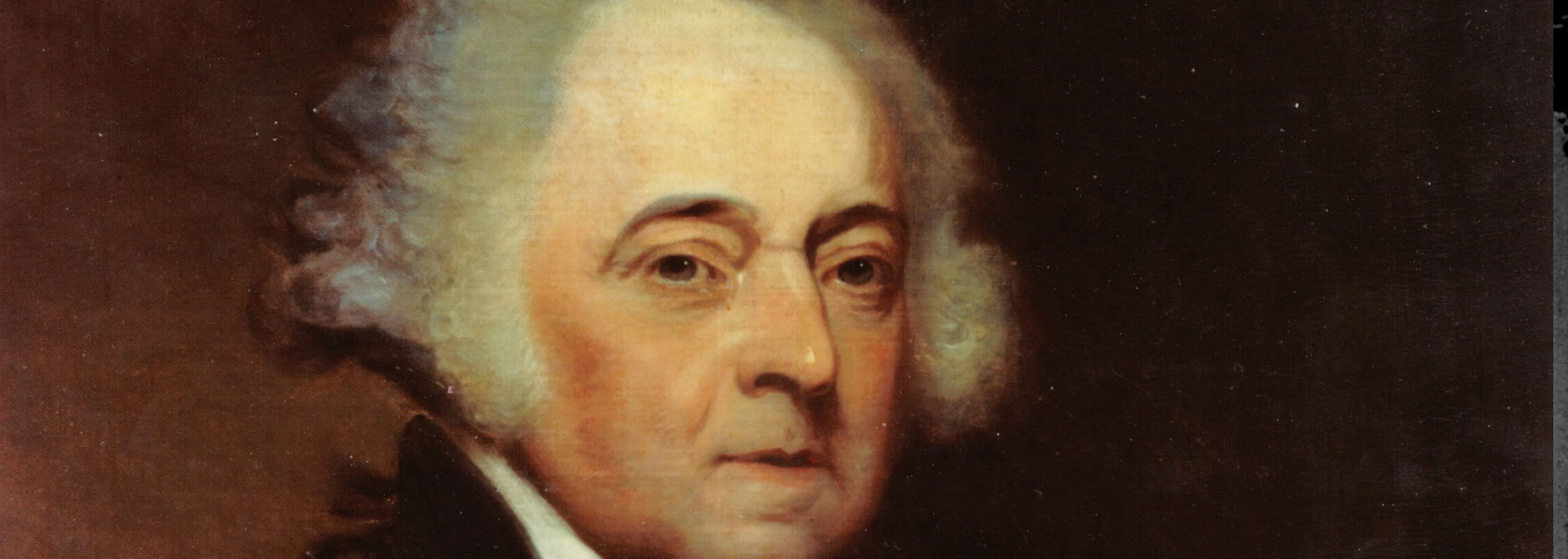
July is a pivotal month for America. It marks the culmination of many years’ labor to bring thirteen discordant colonies around one solemn purpose, united in the essentials of independence, self-government and liberty under law. It was on this day that the Continental Congress actually voted, without dissent, for independence, accepting the resolution proposed by Richard Henry Lee back on June 7. Two days later, the day we now observe to mark the occasion, those gathered approved the Declaration drafted by Jefferson and presented to the Congress by its principal author (Jefferson), alongside John Adams, Benjamin Franklin, Roger Sherman and Robert Livingston. At the center of this difficult task, at nearly every phase, was the tenacious John Adams of Massachusetts. It is perhaps not an overstatement to say that he truly was the driving force behind independence. Prodding, pushing, resolving, shouting above the din of opposition, John Adams deployed all of his energies and abilities to persuade his fellow colonists that nothing less than a complete and total independence is our future.

Free men and women, not only enjoying our God-given liberties, but exercising our moral obligations to keep them was the vision of Adams and those who stood in defiance of tyranny on this day, two hundred and thirty-seven years ago. It was a repudiation of permanent servitude to a distant authoritarian government, subsisting on what it deigns to allow us. It was an advance beyond the old, failed system of absolute monarchs who dictated the terms of life and death to subjects. It was also a summons to restore the rights and obligations of a people already free to stand on their own, free in their lives, property and persons…a freedom given, not by the approval of government, but by the Creator and Supreme Lawgiver.

It would be another son of Massachusetts, President Calvin Coolidge, who would offer a fitting tribute to this tireless and brave champion of ordered liberty. Delivered in Cambridge, July 3, 1925, to commemorate John Adams’ nomination of George Washington as commander of the Army, Coolidge said,

“I suppose if we were to pick any two men out of that gathering, to be set down as something other than politicians, Washington and sturdy old John Adams would be well toward the top of the polling. Though they approached the matter from utterly different angles, they were both led by the sagacity of great politicians to the same conclusion. To both, the crisis was essentially national. A nation must be created to deal with it…All this we look back upon as illumined statesmanship. But statesmanship is nothing more than good, sound politics, tested and proven. That is what it was when John Adams conceived the great strategy of calling a man of the South to the chief command. A more provincial man might have dreamed of Massachusetts, aided by the other colonies, taking and holding the lead and garnering the lion’s share of glory. But Adams was planning in terms of a nation, not of provinces…It was a stroke of political genius that Adams, soul of Puritanic idealism, should have moved the adoption of the army by Congress and the selection of Washington as commander in chief.

“…Let it ever be set down to the glory of Massachusetts that John Adams made George Washington Commander in Chief of the Continental Armies and John Marshall Chief Justice of the United States. Destiny could have done no more.”

It was Adams, at this critical juncture, who placed the righteous prospects of a United States before his own ambitions, the narrow passions of the moment or the instant gratification of anyone’s ambitions, and carried the day triumphant for the self-determination of every one of us down to modern time. The bold action taken by Adams exemplifies that our independence rests on character, the selfless sacrifice of his and every generation, to ensure that true freedom continues.

Image