On Knute Rockne and Football

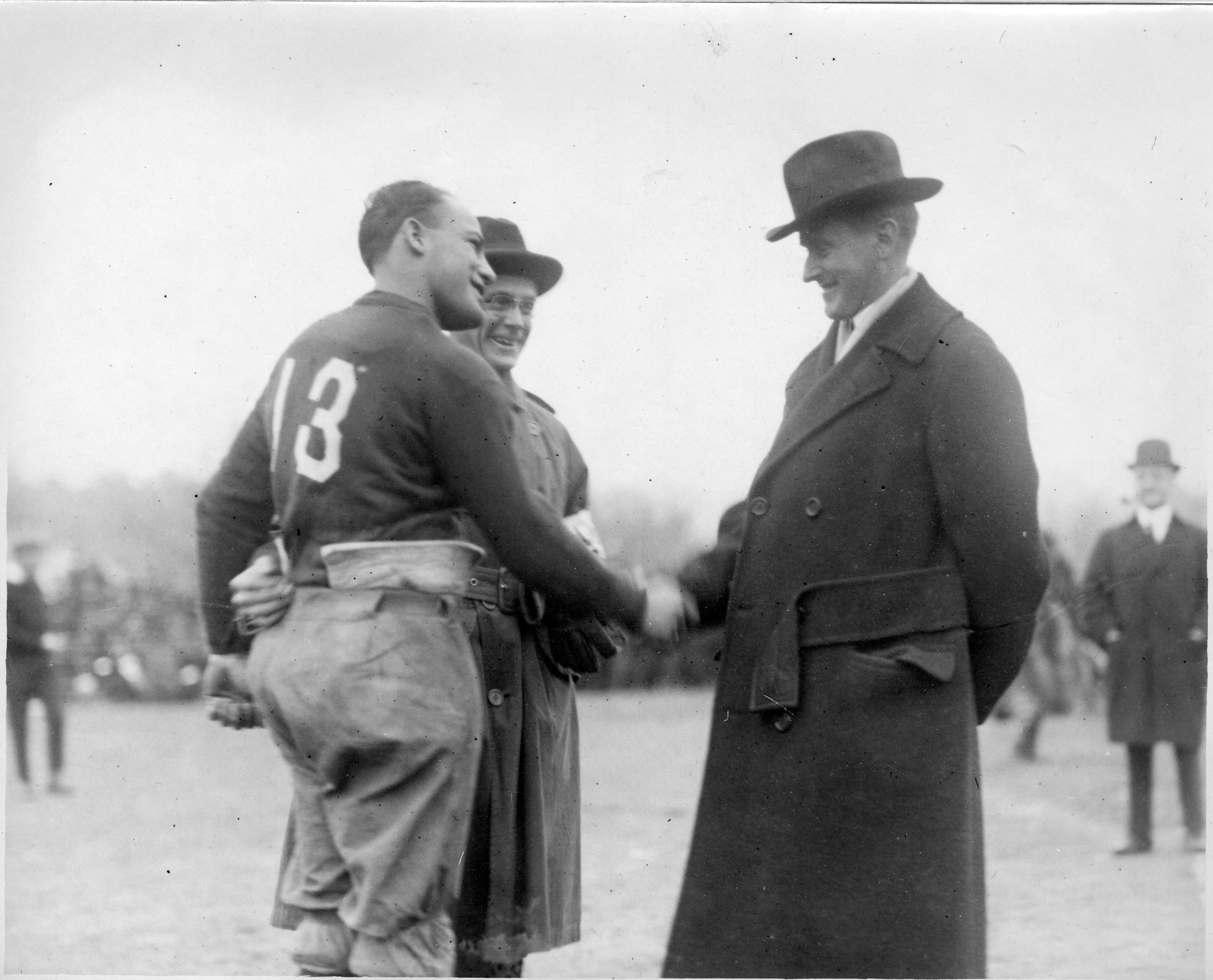
ImageGovernor Coolidge is photographed meeting Amherst’s football captain on Pratt Field, 1920.


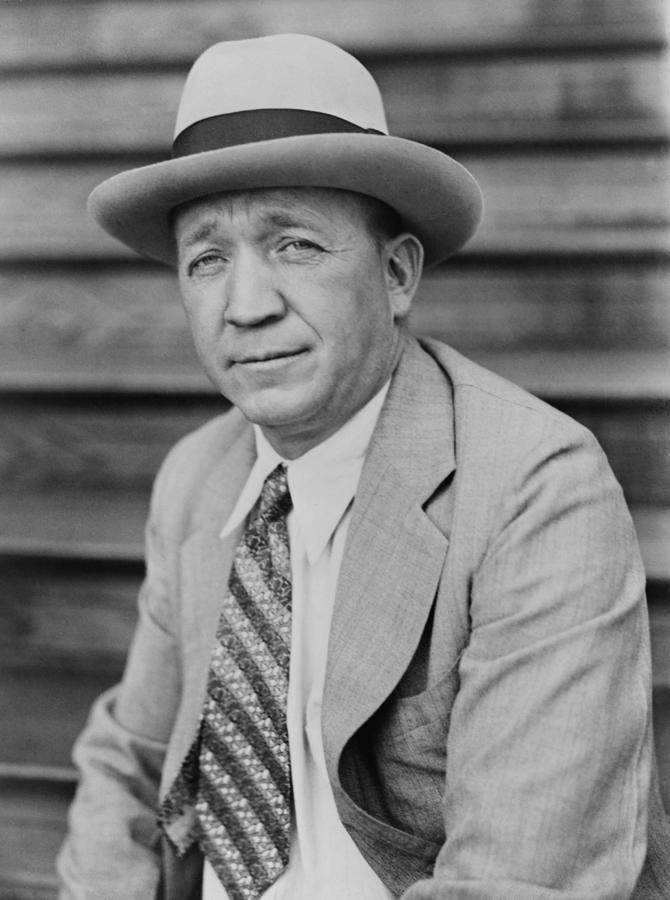
As college football season commences and the NFL settles on its concussion suit, it is worth reflecting upon the principles of which the game is supposed to consist. It is more than big jocks slamming into each other for four quarters. It means more than the business of contracts, celebrity and eradication of risk. Notre Dame’s Knute Rockne taught young men the heart of the game was more than all that. The passion for excellence and development of moral strength was the essence of the sport. Coolidge, writing on the sorrowful occasion of the great coach’s death in 1931, offered these thoughts on the man and the abiding worth of what he taught,

     Knute Rockne is gone. As a football coach he ranked at the head of his profession. In the thirteen years during which he trained the Notre Dame team there were one hundred and five victories and but twelve defeats. Five of his teams never lost a game.

     Back of these achievements was a great man, an inspiring leader and a profound teacher. His training was not confined to the physical side of athletics. He put intellectual and moral values into games. He taught his men that true sport was something clean and elevating. Right living and right thinking went into his victories.

     Rockne conducted a course that was only incidental in education. Yet he had a name and fame with the undergraduate world and the public surpassing that of any faculty member in the country. His activities had the benefit of publicity, but that does not account for his hold on young men. We shall find that in his constant demand for the best that was in them. No bluff would answer. Fifty percent would not do. His passing mark was one hundred. He required perfection. That was why men honored and loved him. That was the source of his power (“Calvin Coolidge Says,” April 2, 1931).

Image

On What is Missing in Education

In all the discussion over the years concerning the deficiencies of modern education, from the improvement of testing standards, the adoption of new curricula, or even the construction of expansive facilities, the most fundamental component is missing. The purpose of education, for most of America’s existence, has been encouraging the student’s grasp of morality and sense of service to others. So it was for the last classically educated President in our history, Calvin Coolidge.

For all the concern over school shootings, sexual misconduct, drugs, violent outbursts, and other self-destructive behavior, the basics continue to be neglected as incapable of addressing the “complexity” of the issues. This is a refusal to live in reality. It is a decided effort to run from the hard decisions of maturity, allowing immature and unhealthy impulses to dictate both the lives of individuals and the governance of schools.

No one is born with perfect behavior, impeccable manners, or maturity. These qualities must be taught, for students absorb both the good and the bad. Cut out the moral core and there is no compass to help the individual discern good from evil values. Moreover, the young are no longer taught the most basic virtues of character:  self-control, temperance, kindness, forbearance, patience, charity, and diligence. Instead, moral instruction is ridiculed as an attempt to impose extreme codes of behavior or to establish a state religion. Animalistic behavior is regarded as normal, and any attempt to reaffirm essential standards of conduct is met with organized ostracism from accepted society by politically correct elites. In truth, character has nothing to do with a “separation of church and state” and everything to do with a good and healthy civilization.

We are failing our children egregiously.  The individual is treated as mere biological matter or, at best, mind without conscience, free to respond to any and every stimuli while simultaneously being devoid of a spiritual nature or the needs of the soul. Mere relay of information is not education. Transmitting data, shorn of any idea that truth exists and can be known objectively, does not fulfill a teacher’s obligation.

Coolidge said it best,

“Man is far more than intelligence. It is not only what men know but what they are disposed to do with that which they know that will determine the rise and fall of civilization…The realization of progress that has marked the history of the race, the overwhelming and irresistible power which human nature possesses to resist that which is evil and respond to that which is good, are a sufficient warrant for optimism. If this were not so, teaching would be a vain and useless thing, an ornament to be secured by a few, but useless to the multitude.”

Coolidge thought such a narrow base of informed and truly educated people was not right. Proper education reached as many as it could. Proper education did not abandon certain communities, specific demographics, or particular economic strata. It seems some today have surrendered the standards because too few live up to them. Hence, literacy continues to fall, historical awareness evaporates, and nothing is required of the inmates running the asylum.

Coolidge appealed to higher standards proven by decades of historical experience. People were not richer, wiser, better, or purer than they are now, but they knew the effort to aspire to standards was worth it. Aspiring to the ideal — a character formed and maintained through constant effort — was worthy not because perfection could be realized, but because good character is found in its pursuit.

Coolidge continues,

“Our country…has founded its institutions not on the weakness but on the strength of mankind. It undertakes to educate the individual because it knows his worth. It relies on him for support because it realizes his power…[T]he chief end of it all, the teaching of how to think and how to live, must never be forgotten.

     All this points to the same conclusion, the necessity of a foundation of liberal culture, and the requirement for broadening and increasing the amount of moral intellectual training to meet the increasing needs of a complicated civilization. Free schools and compulsory attendance are a new experience. No power of government can bring them to success. If they succeed, it will be through the genuine effort and support that can come only from the heart of the people themselves. It is this condition that makes the position of the teacher rise to such high importance.”

Without the moral and the spiritual to support and sustain the individual, all the “facts” and material stimuli of modernity will leave the student empty, ill-equipped for the potential life holds. It will squander the great inheritance due the next generation: the wisdom of those who thought great thoughts and did great deeds before us.
Image

On Presidential Limits

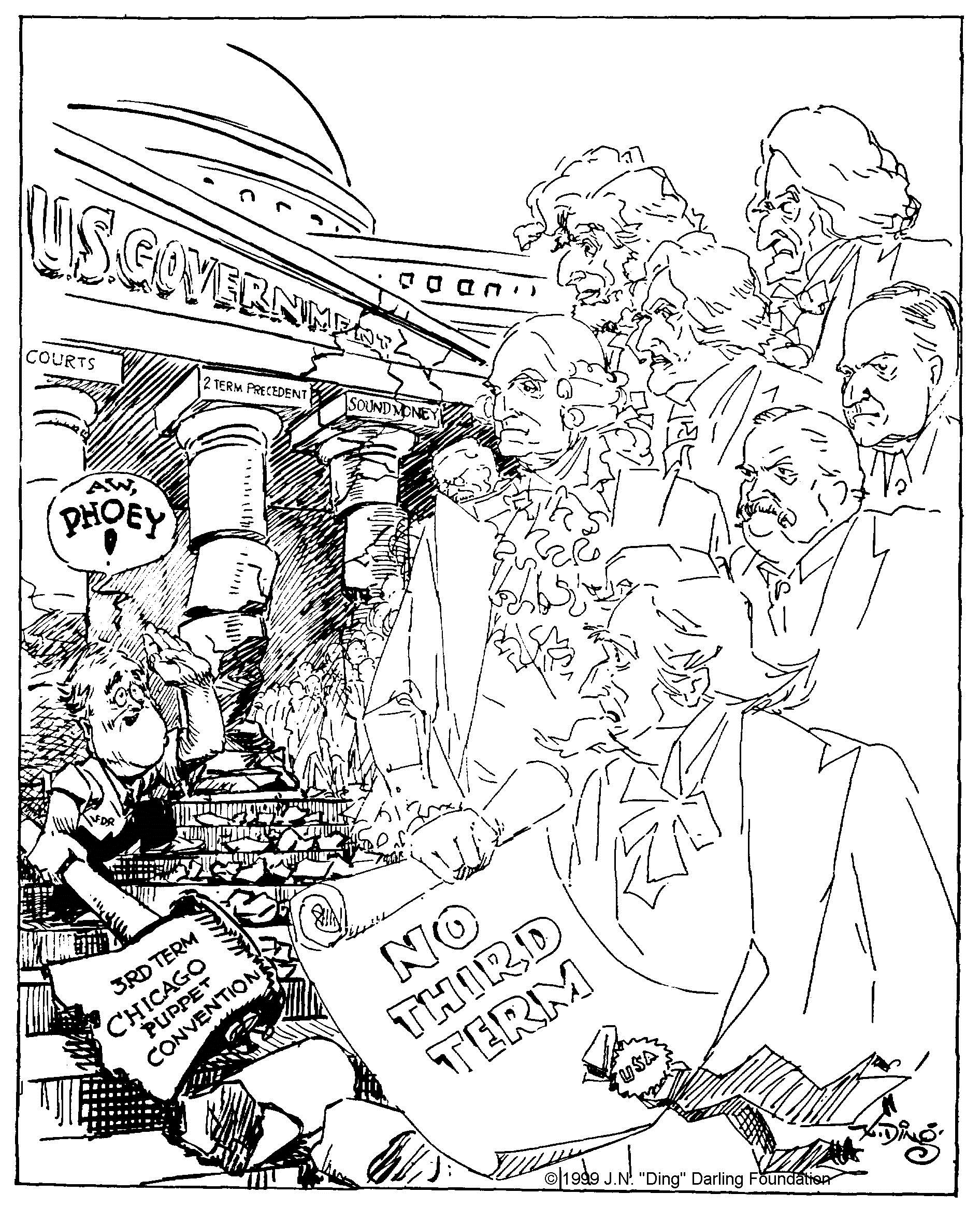
The custom of two terms established by President Washington was faithfully preserved for one hundred and fifty-one years until the precedent was broken by Franklin Delano Roosevelt, winning his third term in 1940. Coolidge had been gone seven years by that time. F. D. R.  would be elected for a fourth term in 1944 and die in office the following April. The twenty-second Amendment was ratified in February 1951 in order to formally establish the original two-term limit as part of the Constitution.

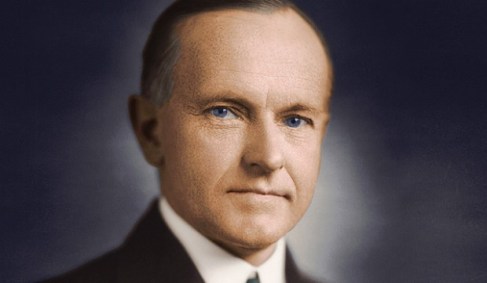
Looking back on his five and a half years as President, Coolidge offered some enduring insights on the need for Presidential limits. This is not only exemplified by the term of office custom, which is now law, but the necessity to respect the Office, honor the limits of its power and guard against its delusory sense of greatness. This risk is not unique to the Presidency; one’s approach to authority on any level is just as prone to abuse and self-deception.

Coolidge, never buying the notion that he was a great man, held each responsibility with the humility of one who could handle what was expected of him without pretentiousness or “muscle-flexing.” He made the difficult look easy but his ability to lead came from discipline, training and perspective not arrogance or condescension. He had this to say about limits,

…[I]rrespective of the third-term policy, the presidential office is of such a nature that it is difficult to conceive how one man can successfully serve the country for a term of more than eight years.

     While I am in favor of continuing the long-established custom of the country in relation to a third term for a President, yet I do not think that the practice applies to one who has succeeded to part of a term as Vice President. Others might argue that it does, but I doubt if the country would so consider it…

     …A President should not only not be selfish, but he ought to avoid the appearance of selfishness. The people would not have confidence in a man that appeared to be grasping for office.

     It is difficult for men in high office to avoid the malady of self-delusion. They are always surrounded by worshipers. They are constantly, and for the most part sincerely, assured of their greatness.

     They live in an artificial atmosphere of adulation and exaltation which sooner or later impairs their judgment. They are in grave danger of becoming careless and arrogant.

     The chances of having wise and faithful public service are increased by a change in the presidential office after a moderate length of time.

     In the higher ranges of public service men appear to come forward to perform a certain duty. When it is performed their work is done. They usually find it impossible to readjust themselves in the thought of the people so as to pass on successfully to the solution of new public problems.

     An examination of the records of those Presidents who have served eight years will disclose that in almost every instance the latter part of their term has shown very little in the way of constructive accomplishment. They have often been clouded with grave disappointments.

     While I had a desire to be relieved of the pretensions and delusions of public life, it was not because of any attraction of pleasure or idleness.

     We draw our Presidents from the people. It is a wholesome thing for them to return to the people. I came from them. I wish to be one of them again…Our country does not believe in idleness. It honors hard work. I wanted to serve the country again as a private citizen.

ImageIn this editorial depiction by J. N. “Ding” Darling entitled, “Just a whole lot of nobodies who never knew nothin’,” published October 15, 1940, the cartoonist conveys F. D. R.’s destructive disregard of our institutions and traditions. It is a suitable tribute that, among the “ghosts” of past Presidents arrayed against Roosevelt, Calvin Coolidge is conspicuously among them (L to R: Washington, Lincoln, Jefferson, Jackson, Cleveland and Coolidge stand in the foreground, with Theodore Roosevelt and the rest of those Presidents who have gone on, standing in the background). Coolidge’s warnings echo even now.