On Presidential Pedigree

45058v caboose of train 1925

“It is customary I suppose for those who are interested in those things to look into the possible inherited background of Presidents. Some one has dug out a tradition that my family, the Coolidges, came from a place in Normandy. The French spelling was Colynge. I have seen on the screen within a short time a picture of a castle in that town–I can’t tell the name of the town. Now I assume that that meant that we had a Norman background, which as I indicated yesterday was a Norse or a Norwegian background. I have got so many backgrounds of one kind or another that I am pretty purely American, having I believe a little tinge of Indian blood in me. I simply speak of the Norman background as of a little interest on account of the Norwegian gathering yesterday. I have got several others that I don’t need to dwell on–Scotch, and, Colonel [Michael] Hennessy says, Irish” — Calvin Coolidge, press conference on June 9, 1925 (The Talkative President, p.42).

Virtually since the beginning, people have been drawn to trace lineage to someone renowned and respected, especially in the last two hundred years when that someone is among our favorite Presidents. While family histories certainly make for fascinating discoveries, at times connecting us closer than first realized to the heroic, human nature seems driven to conclusively confirm that greatness exists through bloodlines instead of through traits of character. Still, it is telling that our nation’s heroes are known for their courage, hard work and service, from George Washington to folk figures like John Henry. They triumph over tragedy through discipline, perseverance, and sincerity. They stand as men and women not as petty, dependent victims. Coolidge, like most Americans, was entirely unashamed of his status as a “mutt” rather than a fancy purebred. Overemphasizing family heritage to bring us closer to what was noble and worthy, especially in America, is missing a very real opportunity. Each one of us can realize the regal inheritance we already possess as Americans under our system of liberty and responsibility. Yet, and even more importantly, partaking of the honor takes genuine effort because it is test in moral virtue not material status. This is why slavery has been the normal condition of human experience. It is easier than true freedom.

While Coolidge could just as readily be looking ahead and looking behind, he summarized America’s kind of nobility this way,

“Although all our Presidents have had back of them a good heritage of blood, very few have been born to the purple. Fortunately, they are not supported at public expense after leaving office, so they are not expected to set an example encouraging to a leisure class. They have only the same title to nobility that belongs to all our citizens, which is the one based on achievement and character, so they need not assume superiority. It is becoming for them to engage in some dignified employment where they can be of service as others are. Our country does not believe in idleness. It honors hard work.” Or, when he said, “There can be no national greatness which does not rest upon the personal integrity of the people.” What makes Americans noble is not found in their ancestry or genetic pedigree, but rests on the self-control, honesty, humility and sense of service each individual cultivates in the heart, the mind and in one’s actions. Coolidge never subscribed to the false premise that greatness is some unattainable birthright or gift from those in authority. Greatness resides in the small things, truth loved above pretense, a job well-done, sacrifice quietly rendered. “We need never fear,” Coolidge once observed, “that we shall not be called on to do great things in the future if we do small things well at present.” As it says somewhere else, “Do you see a man who excels in his work? He will stand before kings” and “He that is greatest among you shall be your servant.”

The Coolidge Women

SS_President_Coolidge_Launching__Newport_News_Virginia (3)

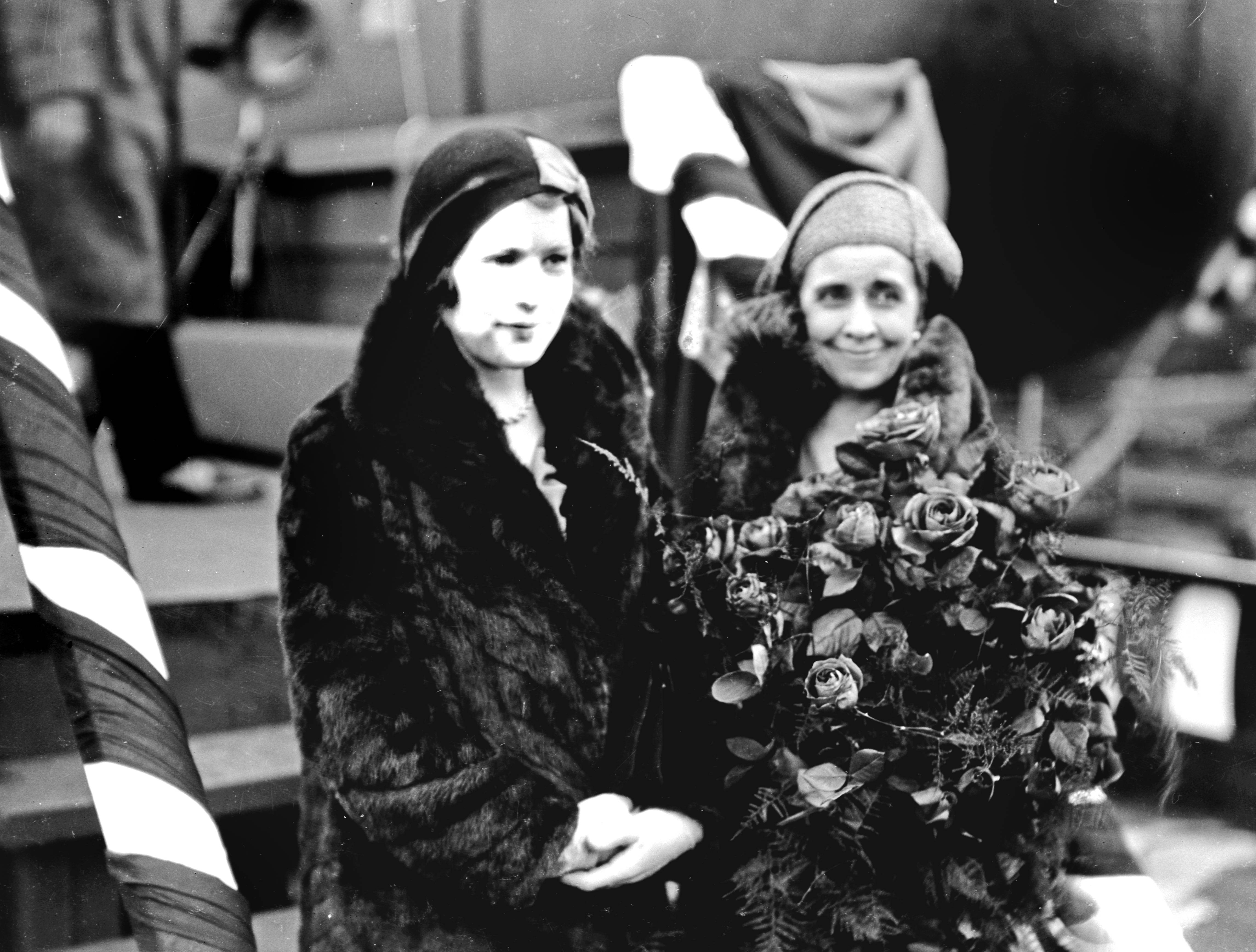
Florence (upper left) and Grace Coolidge (lower right) join others at the christening of the liner SS President Coolidge, February 21, 1931. The vessel’s sister ship, the SS President Hoover, had been christened the previous December by First Lady Lou Hoover. Standing beside her hull, Grace christened the ship with a bottle of water from one of the springs near the Homestead in Plymouth. These two merchant ships were the largest built up to that time, each 645 feet in length, with gross tonnage of 21,936.

Both Mrs. Coolidge and Mrs. Coolidge stand for their picture at the dock in Newport News, Virginia.

Both Mrs. Coolidge and Mrs. Coolidge stand for their picture at the dock in Newport News, Virginia. Thanks go to Norfolk Public Library for the use of these pictures from the 1931 christening.

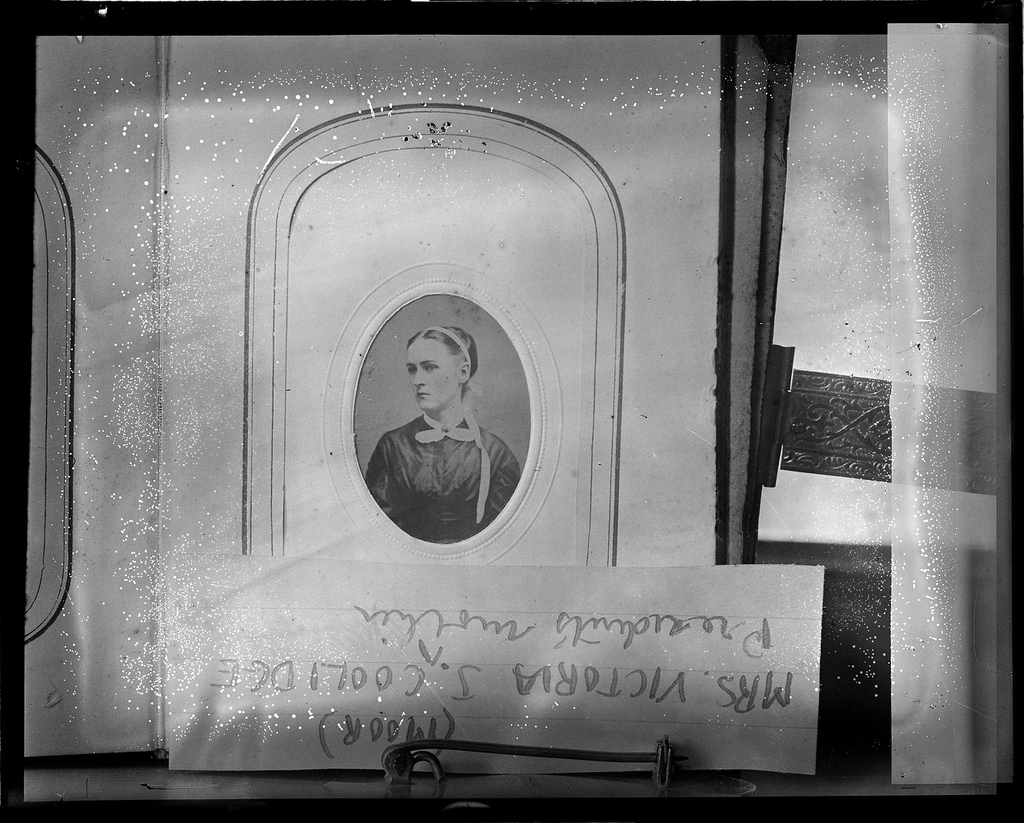
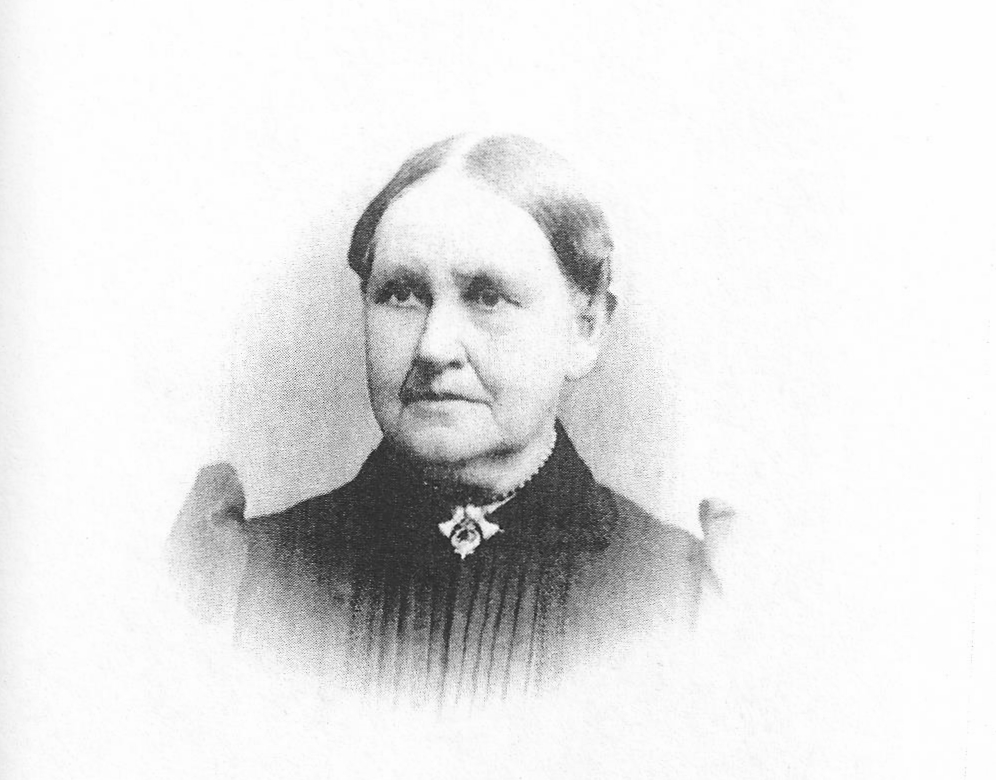
The President's mother, Victoria Josephine Moor Coolidge. Of her, Calvin once wrote: "Whatever was grand and beautiful in form and color attracted her. It seemed as though the rich green tints of the foliage and the blossoms of the flowers came for her in the springtime, and in the autumn it was for her that the mountain sides were struck with crimson and gold." She died at age 39, when Calvin was 12 years old.

The President’s mother, Victoria Josephine Moor Coolidge. Of her, Calvin once wrote: “Whatever was grand and beautiful in form and color attracted her. It seemed as though the rich green tints of the foliage and the blossoms of the flowers came for her in the springtime, and in the autumn it was for her that the mountain sides were struck with crimson and gold.” She died at age 39, when Calvin was 12 years old.

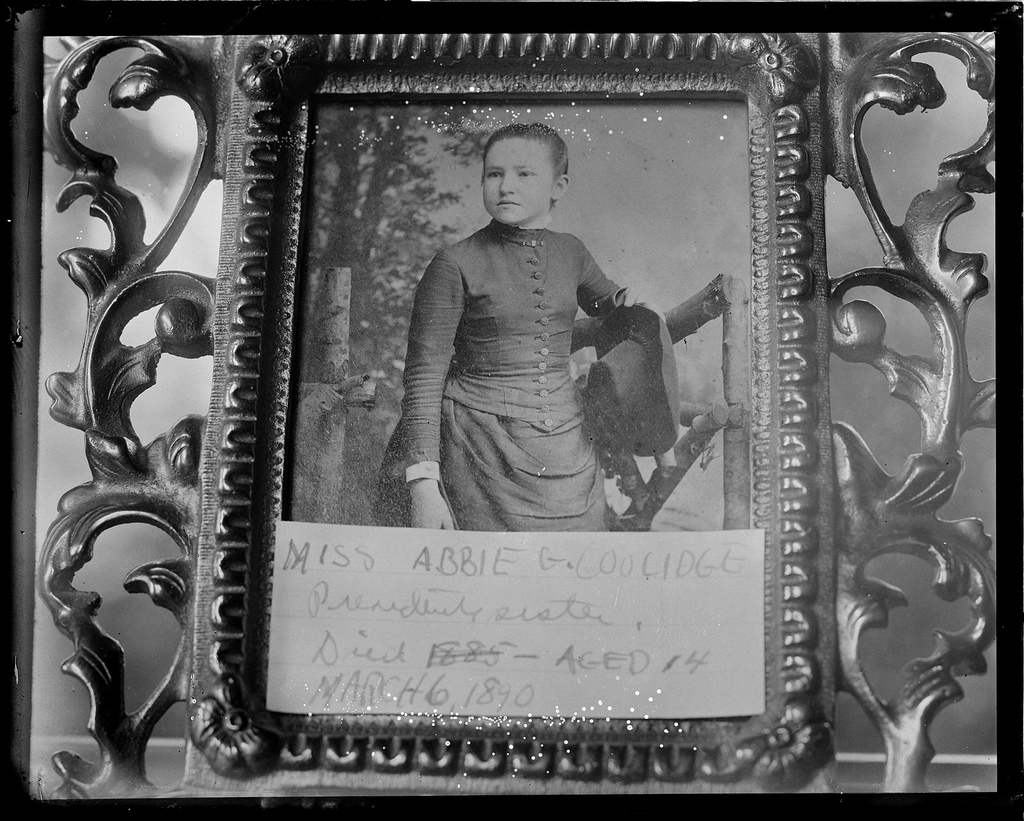
The President's sister, Abigail Gratia Coolidge, three years his junior. Of her Calvin wrote: "The memory of the charm of her presence and her dignified devotion to the right will always abide with me."

The President’s sister, Abigail Gratia Coolidge, three years his junior. Of her Calvin wrote: “The memory of the charm of her presence and her dignified devotion to the right will always abide with me.” She died at age 14 of appendicitis.

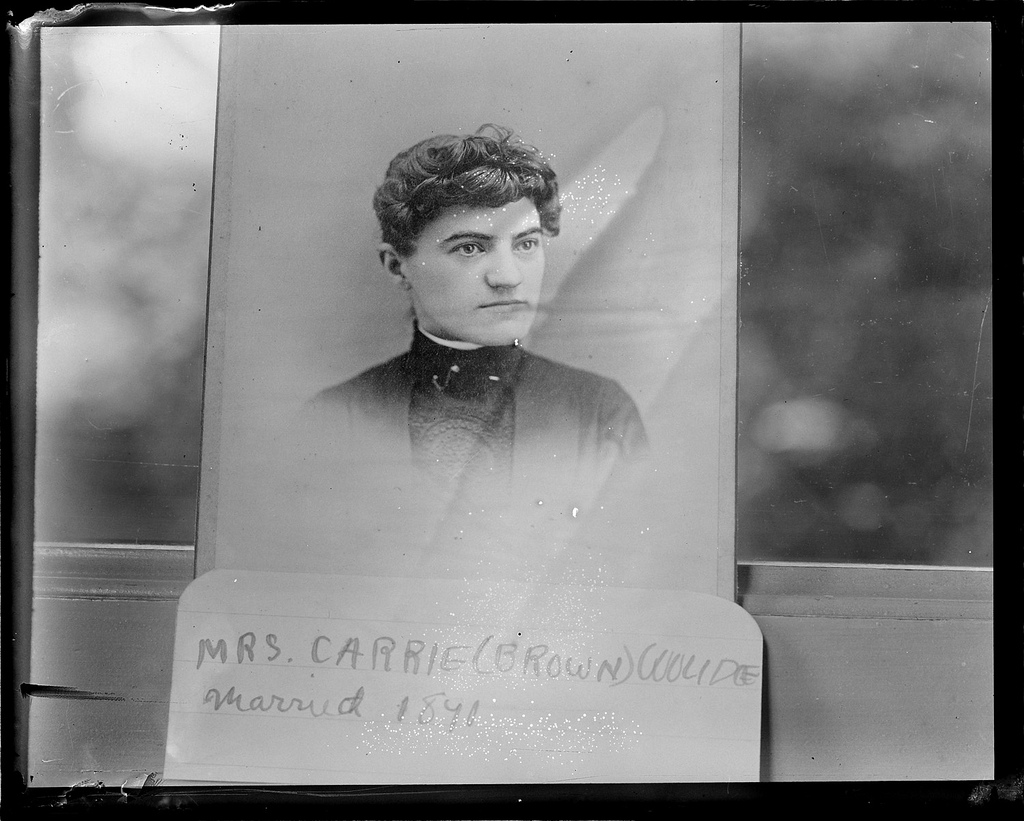
The President's stepmother, Carrie A. Brown Coolidge, married his father, the Colonel in September 1891. She had been an active participant in the life of Plymouth for many years. Loving him as her own son, Calvin's stepmother would be another great influence for good in his life at a crucial time. Of her he once said, "For thirty years she watched over me and loved me, welcoming me when I went home, writing me often when I was away, and encouraging me in all my efforts." She passed away in 1920 just before his election to the Vice-Presidency.

The President’s stepmother, Carrie A. Brown Coolidge, married his father, the Colonel in September 1891. She had been and would continue to be an active participant in the life of Plymouth for many years as a teacher and postmaster. Loving him as her own son, Calvin’s stepmother would be another great influence for good in his life at a crucial time. Of her he once said, “For thirty years she watched over me and loved me, welcoming me when I went home, writing me often when I was away, and encouraging me in all my efforts.” She passed away in 1920 just before his election to the Vice-Presidency.

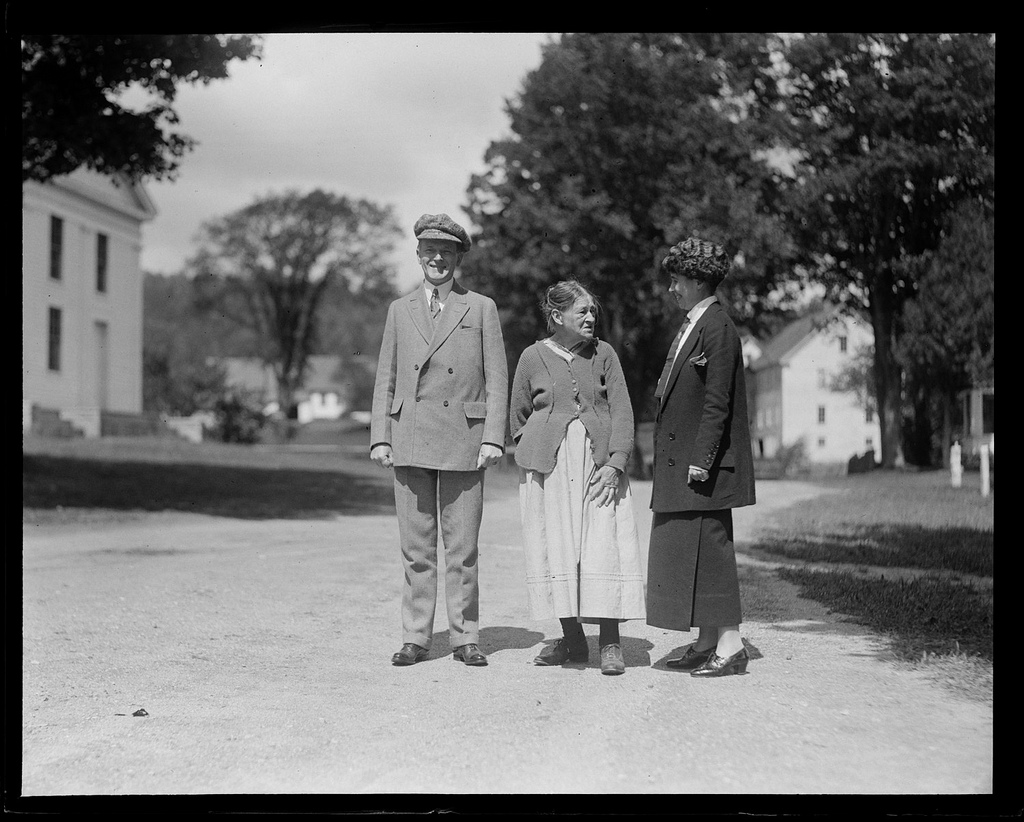
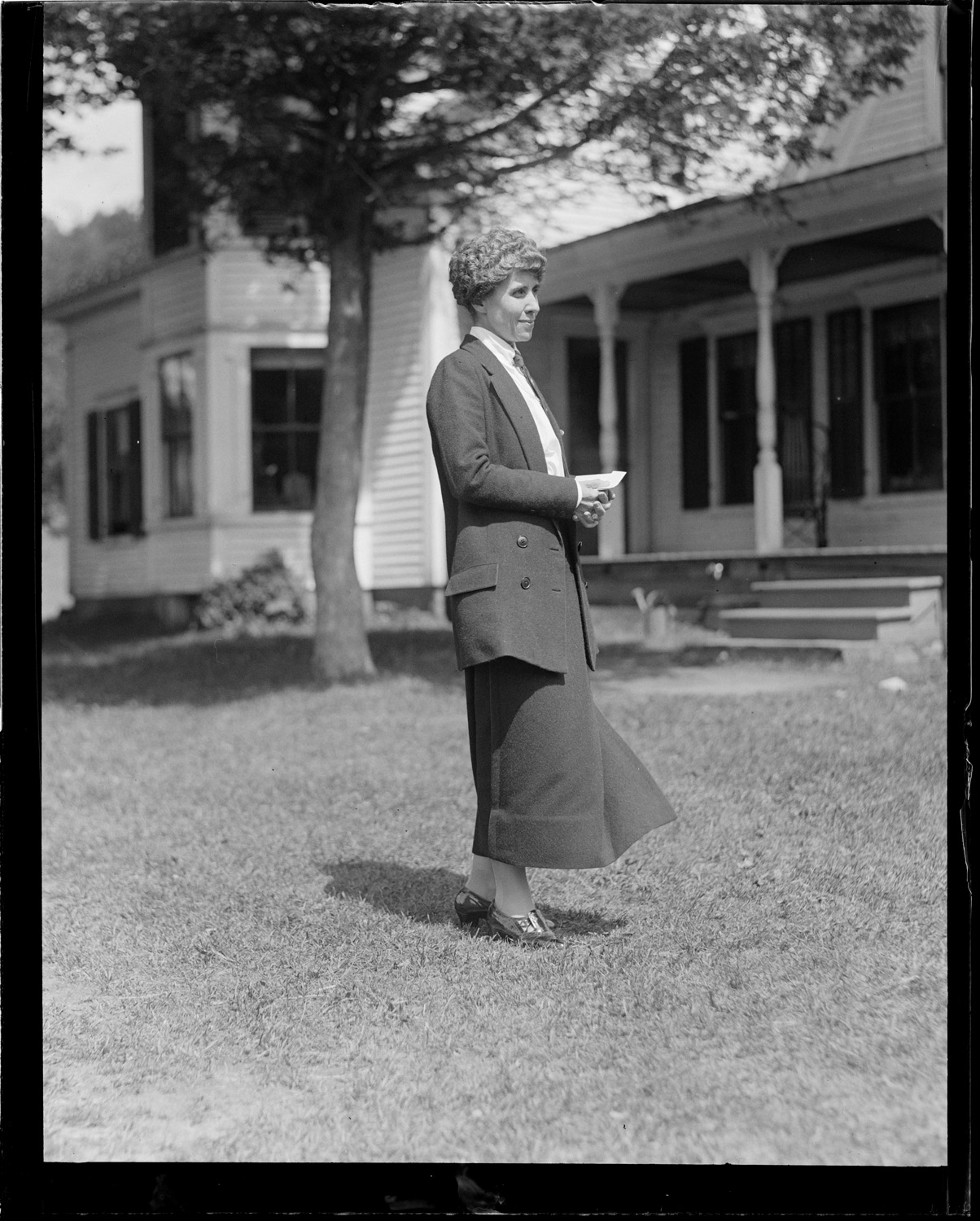
The President's maternal aunt, Gratia E. Moor, while technically not a Coolidge was his mother Victoria's older sister. Here he and Grace enjoy time with her during a visit to Plymouth.

The President’s maternal aunt, Gratia E. Moor, while technically not a Coolidge (by surname), she was his mother Victoria’s older sister. Here he and Grace enjoy time with her during a visit to Plymouth.

The President's paternal grandmother, Sarah Almeda Brewer Coolidge, known as "Aunt Mede," also left a deep impression on Calvin's life. The wife of Calvin Galusha Coolidge, she lived to see her grandson meet and marry Grace. Of "Aunt Mede" he recalled, "She was a constant reader of the Bible and a devoted member of the church, who daily sought for divine guidance in prayer. I stayed with her at the farm much of the time and she had much to do with shaping the thought of my early years. She had a benign influence over all who came in contact with her. The Puritan severity of her convictions was tempered by the sweetness of a womanly charity. There were none whom she ever knew that had not in some way benefited by her kindness."

The President’s paternal grandmother, Sarah Almeda Brewer Coolidge, known as “Aunt Mede,” also left a deep impression on Calvin’s life. The wife of Calvin Galusha Coolidge, she lived to see her grandson meet and marry Grace. Of “Aunt Mede” he recalled, “She was a constant reader of the Bible and a devoted member of the church, who daily sought for divine guidance in prayer. I stayed with her at the farm much of the time and she had much to do with shaping the thought of my early years. She had a benign influence over all who came in contact with her. The Puritan severity of her convictions was tempered by the sweetness of a womanly charity. There were none whom she ever knew that had not in some way benefited by her kindness.”

The indomitable Aurora Pierce, friend, housekeeper and member of the family, she could handle just about anything thrown her way. She knew how to cook for Calvin and was one of the few who could issue orders to him without fear. When she was told of his death on January 5, 1933, she wept.

The indomitable Aurora Pierce, friend, housekeeper and member of the family, she could handle just about anything thrown her way. She was the essence of a hardy New England pioneer woman. She knew how to cook for Calvin and was one of the few who could issue orders to him without fear. When she was told of his death on January 5, 1933, she wept.

Grace Anna Goodhue Coolidge, "the sunshine and the joy of his life--his rest when tired--his solace in time of trouble," as Miss Randolph observed (Ishbel Ross, Grace Coolidge and Her Era p.188).

Grace Anna Goodhue Coolidge, “the sunshine and the joy of his life–his rest when tired–his solace in time of trouble,” as Miss Randolph observed (Ishbel Ross, Grace Coolidge and Her Era p.188).

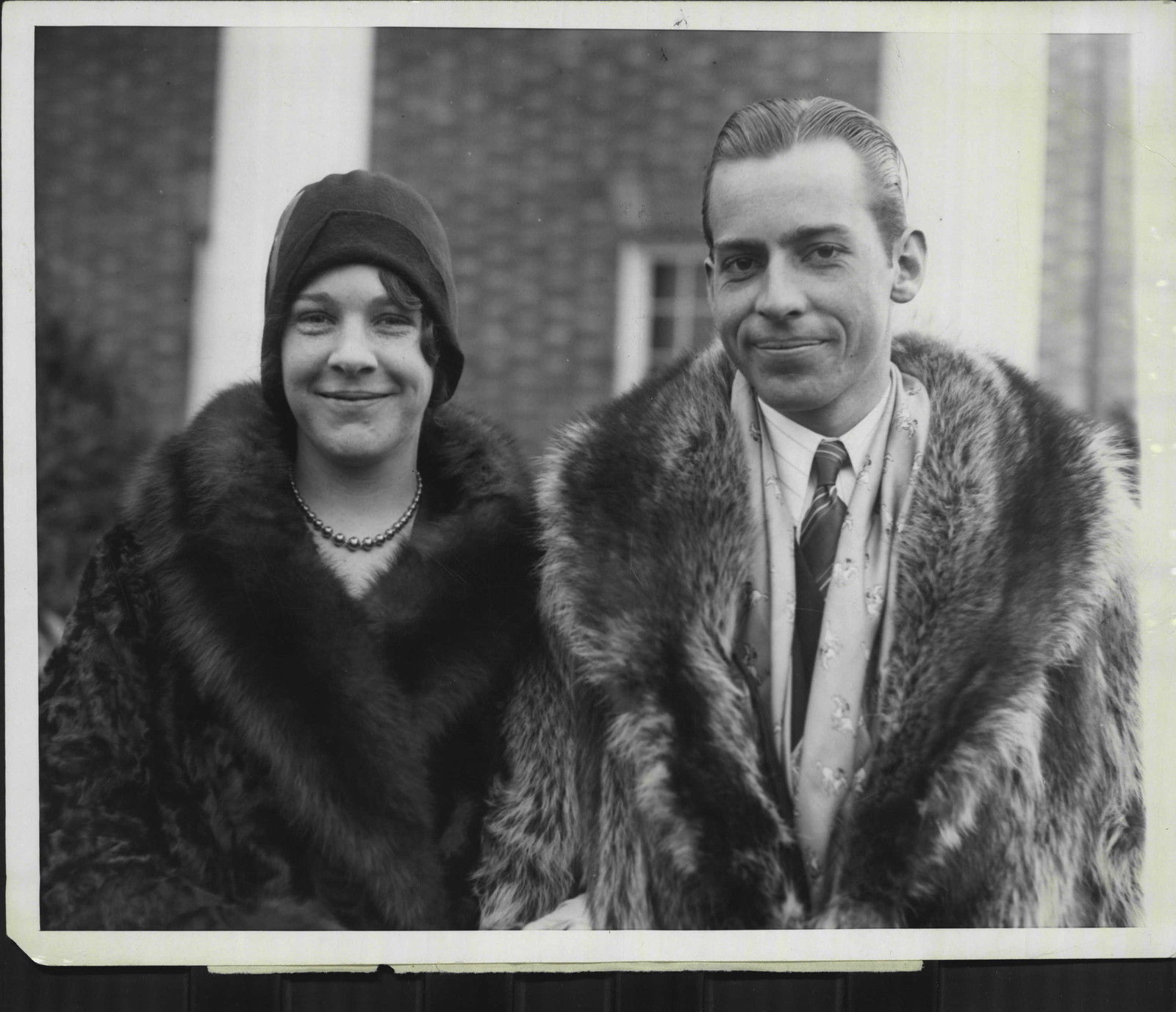
The President's oldest son, John, and Florence Trumbull during their engagement, 1928.

The President’s oldest son, John, and Florence Trumbull during their engagement, 1928. Calvin and Grace loved the young lady who would become their daughter.

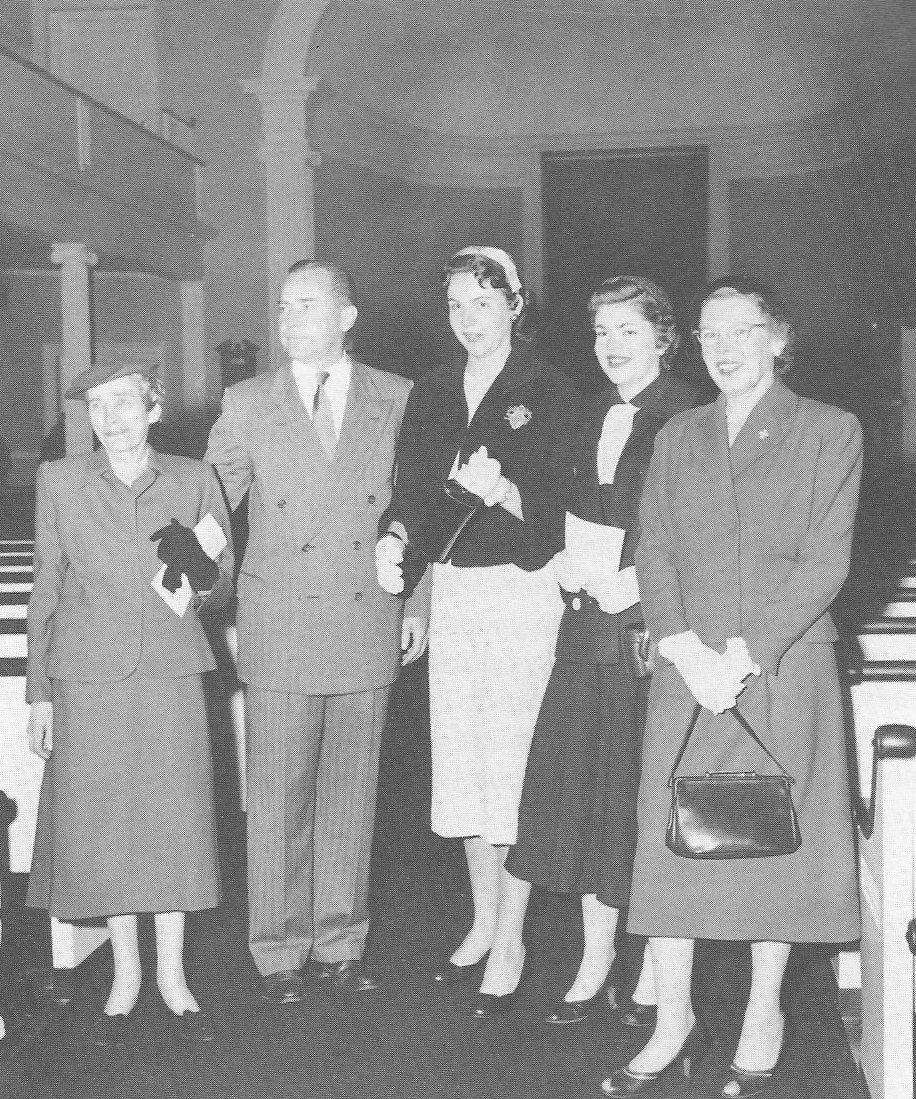
The Coolidge family at the dedication of the Calvin Coolidge Memorial Room in Forbes Library, September 1956. This would prove to be Grace's final public appearance. Her "Precious Four," as she called children John and Florence with granddaughters Cynthia and Lydia, are featured in Gloria May Stoddard's fine book, Grace and Cal: A Vermont Love Story, p.153). This photograph is found in the holdings of Forbes Library.

The Coolidge family at the dedication of the Calvin Coolidge Memorial Room in Forbes Library, September 1956. This would prove to be Grace’s final public appearance. Her “Precious Four,” as she called children John and Florence with granddaughters Cynthia and Lydia, are featured in Gloria May Stoddard’s fine book, Grace and Cal: A Vermont Love Story, p.153). The original photograph is found in the holdings of Forbes Library.

“Bless Their Honest Irish Hearts” by Charles C. Johnson

“Bless Their Honest Irish Hearts” by Charles C. Johnson

Before St. Patrick’s Day comes to a close, it is useful to consider the contributions of one individual, not native to the Emerald Isle but, despite being a Congregationalist Yankee, did much toward welcoming and assimilating Ireland’s immigrants to a place of respect and honor in one of the most Irish-heavy areas of America, the city of Boston. Rather than enhancing racial or religious bigotry by demanding instant results, Coolidge diffused tensions through mutual respect and patient education. Treating the Irish no differently than anyone else who came here to work hard, live honestly and become citizens, he taught what being American is all about, free of hyphens, committed to liberty, grounded in Christian forbearance and confident enough to hold faith in our founding ideals. In this way, he did more to establish the Irish (and immigrants of all countries) as full-fledged Americans than most recognize. Coolidge would experience an unbroken series of political victories as a result, thanks in part to these “Coolidge Democrats” who understood that for immigration to benefit everyone, the responsibilities of citizenship must be taken just as soberly as its rewards. Character came first and it was that very insistence on standards, despite the career risks for Coolidge personally, that prevailed at the ballot box. Coolidge did not need a herd of consultants to validate the Golden Rule for him. As he would observe later in life: The person who is right makes his own luck. Cal points the way toward the Founder’s vision for an assimilated, prosperous and peaceful people preserved through an incremental, not immediate, process; a pathway to citizenship earned by obedience, not bestowed by political calculation for electoral advantage.

A rarer specimen than Davis' recent great discovery, Honesty by "Ding" Darling, The Des Moines Register 8-31-1924

“A rarer specimen than Davis’ recent great discovery, Honesty” by “Ding” Darling, The Des Moines Register 8-31-1924