First Presidential Transatlantic Conversation, October 13, 1928

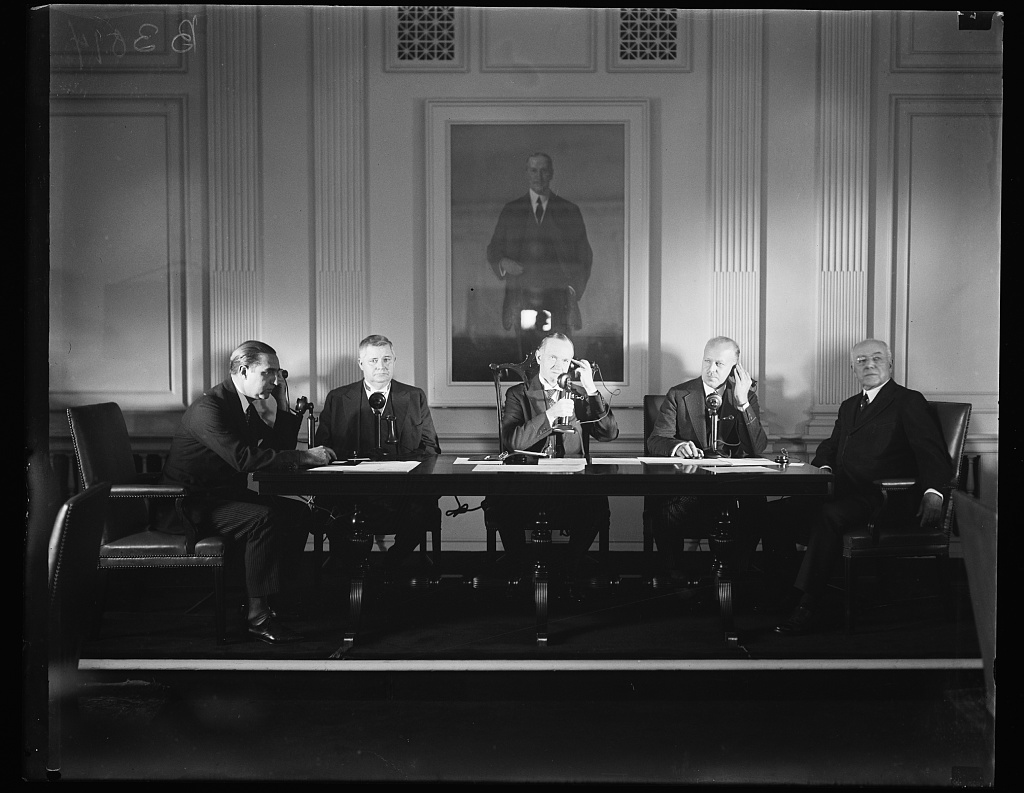
Pictured here in the Chamber of Commerce Building in Washington, D.C., from L to R: Don Mariano de Amoede y Galaremendi (Spanish Embassy, Washington); Under Secretary of State J. Reuben Clark; President Coolidge, speaking to King Alfonso; Walter S. Gifford, president of AT & T; and Joseph H. De Frees, chairman of the board, U.S. Chamber of Commerce. The man in the portrait above them is businessman Harry A. Wheeler, the first chairman of the U.S. Chamber of Commerce.

Pictured here in the Chamber of Commerce Building in Washington, D.C., from L to R: Don Mariano de Amoede y Galaremendi (Spanish Embassy, Washington); Under Secretary of State J. Reuben Clark; President Coolidge, speaking to King Alfonso; Walter S. Gifford, president of AT & T; and Joseph H. De Frees, chairman of the board, U.S. Chamber of Commerce. The man in the portrait above them is businessman Harry A. Wheeler, the first chairman of the Chamber. Thanks go out to Mr. Jerry Wallace and everyone who, through tenacious detective work, identified all the details behind this photograph.

The occasion this photograph captures marked two historic firsts: It was the first time a President personally used a transatlantic telephone and it was the first telephone conversation held between a President and one of Europe’s leaders. While the very first transatlantic service was achieved on January 7, 1927 between New York and London, the nation of Spain is here linking up with America via telephone technology, joining France, Germany, Sweden, Holland and Belgium in the ability to connect over a circuit of 6,500 miles inside of one-fifth of a second. The conversation between President Coolidge and King Alfonso XIII was flawlessly crisp, heard clearly on both sides of the Ocean and was noted as the best talk thus far experienced with such a device over so long a distance. President Coolidge had spoken to the leaders of Mexico, Canada and Cuba in past months but it was this conversation that made history.

After exchanging greetings, President Coolidge elaborated on the exceptional potential of the telephone and what it meant for future. Coolidge, speaking to the King, observed, “I welcome this added link, no less strong because it is invisible, between Spain and the United States. I believe it to be true that when two men can talk together the danger of any serious disagreement is immeasurably lessened and that what is true of individuals is true of nations. The international telephone, therefore, which carries the warmth and the friendliness of the human voice, will always correct what might be misinterpreted in the written word.

“Whatever brings our two countries closer is of value to us and to the world. This Western Hemisphere, discovered by the wonderful navigators of Spain, has always owed much to your country. The language of Spain is the language of a great part of the Americas. The fine traditions of Spain are the basis of the culture of a large part of the Americas and our friendship with the great nations in the South draws us closer to their mother country. With your country and with theirs the United States stands for the promotion of world understanding and peace…I am especially glad thus orally to greet your Majesty, because I know the position of great personal responsibility you hold in directing the policies and progress of your country. I wish for your Majesty a long and happy life and for your country all the prosperity and happiness which come from wise and benevolent leadership in all those things which make life richer and finer.”

King Alfonso XIII of Spain, painted by Philip Alexius de Laszlo in 1927. De Laszlo also painted a portrait of Coolidge (1926).
King Alfonso XIII of Spain, painted by Philip Alexius de Laszlo in 1927. De Laszlo also painted a portrait of Coolidge (1926).

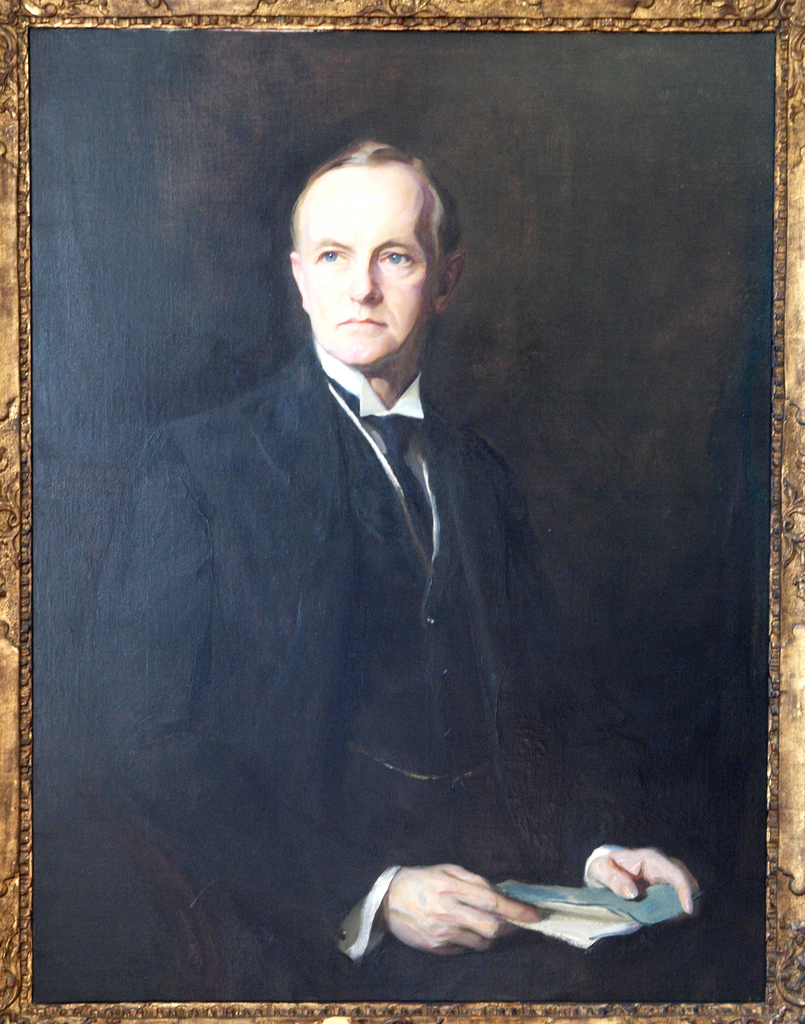
The portrait of Coolidge painted by Hungarian artist Philip de Laszlo, two years before the telephone conversation with King Alfonso.

The portrait of Coolidge painted by Hungarian artist Philip de Laszlo, two years before the telephone conversation with King Alfonso.

To that, King Alfonso replied, “Mr. President, I thank you for the cordial words in which you do Spain the honor and justice to recognize her outstanding services to the Americas and I agree that we ought to expect from this new means of communication ever closer relations because of the intimate and more perfect understanding between the two peoples.

“I reiterate to your Excellency, with my salutations, the testimony of my most sincere appreciation and extend best wishes for the peace and prosperity of the United States.”

Dedication of Bok Tower, February 1, 1929

President Coolidge standing beside Edward Bok. Is that the President smiling? Perhaps he is reading that mentions smiling at the absurdity of engendering class envy in this country.

President Coolidge standing beside Edward Bok. Is that the President smiling? Perhaps he is reading that phrase in the Dedication Address which mentions smiling at the absurdity of those who engender class envy in this country.

On their second visit to Florida near the close of his presidency (the first being en route to Havana the previous year), Calvin and Grace Coolidge came to Lake Wales to dedicate the Mountain Lake Sanctuary and Bok Singing Tower to the American people. Some of his reflections on that occasion are given here,

“These grounds which we are dedicating to-day are another extension of this rapidly developing movement: It has been designated as a sanctuary because within it people may temporarily escape from the pressure and affliction of the affairs of life and find that quiet and repose which comes from a closer communion with the beauties of nature. We have not secured the benefits which I have enumerated without being obliged to pay a price. The multiplicity and the swiftness of the events with which we are surrounded exhaust our nervous energy. The constant impact upon us of great throngs of people of itself produces a deadening fatigue. We have a special need for a sanctuary like this to which we can retreat for a time from the daily turmoil and have a place to rest and think under the quieting influence of nature and of nature’s God.

“It is not only through action, but through contemplation that people come to understand themselves. Man does not live by bread alone. This thought is expressed in the motto of the sanctuary in the words of John Burroughs: ‘I come here to find myself. It is so easy to get lost in the world.’ We are so thickly crowded with the forest of events that there is not only danger that we can not see the trees, but that we may lose our sense of direction. Under the influence of these beautiful surroundings we can pause unhampered while we find out where we are and whither we are going. Those who come here report the feeling of peace which they have experienced. In the expression of an ancient writer, it is a place to which to invite one’s soul, where one may see in the landscape and foliage, not what man has done, but what God has done…

L to R: First Lady Grace Coolidge, President Coolidge, Mrs. Mary Curtis Bok and Mr. Edward William Bok, February 1, 1929.

L to R: First Lady Grace Coolidge, President Coolidge, Mrs. Mary Louise Curtis Bok and Mr. Edward William Bok, February 1, 1929.

“The main purpose of this sanctuary and tower is to preach the gospel of beauty. Although they have been made possible through the generosity of Mr. Edward W. Bok, he does not wish them to be considered as a memorial or a monument. While it has been his purpose to give some expression here to his own love of the beautiful, in form, in color, and in sound, he has also sought to preserve the quiet majesty of the trees, increase the display of coloring in the flowers, and combine stone and marble in the graceful lines of the tower, all in a setting surrounded by green foliage and reflected in. sparkling waters over which the song of the nightingale will mingle with the music of the bells…

“This sanctuary and tower are not only endowed with a beauty of their own, but they are a representation of the beneficent spirit of the giver. They are another illustration that the men of wealth of the United States are not bent on the accumulation of money merely for its own sake, or that they may use it in selfish and ostentatious display. A most cursory examination of the facts would soon disclose that our country leads the world in its charities and endowments. It would be difficult to recall any line of endeavor capable of ministering to human welfare, not only in our own country but in many places abroad, which is not being helped by the generosity of our people of wealth. Not only that, but the charities of this Nation stand on a plane which is occupied by them alone. They have never been tainted with any effort to hold back the rising tide of a demand for the abolition of privilege and the establishment of equality, but have rather been the result of a sincere philanthropy. They have not come from any class consciousness; certainly, not from any class fear. They represent in all its beauty and purity the love of man and the desire to benefit the human race. We have a strong sense of trusteeship. While giving every credit to the genius of management, and holding strongly to the right of individual possessions, we realize that to a considerable extent, wealth is the creation of the people, and it is fitting; as in this case, that it should be expended for their material, intellectual, and moral development..

Dutch-born, Mr. Bok came to America at the age of six and worked his way up from a New York bakery to editor of the Ladies Home Journal for thirty years. The man had a life-long fascination with natural beauty and artistic expression. He accomplished much and gave much in return. Bok Singing Tower bequeaths that love for color, use of light and an appreciation for the artistic to all Americans.

Dutch-born, Mr. Bok came to America at the age of six and worked his way up from a New York bakery to editor of the Ladies Home Journal, where he served  for thirty years. The man had a life-long fascination with natural beauty and artistic expression. He accomplished much and gave much in return. Bok Singing Tower bequeaths that love for color, use of light and an appreciation for the artistic to all Americans.

“Gradually, for complete revolutions do not occur in a day, we have transferred our allegiance to the people. It is for them that our songs are made, our books are published, our pictures are painted, our public squares are adorned, our park systems are developed, and the art of the stage and the screen is created. While these things are done by individuals, this movement is ‘of the people, by the people, and for the people.’ It is no accident that this superb creation, which we are dedicating to-day, is the conception of a man whose only heritage was that of good breeding, an American by adoption, not by birth, who has felt the pinch of poverty, who has experienced the thrill of hard manual labor, and who has triumphed over many difficulties. Edward W. Bok is making this contribution in recognition of his loyalty to his sovereign, the people. It is another demonstration that when they are given the opportunity the people have the innate power to provide themselves with the wealth, the culture, the art, and the refinements that support an enlightened civilization. Now, therefore, in a spirit of thankfulness for the success of our institutions, which is here attested, and appreciation of the munificent generosity, which is here exhibited, in my capacity as President of the United States, I hereby dedicate this Mountain Lake Sanctuary and its Singing Tower and present them for visitation to the American people.” 

Bok_Tower

For more information, including a superb video about the Tower and Gardens, Coolidge’s dedication of it — and the importance of preserving it — at the Bok Tower website, under the “legacy” tab (https://boktowergardens.org/legacy/).

“Discovering An Old Treasure” by Dan Ponder

“Discovering An Old Treasure” by Dan Ponder

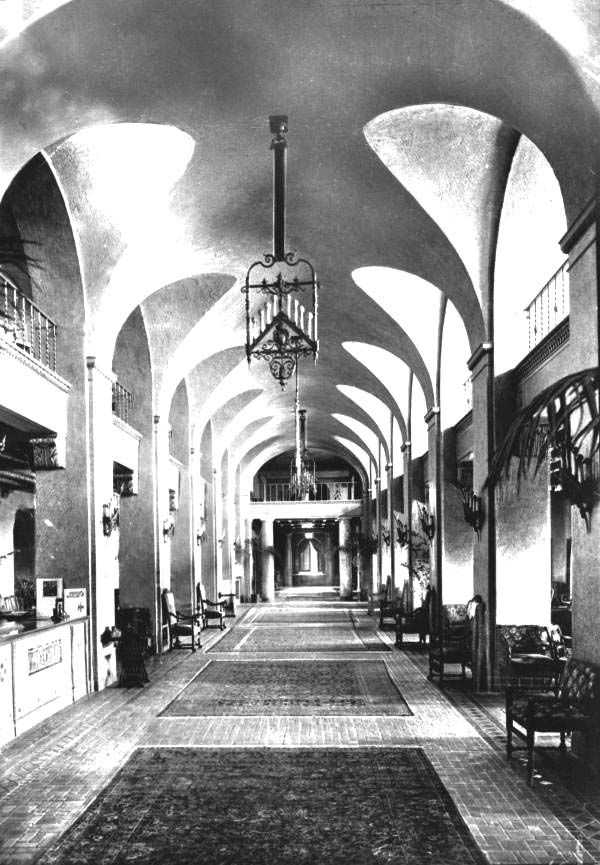
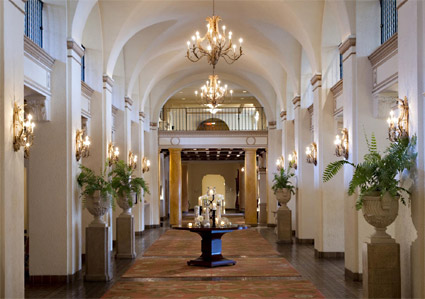
The Vinoy Hotel lobby, as it appeared during the 1920s.

The Vinoy Hotel lobby, as it appeared during the 1920s.

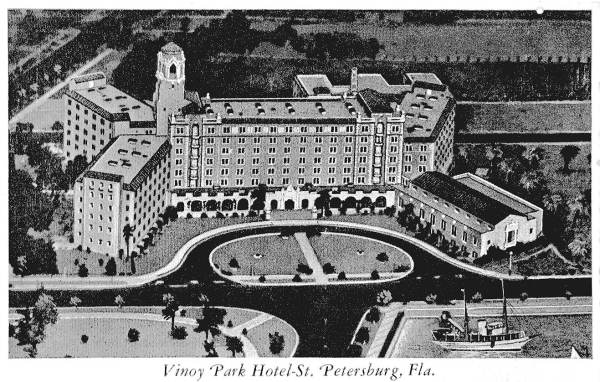
St. Petersburg's Vinoy from the air, 1920s.

St. Petersburg’s Vinoy from the air, 1920s.

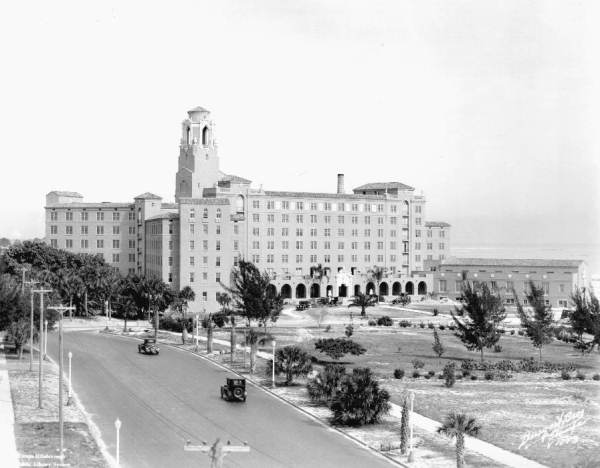
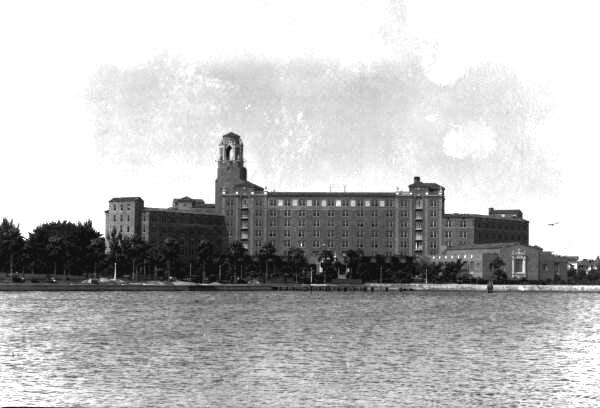
The Hotel in 1926, overlooking Tampa Bay.

The Hotel in 1926, overlooking Tampa Bay.

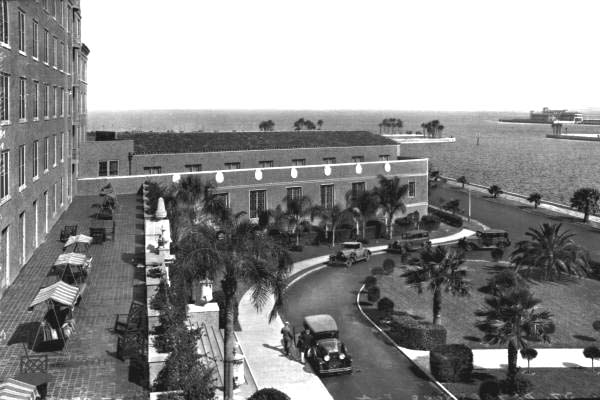
View from the balcony above the front entrance.

View from the balcony above the front entrance.

Vinoy from yacht basin 1920s

The Lobby of the Renaissance Vinoy today.

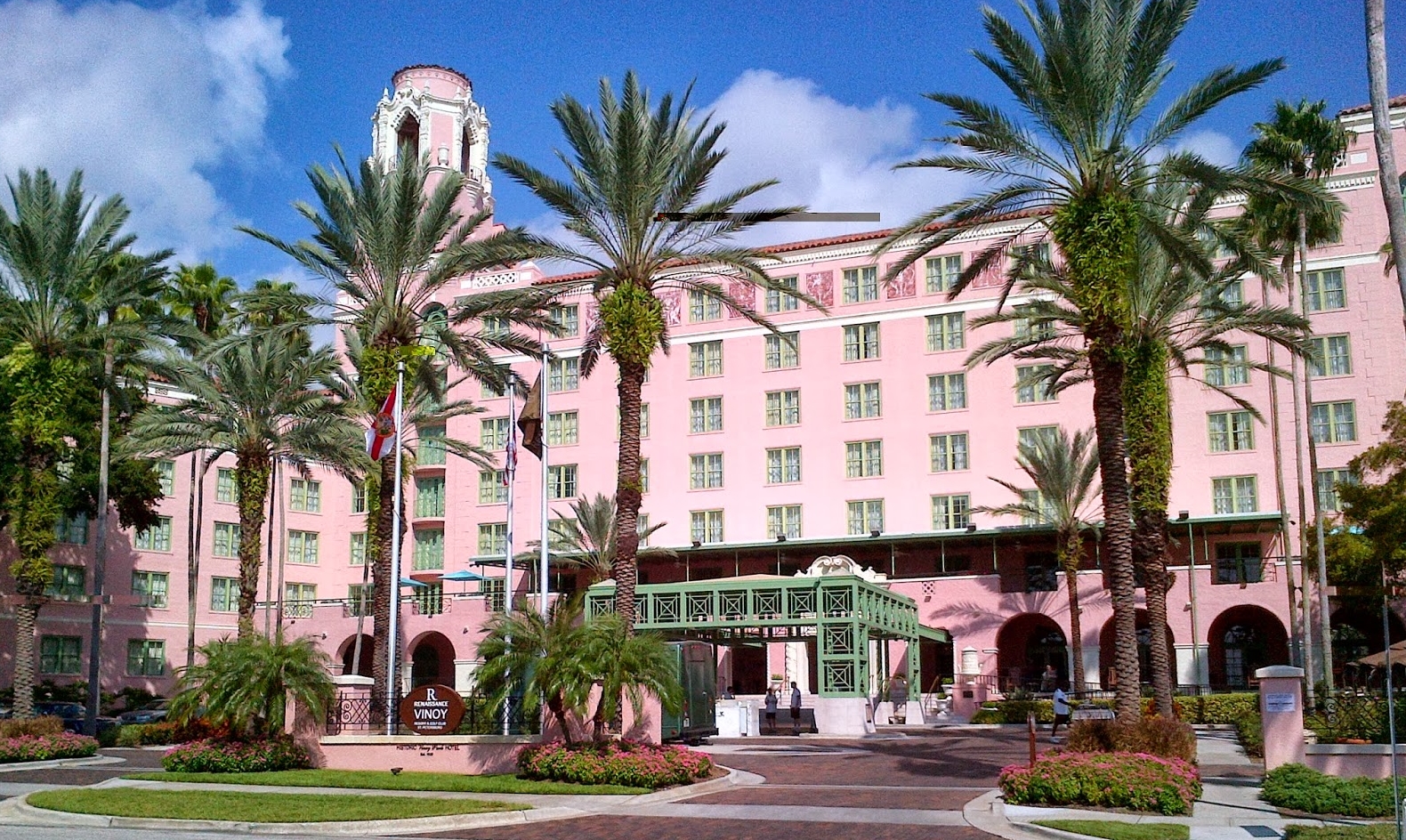
The Lobby and Front Entrance (with the old Viewing Tower) of the Renaissance Vinoy today

St. Petersburg-20131016-00094

This article from Friday, January 24th, recounts the beginnings of the Vinoy Hotel in St. Petersburg, Calvin Coolidge’s visit there in January 1930 and its modern rediscovery. Time has seen rescue of the place where the former President spoke via radio hookup on the “Economics of Life Insurance,” before heading north, with Mrs. Coolidge, to stay in Mount Dora on their way to the west coast. Mr. Ponder’s recounting of Coolidge’s dislike for the fancier food may or may not be genuine. Apocryphal or not, it speaks to the truth that Coolidge was an unabashedly simple man with unpretentious tastes and humble manners. He never did care for “special treatment,” wishing to be just another American, free to come and go without fanfare or attention, as biographer Claude M. Fuess recounts in his book, Calvin Coolidge: The Man From Vermont,

“In harmony with the other phases of his character, Coolidge had simple tastes. The living conditions under which he had been brought up were good enough for him, and he was in no danger of being corrupted by self-indulgence…Coolidge had himself no affectations and despised people who, as he said, ‘put on airs’…He had been taught as a child the evil of waste, and the lesson persisted. In July 1925, he went to Camp Devens to review the 26th Division, and thorough preparations were made for his reception. In his washroom General Logan had placed two immaculate towels for the President’s personal use; but just before he arrived a hot and dusty aide dashed into headquarters, visited the lavatory, and naturally dried his hands with one of the special towels. When the President was escorted to the washroom, his companion noticed that one of the towels was streaked with dirt, and proffered him the remaining one, but Coolidge waved him aside, saying, ‘Why soil it? There’s one that’s been used. That’s clean enough’ ” (pp.485, 487).

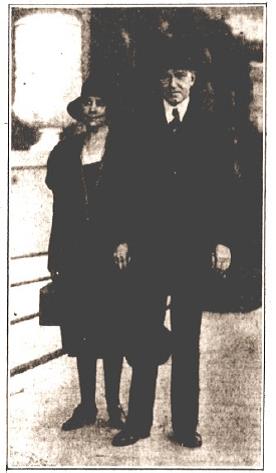
The Coolidges arrive in St. Petersburg, January 8, 1930. Coolidge addressed the 200 delegates convened at the Vinoy Hotel on the "Economics of Life Insurance," January 9, carried at 9:30PM on WJZ out of New York and WBZ out of Boston. It was the first time Coolidge spoke publicly after the Presidency.

The Coolidges arrive in St. Petersburg, January 8, 1930, photographed for the St Pete Times, January 9, 1930. Coolidge addressed the 200 delegates convened at the Vinoy Hotel on the “Economics of Life Insurance,” January 9, carried at 9:30PM on WJZ out of New York and WBZ out of Boston. It was the first time Coolidge would speak publicly after the Presidency.

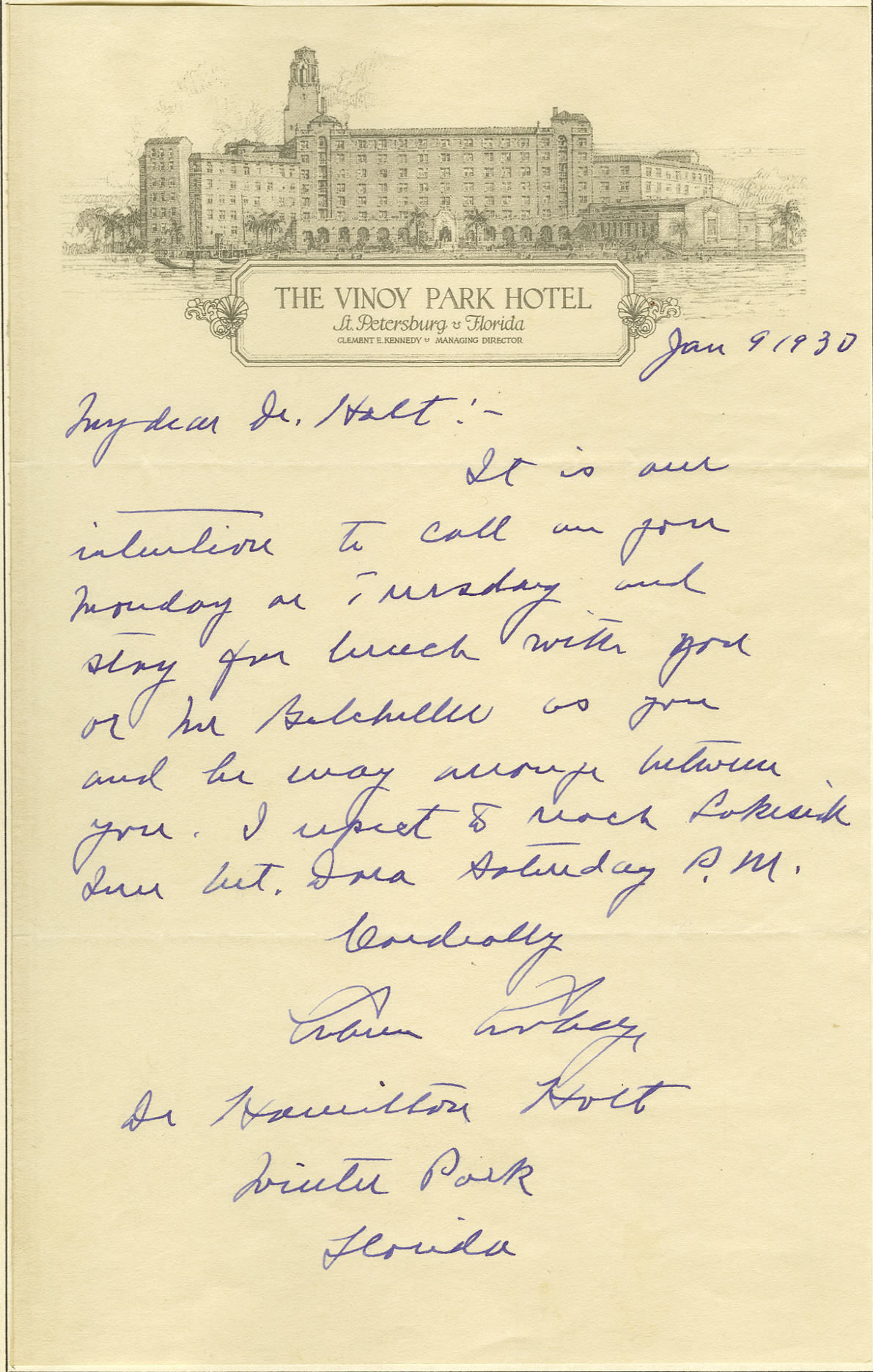
Coolidge letter to the President of Rollins College, Mr. Holt, written on January 9, 1930, on Vinoy stationary. The Coolidges would visit Rollins during their stay in Florida.

Coolidge letter to the President of Rollins College, Dr. Hamilton Holt, dated January 9, 1930, on Vinoy stationary. The Coolidges would visit Rollins during their stay in Florida. The letter, in Coolidge’s unmistakable hand, says: “My dear Dr. Holt: –  It is our intention to call on you Monday or Tuesday and stay for lunch with you or Mr. Bacheller [long-time trustee of Rollins College] as you and he may arrange between you. I expect to reach Lakeside Inn Mt. Dora Saturday P.M.   Cordially  Calvin Coolidge.”