Frost on Coolidge

                         Image

While some may think there was little to connect a Grover Cleveland Democrat with a life-long Republican, it would come as a surprise that Coolidge’s life was filled with such connections. He was not a man given to airs or sense of superiority, personally or politically. He would consider Democrats among his closest friends, even allies. He would count numerous Irish immigrants among his supporters. The Democrat presidential candidate of 1928, Al Smith, was a good friend. He married into a Democrat family. These relationships were not due to some lack of commitment to principle, for Coolidge’s consistency and conviction were widely known. It was due to a set of convictions that transcended political posturing. It was an agreement with what America was all about, whether you were Republican or Democrat. It was a respect for people stemming from a mutual reverence for America’s ideals. Character and perspective on both sides made it possible to have principled disagreement but still work toward common aims as Americans. Without integrity, civility has no pillars on which to stand. When the ideals of America are no longer shared and character is demonized, it is no wonder that both a sense of proportion and civility are missing as well.

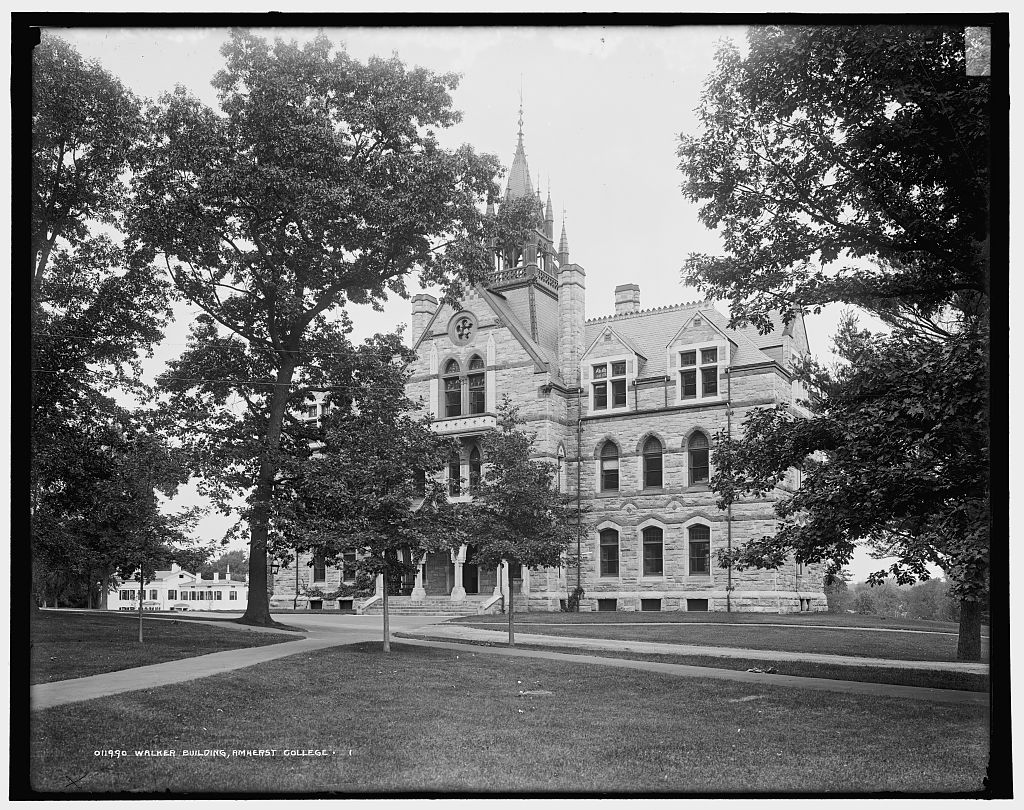
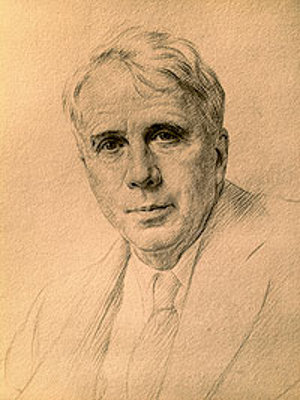
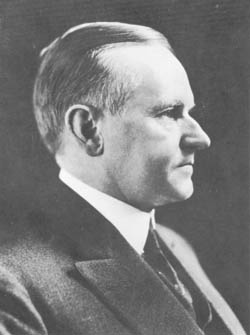
One of the most predictable acquaintances Coolidge encountered, however, was Robert Frost. As Joseph A. Conforti in his book, Imagining New England, examines the identity and mindset of the commonly caricatured “Yankee,” he features both the President and the poet. While, as Coolidge biographer Fuess observed, Coolidge was unique for combining so many — if not all — of the qualities of a “Yankee” in a single person, Frost could not be more different in upbringing and politics. But what did Frost think of Coolidge? There is often an assumed affinity of the two but, again, Frost was a Cleveland Democrat while Coolidge held loyally to the Republican Party all of his life. Frost, widely regarded as a New England rustic, was born and raised in the city, San Francisco to be exact. Coolidge, as we know, came from the rugged hills of Vermont and hailed from rural western Massachusetts, not the sophisticated social circles of Boston. Frost was largely ambivalent when it came to politics; Coolidge joked that his hobby was “running for office.” Frost would never finish college while Coolidge would not only graduate but give the witty “Grove Oration,” for his class. It was Amherst that would enable these lives to cross paths. Frost would come to the College on and off from 1916 through 1938 to teach English. Meanwhile, Coolidge rose in state and national affairs, serving as a trustee of his alma mater through his retirement from public life. They certainly knew each other and among the several interesting observations made by Conforti is this, quoting from Lawrance R. Thompson’s Frost: The Years of Triumph, 1915-1938,

“Frost admired Coolidge; he identified with his political and cultural conservatism, praised his ‘overthemountain nature,’ and respected his kindred descent from ‘a modest, frugal, and unpretentious line of Puritan farmers’…Frost’s political detachment and poetic rejection of social criticism provoked literary enemies who saw him as a product of the same stingy soil that gave birth to Coolidge.” Frost would be defended “against such critics” and his apologists would share the “Coolidge-like Yankee moral vision that emerges from much of his verse.” As Robert Coffin, of Yankee magazine fame, would write, “Frost likes his people in individual, not mass formation. He isn’t blaming their troubles on the capitalists or the environment, but on the way life is built and the way they are built…” Such an outlook would have found Coolidge in agreement.

As Coolidge would preside over the lively and energetic Twenties, Frost would become, in Conforti’s words, a “New England version of Will Rogers” personifying the folk wisdom and authenticity of American character. One reporter summarized the traveling poet this way, Frost’s temperament “was one of inexpressible gentleness, with humor and strength and whimsical sincerity.” It seems Coolidge and Frost were more alike than is apparent at first glance. But then this is America at work, bringing two very different individuals together around transcendent ideals, common principles of character and, tempered by realism, an abiding faith in her purpose.
        ImageImage

On the Boy Scouts

                         Image

Reflecting on the purpose of this long-standing private organization, especially in light of the recent change in admission standards, it is important to recall what Calvin Coolidge had to say about them. Writing in his daily column on February 9, 1931, he said,

“Millions of our young men have had the benefit of the physical, mental and moral discipline that results from Scout training. When the evil reports of a few gangsters make us wonder if society and government are about to disintegrate and revert to the law of the jungle, we can turn with assurance to the humanizing and civilizing effect of the Boy Scouts. Under the old life in the country every boy was something of a Scout. But in the modern city many boys live on a narrow street or alley. The buildings make it impossible for them to see; in the constant roar they cannot hear. With the lack of healthful and life-giving impulses from without they are turned back on themselves. When they need action and companionship in order to secure a natural growth of body and mind, they are unable to find anything but an artificial, dwarfing substitute. The profitable and patriotic remedy for these conditions is the Boy Scout movement. Under the influence of a considerable body of citizens so trained our republic is fairly secure.”

Considering the Boy Scouts accomplished all of this for decades before the latest round of complaints against it, the policy change rings hollow. Volunteer and civic-minded organizations, like what the Scouts have been, represent certain moral standards and no force in the world can rightfully tell them to abandon that ennobling purpose in order to enact the amorphous values of someone else. The Boy Scouts are not about sexual orientation, but about instilling character and competence in our young men. That used to be an asexual blessing to society–not anymore. Sexual identity trumps all other values. Now, one by one, organizations like the Boy Scouts have to concede their purpose to an intolerant minority unwilling to grant the existence of any organization that chooses its own standards of membership. So much for the good old fashioned virtue of living and letting live. This latest coerced participant in reordering society to please a few is only the most recent effort to keep Pandora’s box open, whatever it will cost (in lives or public morals) down the road.

On Getting to the Point

Calvin Coolidge was known for his incredible ability to distill the clutter of requests, technical details and verbose discussions into their essential qualities. His succinct style and disciplined pursuit of a matter’s basic point may have appeared lazy to the workaholic but to the one paying attention, it was a product of his practiced skills as a good listener and an effectual doer outside the limelight. Coolidge’s mastery of bringing the complex back down to its simplest principles left more than one contemporary amazed. Henry Stoddard, the owner and editor of the New York Evening Mail and student of Presidents from Grant through Coolidge and beyond had this instructive assessment of the man, writing in 1938:

“I doubt whether we have ever had a President–certainly not one in my time–who could probe so quickly and so surely to the heart of a problem as Calvin Coolidge did. He frequently said that if you got to the common sense of a question you had its answer–but how few possess that rare gift of seeking or even getting to the common sense of a question! In the lengthy debates in Congress how often have you heard common sense revealed? He insisted that worries beclouded clear thinking; therefore he refused to have them. No one would say that he was an optimist–he was too much of a realist–but his realism was of faith, not of fear. He never dreaded tomorrow. He prepared for it. No man having the right to know ever left Coolidge with the slightest doubt of his opinions…Slow to give his word, he never called it back” (‘It Costs to be President,’ p.133).

                 Image

Former President Coolidge at Madison Square Garden, his last public appearance, October 11, 1932. As he rose to speak, the crowds began to eat so much of his time with their enthusiastic standing ovations that he held up his watch to remind them that minutes were precious and he had to get to the point quickly in the time allotted. Even then, his determination to cut through the waste and get to the substance of why he was there mattered more than the accolades.