On Bureaucracy and Functional Government

Image

When President Coolidge spoke to those gathered at the illustrious College of William and Mary in 1926, he reminded his listeners of what makes government function. For government to work, it must be local and accountable. Established by the earliest arrivals from the Old World, the experiences with bureaucratic authority taught the colonists that government centralized (and thereby removed from the problems it attempts to fix) never works. For this reason, as government advanced from colonial to state forms, bureaucracies had no part in the drafting, passage or implementation of state constitutions, laws and standards.

It was up to the towns, cities, counties and ultimately states to make government function. It is the cradle of true states’ rights and the basis for a genuine national unity. The one-size-fits-all approach always succumbs to its own inherent weaknesses. In the process of forming their own governments, Americans learned how liberty is only possible when the ability to make decisions is preserved at the local and personal level. Anything more and government, even in the name of compassion and efficiency, becomes inhuman, destructive and incompetent — the murderer of what Coolidge earlier called an individual’s “self-direction,” known also as freedom.

Experience has actually proven, so that Coolidge could truthfully say, “No method of procedure has ever been devised by which liberty could be divorced from local self-government. No plan of centralization has ever been adopted which did not result in bureaucracy, tyranny, inflexibility, reaction, and decline.” Liberty and local self-government cannot be separated as with a clinical incision to the body politic. This is why transforming government into the expansive, all-encompassing State it is today, whatever the intentions, always kills the liberty exercised by the individual.

The most adept planners fail not because someone disrupts the plan from its certain success nor because the plan can only work with the right kind of people in charge. The plan fails because it is inherently flawed. It attempts to liberate humanity by denying its humanness. Forced to conform to an unrealistic set of approved behaviors, government is stripped of any human quality, turning what is supposed to be the humane agency of free individuals, the “expression of the life” by a sovereign people, into “a cold, impersonal machine.” No longer the personal involvement of individuals deciding their own affairs, government perverts to infinite layers of “expert practitioners.” An unaccountable and reckless bureaucracy takes the place of local self-determination, giving and taking away freedom with the draft of every new form and the sweep of every expert’s pen.

We see states are no longer allowed to diverge from total conformity to Federal specifications, however mundane the state matter. This administration has made clear it will sue any state refusing to march in step with the arbitrary and selective enforcement of law it exemplifies. We watch as counties, boroughs and parishes are threatened to accept designated “Federal” money or else be cut off from future “favor.” We look while cities, towns, and villages are told to adopt a complete overhaul of zoning regulations by the Housing and Urban Development Department in Washington. We then stand aghast as Washington invades our most personal decisions of child-raising, employment, education, health care, retirement, and, through the institutionalization of political correctness, what we are allowed to say in political opposition and believe in religious conviction.

Coolidge, addressing the issues of housing, food, wages, hours, conditions, justice and opportunity, placed the power for addressing all these with the welfare of all the people in his state squarely where it belonged, where the laws properly placed them — with the people themselves. It is they who bear the burdens of government, who pay its costs and activate its provisions. It was for the people of Massachusetts to decide these details of their lives because they comprised its government from little Monroe to Beacon Hill. What Coolidge said of Massachusetts could be said of governments everywhere across this Union, “Our government belongs to the people. Our property belongs to the people. It is distributed. They own it. The taxes are paid by the people. They bear the burden. The benefits of government must accrue to the people. Not to one class, but to all classes, to all the people. The functions, the power, the sovereignty of the government, must be kept where they have been placed by the Constitution and laws of the people.”

The power of these truths, the “rules of action” originating from the people from whom governments are constituted, are what make bureaucracies such an affront to civilization everywhere. Lifting power out of the hands of the people directly concerned with a given issue, bureaucracies clog the proper function of government by setting up “the pretense of having authority over everybody and being responsible to nobody.” It is the assumption of control without an equal measure of responsibility that makes a bureaucracy so destructive of local self-government and, inseparably, individual freedom. Coolidge put it in even clearer terms, “Of all forms of government, those administered by bureaus are about the least satisfactory to an enlightened and progressive people. Being irresponsible they become autocratic, and being autocratic they resist all development. Unless bureaucracy is constantly resisted it breaks down representative government and overwhelms democracy.”

There are definite issues the Federal government is simply, even at its best, not equipped to handle, being “too far away to be informed of local needs, too inaccessible to be responsive to local conditions.” It has proven unworthy of few things, yet it is still given many more to manage. As Coolidge said, “It does not follow that because something ought to be done the National Government ought to do it.” Liberty diminishes in proportion to increasingly centralized control. Where freedom is concerned, it actually is a zero-sum game.

The solution, as Coolidge analyzed this problem, remains the same now. The states can help end or irreversibly enable the dysfunction of government by bureaucracy. The rights held by states are not given them to never use just as they are not given to abuse those to whom they are accountable, the people of each state. If they are unfaithful in the exercise of delegated powers, the Federal Government is thereby invited to step in and get involved. The willing weakness of local and state government only encourages the intrusion of Federal controls.

This danger provoked President Coolidge not to absorb power, but to restore the correct balance between the people, the states and national government. He did so consistently. By vetoing the double attempts to socialize American agriculture, chopping down the Federal outlay for flood aid, cutting and cutting again the size of the Federal budget, paying down the nation’s $20 billion debt, reducing tax rates across the board and fighting the Congressional urge to spend each year’s growing surplus, Coolidge left the recipe that works when Washington is governed responsibly. It remained for the states and local decision-makers to follow that constructive lead. Far too often they did not do so, working instead against Coolidge’s program.

Local self-government cannot afford, fiscally, politically, morally, to shirk its duty a moment longer. The states cannot emulate the direction they took in the 1920s and 30s. It must be the sovereign people, through their municipal, county and state governments, who stand when no one else seems willing to stand. The alternative will hasten only more of the same disastrous consequences ahead for us already.

The way lit by Coolidge forward, back toward progress and justice, requires courage but it is the only way. It means robustly asserting local and state authority, dragging Washington back to its limited and lawful sphere of responsibilities. “I want to see the policy adopted by the States of discharging their public functions so faithfully that instead of an extension on the part of the Federal Government there can be a contraction.” The march back toward a government of the people and away from central bureaucracy starts where all good governance begins — at the local level.

On those Roaring Twenties

Image

Historian Paul Johnson


It is fitting that those who helped drive the Reagan Revolution forward humbly credit their inspiration to the shy, quiet man from Vermont, Calvin Coolidge. In a very real way he bequeathed the essential recipe for the successes of the 1980s. While the ingredients were not precisely followed in every respect, especially concerning the payment of debt, the principles contained such power that even Congressional spending could not slow it down.

President Reagan’s combination of political saavy, biting wit, unassuming competence and ability to cut through the complex and see the simple essence of an issue derived not merely from his life’s experiences, they found inspiration from his study of Coolidge. Reagan, after all, like several of the men and women who comprised his team of “revolutionaries,” first came to understand the world during the Coolidge Era and in the years shortly thereafter. The lessons “Silent Cal” taught in both word and action left abiding impressions on future Secretaries of the Treasury (Donald T. Regan) and Defense (Caspar Weinberger) and future Attorney General Edwin Meese III, along with many others.

Two scholars, in particular, were returning to Coolidge’s record in order to reassess his very real achievements. In 1982, Thomas B. Silver, in Coolidge and the Historians, would lead this effort and unearth most of the shoddy and partisan reporting against the thirtieth president and the 1920s. In 1984, Paul Johnson, in the sixth chapter of his Modern Times: The World from the Twenties to the Nineties, would roll back the shroud thrown over not only the genuine triumphs of the Roaring Twenties but also the legacy of Mr. Coolidge. As Mr. Johnson would reflect on this reserved and disciplined leader, he would not only find him to be “the most internally consistent and single-minded of modern American presidents” but he, like all of history’s great men, was not an intellectual. To Mr. Johnson, that is a very good thing because “[a]n intellectual is somebody who thinks ideas are more important than people.” Wilson and Hoover approached the world this way while Coolidge, and Reagan, did not. To Coolidge and Reagan, people were the preeminent focus of their policies. The “smartest ones in the room” miss that all-too-obvious truth. People were genuinely benefited by Coolidge’s leadership.

Johnson could accurately survey the Twenties not as an aberration of gross materialism or empty gains but as an unprecedented prosperity that was both “very widespread and very solid” (p.223). “It was,” Johnson corrects, a prosperity “more widely distributed than had been possible in any community of this size before, and it involved the acquisition, by tens of millions, of the elements of economic security which had hitherto been denied them throughout the whole of history. The growth was spectacular.”

As a direct result of Coolidge prosperity, national income jumped from $59.4 to $87.2 billion in eight years, with real per capita income climbing from $522 to $716. Millions of workers purchased insurance for the first time, a phenomenon of a healthy economy Obama is deliberately ignoring. Savings quadrupled during the decade. Ownership in fifty stocks or more reveals the vast majority were not “the rich,” but housekeepers, clerks, factory workers, merchants, electricians, mechanics and foremen. Union membership plummeted from just over 4 million at the outset of the 1920s to 2.5 million by 1932. As small and large businesses succeeded, people were able to provide holidays with pay, insurance coverage and pensions as well as other benefits, giving substance to Coolidge’s dictum that “large profits mean large payrolls” thereby making “collective action superfluous,” as Johnson observes (p.225). Home ownership skyrocketed to 11 million families by 1924.

Perhaps the most obvious index of prosperity could be seen in automobile ownership. What began as a novelty for just over 1 million Americans in 1914 (with less than 570,000 produced annually) exploded into 26 million owners with over 5.6 million autos produced annually by 1929. Air travel was fast becoming the normal mode for “regular” folks and classes were rapidly dissolving from upward mobility. In 1920 a meager $10 million was spent on radios. By 1929 that figure had surpassed $411 million, which was itself small compared to the $2.4 billion spent on electronic devices as a whole in the Twenties.

These years were not, as some would claim later, removed from an appreciation of the past. The expansion of education is “[p]erhaps the most important single development of the age” (Johnson 225). Spending on education increased four times what it was in 1910, from $426 million to $2.3 billion. But unlike today’s habit of throwing money at the problem, it brought results. Illiteracy actually went down over fifty-percent. A “persistent devotion to the classics,” with David Copperfield at the head of the list, defined the decade. Culture was reaching the homes of those who had once been the least connected Americans through reading clubs, youth orchestras and “historical conservation” movements that would restore sites like Colonial Williamsburg.

“The truth is the Twenties was the most fortunate decade in American history, even more fortunate than the equally prosperous 1950s decade, because in the Twenties the national cohesion brought about by relative affluence, the sudden cultural density and the expressive originality of ‘Americanism’ were new and exciting” (p.226).

The problem, as Mr. Johnson concludes, with the expansion of the Twenties was not that it was “philistine or socially immoral. The trouble was that it was transient. Had it endured, carrying with it in its train the less robust but still (at that time) striving economies of Europe, a global political transformation must have followed which would have rolled back the new forces of totalitarian compulsion, with their ruinous belief in social engineering, and gradually replaced them with a relationship between government and enterprise closer to that which Coolidge outlined…” More of the same policies would have prevented much of what followed in the 1930s and beyond. “[M]odern times would have” indeed “been vastly different and immeasurably happier.” The purpose served by Coolidge “minding his own business,” as he put March 1, 1929, was perhaps more a forecast of his successors than an introspection. If only Hoover had been listening more carefully. The downturn in 1929 would certainly have more closely resembled the depression of 1921 and, with the Harding-Coolidge recipe of “masterful inactivity,” have spared millions of lives the terrible suffering and avoidable loss brought on by Hoover’s spending and Roosevelt’s “New Deal.”

On Jefferson, Impeachment of Judges and State Nullification

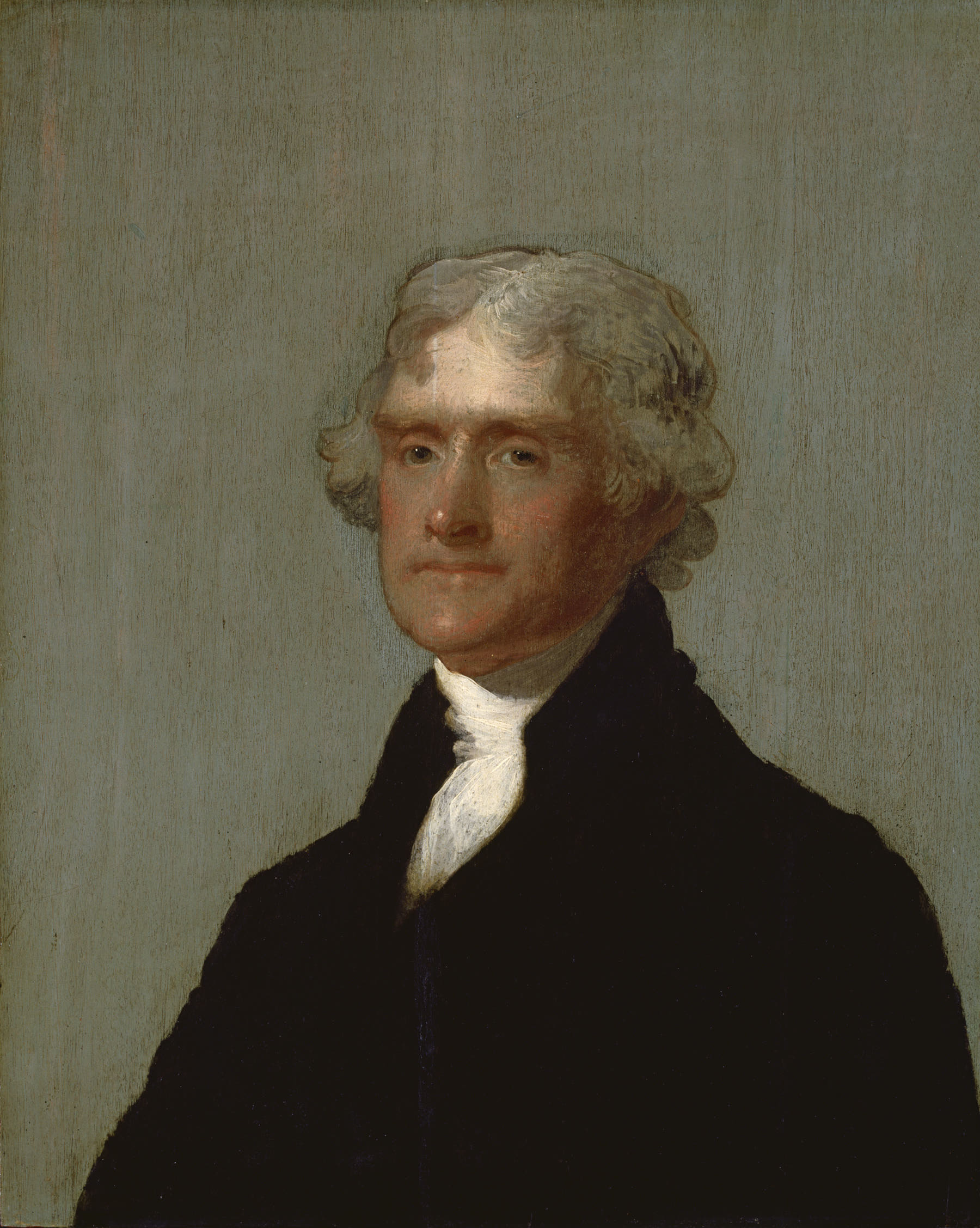
“President Jefferson seems to have entertained the opinion that even the Supreme Court should be influenced by his wishes and that failing in this a recalcitrant judge should be impeached by a complaisant Congress. This brought him into sharp conflict with John Marshall, who resisted any encroachment upon the independence of the Court. In this controversy the position of Marshall has been vindicated…In spite of all his greatness, anyone who had as many ideas as Jefferson was bound to find that some of them would not work. But this does not detract from the wisdom of his faith in the people and his constant insistence that they be left to manage their own affairs. His opposition to bureaucracy will bear careful analysis, and the country could stand a great deal more of its application. The trouble with us is that we talk about Jefferson but do not follow him. In his theory that the people should manage their government, and not be managed by it, he was everlastingly right” (Calvin Coolidge, ‘The Autobiography,’ pp.214-5).

The independence of the Judiciary, even with the partisan campaigning of Justice Chase and perceived activism of Marshall, was the larger issue. If the courts were to retain autonomy as an equal branch in the national government without manipulation by the President or reprisal from Congress, it had to stand firm. Asserting its independence kept it from becoming subservient to either form of interference. It preserved the ability of the people to find justice. If the Court had simply deferred, the people would have lost liberty, having no legal recourse or remedy from either Executive will or Legislative preference. It maintained the Constitutional equilibrium and kept the courts open to the people’s claims.

Due to the intense unpopularity of the Eighteenth Amendment, ushering in Prohibition, the states sought to find ways to override it. Nullification, even in the leading state of Massachusetts became a distinct possibility. The state legislature went so far as to pass a bill making possible the sale of small amounts of beer and alcohol in the state. It was a direct challenge to make void a Constitutional amendment by legislative act. It came to Governor Coolidge’s desk in May of 1920. Vetoing the measure with a firm rebuke, Coolidge registered his dissent, “There can be no constitutional instruction to do an unconstitutional act. The authority of the law is questioned in these days all too much. The binding obligation of obedience against personal desire is denied in many quarters. if these doctrines prevail all organized government, all liberty, all security are at an end. Force alone will prevail. Can those intrusted with the gravest authority set any example save that of the sternest obedience to law? Can Massachusetts afford to take any position which may turn out to be, which can anywhere be interpreted to be, an act of nullification? If rights are infringed the way to the court is open. The cases are pending which will undoubtedly decide the question here raised. Let the Supreme Court of the United States talk. The Massachusetts method of determining the authority of the law ought always to be by litigation and never by nullification, which is legislative direct action” (Coolidge, ‘The Price of Freedom,’ p.407).

It is clear that while in recent years state and federal legislation, allowed to pass without due deliberation for all concerned, is seeking but does not possess Constitutional supremacy. They are legislative acts not Constitutional Amendments. They are the products of surrendering legislative independence to the will either of the Executive or the pressure lobbied upon them by interested minorities. To a natural law theorist like Coolidge, such actions are neither right nor representative of true law. The Amendment process, ignored because the legislation is not widely desired or supported, has been supplanted by making legislatures and even courts defer to hastily crafted and recklessly passed rules for society. Even so, to Coolidge, nullification was not the answer. The Constitution did not protect the right of states to do wrong any more than it did the National Government. If the law is to change, state nullification was not the way to accomplish it. Both repeal and the Constitutional amendment process are available means.

Until then, the courts must retain their independence from Congress, the President and political pressure groups to hear claims impartially and without interference. Unpopular legislation will undo itself when reality catches up to administration. The states already possess the power of implementation and will expose bad laws for what they are until repeal occurs. But nullification, such as that argued by Thomas Woods, reaches outside the Constitutional framework for an escape clause that, when it functioned under the Articles of Confederation, did not prevent the chaos that ensued.

     Image