“I suppose I am booked for exhibition…”

calvin-coolidge dollar

“You’re the top…You’re a Coolidge dollar!” — Cole Porter, lyrics from You’re The Top, referring to the “Coolidge Prosperity” of the 1920’s (Anything Goes, 1934)

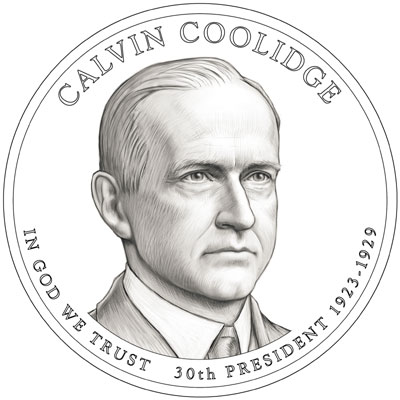
As the four new arrivals in the “Presidential $1 Coin Program” this year include Calvin Coolidge, coming in April, it is fitting to look back on a much older, even more distinguished coin from 1926. The coin is, of course, the Sesquicentennial half-dollar commissioned by Congress at the request of the National Sesquicentennial Exhibition Association and struck for special distribution at the Exposition in Philadelphia between June 1 and November 30, 1926, marking the one hundred and fiftieth anniversary of the Declaration of Independence.

It is unique as the first and only coin to be struck on which appears a President not only within his lifetime but also during his term of office. It is extraordinary that Calvin Coolidge was accorded this singular honor, a level of recognition not bestowed on any other President and only three other living individuals. It is unfortunate that the Association insisted on a technique, though popular with numismatists at the time, produced too shallow a relief in the striking that even a mint condition half-dollar looks worn and poorly produced. If only the Association had required a sharper relief of John Frederic Lewis’ striking design. While the Chief Engraver of the Mint, John R. Sinnock, whose designs were turned down, should not have taken credit for the final result, it is also unfortunate that the coin was so under-promoted and poorly struck that it did not sell better than it did — only 140,592 coins selling out of 1,000,528 (the rest going back to the Mint to be melted down for other uses). Unfortunately, Sinnock would incorporate Lewis’ style in the better known Roosevelt dime (1946) and Franklin half-dollar (1948), likewise without proper credit.

Asked about the upcoming Exposition in Philadelphia during one of his press conferences in December 1925, knowing that both he and the coin would be present at so historic an occasion, Coolidge responded with that characteristic twinkle in his eye: “There isn’t anything very definite that I can say about the Sesquicentennial Exposition at Philadelphia. I suppose I am booked for exhibition and that will probably be on the 4th of July” (The Talkative President p.13). His speech marking the anniversary of the Declaration is still one of the most quoted, most eloquent, most insightful and among the greatest speeches ever given by an American President. He would be an exhibit at the Exposition…or did he mean, he would exposit at the exhibits?
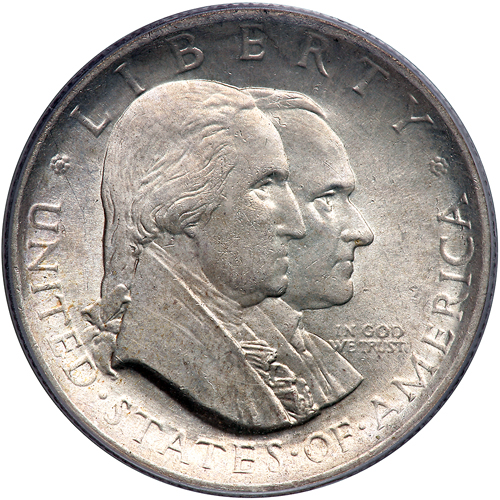
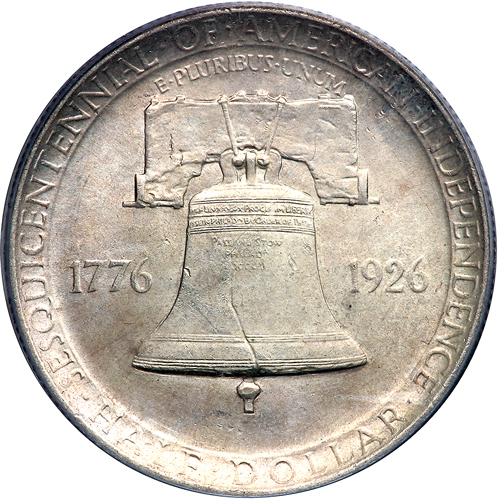
Sesquicentennial Half DollarReverse Susquicentennial Half Dollar

On his Love for Grace

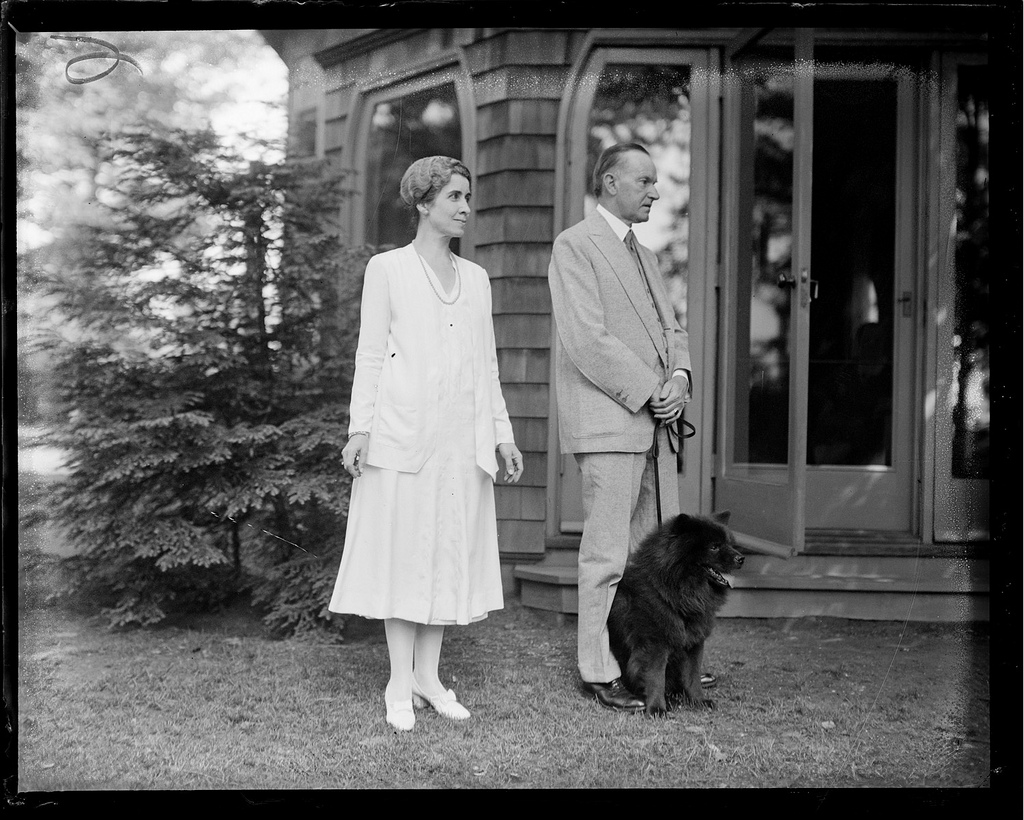
6193350824_806ca09a37_b Coolidges at New Home 6-1930

Few qualities were as amply prevalent yet so quietly manifested and privately treasured as Coolidge’s very deep love for his wife, Grace. It was not for public display, neither was it a calculated political ploy, his passionate affection and constant adoration were very sincere and very personal to both of them.

A man known as frugal and economical in public policy had one exception to the rule in his household, he splurged when it came to his dear wife’s adornment. As Grace remembered, “Mr. Coolidge had deeper sentimental feeling than most people whom I have known, but he did not reveal it in outward manifestations.” Coolidge biographer Claude M. Fuess recounts this story, one of many such instances, of Calvin’s romantic nature, “On one occasion when she and Mrs. Stearns were going through the lobby of the Hotel Touraine [located in Boston], he handed her a package which looked as if it might contain a toothbrush. She thought it was one of his jokes, but when she opened it, she found a flexible gold-and-platinum bracelet…” (The Man from Vermont p.274).

While away in New York for the monthly insurance company meeting, as he prepared to return home, Coolidge took up pen and paper to write his wife:

December 8, 1932

My dear Grace,

Tomorrow I shall be home. Unless you have not heard, send the car to Springfield at 8:40 Friday. I have thought of you all the time since I left home.

With much love,

Calvin Coolidge

Source: Stoddard, Gloria May. Grace & Cal: A Vermont Love Story. Shelburne, VT: The New England Press, 1989, p.143.

As Cyndy Bittinger has noted, this was Calvin’s last letter to Grace before his death the following January. It would be tenderly marked by Mrs. Coolidge “his last letter” and kept until after her death. Thanks to the Coolidge family it eventually found its way to the Vermont Historical Society, where it is now carefully preserved at the end of a wonderful collection of the President’s letters to his “dear Grace.”

grace and cal vermont love story 001

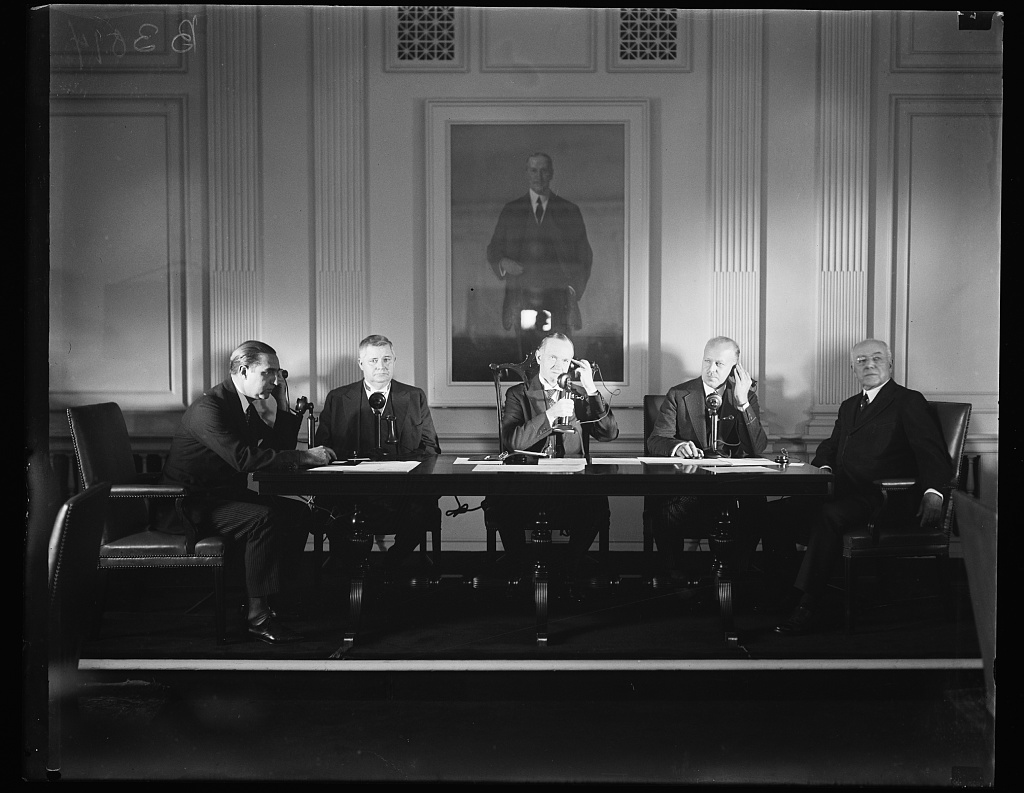
First Presidential Transatlantic Conversation, October 13, 1928

Pictured here in the Chamber of Commerce Building in Washington, D.C., from L to R: Don Mariano de Amoede y Galaremendi (Spanish Embassy, Washington); Under Secretary of State J. Reuben Clark; President Coolidge, speaking to King Alfonso; Walter S. Gifford, president of AT & T; and Joseph H. De Frees, chairman of the board, U.S. Chamber of Commerce. The man in the portrait above them is businessman Harry A. Wheeler, the first chairman of the U.S. Chamber of Commerce.

Pictured here in the Chamber of Commerce Building in Washington, D.C., from L to R: Don Mariano de Amoede y Galaremendi (Spanish Embassy, Washington); Under Secretary of State J. Reuben Clark; President Coolidge, speaking to King Alfonso; Walter S. Gifford, president of AT & T; and Joseph H. De Frees, chairman of the board, U.S. Chamber of Commerce. The man in the portrait above them is businessman Harry A. Wheeler, the first chairman of the Chamber. Thanks go out to Mr. Jerry Wallace and everyone who, through tenacious detective work, identified all the details behind this photograph.

The occasion this photograph captures marked two historic firsts: It was the first time a President personally used a transatlantic telephone and it was the first telephone conversation held between a President and one of Europe’s leaders. While the very first transatlantic service was achieved on January 7, 1927 between New York and London, the nation of Spain is here linking up with America via telephone technology, joining France, Germany, Sweden, Holland and Belgium in the ability to connect over a circuit of 6,500 miles inside of one-fifth of a second. The conversation between President Coolidge and King Alfonso XIII was flawlessly crisp, heard clearly on both sides of the Ocean and was noted as the best talk thus far experienced with such a device over so long a distance. President Coolidge had spoken to the leaders of Mexico, Canada and Cuba in past months but it was this conversation that made history.

After exchanging greetings, President Coolidge elaborated on the exceptional potential of the telephone and what it meant for future. Coolidge, speaking to the King, observed, “I welcome this added link, no less strong because it is invisible, between Spain and the United States. I believe it to be true that when two men can talk together the danger of any serious disagreement is immeasurably lessened and that what is true of individuals is true of nations. The international telephone, therefore, which carries the warmth and the friendliness of the human voice, will always correct what might be misinterpreted in the written word.

“Whatever brings our two countries closer is of value to us and to the world. This Western Hemisphere, discovered by the wonderful navigators of Spain, has always owed much to your country. The language of Spain is the language of a great part of the Americas. The fine traditions of Spain are the basis of the culture of a large part of the Americas and our friendship with the great nations in the South draws us closer to their mother country. With your country and with theirs the United States stands for the promotion of world understanding and peace…I am especially glad thus orally to greet your Majesty, because I know the position of great personal responsibility you hold in directing the policies and progress of your country. I wish for your Majesty a long and happy life and for your country all the prosperity and happiness which come from wise and benevolent leadership in all those things which make life richer and finer.”

King Alfonso XIII of Spain, painted by Philip Alexius de Laszlo in 1927. De Laszlo also painted a portrait of Coolidge (1926).

King Alfonso XIII of Spain, painted by Philip Alexius de Laszlo in 1927. De Laszlo also painted a portrait of Coolidge (1926).

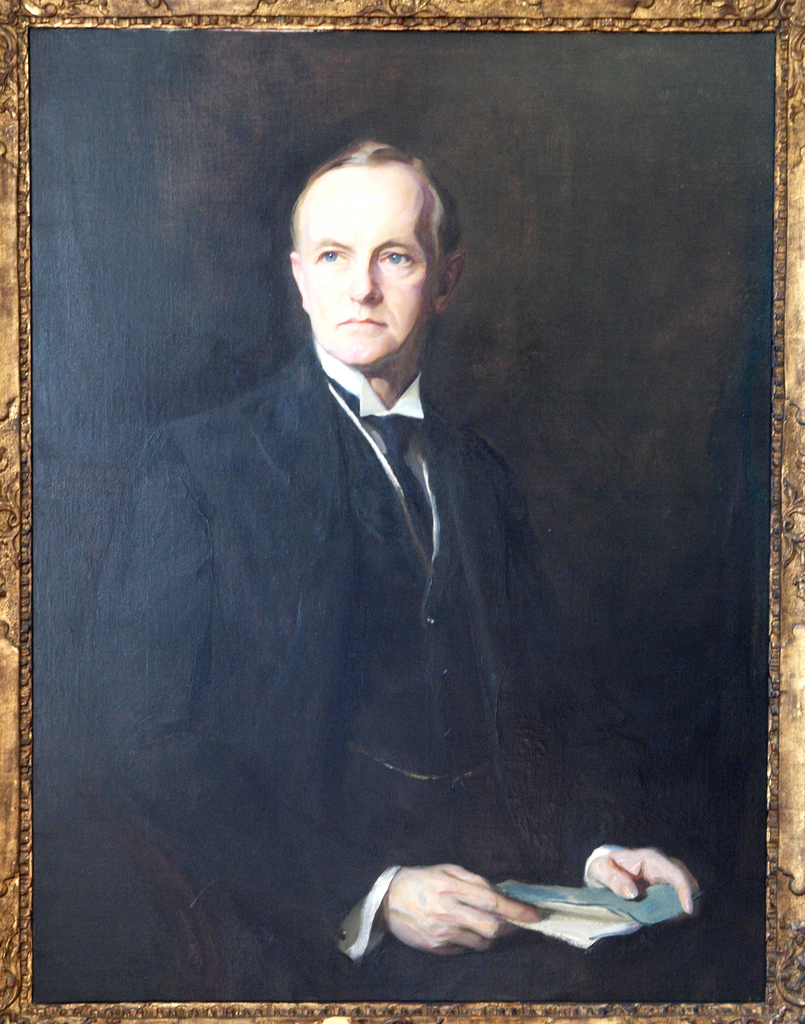
The portrait of Coolidge painted by Hungarian artist Philip de Laszlo, two years before the telephone conversation with King Alfonso.

The portrait of Coolidge painted by Hungarian artist Philip de Laszlo, two years before the telephone conversation with King Alfonso.

To that, King Alfonso replied, “Mr. President, I thank you for the cordial words in which you do Spain the honor and justice to recognize her outstanding services to the Americas and I agree that we ought to expect from this new means of communication ever closer relations because of the intimate and more perfect understanding between the two peoples.

“I reiterate to your Excellency, with my salutations, the testimony of my most sincere appreciation and extend best wishes for the peace and prosperity of the United States.”