On Preemptive Involvement Abroad

Image

“Nations which are torn by dissension and discord, which are weak and inefficient at home, have little standing or influence abroad. Even the blind do not choose the blind to lead them. Foreign peoples are certainly going to seek assistance only from those who have demonstrated their capacity to maintain their own affairs efficiently. If we desire to be an influence in order and law, tranquility and good will in the world, we must be determined to make sufficient sacrifices to live by these precepts at home. We can be a moral force in the world only to the extent that we establish morality in our own country. — President Coolidge, May 30, 1927.

“I wish crime might be abolished; but I would not therefore abolish courts and police protection. I wish war might be made impossible but I would not leave my country unprotected…” — Coolidge in a Letter to the National Council for Prevention of War, July 23, 1924 (cited from ‘The Mind of the President,’ pp.235-6).

“America represents the greatest treasure that there is on earth, the greatest power that there is to minister to the welfare of mankind; to leave it unprepared and unprotected is not only to disregard the national welfare, but to be no less than guilty of a crime against civilization” — May 30, 1923

“America stands ready to bear its share of the burdens of the world, but it cannot live the life of other peoples, it cannot remove from them the necessity of working out their own destiny. It recognizes their independence and the right to establish their own form of government, but America will join no nation in destroying what it believes ought to be preserved or in profaning what it believes ought to be held sacred” — February 22, 1922

If we are sincere in our expressed determination to maintain tranquility at home and peace abroad, we must not neglect to lay our course in accordance with the ascertained acts of life. We know that we have come into possession of great wealth and high place in the world. There is scarcely a civilized nation which is not our debtor. We are sufficiently acquainted with human nature to realize that we are oftentimes the object of envy. Unless we maintain sufficient forces to be placed at points of peril when they arise, thereby avoiding for the most part serious attack, there would be grave danger that we should suffer from violent outbreaks, so destroying our rights and compromising our honor that war would become inevitable. It is to protect ourselves from such danger that we maintain our national defense. Under this policy it is perfectly apparent that our forces are dedicated solely to the preservation of peace…We have sufficient reserve resources so that we need not be hasty in asserting our rights. We can afford to let our patience be commensurate with our power” — May 30, 1927, emphasis added.

On Being Worthy of Freedom

Apprehensions over the future have always remained an ever-present concern for a wise and circumspect people. When Americans stop being concerned for the next generation, it will be because we are no longer free individuals. The prospects for freedom stand in greater doubt than perhaps they have for many years, but a lack of confidence in our system is only new to us, not to generations of Americans who came before us.

Any one of the hardships overcome by prior generations could have halted the experiment of self-government in its tracks. It has certainly had no shortage of critics who proclaimed “failure” and “defeat” only to be proven flatly wrong time and time again. Inequity and unfairness have been present in human history from the outset, but neither has had the power to prevent individuals of determination from accomplishing truly great things despite it. Our time is hardly the first to ask, “who is worthy of freedom?”

The Progressive Era produced an almost overwhelming array of reasons to change the way this country was established. It would answer our question with pessimism: the people were ultimately not to be trusted with freedom. It was an intelligent few who merited such power. Coolidge knew, on the other hand, freedom was safest in the hands of the people.

The charge that our system was both too wild and too unequal, compared to the “enlightened” societies of Europe, led to calls for regulation of human behavior on a scale never before known. The pursuit began to implement an efficient and intelligent approach to government that would mitigate risk, remove inequities and shepherd the people to progress.

These activists, predisposed to intense skepticism about capitalist systems, trusted government implicitly with greater and greater control. Enamored with a lopsided admiration for methods foreign to American ideals of law and liberty, these generally middle class intellectuals failed to appreciate the remarkable nature of our constitutional system. They overlooked the careful balance worked out by the Framers, infusing a disastrous measure of good intentions with a reckless accumulation of new laws.

They entrusted government with the power to supply the shortfalls of human nature with legislation. Each effort undervalued, even ignored, the unquantifiable worth of freedom. Government, endeavoring to be “smart” and “humane,” hurt those it proclaimed to help by robbing them of the dignity of free will, the moral judgment of those given sovereignty in our system.

Ours is a history of accomplishment and success because people were recognized not as subjects in service to the State but individuals whose value comes from a Divine Creator. Made in the image of God, it logically follows that the dreams, aspirations and abilities to create, construct and succeed are within every person’s power. It is that power now being denied our young people as unrealistic and unattainable. This is nothing more than the latest incarnation of those who denied Edison could harness light, the Wrights could fly and Ford could mobilize America.

The avoidable tragedy of all this is that it literally destroys the wholesome yearnings of millions for something better than marginal existence. Instead, the young are told to be content with mediocrity, cease the pursuit of success, and consign all future faith and hopes to Washington’s management. No less self-deluded than the Progressives of Coolidge’s day, this operation dehumanizes humanity. History proclaims it will ultimately fail but the cost to countless lives in the process can never be known.

Coolidge, grappling with these problems, said in 1923,

[T}he motive power of progress and reform has not come from the high and mighty but from the mass of the people…It is not the quantity of knowledge that is the chief glory of man…It is in the moral power to know the truth and respond to it, to resist evil and hold to that which is good, that is to be found the real dignity and worth, the chief strength, the chief greatness. This power, even in the humblest and the most unlettered, rises to a height which cannot be measured, which cannot be analyzed. It is this strength of the people which can never be ignored. Of course it would be folly to argue that the people cannot make political mistakes. They can and do make grave mistakes. They know it; they pay the penalty. But compared with the mistakes which have been made by every kind of autocracy they are unimportant…

…Unless the people struggle to help themselves, no one else will or can help them. It is out of such struggle that there comes the strongest evidence of their true independence and nobility, and there is struck off a rough and incomplete economic justice, and there develops a strong and rugged national character. It represents a spirit for which there could be no substitute. It justifies the claim that they are worthy to be free…

     …Civilization and freedom have come because they are an achievement, and it is human nature to achieve. Nothing else gives any permanent satisfaction. But most of all there is need of religion. From that source alone came freedom. Nothing else touches the soul of man. Nothing else justifies faith in the people.

Like the generation who saw beyond the narrow confines of subsistence imposed upon it by king and Parliament, it is time to refuse to participate in a supervised decline. Being taught to doubt our own judgment is merely a prelude to forfeiting the ability to make our own choices, to strive, to fail, to triumph — in short, to live free. If we are to be worthy of that freedom, we cannot surrender to this latest effort — however organized it is — to train out the moral ideals and intangible dreams of people.

Image

On National Defense

Image

The Reagan Doctrine, summarized as “Peace through Strength,” is rightly praised for its sensible protection of our interests and the conscientious pursuit of peace in our dealings with the world. However, it did not start with Reagan. Among the many debts the “Great Communicator” derives from his predecessors, his pursuit of peace through preparedness owes some credit to President Coolidge. While Coolidge certainly preceded the prospect of nuclear proliferation in our time, the struggle for world power was no less prevalent then. The principles remain unchanged because they stem from human nature.

In the first of his three-part series on “Promoting Peace” published after leaving the White House, Calvin Coolidge outlines the immense task of preventing war through adequate defense. Coolidge certainly understood the complexity of the problem and this enabled him to distill it down to its essence: a question of human nature. He writes,

When the test comes the people will give up almost any other human right to secure safety and protection. Whenever anarchy imperils a state a military dictator always appears, because they prefer him to the lawlessness of the mob…In protecting its citizens abroad as well as at home the government, in reality, is only protecting itself. To refuse and neglect to do this is nothing short of national suicide.

     This principle is so well understood and so long established that nations accord to a foreign country, whenever the rights of its citizens are threatened or violated, the privilege of sending its naval and marine forces to protect them without considering such intervention an act of war.

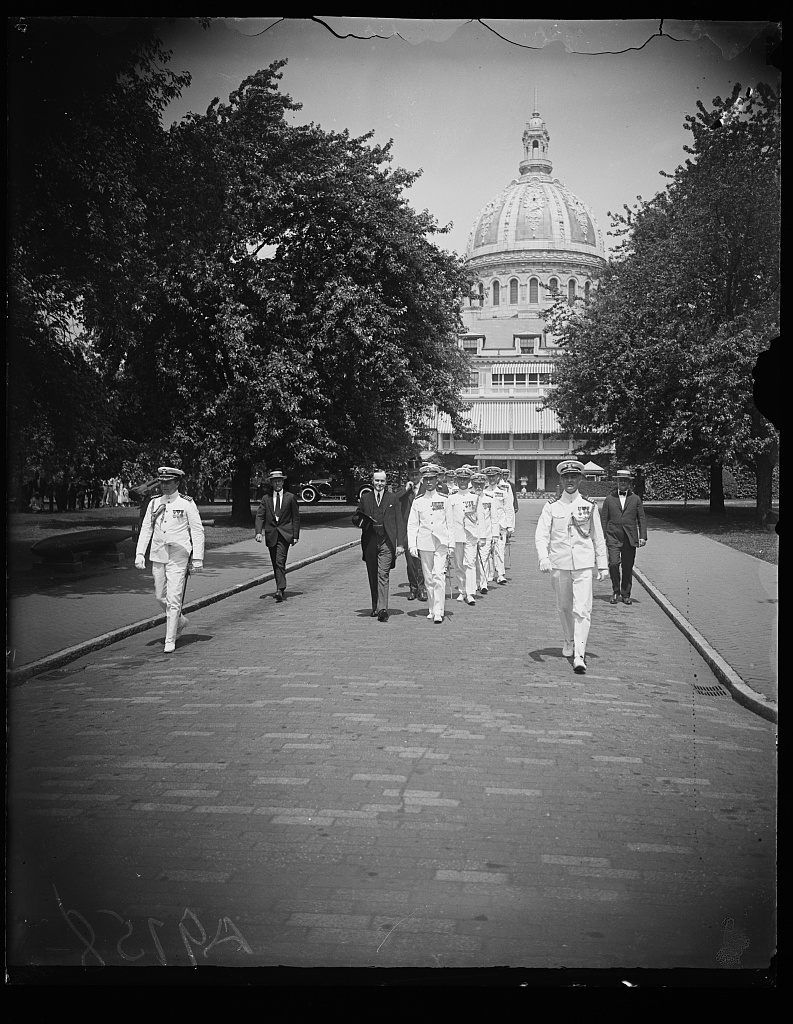
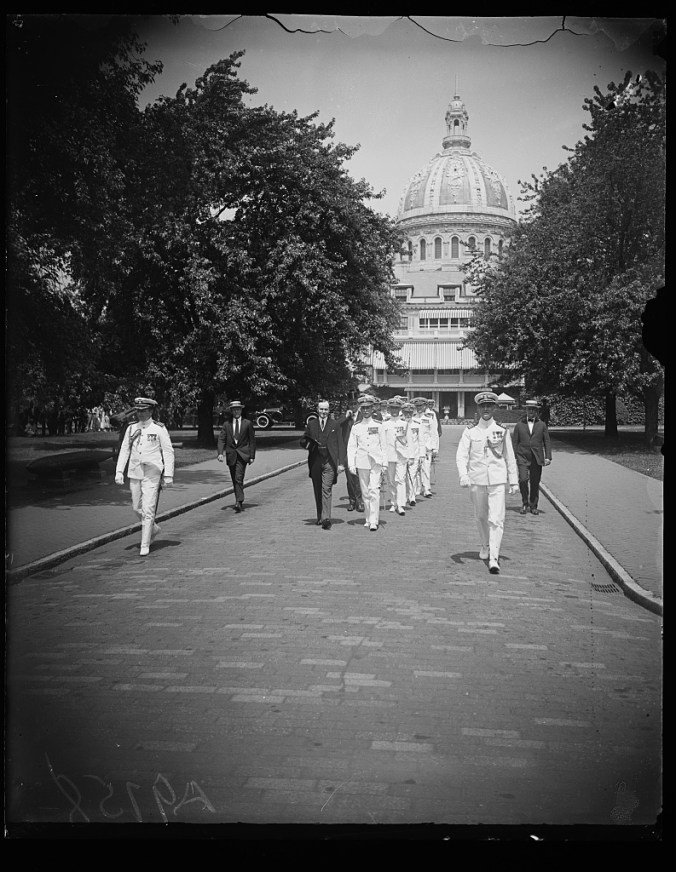
     One of the methods by which each government undertakes to preserve order so that it may protect its people from domestic violence and foreign hostilities is known as preparation for national defense. The great object that it all seeks to accomplish is peace…We do not have these [police, Army and Navy] for the purpose of making war, but for the purpose of preserving peace. The ability to protect the people within its borders and to insure to them the security which can only come from the orderly administration of law is so much and so peculiarly the first requisite of every government that under international usage civilized nations do not recognize a government which can not or does not meet these obligations. 45060v CC at Naval Academy 1925
As the inordinate power of the current regime grows, it becomes ever more apparent how far removed it is from this essential purpose of lawful order and national defense.

While Coolidge ensured the ratification of Kellogg’s Pact against war, he understood good government protects its citizens from lawless violence. At the same time, he knew that no measure could ever eradicate conflict completely. What he worked to maintain was an adequate force to meet evil, understanding that the unjust and violent are enabled when national defense is neglected. The former President continues,

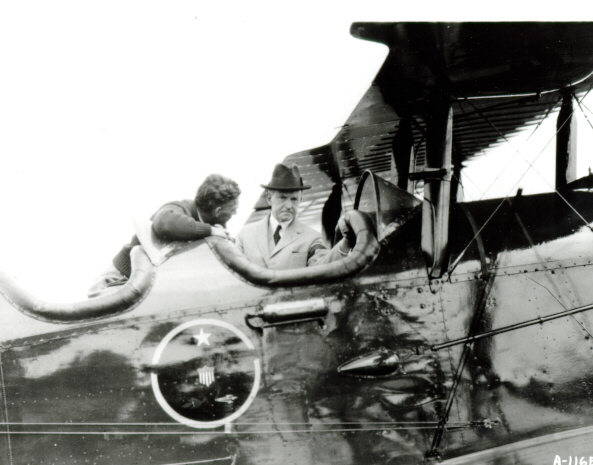
No sure way has ever been found to prevent war. We all realize that it is one of the most hideous afflictions to which mankind is subject. Opinions may differ as to whether nations with adequate military forces are more likely to enjoy peace than those which neglect their defenses. In the last analysis, this is a question of dealing with human nature. Every one knows that if there were no police our cities would be ransacked within twenty-four hours. I very strongly suspect that if there were but one nation in the world supplied with an army and a navy, and, to make the supposition as strong as possible, if that nation were our own, it would not be long before the other nations had been overrun. It seems to me that it is almost a moral certainty that we should find some excuse for taking that action. But when we know that other countries have a considerable ability to defend themselves, it is human nature for us to regard them with a more wholesome respect and be more careful about violating their rights. If we reverse this picture we can likewise conclude that if others know we are prepared to defend ourselves they will be less likely to commit offenses against us. coolidge bolling field 9-9-24
We perform no favors by taking up the burden of each nation’s duty to self-defense. The lessons of the Great War taught him that. Europe would again defer to America for its rescue in World War II and, it seems, in every conflict since. Coolidge saw danger in the policy of making the world “safe for democracy.” Likewise, we only enable our rights to be ransacked and our lives taken if we indulge our enemies through a lack of preparedness. An absence of resolve and an absolute refusal to use force only encourage injustice to continue with impunity against our citizens and their rights. What constitutes an adequate defense, then?

The President answers,

They should be large enough so that others would see there would be a great deal of peril involved in attacking us. They should not be so large that our country would feel we would undergo no peril in attacking others…I have ventured the opinion that war would have broken out in Europe much earlier than 1914 if those countries had not been prepared to resist attack. I also believe that some of them were overprepared…Adequate defense does not require a return to the conditions which then existed, but rather requires their avoidance.

The question of defense, like a coin, has another side. Military might has natural limitations. It can grow too large and thereby undermine its goal to preserve peace. Defenses, however lethal or expansive, will never permanently override human nature’s “determination to be free.” What about individuals who have ideological, instead of national, loyalties? What of those who freely embrace death for their radical dream, like islamofascists?

Coolidge summarizes,

That the wrongdoer, whether it be the individual or the nation, can be checked by force is apparent, but no force will be found adequate for an extended period to impose upon any considerable body of people a system which is recognized by the general standards of humanity as injustice and servitude. Such an attempt would create a revolt in which it would be found that the victims would rather die than yield. While an army and navy can be very useful to protect a nation from wrongful attack and unjust aggression, they cannot afford an absolute guarantee against war. Preparation for defense seems to me to be necessary in the world as we find it at the present time, and is useful, but it is well to recognize that there are limits beyond which it does not and cannot go in preserving peace…

Both sides of our obligation need equal care. This means understanding clearly that the use of national defense is not the evil here. Lawless and abusive destroyers of our citizen’s lives and liberties are the evil here, as Coolidge concludes,

…[W]e should take every precaution to prevent war, of which adequate defense is one. But we should also take every precaution to protect ourselves to the fullest possible extent from its ravages, if it does come. The Army and Navy serve the double purpose of prevention and defense. The individual and the race have not progressed beyond the point where they need the teaching and effect of discipline. We require not only the existence, but the outward manifestation, of authority.

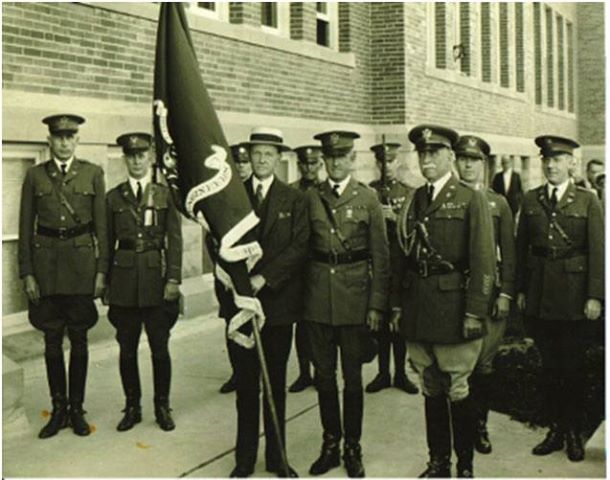
Without the policeman impartially enforcing the law, and the members of our military and National Guard prepared to do their duty, peace is impossible. Without a national defense ready to use strength to confront the individual or nation who takes American lives, exacting life for life, the murderous and lawless continue emboldened. Reagan and Coolidge both understood that the problem was embedded in human nature. The bully, the criminal, and the despot best understand the language of force. Reason and law mean little to them without physical demonstration. It is by exercising our duties of adequate national defense that law and peace are reestablished, evil men and women are deterred and a balance of righteous force restored.
Image

998243_10151699964766321_1262093981_n SD National Guard