On the Press and the People

Witnessing what continues to unfold this past week concerning the IRS targeting conservative groups combined with the Administration’s “policy” of dismissiveness and denial, it is important to remember on whose “watch” all of these actions have taken place: the Associated Press.

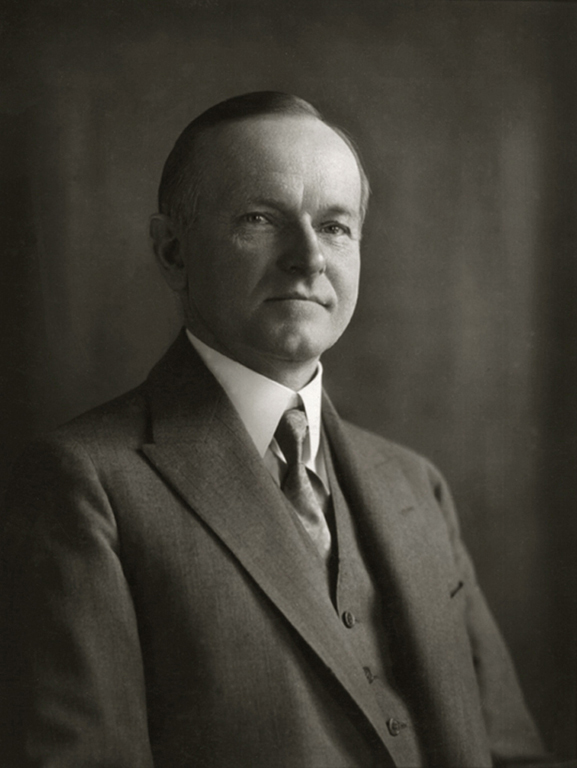
It was Coolidge, writing his column for October 18, 1930, who said, “Like everything else, the standards of the press are ultimately set by the people themselves. They will get what they insist on having. If they want a reliable, serious, informing newspaper, it will be furnished for them. If they are content with exciting, highly colored sensationalism, they will get that. The present tendency is toward higher standards.” One wishes the AP would take an ounce of this advice now. As, however, they have persisted in their effusion for partisan outcomes without concern for factual (or actual) journalism, a new media has risen from the people themselves. As the old media struggles to keep subscribers and audiences, the new continues to rally toward truth and a responsible press.

The substance of Mr. Coolidge’s point is that if we tolerate aberrant “reporting,” we will continue to get it. The reverse is equally true. Coolidge’s prediction is now fulfilling itself: we are getting the facts we demand. It was Andrew Breitbart who reminded us in September 2011 that we, regular Americans, are the journalists now. We are doing the job the media simply won’t do. I think Mr. Coolidge would be proud.

                                  Image

                         Image

On “The Press Under a Free Government”

“The relationship between governments and the press has always been recognized as a matter of large importance. Wherever despotism abounds, the sources of public information are the first to be brought under its control. Wherever the cause of liberty is making its way, one of its highest accomplishments is the guarantee of the freedom of the press. It has always been realized, sometimes instinctively, oftentimes expressly, that truth and freedom are inseparable. An absolutism could never rest upon anything save a perverted and distorted view of human relationships and upon false standards set up and maintained by force. It has always found it necessary to attempt to dominate the entire field of education and instruction. It has thrived on ignorance. While it has sought to train the minds of a few, it has been largely with the purpose of attempting to give them a superior facility for misleading the many. Men have been educated under absolutism, not that they might bear witness to the truth, but that they might be the more ingenious advocates and defenders of false standards and hollow pretenses. This has always been the method of privilege, the method of class and caste, the method of master and slave”Calvin Coolidge, addressing the American Society of Newspaper Editors, January 17, 1925. The full speech can be found in “Foundations of the Republic,” pp.183-190 or online at http://teachingamericanhistory.org/library/document/the-press-under-a-free-government/.

On the Mystery of Coolidge

Dr. Elihu Grant, who taught literature at Smith College, lived directly across from “Mr. Coolidge” for ten years. He was a prolific writer and “groundbreaking” excavator of areas around ancient Jerusalem. He offers this appraisal of the neighbor who would become President of the United States,

     “I never was one of those who felt free to call him ‘Cal,’ but always thought of him as ‘Mr. Coolidge’…Others had their ups and downs in the political game. He was always going up. People had confidence in him and he never went backwards from any position which he held in the respect of his fellow-townsfolk. He always seemed to have his object clearly in mind and went straight for it. His method was one of industry and persistence. If a nomination was to be secured, he often made his major efforts before the possible opposition had begun. By the time of the election, he seemed to have the whole matter discounted in his own mind so that he was full ready to attend to business as soon as he was invited to take charge.

     “He has often been referred to as a man of mystery. It seems to me that there is no special mystery about him. Men of his type are not infrequently seen in New England. One finds them in the law, in the ministry and other professions, in business, and in the town-meetings. The remarkable thing about Mr. Coolidge is that he has so many of the characteristics of the type and that he has them in such perfect blend. He seeks nothing mysterious, and he neither says nor does anything mysterious. He is straight and strenuous in his quiet way. There is not a trace of affectation about him. He is natively modest. He simply does not care for unreality. He does care tremendously for the real, a real job, a real achievement. His actions always run far ahead of his words, and they are in the same direction.”

What to some appeared mysterious was not a mystery at all. It was simply a man who lived with full awareness and confidence in reality. Pursuit of the artificial substitutes work for intentions and accomplishment with wishful promises. The artificial denies what is really there and is too weak a basis on which to lead one’s life. Living in reality takes courage and discipline. That is what makes creating a world of blissful ignorance without responsibilities so alluring to many. Coolidge, by choosing to live in reality, demanded more than so flimsy a foundation as that.

                         Image