On Columbus Day

Image

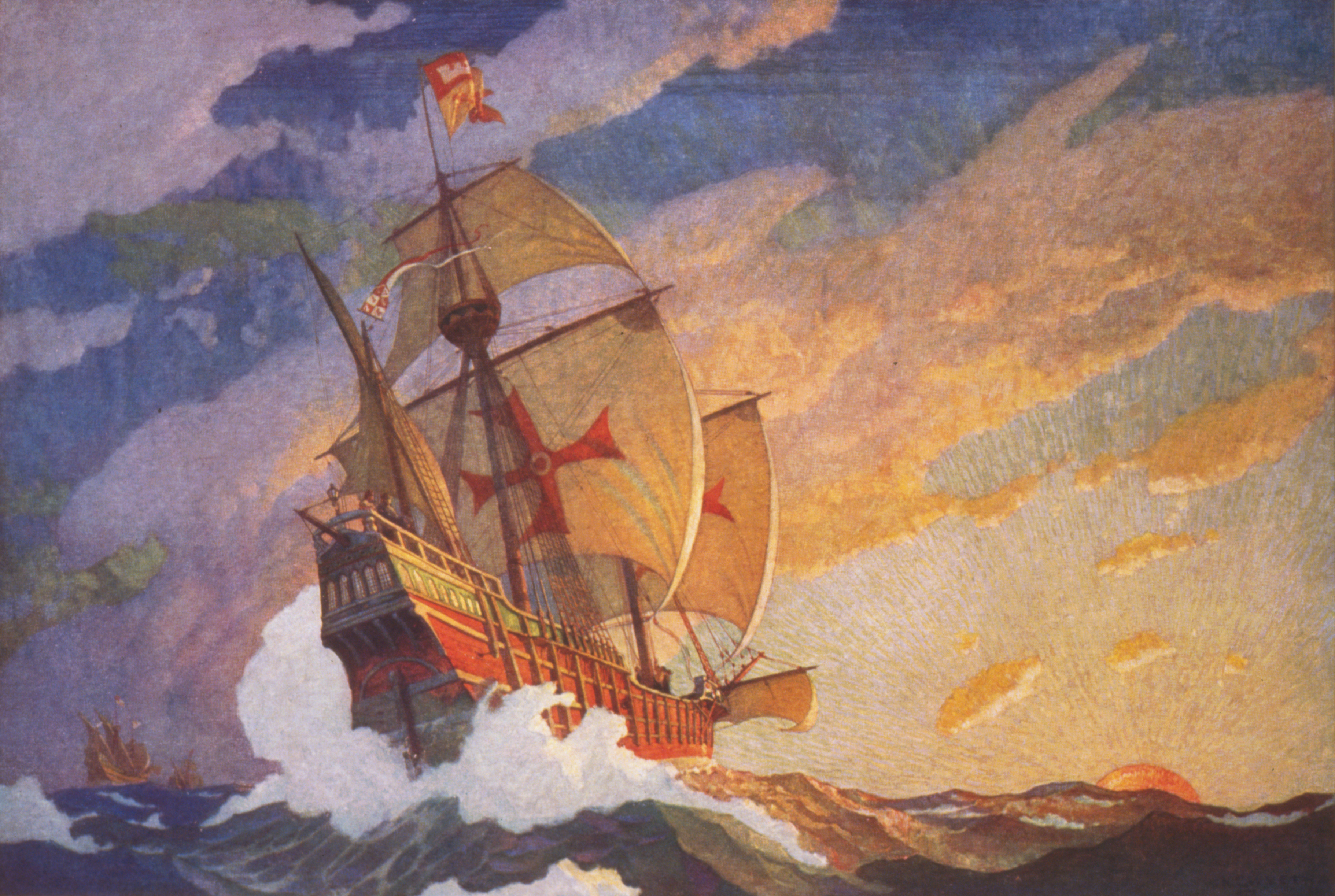
Few individuals in Western civilization have undergone as pervasive a demonization as Christopher Columbus. He has been designated the “poster boy” of all that is wrong with the West, in general, and America, in particular. He is blamed for Western racism and slavery (as if those policies are unique to dead white Europeans) because of his enslavement of the indigenous population, despite discovering a New World that would establish freedom as the governing ideal of human existence. He is blamed for Western Christendom because of his conversion of the natives, despite taking the first step toward what would become a haven of religious liberty and freedom of conscience in America. He is blamed for Western imperialism because of his accidental destruction (by an uncontrollable lack of immunity) of the various cultures with which he came in contact, despite introducing a New World that would form the greatest melting pot of diversity ever accomplished. It was nothing less than American opportunity and freedom, at the basis of our institutions, that made this possible. None of the good America has meant to human history and its unprecedented advancement would have happened without that first step into the dark unknown.

The same folks who discredit and ridicule men like Columbus for his failures not only defend the most violent thugs and genocidal regimes of this and the twentieth century — one need only recall the Western media’s adulation for Mao, Castro, Qaddafi and “Uncle Joe” Stalin — to recognize the double standard. The “blame America first” mentality illustrates the failure, not of America, but of human nature itself. The principles that formed America as the exception to the rule of human affairs is not at fault here. We honor our heroes not because they lack imperfections or never committed any wrongs. We honor men like Columbus because we revere and love what good they did accomplish. It is a respect for good above evil that merits our praise and admiration. Meanwhile, as Coolidge would say,

[I]t is a very hasty and ill-considered judgment to conclude that there is more bad than good in any one. We are all a combination of both elements. While we ought not to approve of the evil in ourselves or in others…The only perfect man ate and drank with publicans and sinners. It did not scandalize Him, it was some of those who were not perfect who were scandalized.

The politically correct demand for perfection is chasing an eternally elusive object. When the only subjects worthy of study are those who never violated the politically correct creed, we will have an extremely narrow, and uninformed, view of human nature. We may know much but without a full understanding of our nature, the good with the bad, it becomes a fantasy fixated on the reality we choose, not the reality which is.

Coolidge reminded those reading his daily column,

There is enough good in all of us to support the law of human fellowship. We shall be much more effective for good if we treat men not as they are but as they ought to be. If we judge ourselves only by our aspirations and every one else only by their conduct we shall reach a very false conclusion. When we have exhausted the possibilities of criticism on ourselves it will be time enough to apply it to others. The world needs high social standards and we should do our best to maintain them, but they should rest on the broad base of Christian charity. 

If the politically correct code sought to lift and inform the culture with higher standards, it would not mock the only Perfect Man Coolidge mentioned. Christ would be its greatest example. The hypocrisy evident in “blaming America first” is laid bare by this point. The offense of Columbus, in these folks’ eyes, is not what they claim it to be. His offense is helping to make America possible. The exploitation and oppression he perpetrated (meant to assign the full guilt we should all feel for being Americans) defines all we need to “know” about him. The good he did — not the first to arrive but the first to introduce the New World to the Old — is spoiled and negated by his sins against political correctness. Nothing but the evil he represents matters to such people because it fits the political agenda not honest historical perspective.

Ultimately, it is a denial of good itself. Truth learns from both the wrong examples and the right ones, honoring good where it can be found, even in flawed and imperfect people like Columbus. Pessimists and cynics may long for the “good old days” when Meso-American empires sacrificed their own human populations and chiefs, like Powhatan, consolidated power through war and genocide. But, if not for the Christian boy Chanco, murder would have continued unabated. Considering Americans were the first to appeal to higher ideals, ideals grounded in a moral conscience, Coolidge could rightly say of Columbus on October 11, 1930,

He is entitled to rank forever as the greatest of all explorers. But the glory of his exploit, great as it was, becomes almost unimportant when compared with its results. It marked the inception of the modern era. The minds of men were opened to new thoughts. The gold and silver of America gave a new trend to the life of Europe. The arts began to flourish. The people began to assert their rights. More colonies brought more trade. A new age appeared, great in captains, admirals, statesmen, poets and philosophers, and finally new nations dedicated to human freedom arose on this side of the Atlantic. These are partly the reasons why Christopher Columbus is entitled to be honored.

The substance for recognizing Columbus in this, the five hundred and twenty-first year since his discovery, resides not so much in what he personally did, or failed to do. It resides in the part he played in the opportunity to establish, for the first time, a place where people can live free to govern themselves, keep the rewards of their own work, and practice, unfettered, the obligations of their conscience before God and mankind.
Ships_of_Christopher_Columbus

On the Armenian Orphan Rug

Image

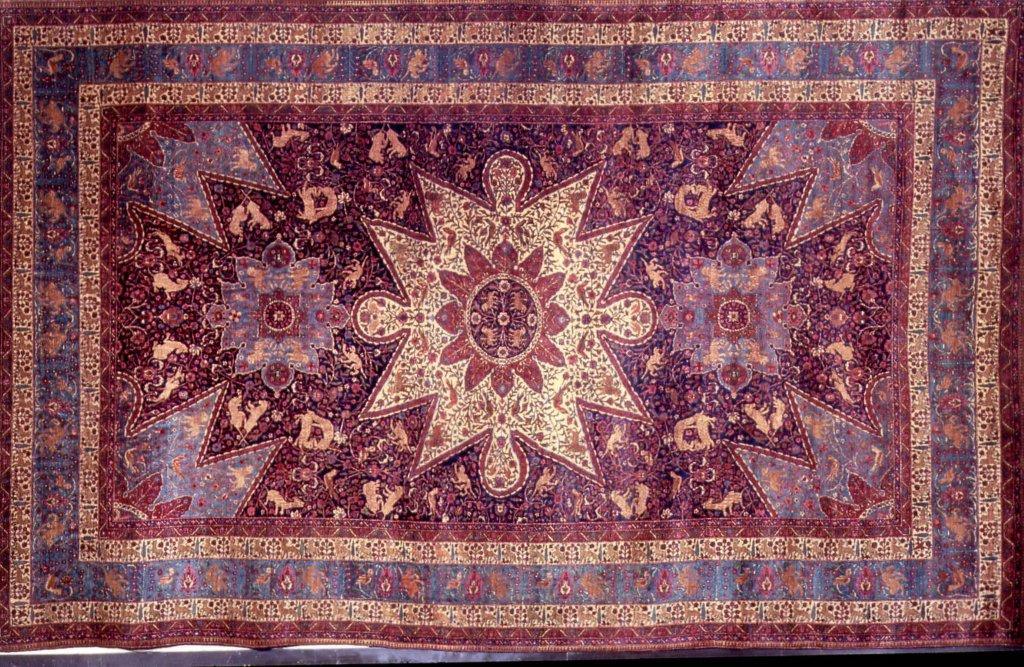
“The beautiful rug woven by the [Armenian] children in the [Ghazir] orphanage in the Lebanon has been received. This, their expression of gratitude for what we have been able to do in this country for their aid, is accepted by me as a token of their goodwill to the people of the United States. . . The rug has a place of honor in the White House, where it will be a daily symbol of good-will on earth” — President Coolidge, December 4, 1925.

A new book, President Calvin Coolidge and the Armenian Orphan Rug by Dr. Hagop Martin Deranian, delves into the regrettably little known events in Armenia that resulted in an unprecedented rescue and relief effort led by Americans of one million refugees, including 100,000 orphans, displaced by genocide. The rug, presented to President Coolidge in 1925, hung prominently in the prestigious Blue Room of the White House until 1928, respectfully preserved by Grace in their Northampton home and returned to Washington in 1983. The author recalls, “It was an emotional feeling to touch this very rug. These girls with their nimble fingers wove their gratitude to America into every stitch.”

The Armenian Cultural Foundation will host a reception open to the public giving Dr. Deranian an opportunity to present his work on October 20, 2013, in Arlington, Massachusetts at 3PM. It is well worth attending!

On the Limbaugh Theorem

Image

It is unimaginable that America would ever see, let alone re-elect, such a dearth of leadership as we now experience. It is a far fall from the Presidential strength of character demonstrated on either side of the aisle from Reagan and F.D.R. to Coolidge and  Cleveland. It tests the bounds of reality to try to understand why someone so hostile to America’s history and institutions could find such prevalent support.

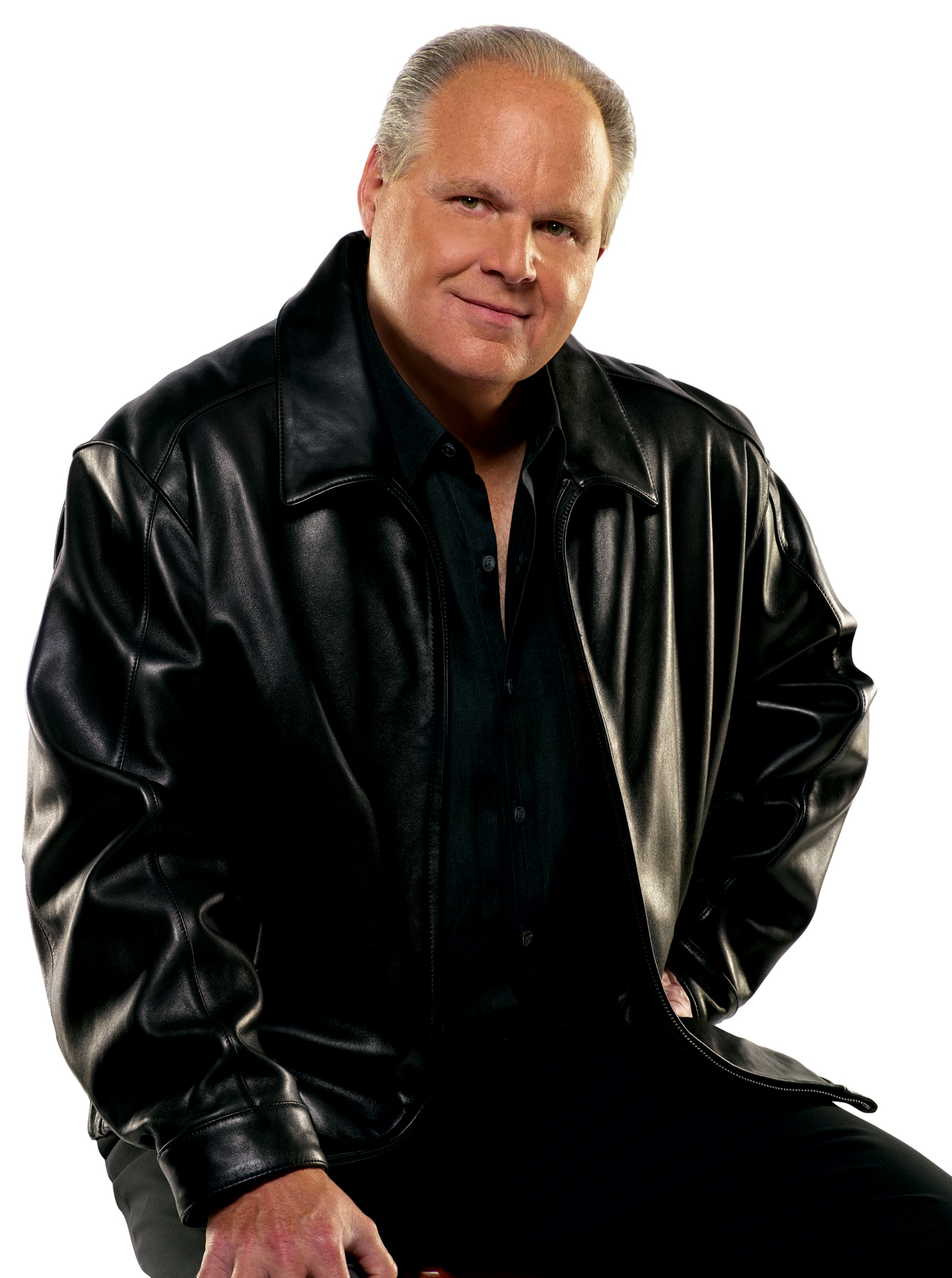
Rush Limbaugh has proffered an explanation for this utterly irrational disconnect between Obama and any accountability for his own policies with the “Limbaugh Theorem.”

Image

Instead of tracing effects directly to their causes, too many are willing defenders of policies that are indefensible. The not too distant past would indict this attitude. Coolidge appreciated that history was more than a dry series of dates and dead people. He said, “If we could better understand what they said and did to establish our free institutions, we should be less likely to be misled by the misrepresentations and distorted arguments of the hour, and be far better equipped to maintain them [our free institutions].”

Professing to finally espouse the colorblindness of an enlightened modernity, this current attitude claims to be free at last from what mired past generations in racism and ignorance. In reality, this politically correct culture has camped atop a mountain piled high with the soft bigotry of low expectations. Unable to see beyond the irrelevant color or race of the President to properly discern the destructiveness of this man’s political agenda — his own policies free of any opposition for the last five years — this culture seems ready and willing to declare one preeminent political axiom, “As the first black President, he can do no wrong.”

Should it ever be whispered that his actions were less than irreproachable, the fact that he has a certain skin color cancels out any criticism. This ultimate form of affirmative action should be insulting to anyone, regardless of color, race or political persuasion. It is an insult to reason.

Any disagreement is dismissed as racially-driven. He cannot be wrong or else we are instantly back to an unredeemed “Jim Crow” America, as opposed to the peace and unity in which we now live, this new day hailed to be the transformational age of Obama. The popular perception that all progress would be undone by pointing out the failures of one who happens to be a certain color is too much for this culture to allow. Obama cannot be blamed for anything he has done because…he inherited it, he is being obstructed by Republicans, he is not being understood, he was forced to work with a deck stacked against him by the Founders or any number of contorted explanations that try to justify him at all costs. This lone individual is too big to fail, even if it means America is to be sacrificed for his sake. 

The Limbaugh Theorem further explains that faith in America is what is being lost, instead of the credibility of absentee leadership. In time past, people were able to know failure when they saw it and reverse course at the ballot box. Hoover in 1932 and Carter in 1980 are prime examples. Now, as Coolidge himself struggled to understand, the artificial world of the political mind is becoming reality by perception.

Still, the perpetual campaign of this administration shows that even the President knows he has yet to fully convince a large cross-section of the electorate. The Office has known reprobates and autocrats before but it has never known anyone quite like this man. The combination of ambition for power with arrogance and animus toward the nation over which he has been elected makes him unlike anyone else who has occupied the White House. Yet, he is merely human. It is the pervasive force of political correctness maintained by those who carry his water (the First Lady is not the only one carrying water these days) that has kept him insulated from the consequences of his policies. Without the smoke and mirrors, the Wizard is no more immune from consequences than the rest of us in Oz are.

As Coolidge reflected upon his time in Washington, he observed there are two minds at work with which the President must deal. “One is the mind of the country,” he noted, “largely intent upon its own personal affairs, and, while not greatly interested in the government, yet desirous of seeing it conducted in an orderly and dignified manner for the advancement of the public welfare. Those who compose this mind wish to have the country prosperous and are opposed to unjust taxation and public extravagance…In general, they represent the public opinion of the land.”

“The immediate authority with which the President has to deal is vested in the political mind. In order to get things done he has to work through that agency…It is a strange mixture of vanity and timidity, of an obsequious attitude at one time and a delusion of grandeur at another time, of the most selfish preferment combined with the most sacrificing patriotism. The political mind,” Coolidge discerned, “is the product of men in public life who have been twice spoiled. They have been spoiled with praise and they have been spoiled with abuse. With them nothing is natural, everything is artificial.”

Then Coolidge draws a conclusion that forms the basis for the Limbaugh Theorem. The political mind, given to the artificial as it is, readily connects the Congress with all that is wrong with inside-the-Beltway thinking. Consequently, Coolidge identifies, “the President comes more and more to stand as the champion of the rights of the whole country.” This ability to equate the President with responsibilities outside, even transcendent of, the inner workings of Washington “is one of the reasons that presidential office has grown in popular estimation and favor, while the Congress has declined.” Moreover, the perception, however real or fake it may be, that “the President is willing to assume responsibility, while his party in the Congress is not,” makes the country feel that he is able to resolve the gridlock as the people’s “champion.”

Coolidge would be appalled at the extent of the destruction through lawless coercion this President has unleashed. Coolidge made clear that the President, whoever it may be, is rightly “held solely responsible for his acts.” Mr. Coolidge would never have condoned the repeated and flagrant disregard for the Office, the shirking of daily responsibilities owed to the country or the systematic protection this President continues to receive from any substantive criticism of his policies. Coolidge does help explain how the Limbaugh Theorem became possible. He does so by describing how the perception of the Presidency as “the champion of the people” easily translates into its corrupted form as the perpetual Washington outsider, able to fix the nation’s problems free of partisanship, free of the corruption of politics, and now free of both Constitutional limits and electoral consequences.