On Scandals

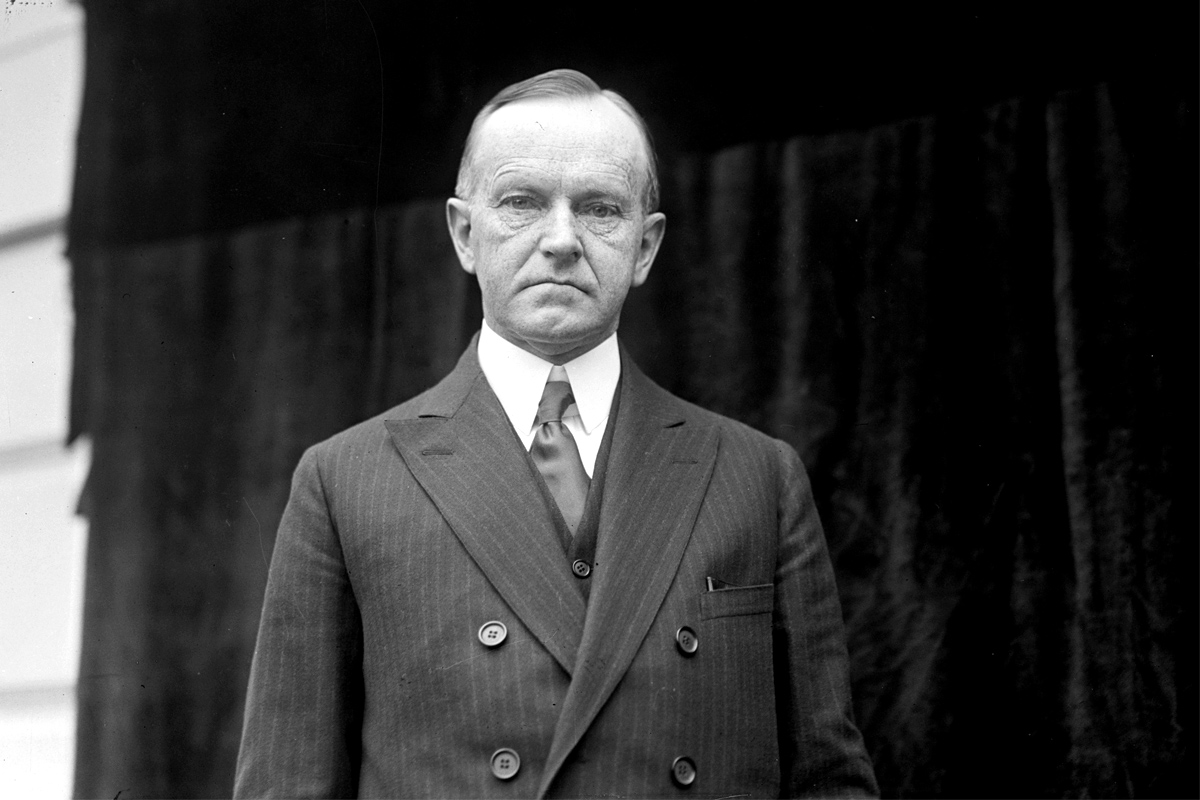
As the details became known of what had transpired when government officials used patronage on friends in favored businesses, President Coolidge would set the tone, in February 1924. Coolidge would explain how he and those under his authority would act to restore integrity, punish the guilty and represent all, not merely a preferred few, Americans,

“Character is the only secure foundation of the state. We know well that all plans for improving the machinery of government and all measures for social betterment miserably fail, and the hopes of progress wither, when corruption touches administration. At the revelation of greed making its subtle approaches to public officers, of the prostitution of high place to private profit, we are filled with scorn and indignation. We have a deep sense of humiliation at such gross betrayal of trust, and we lament the undermining of public confidence in official integrity. But we cannot rest with righteous wrath; still less can we permit ourselves to give way to cynicism. The heart of the American people is sound…For us, we propose to follow the clear, open path of justice. There will be immediate, adequate, unshrinking prosecution, criminal and civil, to punish the guilty and to protect every national interest. In this effort there will be no politics, no partisanship. It will be speedy, it will be just. I am a Republican but I cannot on that account shield any one because he is a Republican. I am a Republican, but I cannot on that account prosecute any one because he is a Democrat…Distressing as this situation has been, it has its reassuring side. The high moral standards of the people were revealed by their instant reaction against wrongdoing.”

The same high standards are maintained when we, the sovereign people, hold our officials to account for mismanagement and dereliction of their sworn duties. Coolidge did more than outline what needed to be done, he did it by appointing a special counsel team to investigate and prosecute both civil and criminal wrongs, by issuing executive orders commanding entire departments be turned upside down to provide all the information investigators requested, by firing his Attorney General for refusing to comply, and welcoming the start of litigation well before the elections of 1924, even when it could have destroyed his chances for election. His clarity in both word and deed demonstrated the right way to handle government abuse of authority, even when it concerned inherited circumstances. Contrary to Hillary Clinton, it still makes a difference at this point.

Image

On Leading By Example

Example is the heart of leadership. Anyone can tell someone what to do, how it should be done and what will happen when instructions are not followed. In short, anyone can be a bureaucrat. Possessing leadership is something entirely different. While it is not always, and some would say not usually, an official position, the approach of successful leaders follows the same course every time. Without a conscientious commitment to duty manifested in example, one is merely “that jerk” in the office. By throwing one’s weight around, reminding people of your authority, and refusing to put hand to the wheel and work, especially when conditions burden everyone, it only breeds resentment and exposes an utter lack of one’s qualifications to lead. Without the keen sense of moral obligation tempered with humility, even Presidents reveal their mettle.

Leadership is not simply who has the most ideas, consider Herbert Hoover. Leadership is not simply who has the most amiable personality, consider Warren Harding. Leadership, especially of Chief Executives, is a profound call to serve, not be served. The inconsistency between one’s words and one’s actions could not be hidden forever and for honest leaders, such is never tolerable. For men like Coolidge, the oath and the office were serious responsibilities to be exercised with utmost respect and self-discipline. Those who lack such qualities are never able to conceal them completely from the people.

The inception of the Budget Bureau illustrates the strength of Coolidge’s leadership. The Bureau was the result of some nine years of persistent effort to bring about responsible budgeting at the national level. In the latter half of the nineteenth century, some twenty-eight consecutive years had kept balanced budgets, ensuring that government expenditures were carefully met within revenues. Surpluses defined these years and it was simply a matter of good sense to so manage the public household. That began to change with the feckless habits of the Benjamin Harrison years and when deficits hit six years in a row, from 1904-1910, something had to be done. It was President Taft who advocated replacing the piecemeal approach with a coordinated and deliberate budgeting process for all government departments. They would go through a formal system that prioritized cutting waste and practicing the strict economy it preached to others. It would be sidelined during the Wilson administration, underscoring how those considered the most “forward-thinking” today would be left in the dust by conservatives such as Taft, Harding and Coolidge, the latter being the most tenacious advocate of modern budgeting. It would be under Harding that the two Congressional bills for this concept would find effective support and quick passage into law as the Budget and Accounting Act of 1921. The Bureau found realization with Harding’s prudent selection of General Charles Dawes, as its first Director. Suitably, Dawes would serve alongside Coolidge as his bold and flamboyant Vice President.

It would be Coolidge, however, (with Bureau Director, General Herbert Mayhew Lord) who would bring both a meticulous and relentless approach to cutting down the debt and restoring surpluses. Continuing to hack away at every possible area of waste, the President, General Lord and his staff of 45 people, ensured that government spending was kept down despite constant efforts to the contrary. At the end of six straight years of surpluses, the nation’s debt had dropped to $16.9 from $22.3 billion at the beginning of Coolidge’s Presidency. Directing those growing surpluses toward productive ends became more and more difficult as Congress sought increased spending levels rather than returning those surpluses to taxpayers in the form of tax cuts, as Coolidge sought.

The Coolidge Administration, and his team of Mellon and Lord did more than talk about benefiting people with these policies, they lived them. Lord’s Bureau was proud of the fact that it used every supply until it wore out. Mellon would give $52 million of his personal income to charity, giving to people generations in the future, not including his generous gifts to the National Gallery of Art and the Smithsonian. Coolidge, ever conscious of his moral duty to Americans, saved much of his Presidential salary and, when his friends sought to establish his official library (before such entities were funded by public money), he gave it all to help the blind. These were leaders not by virtue of their position in government or their campaign rhetoric but by virtue of their genuine demonstration of service toward others. It is time for a renewed commitment to leadership by example.

Image

On Legislative Power

Image

Coolidge knew how to exercise the energy of executive power in calculated doses for maximum effect. Despite the stereotypical impression that he slept through the White House years, a false impression attributed to a later Chief Executive by the name of Ronald Reagan, he understood the use of authority better than most, especially of the executive variety. The independence of Congress, a co-equal in the division of power, was no less imperative to Coolidge.

As a freshman state legislator, Coolidge was not exactly a greenhorn to politics. He had already served as a town councilman, bank legal counsel, city solicitor, clerk of courts and chairman for the Northampton Republican Committee, all by age 34. He had crafted municipal policy before, represented the interests of others both in his practice and in his duties as legal council and city solicitor, learning the law well. Always an active listener and continual thinker, he said little because he truly believed, “He who gives license to his tongue only discloses the content of his own mind. By the excess of words he proclaims his lack of discipline.” Even as he would come to build a record that included direct election of Senators, minimum wage laws, women’s suffrage, transportation regulation, restriction of child labor and other matters, he was not simply running with the “legislative herd” in order to keep pace with a clamor to legislate. While some were running headlong into heavy regulation of rails and Morgan steel, Coolidge refrained. He was not suckered into the movement, quite popular at the time, of breaking up “big business” simply because it was “too big.” He represented the folks back home, to be sure, but was doing so with an informed and conscientious judgment of matters. Even then the full price of what was done would not be understood for years. He knew destroying the mobility of capital and people’s ability to adapt to market conditions, even when it meant unpopular rate increases, hurts not helps everyone, especially the poorest. Legislatures were poor stand-ins for people free to make their own decisions in the marketplace. They may act with good intentions but would leave a trail of havoc that could have been avoided.

Coolidge would later summarize the impact of this period,

The power of legislation has been to a large extent recast, for the old order looked on these increased activities with much concern. This has proceeded on the theory that it would be for the public benefit to have government to a greater degree the direct action of the people. The outcome of this doctrine has been the adoption of the direct primary, the direct election of the United States senators, the curtailment of the power of the speaker of the House, and a constant agitation for breaking down the authority of decisions of the courts. This is not the government which was put into form by Washington and Hamilton, and popularized by Jefferson. Some of the stabilizing safeguards which they had provided have been weakened. The representative element has been diminished and the democratic element has been increased; but it is still constitutional government; it still requires time, due deliberation, and the consent of the States to change or modify the fundamental law of the nation.

It is that slow, deliberate consideration that keeps legislative power independent and people’s liberty preserved. When the Congress abandons that exercise of deliberation and attempt to speed the process without full consideration of the bill, the independence of legislative power is lost. The distinct functions of government are tipped in favor of only one aspect: an energetic executive. Without legislative deliberation, Congress surrenders its central check upon executive abuses. It places decisions that deserve time and thought into the “fast track,” disregarding what harm may come. Coolidge recognized the peril of this transformation to sound lawmaking and people’s freedoms. He differentiated productive collaboration — Congress passing and the President enforcing measures only after thorough consideration –from legislative subservience to executive power.

Speaking in Northampton on Memorial Day, May 30, 1923, Vice President Coolidge articulated the essential distinction this way,

The chief repository of power is in the legislature, chosen directly by the people at frequent elections. Is it this body, which is particularly responsive to the public will, and yet, as in the Congress, is representative of the whole nation. It does not perform an executive function. It is not, therefore, charged with the necessity of expedition. It is a legislative body, and is, therefore, charged with the necessity for deliberation. Sometimes this privilege may be abused, for this great power has been given as the main safeguard of liberty, and wherever power is bestowed it may be used unwisely. But whenever a legislative body ceases to deliberate, then it ceases to act without due consideration. That fact in itself is conclusive that it has ceased to be independent, has become subservient to a single directing influence or a small group, either without or within itself, and is no longer representative of the people. Such a condition would not be a rule of the people, but a rule of some unconstitutional power…An independent legislature never deprived the people of their liberty.

In the haste to “pass the bill to see what is in it” and “prevent deadlock,” the point of properly applied legislative power is being missed on a grand scale. In such an environment, no one can be assured of their freedoms. As Coolidge would say, “A good measure can stand discussion. A bad bill ought to be delayed…Open debate is the only shield against the irretrievable action of a rash majority.”