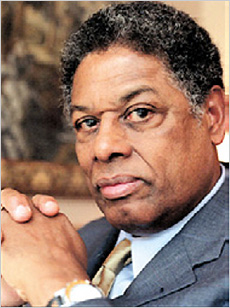
Dr. Thomas Sowell
While not a November during an election year, it is fitting that Thomas Sowell, one of America’s preeminent economic minds, presented the contrasts in policy and attitude that set Calvin Coolidge far ahead of the current White House occupant. It is appropriate mainly because on this day eighty-nine years ago, the President “wired up” on radio broadcast to speak about the responsibilities every citizen possesses. He did not lecture them on the need for sacrifice in the form of higher taxes, less freedom and more supervision. He did not appeal to a prejudice against American traditions and institutions. He did not stir up resentment for the opposition party in order to keep the agenda rolling. Instead he appealed to confidence in the people, not Washington bureaucrats, to decide rightly what needs to be done.
“The institutions of our country rest upon faith in the people. No decision that the people have made in any great crisis has ever shown that faith in them has been misplaced. It is impossible to divorce that faith which we have in others from the faith which we have in ourselves.” Coolidge was not talking about a communal reliance, that subjugates the rights and blessings of the individual to that of an amorphous collective. He explains what citizenship requires, “Unless each of us is determined to meet the duty that comes to us, we can have no right to expect that others will meet the duties that come to them. Certainly we cannot expect them so to act as to save us from the consequences of having failed to act.” To Coolidge, citizenship was of always personal. It was never a requirement imposed upon others that exempted yourself. If you failed to uphold your obligations to participate — from the ballot box to the town meeting to the daily exercise of obedience to law — who were you to expect it of someone else? How can you expect the proverbial “someone else” to pay for a program you want, if you are unwilling to pay for it yourself? How can you decry the results of an election or a failed policy if you have been complacent or negligent as anything less than an energetic and active citizen?
The result of opting out of one’s citizenship obligations was plain in a country where the people are supposed to be sovereign. “If they do not vote they abdicate that sovereignty, and they may be entirely sure that if they relinquish it other forces will seize it, and if they fail to govern themselves some other power will rise up to govern them. The choice is always before them–whether they will be slaves or whether they will be free.” To retain freedom, Coolidge declared, there can be no substitute for the active and energetic exercise of citizenship’s privileges coupled with a faithful discharge of its duties. “It is not to be secured by passive resistance. It is the result of energy and action.” Bad policies do not go away on their own. They are defeated by informed and engaged citizens. Action alone would not suffice, however. The President continued, “To live up to the full measure of citizenship in this nation requires not only action, but it requires intelligent action. It is necessary to secure information and to acquire education.” The two principal places for this intelligence in the electorate are the school house and the house of worship. The moral and intellectual training in citizenship is grounded here. These are to prepared each person for the purpose of a campaign: to send an informed individual to the ballot box. All the money, advertising, organization, speeches, effort are utterly wasted if anything less than informed and engaged citizens vote when the day comes.
The decision before all of us, this year, next year and at every policy proposal, is “whether we wish to be ruled by all the people or a part of the people, by the minority or the majority; whether we wish our elections to be dominated by those who have been misled, through the presentation of half-truths, into the formation of hasty, illogical and unsound conclusions; or whether we wish those to determine the course of our Government who have through due deliberation and careful consideration of all the factors involved reached a sound and mature conclusion.” A discontented few were active then no less than now. They only changed the country’s direction not because they were right or advocated just causes against the majority of Americans but because “a sober second thought” exercised by the people for their welfare and that of future generations “sat out” from their duty to participate. Our country was never meant to be directed and its policies decided by a “minority moved in part by self-interest and prejudice.” The faith that cements our foundations was not entrusted to a part of the people, Coolidge affirmed. “It means faith in all the people. Our country is always safe when decisions are made by a majority of those who are entitled to vote. It is always in peril when decisions are made by a minority.” That minority, be it an autocratic President, a Cabinet member permitted plenary power, a presumptive Supreme Court justice or a club of incumbent Senators, was not given the power they now exercise by our system as founded. It is a corruption to behave as it did. Even more, though, we have been seriously remiss in our duties to allow this wholesale abdication of our sovereignty to take place. Those we send to our county seats, state capitals and Washington serve, not for themselves, but as our employees. They work for us. Yet, we ourselves are but stewards and, as Coolidge would say, “trustees” exercising citizenship for the “benefit of…country and…countrymen.” We are no more at leisure to sanction policies, by vote or abstention, that favor a few while hurting others than are those we send to represent us in government.
Coolidge brings his radio message to a close with a firm rebuke of complacency toward our duties of citizenship. “They have no right to say they do not care. They must care. They have no right to say that whatever the result of the election they can get along. They must remember that their country and their countrymen cannot get along, cannot remain sound, cannot preserve its institutions, cannot protect its citizens, cannot maintain its place in the world, unless those who have the right to vote do sustain and do guide the course of public affairs by the thoughtful exercise of that right…They do not hold a mere privilege to be exercised or not, as passing fancy may move them.” This great trust charged to each of us, “one of the most important and most solemn which can be given into the keeping of an American citizen,” warrants the thoughtful seriousness worthy of its importance.
Last year we witnessed the product of an uninformed and complacent citizenry and the whole country now suffers for a vast disengagement and ignorance. We dare not repeat that costly mistake by continuing to be inactive and uninformed, forsaking our duty to be citizens, in choosing the candidates and direction America is to take in the primaries and general elections coming in the months to follow.
 The Importance of the Obvious