On Lafayette and Foreign Affairs

Image

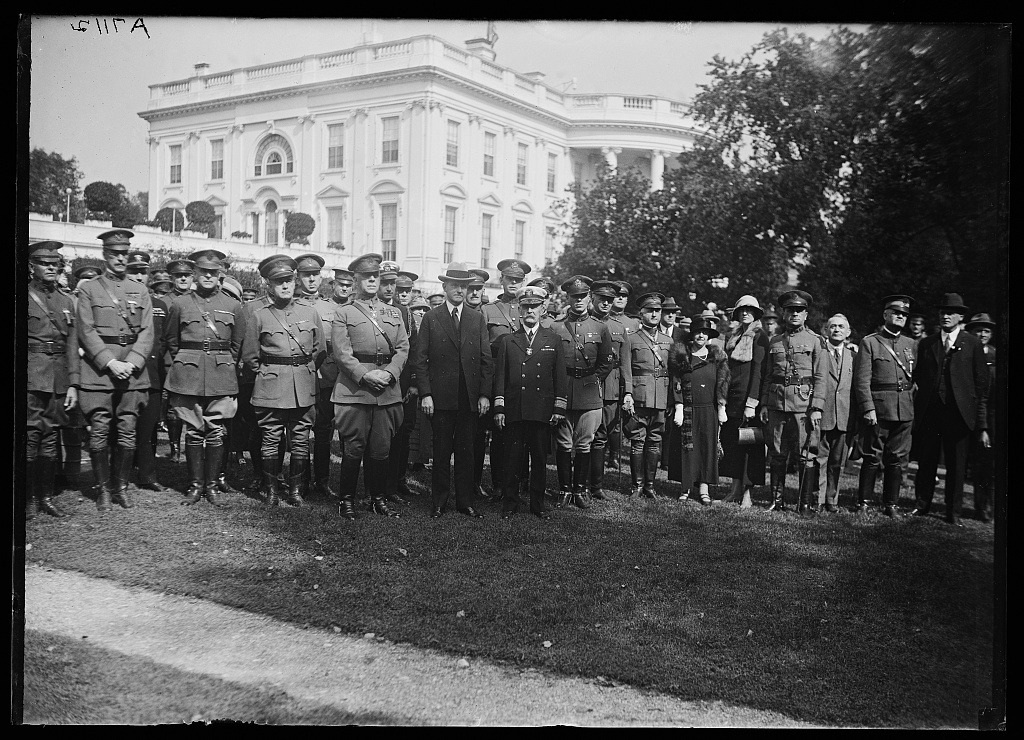
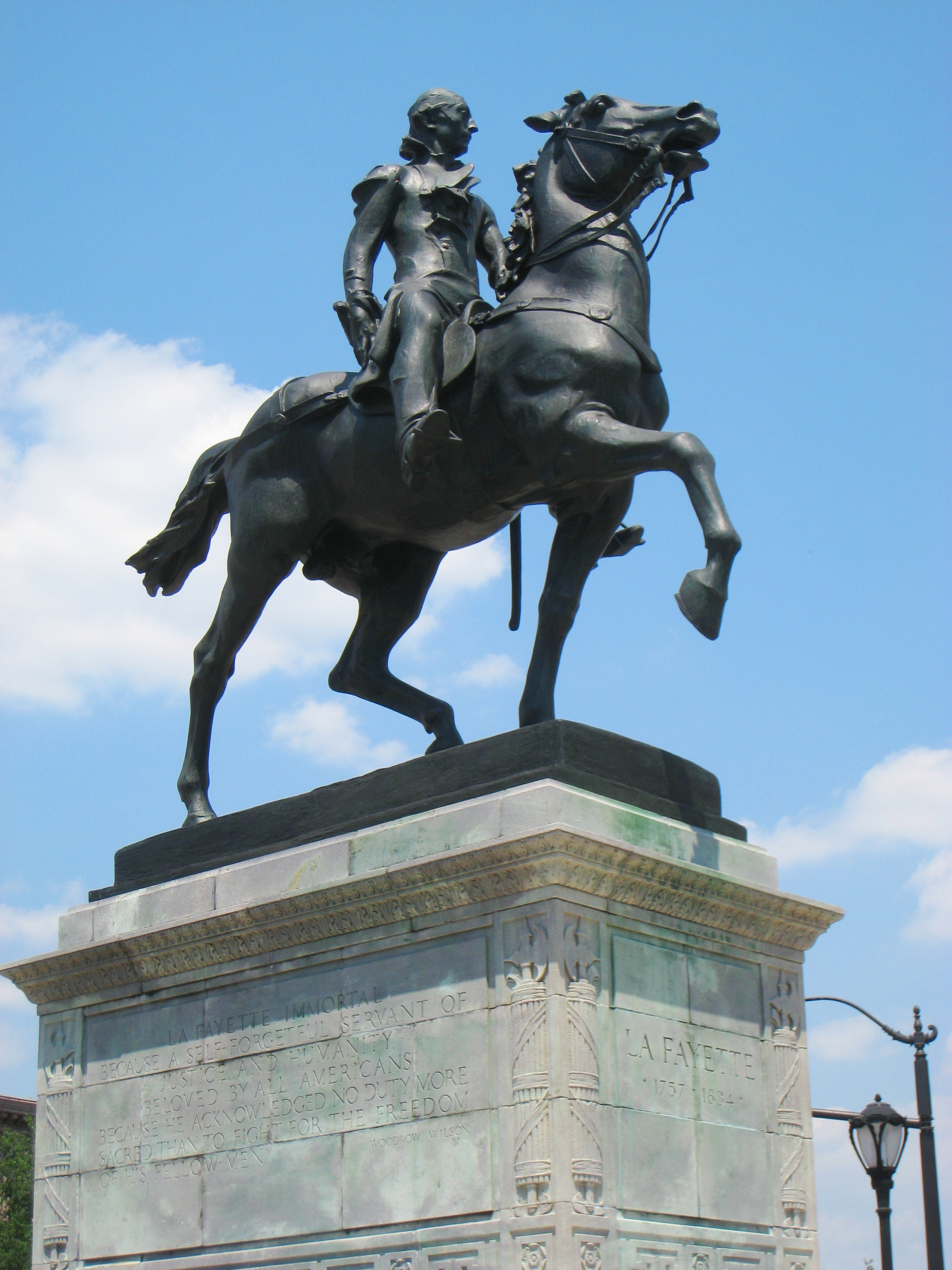
Tomorrow, September 6, marks two important occasions: the birthday of and official farewell to Lafayette by President John Quincy Adams during the French patriot’s last visit to America in 1825. President Coolidge, a century later, upon dedicating the monument to Lafayette placed in Baltimore, Maryland, observed that “[h]is picture to me seems always to have the enthusiasm and freshness of youth, moved with the high-minded and patriotic purpose of maturity. He displayed the same ambition for faithful service, whether he was leading his soldiers in the last charge for American liberty at Yorktown or rebuking the mob at Paris for its proposal to make him king. His part in the French Revolution is well known. He served the cause of ordered liberty in America; he was unwilling to serve any other cause in France…He represents a noble and courageous dedication to the service of freedom. He never sought for personal aggrandizement, but under heavy temptation remained loyal to the great Cause. He possessed a character that will abide with us through the generations. He loved his fellowmen, and believed in the ultimate triumph of self-government.”

As Coolidge continued to reflect upon the freedoms Lafayette fought to preserve in a constitutional republic, he surveys the substance of liberties protected by that document. Coolidge recognized also the deliberate limits placed on the government so that the rights of even the smallest minority — the individual — cannot be deprived of those protections by an ambitious, irresponsible majority.

Coolidge then turns to foreign affairs, hitting upon the true basis for sound foreign policy: guarding independence in our decisions and our interests. Respect, Coolidge shows, comes as a result of that tenaciously guarded independence; not as a product of surrendering it. Being afraid to lead, refusing to use America’s moral power for good, is not the route to successful foreign policy, in other words.

President Coolidge, decried as too provincial for the global burdens of the office, understood the situation far better than the “smartest of the smart” think they do now, as he declared what American foreign policy had been for its first one hundred and fifty years, “We have always guarded it [i.e., independence] with the utmost jealousy. We have sought to strengthen it with the Monroe Doctrine. We have refrained from treaties of offensive and defensive alliance. We have kept clear from political entanglements with other countries. Under this wise and sound policy America has been a country on the whole dedicated to peace, through honorable and disinterested relations with the other peoples of the earth. We have always been desirous not to participate in controversies, but to compose them,” that is, to bring calm back to each situation.

The result? “What a success this has brought to us at home, and what a place of respect and moral power it has gained for us abroad…” No wonder serious statesmen and genuine patriots are astonished at the pathetic equivocations and reckless display of weakness from our current leadership regarding Syria and everywhere else in the world.

Coolidge points to solid ground for future American foreign policy, “To continue to be independent we must continue to be whole-hearted American. We must direct our policies and lay our course with the sole consideration of serving our own people. We cannot become the partisans of one nation, or the opponents of another. Our domestic affairs should be entirely free from foreign interference, whether such attempt be made by those who are without or within our own territory. America is a large country…It has room within its borders for many races and many creeds. But it has no room for those who would place the interests of some other nation above the interests of our own nation.”

“I want to see America set the example to the world both in our domestic and foreign relations of magnanimity. We cannot make over…people…We must help them as they are, if we are to help them at all, I believe that we should help, not at the sacrifice of our independence, not for the support of imperialism, but to restore…a peaceful civilization. In that course lies the best guarantee of freedom. In that course lies the greatest honor which we can bestow upon the memory of Lafayette.”

Image

On Responsible Governing

Image

“When you substitute patronage for patriotism, administration breaks down. We need more of the Office Desk and less of the Show Window in politics. Let men in office substitute the midnight oil for the limelight” — Calvin Coolidge, September 1916, from full speech in Have Faith in Massachusetts, p.46.

While Coolidge was specifically addressing his state’s departure from a responsible exercise of civic obligation toward the sick, poor, and mentally infirm, the “unfortunates” were not being helped by a system that rewarded the appearance of caring over substantive actions. As he had said two years before, “The normal must care for themselves. Self-government means self-support…Do the day’s work. If it be to protect the rights of the weak, whoever objects, do it. If it be to help a powerful corporation better to serve the people, whatever the opposition, do that. Expect to be called a stand-patter, but don’t be a stand-patter. Expect to be called a demagogue, but don’t be a demagogue…Don’t expect to build up the weak by pulling down the strong.”

Coolidge was incensed by the partisan posture that passed laws, rewarded political friends and manifested “compassion” based on the electoral calendar. This utter abandonment of responsible governance is being repeated today. State legislators, like those in Wisconsin, have skipped borders to avoid voting on public expenditure cuts. Other states, like California, are assuming greater and greater control of the cities against those of other citizens in the towns and countryside. Cities, like Detroit, are filing bankruptcy because local government has forfeited the future by spending gratuitously on political favorites rather than serving all its people with constructive economy and limited regulation. The federal government has not passed a budget for four years, yet has spent more than $10 trillion through continuing resolutions, administrative subterfuge and unprecedented disregard of the laws. 

The postponement of yet another provision of Obamacare, this time the full brunt of premium costs, at least until after the midterm elections, is just the kind of “Show Window” partisanship Coolidge found abhorrent in 1916. This postponement of an already unpopular, unaffordable and unworkable law is calculated for one purpose: to benefit the President and his Party in the next election. Such blatant manipulation of government to serve its own ends rather than those which genuinely benefit all the people deserves loud and wide rebuke. Next year’s ballot box affords a direct opportunity to turn out against this reckless system and for responsible governance.

On National Defense

Image

The Reagan Doctrine, summarized as “Peace through Strength,” is rightly praised for its sensible protection of our interests and the conscientious pursuit of peace in our dealings with the world. However, it did not start with Reagan. Among the many debts the “Great Communicator” derives from his predecessors, his pursuit of peace through preparedness owes some credit to President Coolidge. While Coolidge certainly preceded the prospect of nuclear proliferation in our time, the struggle for world power was no less prevalent then. The principles remain unchanged because they stem from human nature.

In the first of his three-part series on “Promoting Peace” published after leaving the White House, Calvin Coolidge outlines the immense task of preventing war through adequate defense. Coolidge certainly understood the complexity of the problem and this enabled him to distill it down to its essence: a question of human nature. He writes,

When the test comes the people will give up almost any other human right to secure safety and protection. Whenever anarchy imperils a state a military dictator always appears, because they prefer him to the lawlessness of the mob…In protecting its citizens abroad as well as at home the government, in reality, is only protecting itself. To refuse and neglect to do this is nothing short of national suicide.

     This principle is so well understood and so long established that nations accord to a foreign country, whenever the rights of its citizens are threatened or violated, the privilege of sending its naval and marine forces to protect them without considering such intervention an act of war.

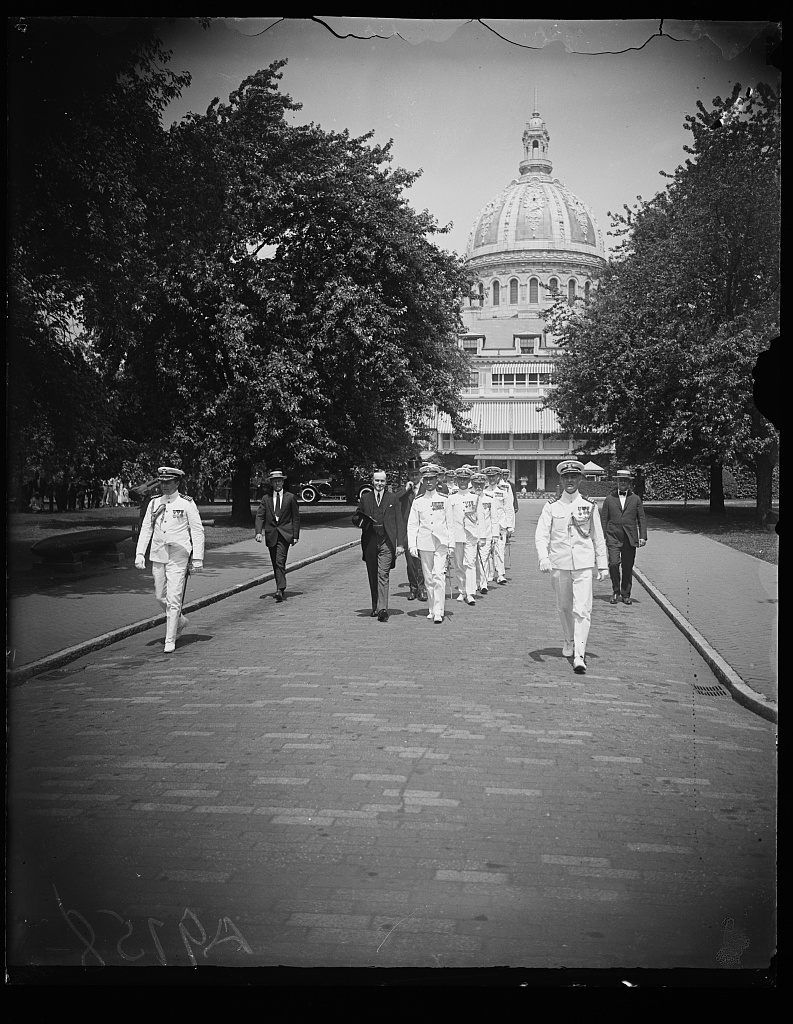
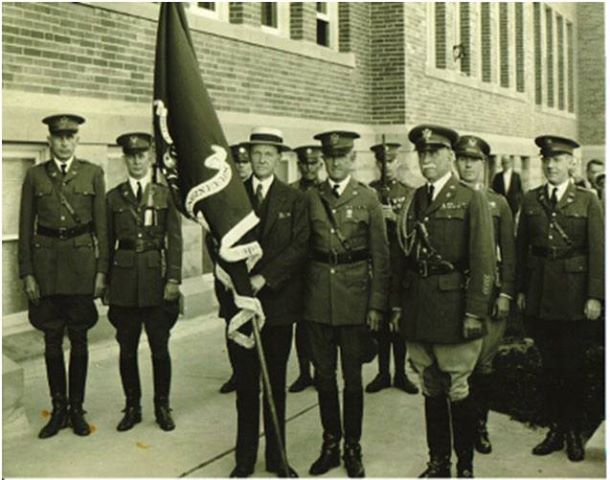
     One of the methods by which each government undertakes to preserve order so that it may protect its people from domestic violence and foreign hostilities is known as preparation for national defense. The great object that it all seeks to accomplish is peace…We do not have these [police, Army and Navy] for the purpose of making war, but for the purpose of preserving peace. The ability to protect the people within its borders and to insure to them the security which can only come from the orderly administration of law is so much and so peculiarly the first requisite of every government that under international usage civilized nations do not recognize a government which can not or does not meet these obligations. 45060v CC at Naval Academy 1925

As the inordinate power of the current regime grows, it becomes ever more apparent how far removed it is from this essential purpose of lawful order and national defense.

While Coolidge ensured the ratification of Kellogg’s Pact against war, he understood good government protects its citizens from lawless violence. At the same time, he knew that no measure could ever eradicate conflict completely. What he worked to maintain was an adequate force to meet evil, understanding that the unjust and violent are enabled when national defense is neglected. The former President continues,

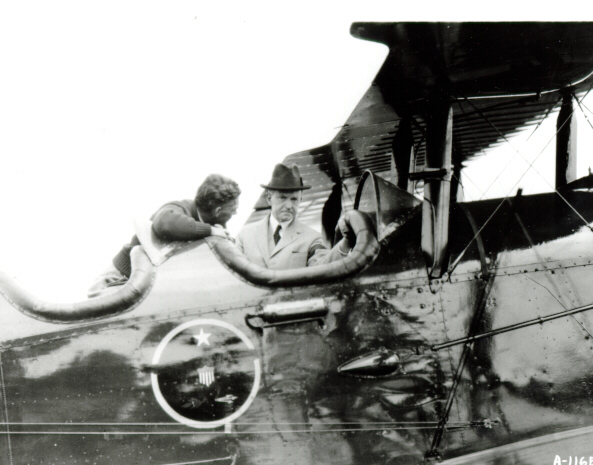
No sure way has ever been found to prevent war. We all realize that it is one of the most hideous afflictions to which mankind is subject. Opinions may differ as to whether nations with adequate military forces are more likely to enjoy peace than those which neglect their defenses. In the last analysis, this is a question of dealing with human nature. Every one knows that if there were no police our cities would be ransacked within twenty-four hours. I very strongly suspect that if there were but one nation in the world supplied with an army and a navy, and, to make the supposition as strong as possible, if that nation were our own, it would not be long before the other nations had been overrun. It seems to me that it is almost a moral certainty that we should find some excuse for taking that action. But when we know that other countries have a considerable ability to defend themselves, it is human nature for us to regard them with a more wholesome respect and be more careful about violating their rights. If we reverse this picture we can likewise conclude that if others know we are prepared to defend ourselves they will be less likely to commit offenses against us. coolidge bolling field 9-9-24

We perform no favors by taking up the burden of each nation’s duty to self-defense. The lessons of the Great War taught him that. Europe would again defer to America for its rescue in World War II and, it seems, in every conflict since. Coolidge saw danger in the policy of making the world “safe for democracy.” Likewise, we only enable our rights to be ransacked and our lives taken if we indulge our enemies through a lack of preparedness. An absence of resolve and an absolute refusal to use force only encourage injustice to continue with impunity against our citizens and their rights. What constitutes an adequate defense, then?

The President answers,

They should be large enough so that others would see there would be a great deal of peril involved in attacking us. They should not be so large that our country would feel we would undergo no peril in attacking others…I have ventured the opinion that war would have broken out in Europe much earlier than 1914 if those countries had not been prepared to resist attack. I also believe that some of them were overprepared…Adequate defense does not require a return to the conditions which then existed, but rather requires their avoidance.

The question of defense, like a coin, has another side. Military might has natural limitations. It can grow too large and thereby undermine its goal to preserve peace. Defenses, however lethal or expansive, will never permanently override human nature’s “determination to be free.” What about individuals who have ideological, instead of national, loyalties? What of those who freely embrace death for their radical dream, like islamofascists?

Coolidge summarizes,

That the wrongdoer, whether it be the individual or the nation, can be checked by force is apparent, but no force will be found adequate for an extended period to impose upon any considerable body of people a system which is recognized by the general standards of humanity as injustice and servitude. Such an attempt would create a revolt in which it would be found that the victims would rather die than yield. While an army and navy can be very useful to protect a nation from wrongful attack and unjust aggression, they cannot afford an absolute guarantee against war. Preparation for defense seems to me to be necessary in the world as we find it at the present time, and is useful, but it is well to recognize that there are limits beyond which it does not and cannot go in preserving peace…

Both sides of our obligation need equal care. This means understanding clearly that the use of national defense is not the evil here. Lawless and abusive destroyers of our citizen’s lives and liberties are the evil here, as Coolidge concludes,

…[W]e should take every precaution to prevent war, of which adequate defense is one. But we should also take every precaution to protect ourselves to the fullest possible extent from its ravages, if it does come. The Army and Navy serve the double purpose of prevention and defense. The individual and the race have not progressed beyond the point where they need the teaching and effect of discipline. We require not only the existence, but the outward manifestation, of authority.

Without the policeman impartially enforcing the law, and the members of our military and National Guard prepared to do their duty, peace is impossible. Without a national defense ready to use strength to confront the individual or nation who takes American lives, exacting life for life, the murderous and lawless continue emboldened. Reagan and Coolidge both understood that the problem was embedded in human nature. The bully, the criminal, and the despot best understand the language of force. Reason and law mean little to them without physical demonstration. It is by exercising our duties of adequate national defense that law and peace are reestablished, evil men and women are deterred and a balance of righteous force restored.

Image

998243_10151699964766321_1262093981_n SD National Guard