On the Kennedy Connection

Image

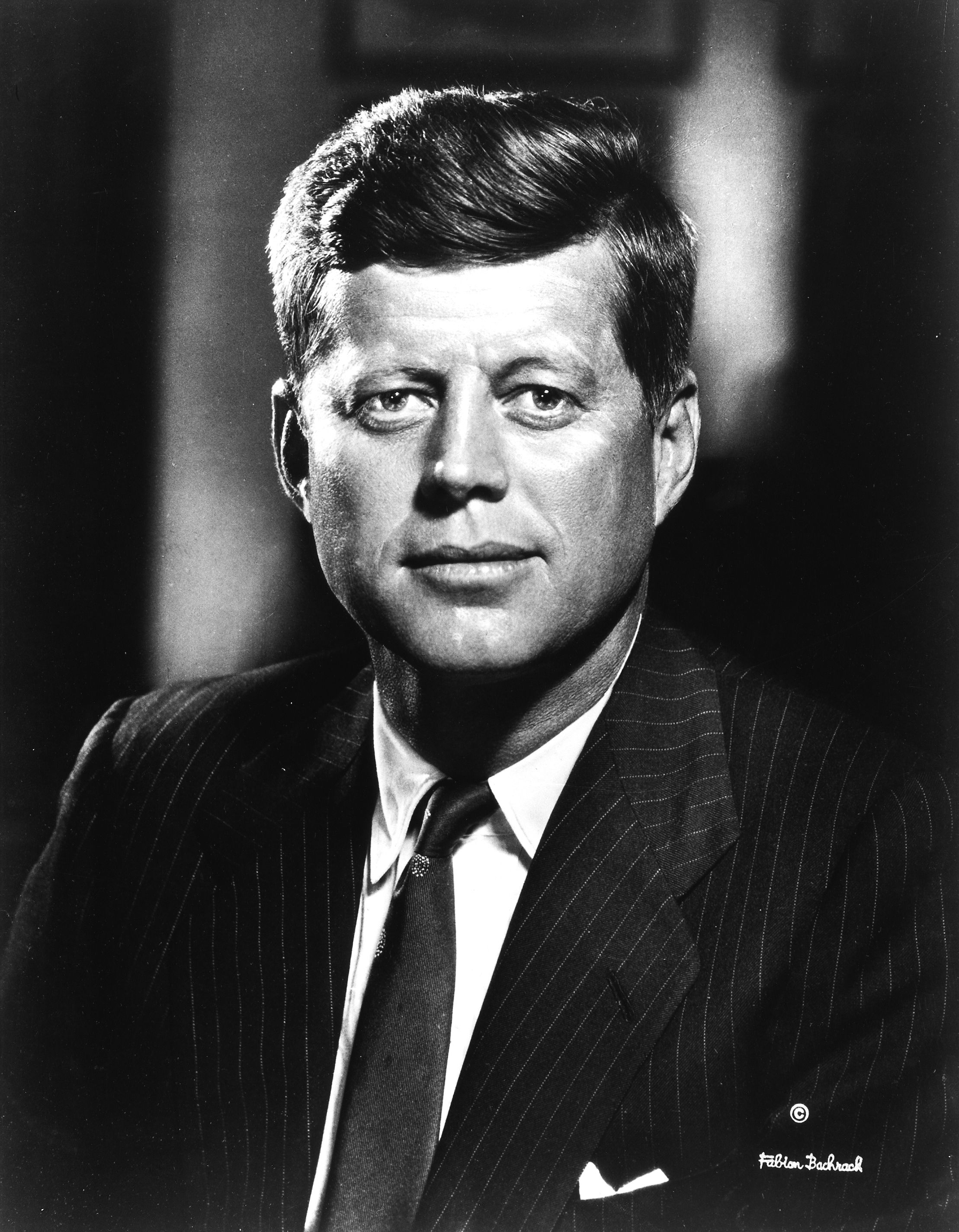
While yesterday marked the remembrance of President Kennedy’s tragic assassination by Communist Lee Harvey Oswald, it is usually not remembered what brought the President to Dallas fifty years ago. Set to address the Dallas Citizen’s Council at the Trade Mart that day, President Kennedy was not only there to bolster flagging national support for reelection — hardly certain that he would even be renominated — but he was also there to gain support for a stronger national defense and an $11 billion permanent, across-the-board tax cut. The tax cut had passed the House two months before and needed to survive the Senate. He had prepared the ground for this sharp cut since his election — taking top rates from 91% to 65% and bottom rates all the way down to 14% from 20%, also cutting corporate rates to 19.5% from 25%. It was not to be a temporary measure helping a few, it was to be permanent, helping Americans in every bracket.

Even more importantly, we need a return to the remembrance of JFK as he was instead of how modern revisionists, starting with the late Mrs. Kennedy, wish him to be. One cannot fault the widow’s grief for the loss of her husband, but, as Piereson observes, one cannot rationally join her and the chorus of voices since who have blamed America for killing the President (Camelot and the Cultural Revolution p.59, 178). They have blamed America first for every societal ill ever since.

Shortly after his death, it was she who lamented, “He didn’t even have the satisfaction of being killed for civil rights…It had to be some silly little communist. It even robs his death of any meaning.” His life had meaning but that meaning did not conform to the higher demands of an agenda already at work to recast history. In that pursuit of an alternative meaning, the modern Left could not bring itself to accept that the ideology they had courted for thirty some years had produced this heinous act. Consequently, the radical Left turned to the only conclusion consistent with their refusal to see communism for what it was — in JFK’s publicly announced conviction, a “Godless tyranny” and “evil” system (Stoll, JFK, Conservative p.64-6). America had to be the problem, they shouted. Thus began a narrative creating “Camelot,” publishing Mark Lane’s conspiratorial theories and now equating 1960s Dallas with the “angry” Tea Party movement of today. It is a fifty-year drum-beat that shrouds the truth, denying what JFK believed, in order to salvage a political worldview he never held.

As we know, an earlier son of Massachusetts, has also been the recipient of decades of mischaracterization and politically-motivated revision: Calvin Coolidge. It is recalled that Coolidge’s only electoral loss was to a Kennedy, when John J. Kennedy narrowly won a seat on the School Board shortly after Coolidge had married. When Coolidge learned his loss was due to not having children yet, he replied, “Might give me time.” He had been married barely two months.
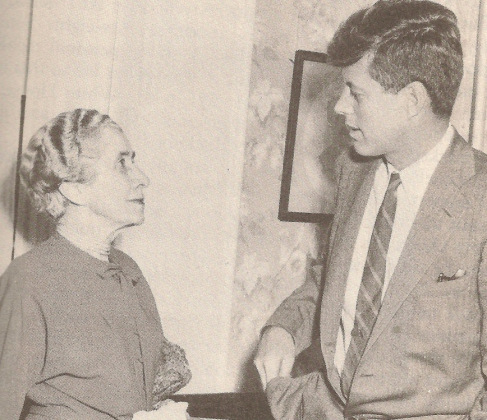
ImageThe ties to JFK, however, go deeper. True, Senator Kennedy helped raise funds and even serve on the Board of Trustees at the Clarke School for the Deaf, working beside Grace Coolidge until her passing in 1957. Upon hearing of her death, Senator Kennedy wrote:

“As a fellow trustee of Clarke School for the Deaf in Northampton I have a strong personal recollection of her untiring devotion and labors throughout her life to this most worthy cause…Since her days in the White House she continued to epitomize the qualities of graciousness, charm and modesty which marked her as an ideal First Lady of the Land” (Ishbel Ross, Grace Coolidge and Her Era, p.312).

In August 1962, President Kennedy enthusiastically sponsored the Coolidge Memorial Foundation’s efforts to promote Coolidge’s legacy nationwide. His support for both Mr. and Mrs. Coolidge speaks not only to their selfless service but also to JFK’s sincere belief that America remained exceptional and that lower taxes, economic growth, religious liberty, protection of property, the rights of the individual against the State, private enterprise, respect for law and order, moral leadership at home and abroad, opposition to unbridled government spending and the eventual defeat of socialism were principles worthy of preserving, regardless of political affiliation. To Kennedy as to Coolidge, they were principles every one of us could proudly champion because America is worth preserving. By keeping America strong, everyone is better for it. This is the Kennedy not allowed to be known by too many self-appointed gatekeepers of our history.

The speeches he gave on August 13, and December 14, 1962, and again, his State of the Union Address, January 14, 1963, embarrassed and shocked the Left of his day. According to Ted Sorenson, one of his closest advisers, Kennedy’s August 13 speech saying “no” to temporary, limited tax cuts, was “without qualification…the worst” speech he ever gave. When he laid out his argument for permanent, across-the-board cuts on December 14, attacks came from all quarters. Senator Albert Gore Sr., mystified why Kennedy was making tax cuts his top priority over health care, education and welfare programs, refused to support it. John K. Galbraith, the devoted Keynesian economist, maligned the message as “the most Republican speech since McKinley.” Galbraith’s disciple, Arthur Schlesinger Jr., excoriated any legitimate consideration of tax cuts as “full of Republican dogma” being “the worst speech the President had ever given” (Stoll p.135). Even Sorenson distanced himself from the President, comparing the substance of his message to something Hoover would say…insinuating, “…and we all know what happened when Hoover tried it.” Even former President Eisenhower decried tax reduction as “fiscal recklessness.” The suspicious distance between Kennedy and liberals of both parties came to a head on this issue in a way none other did.

This internal fight between a President, who was supposed to be of them, and an elite Left who inherited his legacy makes it all the more incredible that his plan – the fundamentals of it, anyway — became law in February 1964, three months after his death. It would validate his arguments that revenue would exceed prior levels and fixed, universal cuts would reinvigorate economic growth in a way more spending never could. Yet, his political heirs obscure that accomplishment to this day. Granted, the cuts were no where near the four Harding-Coolidge reductions in scope or intensity but it illustrated the very real power of the principle whenever championed. It would continue to fuel growth all the way until the recession of 1968. It would provide another potent demonstration for what was to be derisively called “supply-side” or “voodoo economics” when Reagan not only fought for but secured long-overdue tax cuts across-the-board in 1981.

Whether JFK was willing to expressly acknowledge his debt to Coolidge, as Reagan did, remains unsaid. It may be argued, though, that his sponsorship of the Coolidge Memorial Foundation in the midst of his 1962 battle against runaway Federal expenditures and for permanent tax cuts (in order to restore economic growth and then budget surpluses) was perhaps the best tribute he ever rendered to “Silenced” Cal.

Image

On the Gettysburg Address

To express our devotion we have come to the field of Gettysburg. It ranks as one of the great historic battle grounds of this continent. In the magnitude of its importance it compares with the Plains of Abraham, with Saratoga, and with Yorktown. It is associated with a great battle between the Union and Confederate forces and with one of the greatest addresses ever delivered by one of the greatest men ever in the world, Abraham Lincoln. – See more at: http://www.calvin-coolidge.org/address-at-gettysburg-battle-field.html#sthash.LvYMuGW1.dpuf
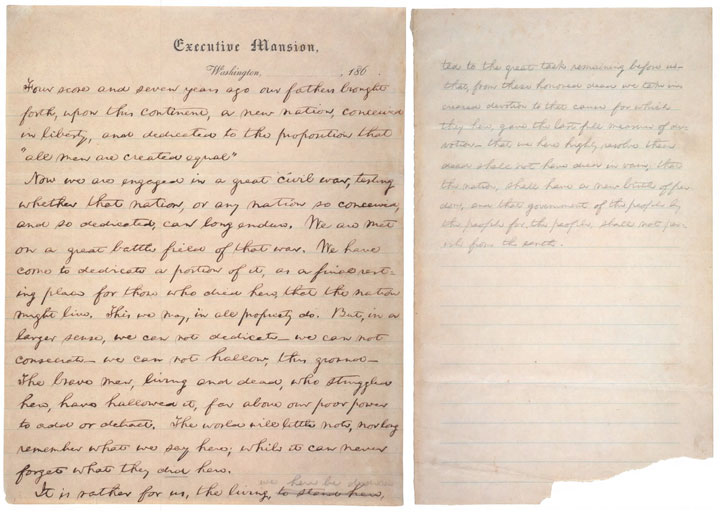
The "Nicolay Copy," earliest known handwritten version of the Gettysburg Address.

The “Nicolay Copy,” earliest known handwritten version of the Gettysburg Address.

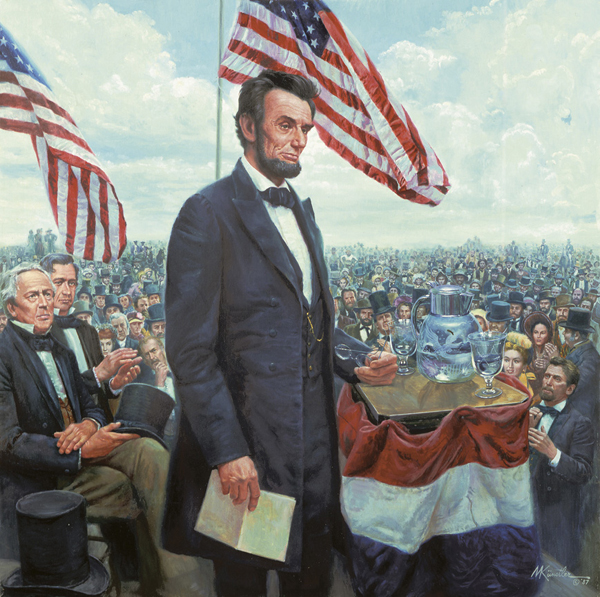
One hundred and fifty years ago, President Lincoln ascended the speaker’s platform to give over the course of two, short minutes one of the most eloquent speeches ever uttered. His words stand in timeless tribute to those, on both sides of those vast fields and hills of Gettysburg, who gave all they had to preserve freedom and government by consent.

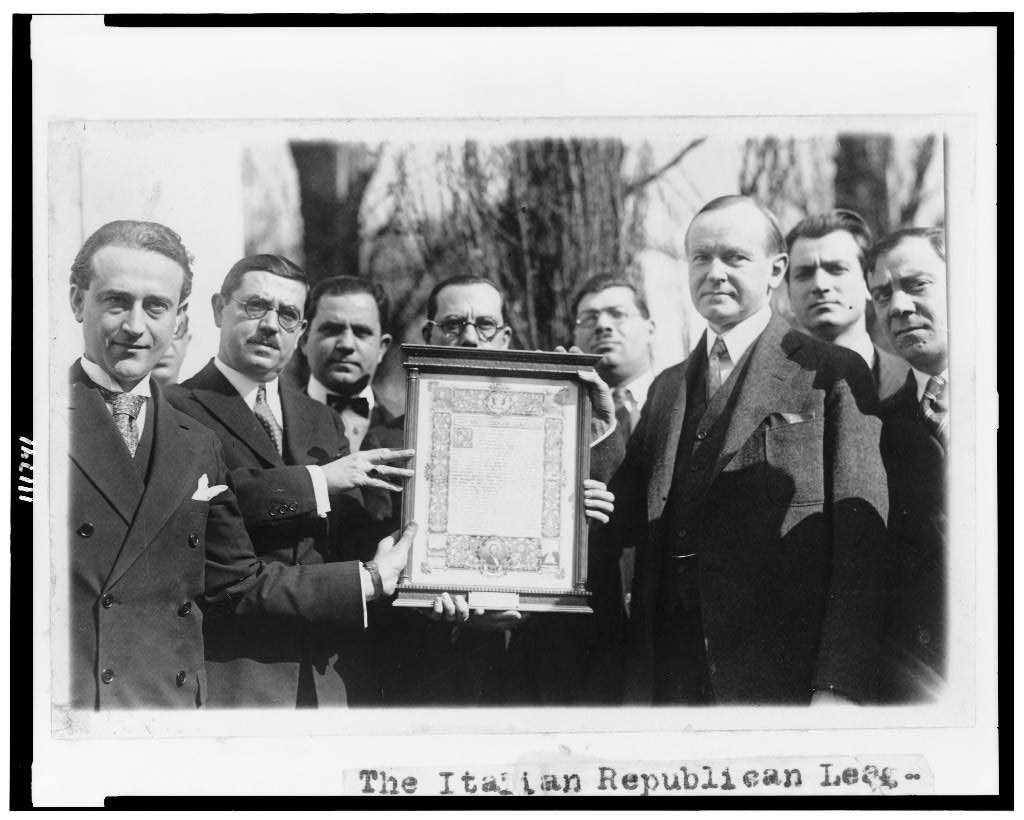
President Coolidge being presented an original parchment of the Gettysburg Address by the Italian Republican League of New York, February 12, 1927.

President Coolidge being presented an original parchment of Lincoln’s Gettysburg Address by the Italian Republican League of New York, February 12, 1927.

One of six Presidents to visit the battlefield at Gettysburg up to that time, Calvin Coolidge came here in 1928, honoring not only what brave men did there but what one man said there,

“We do not come to lament, but to give thanks. With one acclaim the people bestow upon them all that divine salutation, ‘Well done, thou good and faithful servant.’ To express our devotion we have come to the field of Gettysburg. It ranks as one of the great historic battle grounds of this continent. In the magnitude of its importance it compares with the Plains of Abraham, with Saratoga, and with Yorktown. It is associated with a great battle between the Union and Confederate forces and with one of the greatest addresses ever delivered by one of the greatest men ever in the world, Abraham Lincoln.”

Image

To express our devotion we have come to the field of Gettysburg. It ranks as one of the great historic battle grounds of this continent. In the magnitude of its importance it compares with the Plains of Abraham, with Saratoga, and with Yorktown. It is associated with a great battle between the Union and Confederate forces and with one of the greatest addresses ever delivered by one of the greatest men ever in the world, Abraham Lincoln. – See more at: http://www.calvin-coolidge.org/address-at-gettysburg-battle-field.html#sthash.LvYMuGW1.dpuf

On the Pilgrims

Image

As Liberty and Rush Revere take every reading list by storm across the country, this day observes not only the honor we render to our veterans but also the day the Pilgrims committed themselves to the rule of law through the Mayflower Compact in 1620. Derided as “Puritans” for their belief in the sanctity of conscience, committed to live by higher standards than the mediocre choices made for them by the King, the Pilgrims separated themselves from the coercive government of England for the freedoms, first, of Holland and then after two treacherous months crossing the Atlantic, the risks and opportunities of the New World. Still aboard the Mayflower on this day in November, three hundred ninety-three years ago, thirty-one Pilgrims signed the first charter of government by consent in the New World, binding all under the authority of just and equal laws. Their courage, faith and exceptional sense of purpose — risking everything for the fundamental truth of the God-given liberty of conscience — set America from the start on a vastly different foundation than the accepted norm practiced by the rest of the world’s despotic and lawless governments.

It was Governor Coolidge who saw the cause joined for which both the Pilgrims sacrificed and our veterans’ sacrifices now of everything in this life so that we would attain a society not subsisting at the behest of government force but thriving under the reign of law over governor and governed alike. In official proclamation, Coolidge declared, “War is the rule of force. Peace is the reign of law. When Massachusetts was settled the Pilgrims first dedicated themselves to a reign of law. When they set foot on Plymouth Rock they brought the Mayflower Compact, in which, calling on the Creator to witness, they agreed with each other to make just laws and render due submission and obedience. The date of that American document was written November 11, 1620.

“After more than five years of the bitterest war in human experience, the last great stronghold of force, surrendering to the demands of America and her allies, agreed to cast aside the sword and live under the law. The date of that world document was written November 11, 1918.”

Rush Limbaugh’s look at the historical record restores an unjustly excised chapter from our exceptional American life. It simply is not being learned by our children under the stifling regime of modern education. Americans, thanks to this superb book, are being taught again what Coolidge and his generation not only knew by heart, humbly cherished with warranted pride, but found from those men, women and children, despised and rejected by tyrants and despots, an inspiration to greater faith and perpetuation of exceptional achievements.

In a history replete with exceptional people of all kinds, Coolidge held these Pilgrims, who left all they knew to undergo hardships we do not even approach today, with the highest esteem and admiration. No trivial reason drove them to so profound a step into the unfamiliar and deadly in order to secure the blessings of freedom endowed, not by monarchs or Parliaments, but by our Creator.

ImageThe Coolidges looking up toward the memorial to the Pilgrims, Plymouth, Massachusetts

As Coolidge speaks, in his own account of those brave Pilgrims, we can hear in his words the enthusiasm and reverence for the moral power of their example, a force that no arbitrary force, however strong, can withstand. An unchallenged management of every choice in life from Washington can only and absolutely succeed, not by disarming the people physically but by severing Americans from their history — disarming the people intellectually and spiritually. Coolidge spoke then and Rush speaks now so that we retain the long memory of our liberties, as it resists the slow, yet destructive, encroachments of those who sincerely believe they are acting for our own good.

Addressing the National Geographic Society in 1923, Coolidge recounts the Pilgrim’s exceptional accomplishment, “Whatever power is lodged in a monarch, always he has sought to maintain and extend it by encroachment upon the liberties of the people. When the more advanced of the Puritans sought to put their principle of freedom into practical effect by separation from the established church, they were met by the notorious threat of the King that he would make them conform or he would harry them out of the land.

“In that threat lay the foundation of Massachusetts. That little band, from among whom were to come those made forever immortal by that voyage of the Mayflower, sought refuge in Holland, where, by an edict of William the Silent, freedom of religion had been established…”

Citing the words of their preacher, John Robinson, Coolidge continued, ” ‘The people…are industrious and frugal. We are knit together as a body in a most sacred covenant of the Lord, of the violation whereof we hold ourselves strictly tied to all care of each others’ good and of the whole by every one, and so mutually. It is not with us as with men whom small things can discourage.’ In that simple statement is to be found,” Coolidge summarized, “the principle of prosperity, responsibility, and social welfare, all based on religion.” That was not the end of the story, however. “They were of humble origin,” Coolidge noted. These families were not living high on the backs of the poor. They did not get where they were going by confiscation or oppression of others. “The bare necessities of existence had been won by them in a strange country only at the expense of extreme toil and hardship. They did not shrink from the prospect of a like experience in America…

“It was such a people, strengthened by such a purpose, obedient to such a message, who set their course in the little Mayflower across the broad Atlantic on the sixth day of September, 1620…

“A providential breeze carried them far to the north, while storms and the frail condition of their ship prevented them from continuing to their destination. They came to anchor off Provincetown far outside the jurisdiction of their own patent and the authority of existing laws…

“Undismayed they set about to establish their own institutions and recognize their own civil authority. Gathering in the narrow cabin of the Mayflower, piously imploring the divine presence, in mutual covenant they acknowledged the power ‘to enacte, constitute, & frame just & equall lawes, ordinances, actes, constitutions & offices,’ to which they pledged ‘ all due submission & obedience.’ So there was adopted the famous Mayflower Compact. It did not in form establish a government, but it declared the authority to establish a government, the power to make laws, and the duty to obey them. Beyond this it proclaimed the principle of democracy. The powers which they proposed to exercise arose directly from the express consent of all the governed. The date of this document, remarkable for what it contains, but more remarkable still because it reveals the capacity and spirit of those who made it, is November 11, 1620, old style; under the new calendar it is destined long to be remembered as Armistice Day…

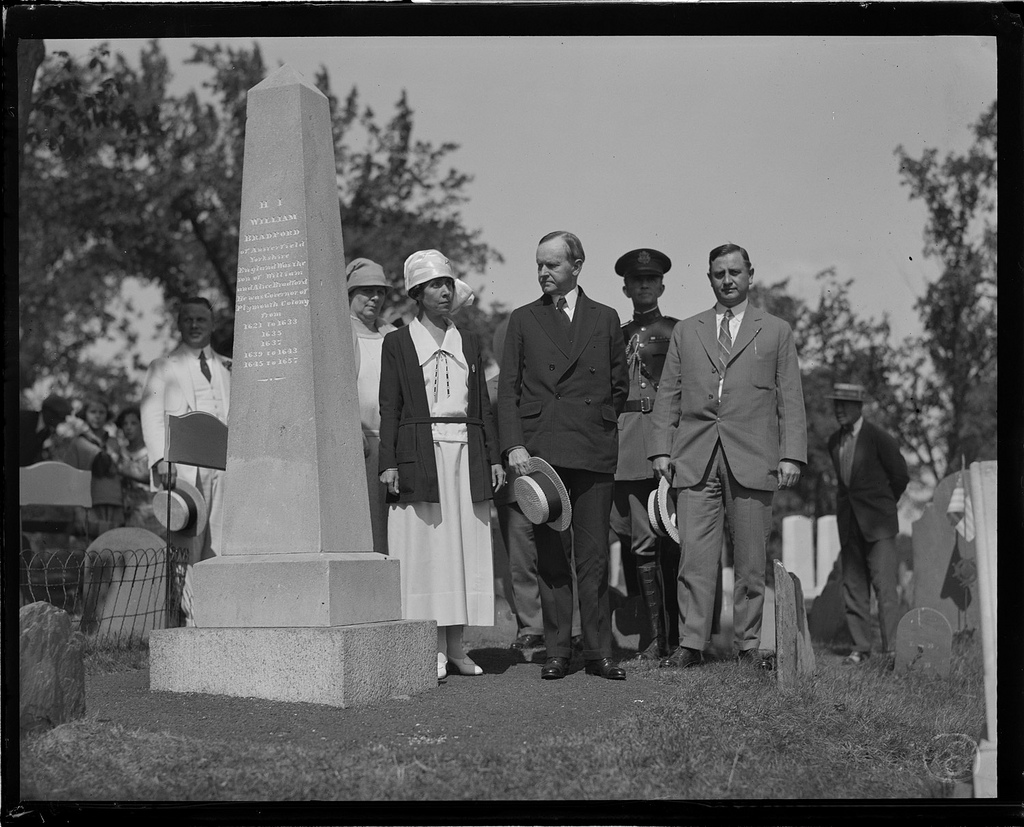
ImageThe Coolidges visiting the memorial marker of William Bradford, leader of the Plymouth settlement

“Such was the beginning of Massachusetts, men and women humble in position, few in numbers, seemingly weak, but possessed of a purpose, moved by a deep conviction, guided by an abiding spirit, against which both time and death were powerless. It is said that upon the old Colony of Plymouth there is no stain of bigoted persecution. They carried with them the atmosphere of holy charity. Their efforts and their experience stand forth distinctly, raising a new hope in the world…” Indeed, they still do, inspiring even the youngest Americans among us to love and share the same great principles those brave Pilgrims demonstrated nearly four centuries ago.

ImagePilgrims signing the Compact aboard the Mayflower, November 11, 1620