On Humanity at the Crossroads

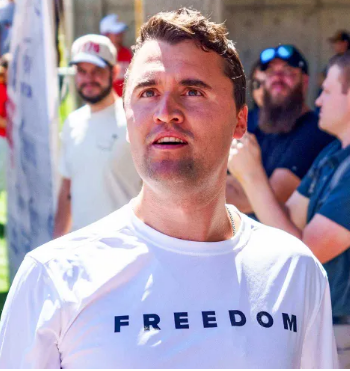
Charlie Kirk at Utah Valley University, September 10, 2025. Photo credit: Trent Nelson/Salt Lake City Tribune/Getty

The shocking assassination of Charlie Kirk on September 10th marks a loss of something far more fundamental than a martyr for America’s heart and soul, beleaguered as it is in the latest phases of the culture wars. Far more elemental than hateful actions rendered proportionately in return for hateful speech, the murder of Kirk reveals a stark collision between despair and hope, the outright repudiation of classically liberal ideals, ones that have inspired acts of heroism and sacrifice from John Quincy Adams’ work on the Amistad case to Frederick Douglass’ efforts to break racial stratification before, during, and after 1865, which have been followed by principled actions of bold, patriotic Americans in countless situations since. The same spirit animated Martin Luther King to envision a world where the content of one’s character triumphed above a regime maintained by violent suppression.

The most radical reformers across every era of the American experiment, from Garrison to Bryan, or Debs to Malcolm X, have presupposed that rational persuasion remained the single most powerful means of changing outcomes as a result of changing minds. An order where killing becomes the sanctioned norm, a culture that remedies electoral losses with blood, silences dissent through terror rather than reason, and solves problems by replacing open debate with dehumanized slaughter of those with whom one differs was the antithesis of the optimism inherent in political activism. Abandoning the freedom to speak, shirking the call to reasonably discuss, respectfully differ, and artfully refute for the license to suppress and silence is a fundamental departure from America’s citizenship.

The ‘final solution’ of literally assassinating influential adversaries plunges America into the service of animalistic impulses while goosestepping away from every vestige of what it means to be human, living life for the betterment of humanity. It discards every shred of the liberating hope and once prevailing faith Americans of every background, creed, and color have possessed for more than three centuries. This is not merely a killing of an individual, it is the death of confidence in anyone or anything still remaining in America to change for the better. It is ultimately a barbaric breach of faith with the historic ability Americans have shown from the beginning to improve themselves, return to ideals, and meet problems squarely and courageously when presented with good reasons for doing so. The force of persuasion connected to shared essentials has always compelled Americans far more effectively than lawless coercion.

This is what made Kirk so impactful a rhetorician whose exercise to the fullest extent of the obligations of his citizenship will continue to shape the future. When he could have shirked the duty and avoided the risk, he entered the arena, gaining support not from the exercise of speech for hateful, selfish ends but for liberating and humanizing ones, appealing to those most ensnared in the intellectual, political, and cultural mires of his generation. That he proved more effective than his opposition in debate vindicated the potency citizenship contains when put to full use, an obligation cowardly skeptics and timid critics fail to realize in themselves or to recognize in others.

As a President Kirk himself greatly admired, Calvin Coolidge had much to say about employing those obligations of American citizenship to their utmost capacity. The failure to do so, whatever one’s political persuasion, was dereliction and betrayal of the trust it still is to be a citizen of the United States. As these excerpts from an address on April 14, 1924 attest, Coolidge delivers what many considered one of the greatest speeches of his career. Whatever one thinks of the late Charlie Kirk, he is certainly not to be found deficient in the full engagement citizenship demands of every American. His sense of decency, even in the midst of fierce debate, and courage in marshaling every resource to win the mind to rational discourse and the will to civic participation will renew the faith and hope that America, by definition, is.
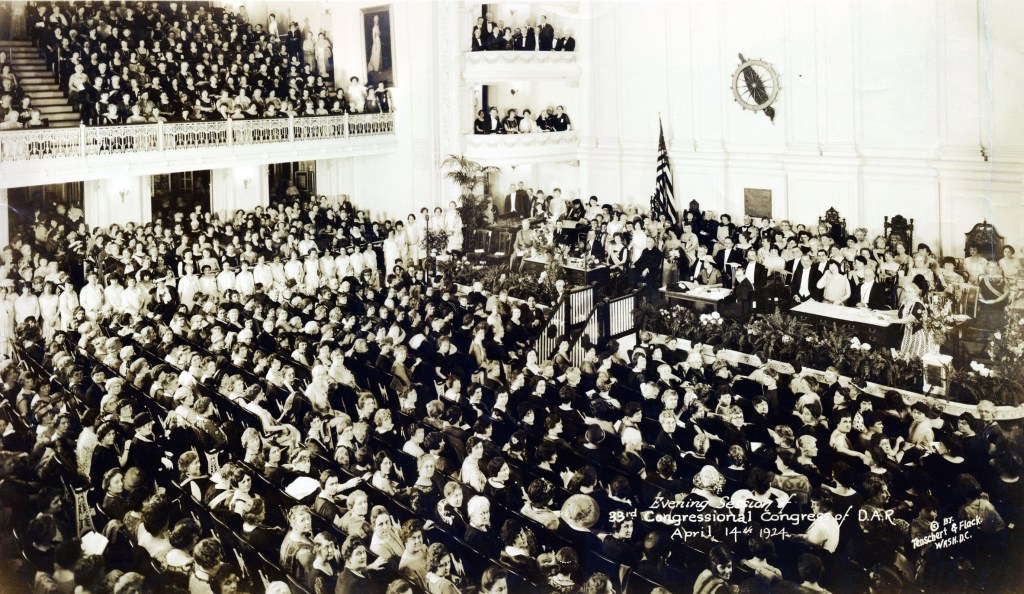
The gathering of the 33rd Continental Congress of the Daughters of the American Revolution, addressed by President Coolidge that evening, April 14, 1924. Photo credit: Daughters of the American Revolution.

“Institutions, whether adopted long ago or of more recent origin, are of themselves entirely insufficient. All of these are of no avail without the constant support of an enlightened public conscience. But still more is needed. Our only salvation lies also in the ever-present vigilant and determined action of the people themselves. The heroic thought and action of the Revolution must forever be supplemented by the heroic thought and action of to-day. Along with the great expansion of free institutions, which has carried them to all parts of the world in a startlingly brief historic period, there has gone a broadening of the principle of self-government. The ballot, in the earlier forms of democracy, was the privileged possession of a limited class. It was not looked upon as a right, but rather as the reward of some kind of high achievement, perhaps material, perhaps intellectual. But lately we have come upon times in which the vote is esteemed, not as a privilege or a special endowment bestowed only for cause shown, but more in the nature of an inherent right withheld only for cause shown. This new conception makes it no longer a privilege, no longer even a right which may be exercised or omitted as its possessor shall prefer. It becomes an obligation of citizenship, to be exercised with the highest measure of intelligence, thoughtfulness, and consideration for the public concern. The fundamental question of keeping America truly American is whether the obligation of citizenship is fully observed.

“Every voter ought not merely to vote, but to vote under the inspiration of a high purpose to serve the Nation. It has been calculated that in most elections only about half of those entitled to vote actually exercise their franchise. What is worse, a considerable part of those who neglect to vote do it because of a curious assumption of superiority to this elementary duty of the citizen. They presume to be rather too good, too exclusive, to soil their hands with the work of politics. Such an attitude cannot too vigorously be condemned. Popular government is facing one of the difficult phases of the perpetual trial to which it always has been and always will be subjected. It needs the support of every element of patriotism, intelligence, and capacity that can be summoned…

“[W]e have never seen, and it is unlikely that we ever shall see, the time when we can safely relax our vigilance and risk our institutions to run themselves under the hand of an active, even though well-intentioned, minority. Abraham Lincoln said that no man is good enough to govern any other man. To that we might add that no minority is good enough to be trusted with the government of a majority. And still further, we shall be wise if we maintain also that no majority can be trusted to be wise enough, and good enough, at all times, to exercise unlimited control over a minority. We need the restraints of a written constitution. To prevent the possibility of such things happening, we must require all citizens who are entitled to do so to take their full part in public affairs. We must be sure that they are educated, trained, and equipped to do their part well. We must not permit the mechanisms of government, the multiplicity of constitutional and statutory provisions to become so complex as to get beyond control by an aroused and informed electorate. We must provide ample facilities of education, and this will require constant expansion and liberalization. We must aim to impress upon each citizen the individual duty to be a sincere student of public problems, in order that they may rightly render the service which their citizenship exacts. But after all, good citizenship is neither intricate not involved. It is simple and direct. It is every-day common sense and justice.”
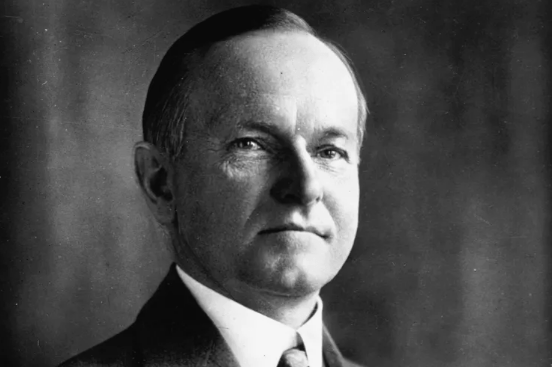
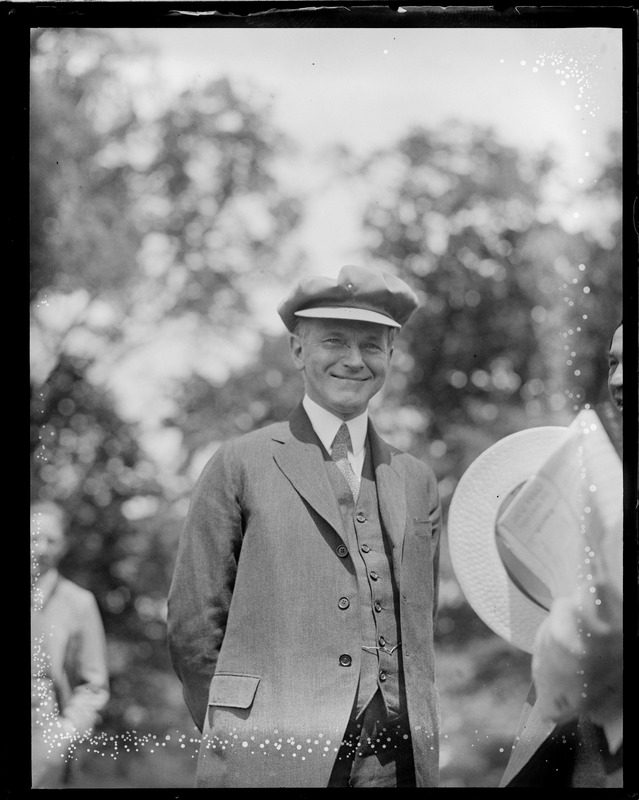
“Not-so-silent” Cal. Photo credit: Library of Congress/Getty Images.

On Loss and Redemption

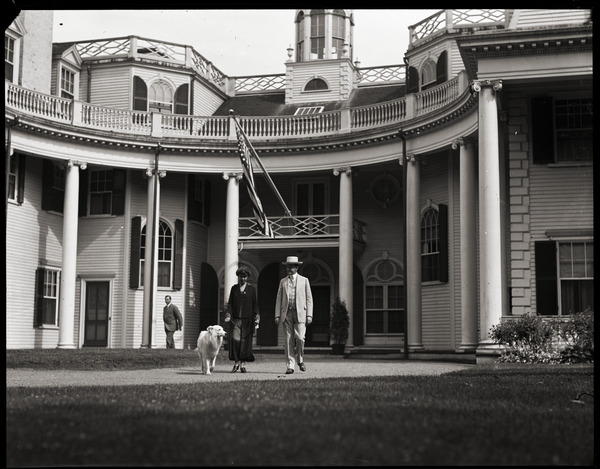
The Coolidges at Swampscott, July 4, 1925. Photo credit: Alton H. Blackington Collection.

Thirteen-year-old Harry Blaney had been working on a gift for the President and First Lady, staying that summer (the Coolidges’ first since losing their youngest boy to septicemia the previous July) at “White Court” in Swampscott, the large oceanfront house just six miles away. Blaney, whose family lived in Lynn, was the oldest boy of three, and the second oldest of Harry Sr. and Lillian Blaney. His father’s company, the Preble Toe Box Factory, made imitation leather toe boxes, the ‘box’ accommodating the space needed for toes in closed-toe shoes. The Blaney family worked hard, and young Harry aspired to follow in the family trade. On Thursday, July 2, 1925, just ahead of the President’s birthday weekend, Harry’s project was completed. He would be brave and deliver it himself. Harry had carved a wooden figure of the President, Mrs. Coolidge, and their dog, Rob Roy. His best chance to deliver his gift directly required that Harry leave the family residence on Groveland Street in Lynn bright and early in the morning to reach Littles Point in Swampscott, before the President began his workday. It might be seen as a presumptuous imposition but what young Harry had to give was important and worth crossing what perhaps was the smallest distance he had ever been (or perhaps ever would be) from a President. Moreover, as he recalled, the President had lost a son just a little older than himself. Harry would go right up to the gates of the residence and wait if had to, confident that someone would appear to accept his gift. He did not have to wait. He met the President out in the neighborhood still on his early morning walk. Mr. Coolidge stopped and spoke with the boy for a few moments but then Harry realized the ideal moment to proffer what he had brought was slipping away. He thrust out the wooden figure and relayed his regards. The President, always affected by sincere gestures of kindness and generosity from boys like Harry, thanked the young man for so kind a sentiment, and they parted.

Photo credit: Leslie Jones Collection.

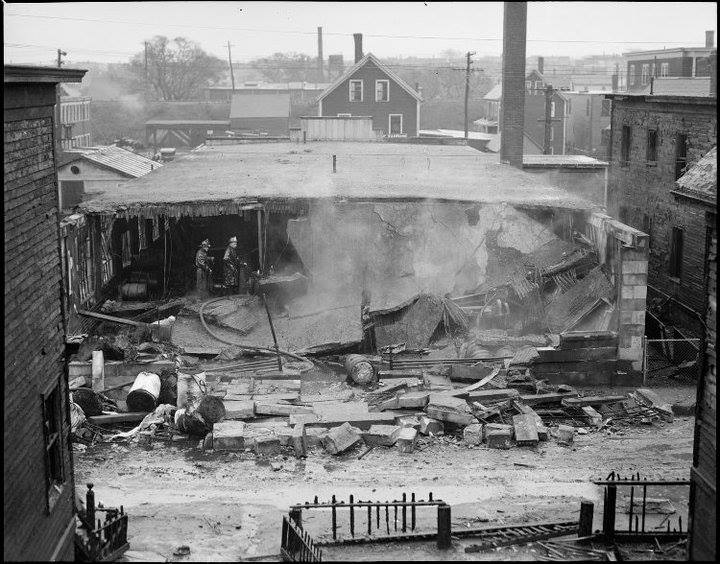
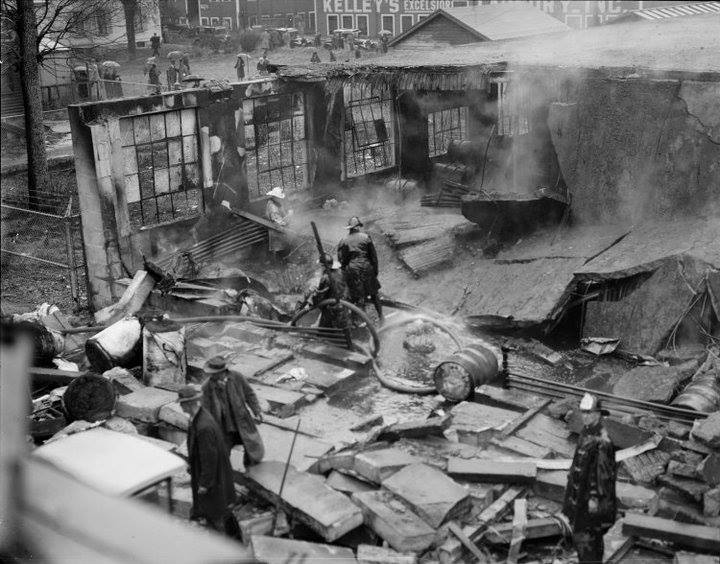
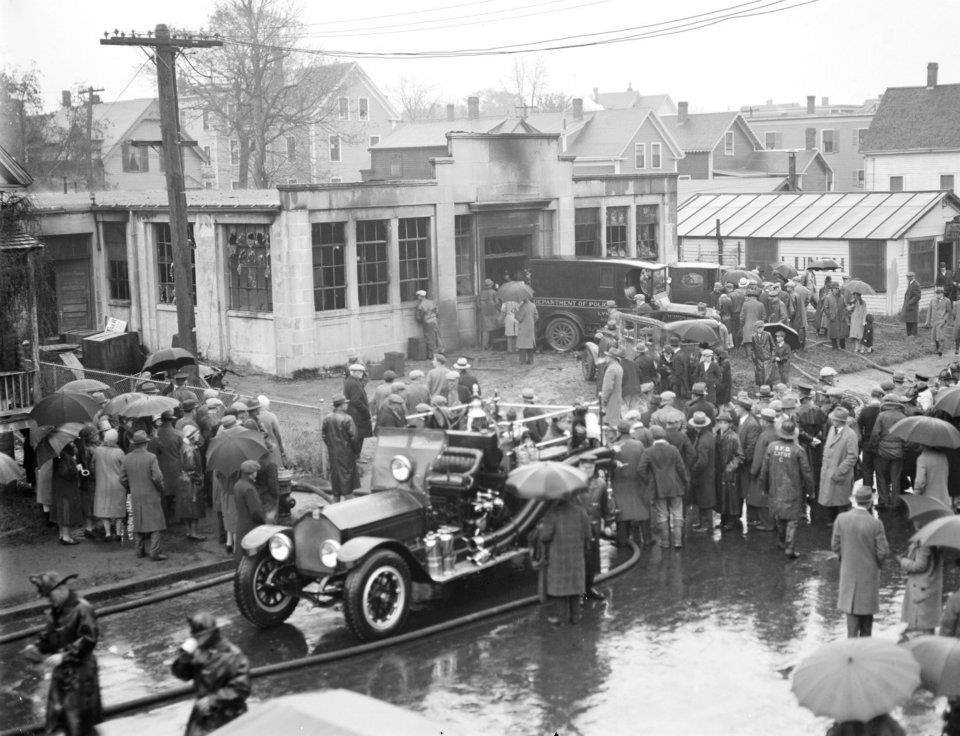
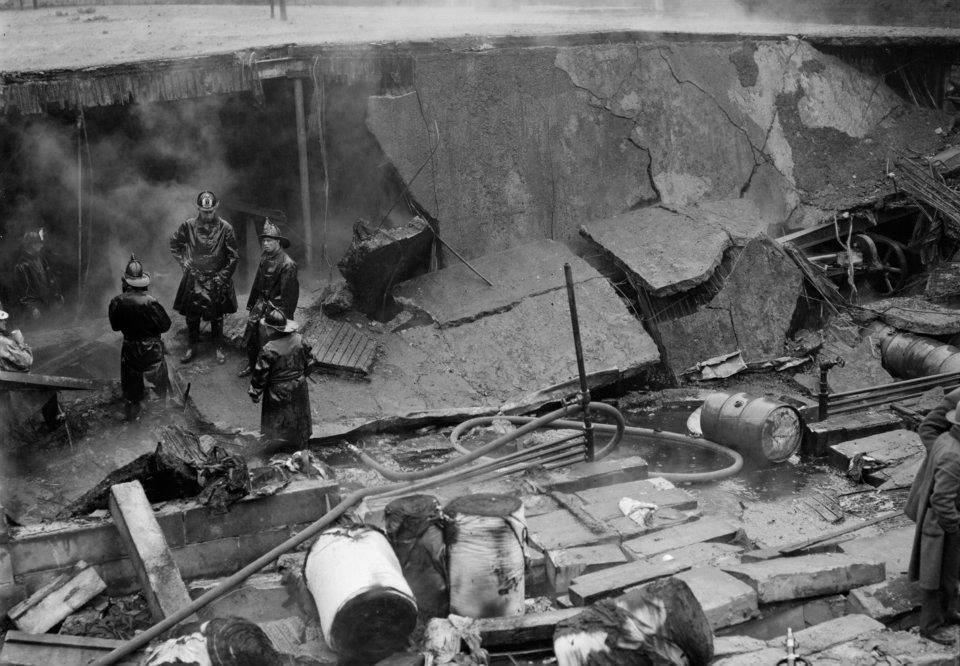
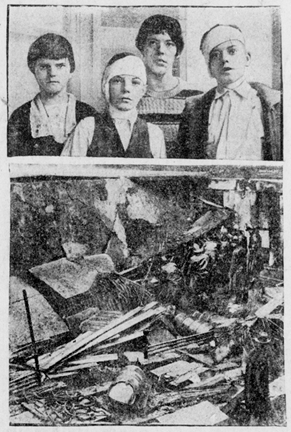
It was another early morning, this time in November, four years later, that now seventeen-year-old Harry prepared to sit down to breakfast with his entire family one last time. The first blast followed swiftly by a second which engulfed the house in flames, set five other homes ablaze, threw employees out windows and doors or through the foot-thick concrete block walls of the factory. The explosion threw the various members of the household in all directions in a tower of fire. Employees were incinerated, blown to pieces, or otherwise suffocated. Others later died of burn injuries in the hospital. The fire departments of all surrounding neighborhoods rushed to the site, finding the scene a roaring, glass-strewn horror. The heroic actions of the fire departments to rescue the trapped, extinguish the flames, and extricate burn victims that day must be combined with the legendary work done by the medical teams at Lynn’s Hospital. Still, it was part of the entire community’s heroism. Some were rescued by quick-thinking bystanders who tore burning clothes from frantic victims fleeing the scene. Others by the twelve-year-old boy who triggered the first alarms by standing atop another’s shoulders. Even a makeshift triage center was set up by a neighbor across the street. Heroic sacrifice mingled with astounding grief. Harry’s mother and five of his siblings, including his six-month old sister, were caught by the blaze in the collapsing rubble, dying almost instantly. Their father, horribly burned, succumbed to his wounds in the hospital ten days after the funeral for their family. Even Harry and his brother Norm, violently thrown by the blast, had serious but non-life-threatening injuries. Twenty-one died as a result of the disaster. Only Harry and Norm, with sisters Lillian and Ella, remained from the Blaney family. In the investigation and inquest that followed authorities traced the origin of the disaster to an ignition of the factory’s highly flammable celluloid (used in the processing of the imitation leather fabricated for toe boxes). The indictments and court proceedings that unfolded afterward initiated fire prevention and zoning regulations for towns like Lynn. Smaller towns and cities permanently separated residential from commercial properties and stipulated long-overdue precautions respecting the storage and handling of combustible materials like celluloid.

A mere five days after the explosion, on November 13, 1928, a letter expressing profound sorrow found its way to young Harry from the President of the United States. Coolidge had not forgotten him or his sentiments that Independence Day week four years prior. “I hope you may find some consolation to relieve the heavy burden of sorrow that has come to you,” the President wrote Harry, “My deep sympathy goes out to you and the members of your family who have survived the shocking tragedy.” Young Harry did survive and found redemption out of the unspeakable loss. The gifts he (and his community) gave, beginning with one to a President a century ago, continue as reminders, however, that we recall greatness not in the act of receiving but in the act of giving. That is what makes the two hundred forty-ninth year since 1776 and one-hundred-fifty-third birthday of Coolidge so meaningful to us. They impart the reminder that redemption through loss remains. Moreover, they connect the gifts bestowed by the Declaration’s Signers with those of a young boy named Harry one hundred years ago.

On Inauguration Day a Century Ago

U.S. President Calvin Coolidge, right foreground, delivers his inaugural address after taking the oath of office on the East Portico of the Capitol building in Washington, D.C. on March 4, 1925. Coolidge was sworn in as the 30th president of the United States. Photo credit: Associated Press.

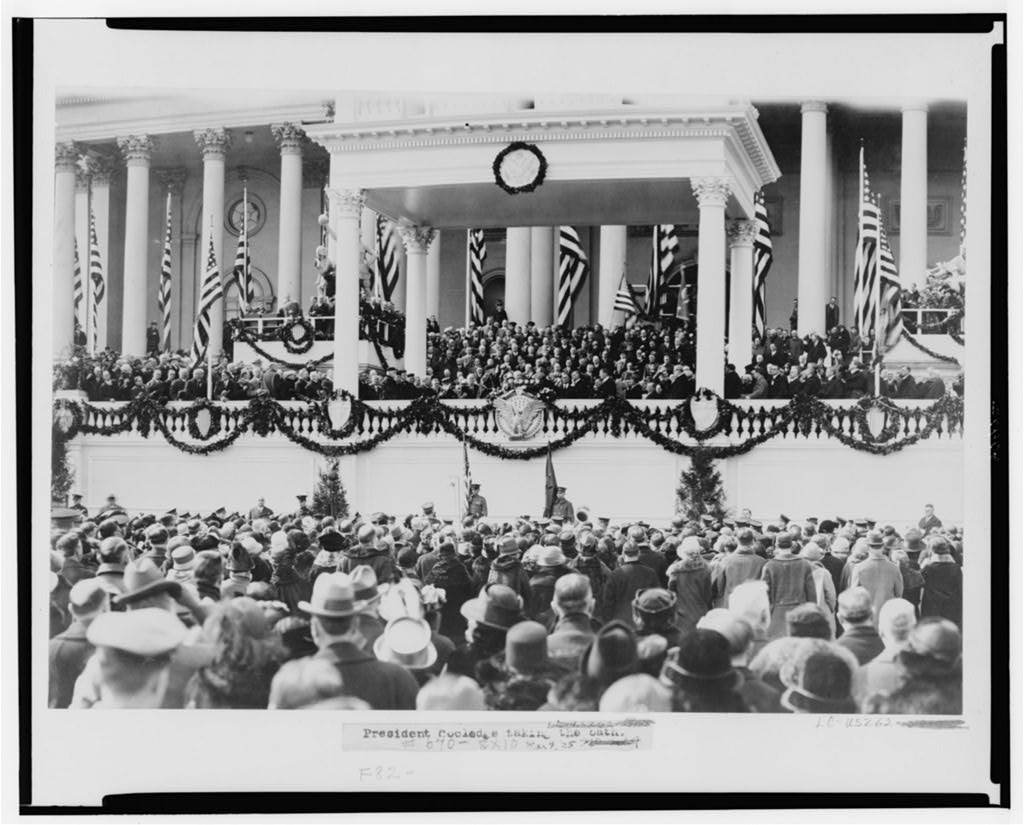
One of the unheralded heroes on Inauguration Day a century ago was legendary radio announcer Graham McNamee. He had already initiated the now familiar tradition of giving historical context and commentary to the news in President Coolidge’s first Annual Message in December 1923. McNamee’s image, wired from the resplendent Public Auditorium in Cleveland the previous summer while covering the Republican National Convention, became one of the first transmitted by the rapidly accelerating powers of the medium. The transmission, just developing at the time, took four minutes. His work for WEAF remained on the cutting edge as he was set to cover the Presidential Inaugural Address in March 1925, the first in history to be carried by radio. It was estimated by correspondents at the time that between 22 to 25 million people heard the Inaugural, including the full recording of Coolidge’s 4,000 plus word Address. Carried across twenty-two stations spanning coast-to-coast, the still novel technology captured the sounds of the pages and the President’s voice so crisply (including more than one of his inspirations!) that he seemed to be on the stage of nearly every school gym and public gathering in the country at the same, shared moment in time. It was America’s first synchronized experience of a vital cultural and political tradition, carrying with implications set to transcend the constraints of the globe itself. Yet, well on his way to earning the Radio Digest Award that year as the “World’s Most Popular Radio Announcer,” McNamee almost missed the entire occasion.

McNamee recalled it this way: “The inauguration proved a meaner job than most, as it was so hard to get information. Washington was full of officials, each apparently knowing all about what was to take place but unwilling to impart much of their knowledge. Everything was confusion, likewise everybody was passing the buck; and it was almost impossible to make our arrangements. For one thing we didn’t know when to go on the air.” It was predicated, McNamee explained, on how long the vice-presidential oath and ceremonies in the Senate Chamber took. It could be twenty minutes or an hour. No telephone wires were permitted in the Senate and so word had to be carried by runner. “Yet,” McNamee continued, “once on the air we had to stay on.” The announcer had to be ready to innovate, crafting the role of political commentator along the way. “So again I wrote reams of stuff, historical stories, and so on, as filler-in-material. Meantime I had stationed messengers in the capitol to hot-foot it to me as soon as the President and Vice-president left the Senate Chamber to come to the capitol steps, where the President himself was to take the oath of office.”

WASHINGTON, D.C. — March 4, 1925, Calvin Coolidge Inauguration. Mr. and Mrs. Coolidge. Photo credit: Baltimore Examiner and Washington Examiner.

Then it happened. “I got lost and the radio sets were almost left flat without an announcer,” McNamee recalled. “My booth was on the pedestal of one of the statues by the steps of the capitol; and all the messengers being busy, I left the booth for a minute, while the officials were still in the Senate Chamber, to get word to one of our staff. To reach him I had to hurdle a temporary fence built to keep the President’s pathway clear of intruders; and, once on the other side, I found I couldn’t get back. A patrolmen yanked me by the shoulder just as I was climbing over on the return journey, and refused to let me go further. I vain I pleaded: ‘Against orders,’ he said. I told him of the microphone lying silent and pictured all the people from coast to coast that would be disappointed. But he was evidently a man of a single-track mind, one of those burly and not very imaginative policemen that will stick like a bulldog to an order, once they get it, and who are inflexible when given a little authority.”

It became desperately close to time. “For ten minutes I argued until at last I saw light–another way of approach through the crowd, which I had not noticed before. I asked him about it; that was all right–it was out of his jurisdiction, but never would he have let me over that fence in spite of the waiting twenty-five million. And that was the total estimated by the newspapers, the audience on this occasion being vastly increased by the children. Almost every school in the land had a loud-speaker installed in its auditorium or its one little room, in the case of the country hamlets.”

Inauguration Day, March 4, 1925, looking across the thousands gathered to witness the ceremony. Photo credit: Library of Congress.

McNamee got back to his booth just in time. “And at that I was caught, for after I reached the booth, and went on the air, with a little description, then a story, I was halfway through that story when a messenger came racing to me, saying that the procession had started from the Senate Chamber. We were having difficulty enough in timing things, anyway, and General Dawes upset even our tentative calculations. Instead of swearing-in the senators one by one, he had done it in batches. That story was pretty well jumbled, I am afraid, for the President was on its heels. I had to cut off my microphone quickly and signal the control room to put on the President’s microphone, just in time to catch the administration of the oath of office by Chief Justice Taft.”

Chief Justice (and former President) William Howard Taft administering the oath of office to President Coolidge, prior to the Inaugural Address. Photo credit: Library of Congress.

“The President stood there very quietly, looking subdued and careworn, I thought; this was so soon after his boy’s death; and his reply to the oath was so low that none of the people there present, excepting the few immediately around him, and none of the radio audience, heard it. We answered many inquiries by mail, afterwards, telling them that the response was a simple, ‘I do.’ ”

McNamee at the 1924 World Series.

Read more about the legendary Graham McNamee in Salient Cal’s America: Reappraising the Harding & Coolidge Era. Thanks to McNamee and his excellent team’s work, here is an excerpt of President Coolidge’s Inaugural Address (which was recorded in full, at the time), the first of its kind carried via radio a century ago.