On Getting to the Point

Calvin Coolidge was known for his incredible ability to distill the clutter of requests, technical details and verbose discussions into their essential qualities. His succinct style and disciplined pursuit of a matter’s basic point may have appeared lazy to the workaholic but to the one paying attention, it was a product of his practiced skills as a good listener and an effectual doer outside the limelight. Coolidge’s mastery of bringing the complex back down to its simplest principles left more than one contemporary amazed. Henry Stoddard, the owner and editor of the New York Evening Mail and student of Presidents from Grant through Coolidge and beyond had this instructive assessment of the man, writing in 1938:

“I doubt whether we have ever had a President–certainly not one in my time–who could probe so quickly and so surely to the heart of a problem as Calvin Coolidge did. He frequently said that if you got to the common sense of a question you had its answer–but how few possess that rare gift of seeking or even getting to the common sense of a question! In the lengthy debates in Congress how often have you heard common sense revealed? He insisted that worries beclouded clear thinking; therefore he refused to have them. No one would say that he was an optimist–he was too much of a realist–but his realism was of faith, not of fear. He never dreaded tomorrow. He prepared for it. No man having the right to know ever left Coolidge with the slightest doubt of his opinions…Slow to give his word, he never called it back” (‘It Costs to be President,’ p.133).

                 Image

Former President Coolidge at Madison Square Garden, his last public appearance, October 11, 1932. As he rose to speak, the crowds began to eat so much of his time with their enthusiastic standing ovations that he held up his watch to remind them that minutes were precious and he had to get to the point quickly in the time allotted. Even then, his determination to cut through the waste and get to the substance of why he was there mattered more than the accolades.

Calvin Coolidge and Civil Rights—the Rest of the Story

Calvin Coolidge and Civil Rights—the Rest of the Story

Here is a great recap by David Pietrusza of what has gone unreported and even suppressed about Coolidge’s brave convictions on civil rights. Notice that in what is commonly perceived to be a past mired in racism (contrary to these “enlightened times”) Americans of all backgrounds were running for office, owning their own successful businesses, finding opportunity and realizing the potential of America’s ideals decades before the Civil Rights Act of 1964. Considering the past fifty years especially, have the benefits really outweighed the costs of government’s social experimentation? “Coolidge Prosperity” alone, aside from the leadership Coolidge demonstrated in the ways Mr. Pietrusza notes, did more for race relations than any of the “Great Society’s” loftiest promises.

CalvinCoolidgeNI

On Mother’s Day

Writing in his daily column on May 8, 1931, the former President remembers,

“There is always danger that we shall not look at values in their proper proportions. What is common and obvious is often none the less precious. Among all the earthly blessings which have been bestowed upon us, it is difficult to find one that compares with motherhood. It is hard to imagine a great ambition than to be what our mothers would wish us to be.

“These sentiments which we all entertain are of little value unless they are translated into action. The day can be well observed by making some contribution for maternity centers, or for the general relief of mothers, to some of the various associations engaged in these charities. None of us can give as much as our mothers gave us.”

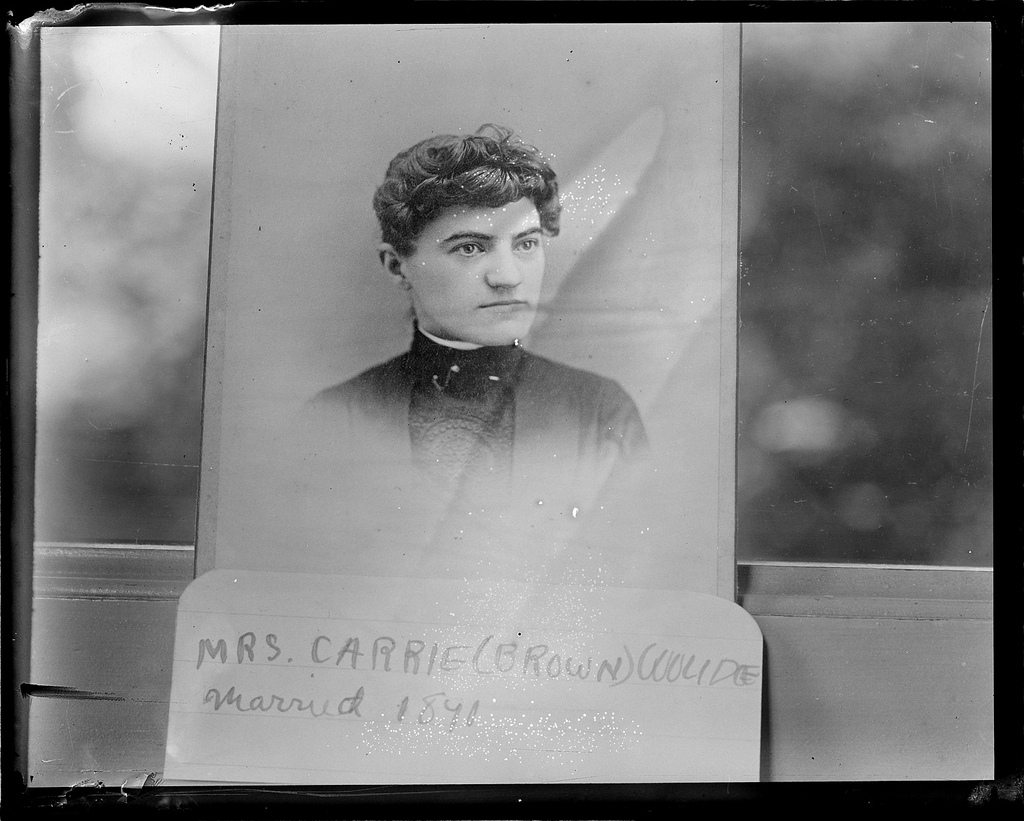
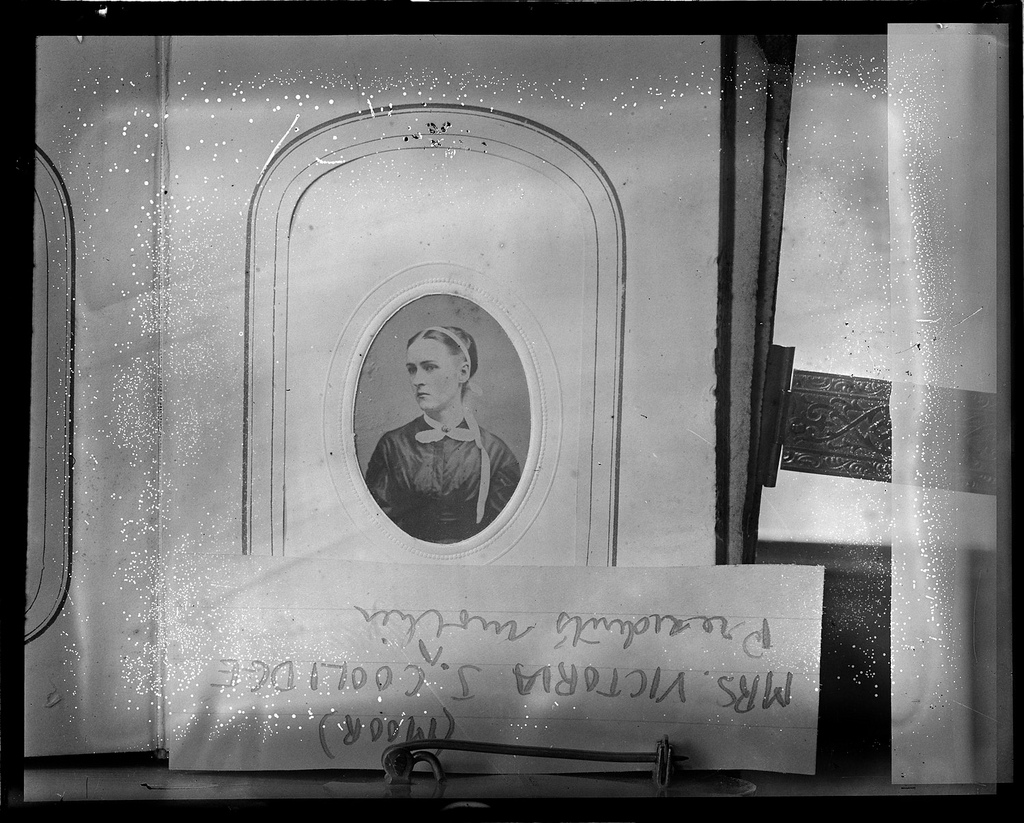
Image           Image

Top: Coolidge’s mother, Victoria Josephine Moor Coolidge, about whom he said, “Whatever was grand and beautiful in form and color attracted her. It seemed as though the rich green tints of the foliage and the blossoms of the flowers came for her in the springtime, and in the autumn it was for her that the mountain sides were struck with crimson and with gold” (‘Autobiography,’ p.13). Bottom: Coolidge’s stepmother, Carrie Althelia Brown Coolidge, a teacher at the Plymouth schoolhouse and the first lady postmaster for the town, married Colonel Coolidge in 1891, who had been a widower for seven years. Of her, President Coolidge wrote, “Loving books and music she was not only a mother to me but a teacher. For thirty years she watched over me and loved me, welcoming me when I went home, writing me often when I was away, and encouraging me in all my efforts” (‘Autobiography,’ p.54). Photos from the Leslie Jones Collection.