The Coolidges in Brule, 1928

The Coolidges in Brule, 1928

Depicted here is the President and First Lady leaving the small country church services one of the Sundays during the summer of 1928.

Deliberately avoiding the elaborate churches and ordained preachers of Superior, the Coolidges went to hear “lay-preacher” Mr. John Taylor, a blind man of 70 years. His sermons, on what newspapers have summarized “plain living and high thinking,” were reminders that the truth is often found in the simplest, humblest of circumstances.

If too enamored by the elaborate and sophisticated, the individual often misses the obviousness of truth entirely just as the apostle asked in 1 Corinthians 1:20 and 1:18: “Where is the wise? Where is the scribe? Where is the disputer of this world? Hath not God made foolish the wisdom of this world?” “For the message of the cross is foolishness to those who are perishing, but to us who are being saved it is the power of God.”

On Preemptive Involvement Abroad

Image

“Nations which are torn by dissension and discord, which are weak and inefficient at home, have little standing or influence abroad. Even the blind do not choose the blind to lead them. Foreign peoples are certainly going to seek assistance only from those who have demonstrated their capacity to maintain their own affairs efficiently. If we desire to be an influence in order and law, tranquility and good will in the world, we must be determined to make sufficient sacrifices to live by these precepts at home. We can be a moral force in the world only to the extent that we establish morality in our own country. — President Coolidge, May 30, 1927.

“I wish crime might be abolished; but I would not therefore abolish courts and police protection. I wish war might be made impossible but I would not leave my country unprotected…” — Coolidge in a Letter to the National Council for Prevention of War, July 23, 1924 (cited from ‘The Mind of the President,’ pp.235-6).

“America represents the greatest treasure that there is on earth, the greatest power that there is to minister to the welfare of mankind; to leave it unprepared and unprotected is not only to disregard the national welfare, but to be no less than guilty of a crime against civilization” — May 30, 1923

“America stands ready to bear its share of the burdens of the world, but it cannot live the life of other peoples, it cannot remove from them the necessity of working out their own destiny. It recognizes their independence and the right to establish their own form of government, but America will join no nation in destroying what it believes ought to be preserved or in profaning what it believes ought to be held sacred” — February 22, 1922

If we are sincere in our expressed determination to maintain tranquility at home and peace abroad, we must not neglect to lay our course in accordance with the ascertained acts of life. We know that we have come into possession of great wealth and high place in the world. There is scarcely a civilized nation which is not our debtor. We are sufficiently acquainted with human nature to realize that we are oftentimes the object of envy. Unless we maintain sufficient forces to be placed at points of peril when they arise, thereby avoiding for the most part serious attack, there would be grave danger that we should suffer from violent outbreaks, so destroying our rights and compromising our honor that war would become inevitable. It is to protect ourselves from such danger that we maintain our national defense. Under this policy it is perfectly apparent that our forces are dedicated solely to the preservation of peace…We have sufficient reserve resources so that we need not be hasty in asserting our rights. We can afford to let our patience be commensurate with our power” — May 30, 1927, emphasis added.

On Knute Rockne and Football

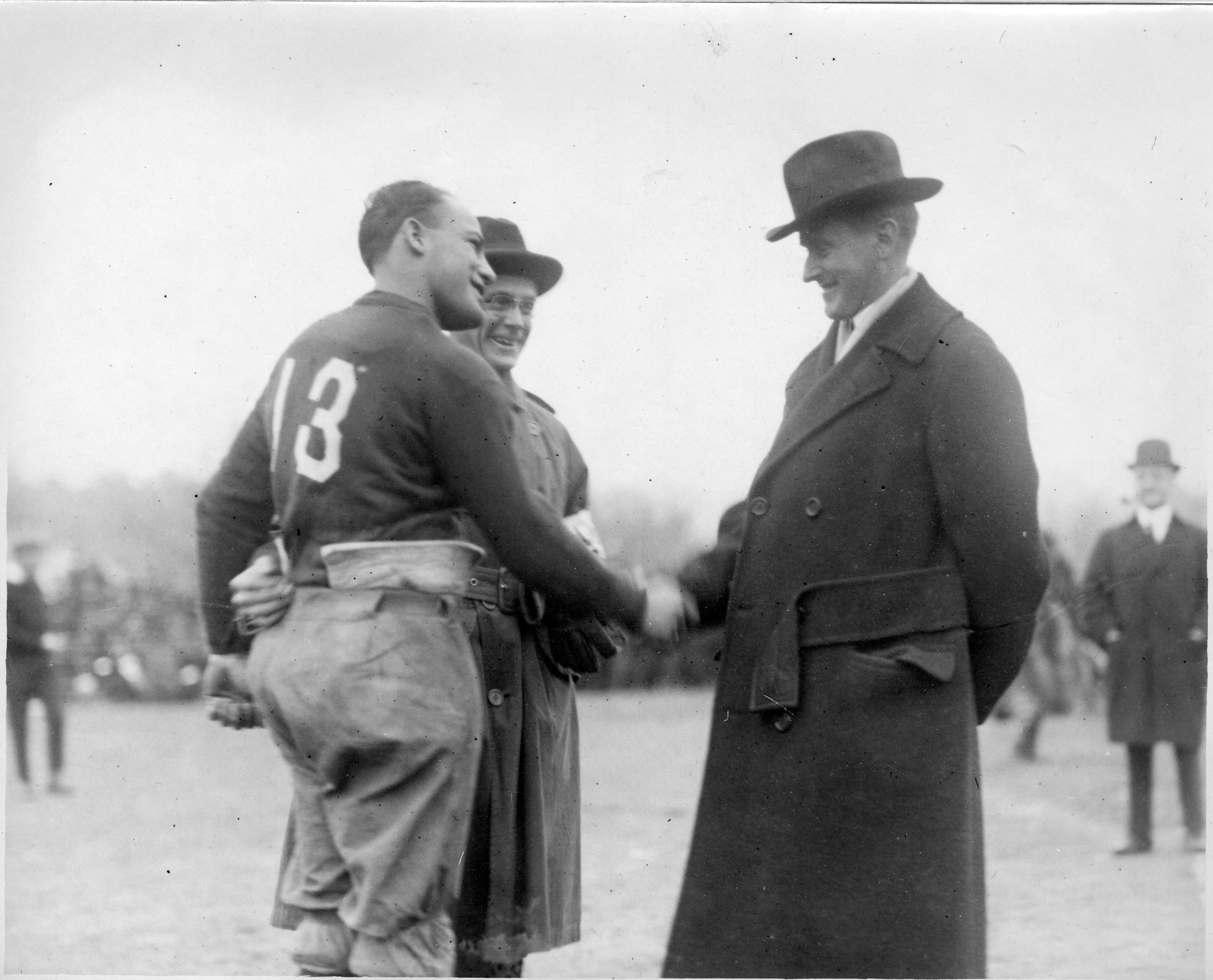
ImageGovernor Coolidge is photographed meeting Amherst’s football captain on Pratt Field, 1920.


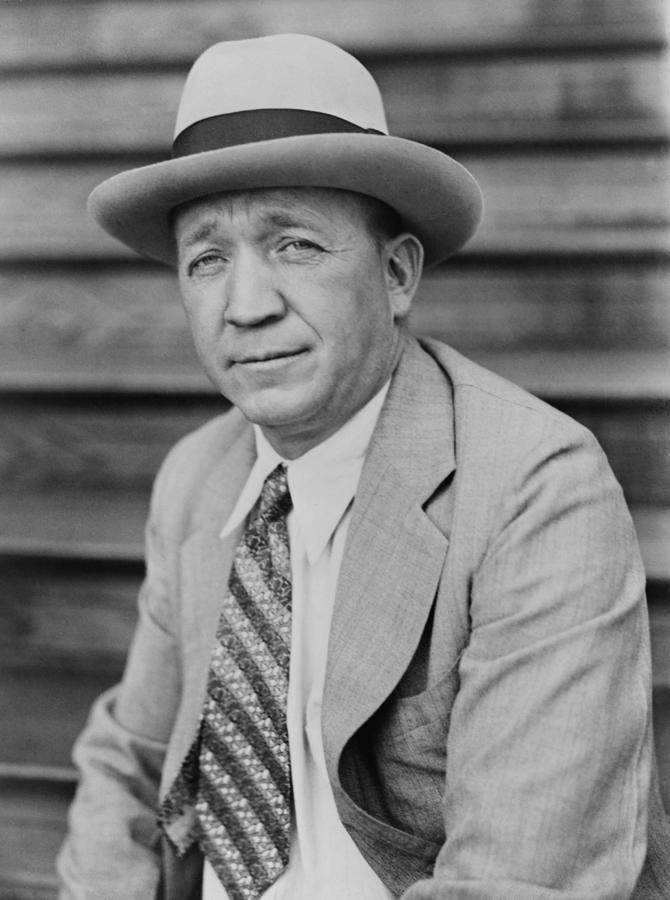
As college football season commences and the NFL settles on its concussion suit, it is worth reflecting upon the principles of which the game is supposed to consist. It is more than big jocks slamming into each other for four quarters. It means more than the business of contracts, celebrity and eradication of risk. Notre Dame’s Knute Rockne taught young men the heart of the game was more than all that. The passion for excellence and development of moral strength was the essence of the sport. Coolidge, writing on the sorrowful occasion of the great coach’s death in 1931, offered these thoughts on the man and the abiding worth of what he taught,

     Knute Rockne is gone. As a football coach he ranked at the head of his profession. In the thirteen years during which he trained the Notre Dame team there were one hundred and five victories and but twelve defeats. Five of his teams never lost a game.

     Back of these achievements was a great man, an inspiring leader and a profound teacher. His training was not confined to the physical side of athletics. He put intellectual and moral values into games. He taught his men that true sport was something clean and elevating. Right living and right thinking went into his victories.

     Rockne conducted a course that was only incidental in education. Yet he had a name and fame with the undergraduate world and the public surpassing that of any faculty member in the country. His activities had the benefit of publicity, but that does not account for his hold on young men. We shall find that in his constant demand for the best that was in them. No bluff would answer. Fifty percent would not do. His passing mark was one hundred. He required perfection. That was why men honored and loved him. That was the source of his power (“Calvin Coolidge Says,” April 2, 1931).

Image