On National Defense

Image

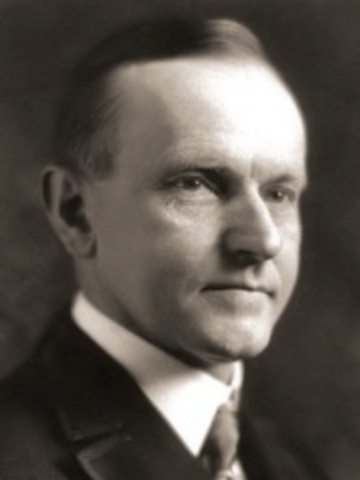
The Reagan Doctrine, summarized as “Peace through Strength,” is rightly praised for its sensible protection of our interests and the conscientious pursuit of peace in our dealings with the world. However, it did not start with Reagan. Among the many debts the “Great Communicator” derives from his predecessors, his pursuit of peace through preparedness owes some credit to President Coolidge. While Coolidge certainly preceded the prospect of nuclear proliferation in our time, the struggle for world power was no less prevalent then. The principles remain unchanged because they stem from human nature.

In the first of his three-part series on “Promoting Peace” published after leaving the White House, Calvin Coolidge outlines the immense task of preventing war through adequate defense. Coolidge certainly understood the complexity of the problem and this enabled him to distill it down to its essence: a question of human nature. He writes,

When the test comes the people will give up almost any other human right to secure safety and protection. Whenever anarchy imperils a state a military dictator always appears, because they prefer him to the lawlessness of the mob…In protecting its citizens abroad as well as at home the government, in reality, is only protecting itself. To refuse and neglect to do this is nothing short of national suicide.

     This principle is so well understood and so long established that nations accord to a foreign country, whenever the rights of its citizens are threatened or violated, the privilege of sending its naval and marine forces to protect them without considering such intervention an act of war.

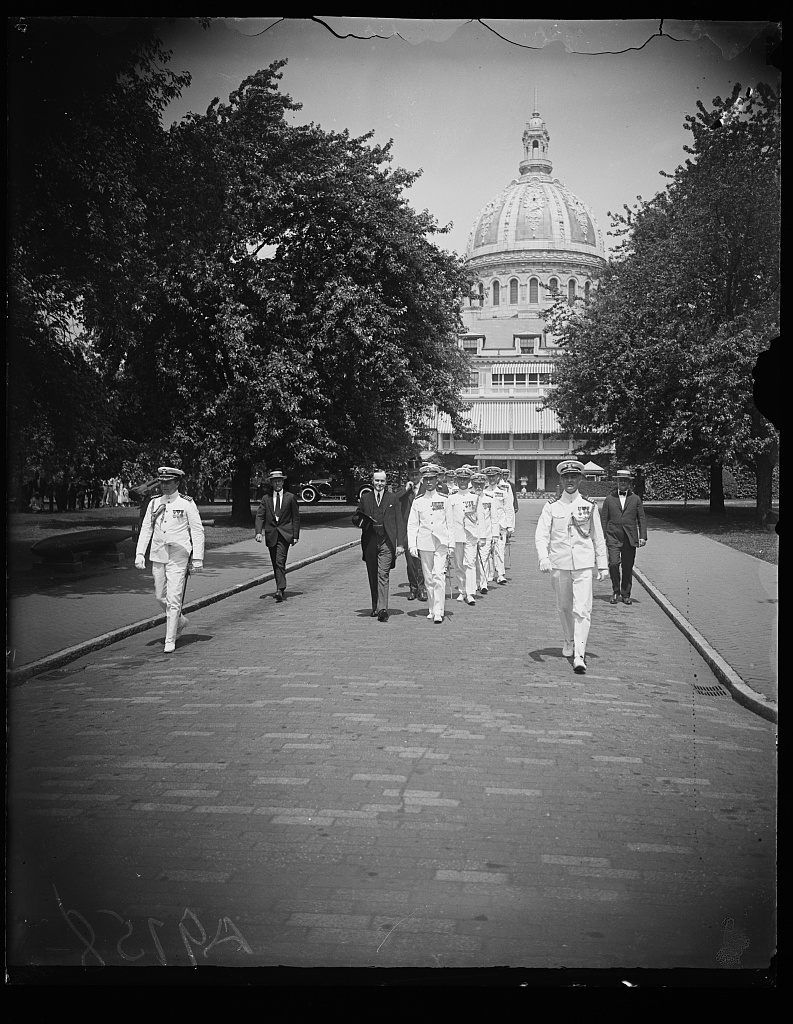
     One of the methods by which each government undertakes to preserve order so that it may protect its people from domestic violence and foreign hostilities is known as preparation for national defense. The great object that it all seeks to accomplish is peace…We do not have these [police, Army and Navy] for the purpose of making war, but for the purpose of preserving peace. The ability to protect the people within its borders and to insure to them the security which can only come from the orderly administration of law is so much and so peculiarly the first requisite of every government that under international usage civilized nations do not recognize a government which can not or does not meet these obligations. 45060v CC at Naval Academy 1925
As the inordinate power of the current regime grows, it becomes ever more apparent how far removed it is from this essential purpose of lawful order and national defense.

While Coolidge ensured the ratification of Kellogg’s Pact against war, he understood good government protects its citizens from lawless violence. At the same time, he knew that no measure could ever eradicate conflict completely. What he worked to maintain was an adequate force to meet evil, understanding that the unjust and violent are enabled when national defense is neglected. The former President continues,

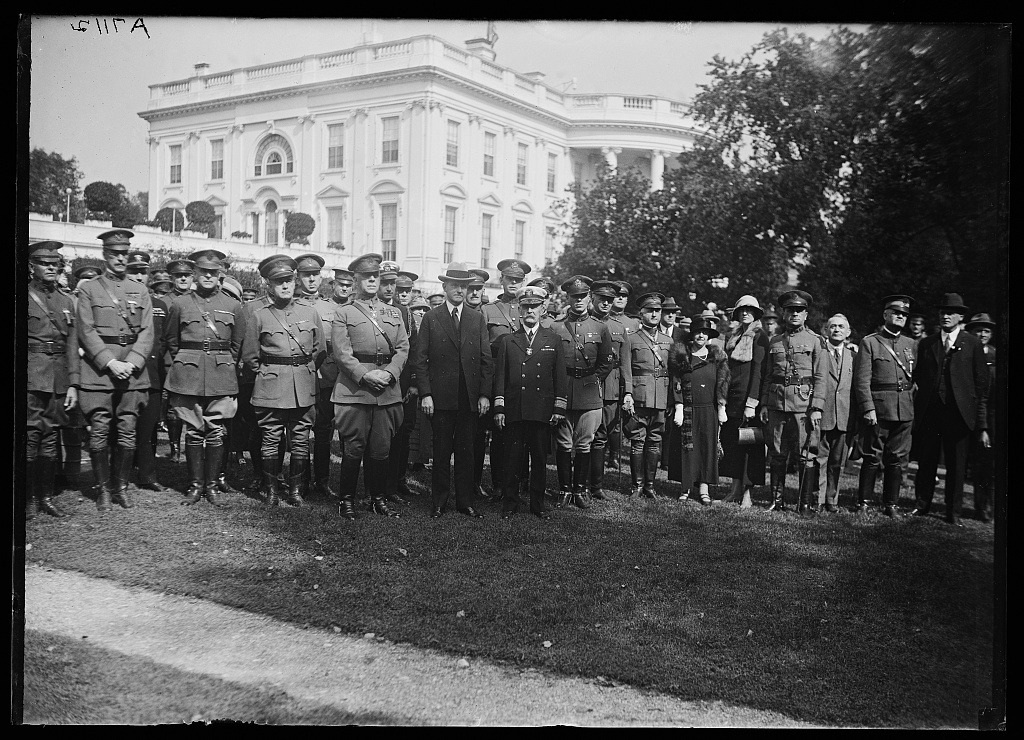
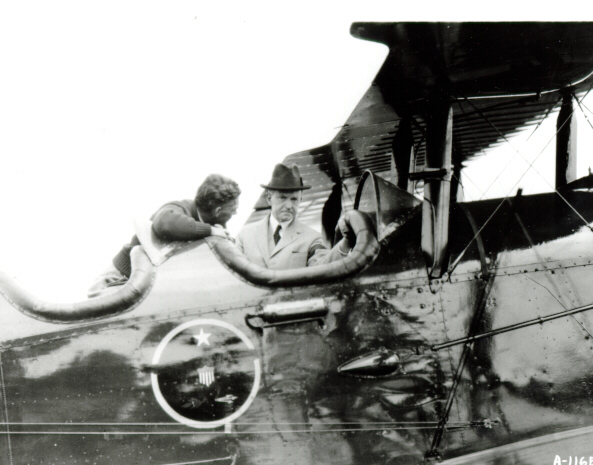
No sure way has ever been found to prevent war. We all realize that it is one of the most hideous afflictions to which mankind is subject. Opinions may differ as to whether nations with adequate military forces are more likely to enjoy peace than those which neglect their defenses. In the last analysis, this is a question of dealing with human nature. Every one knows that if there were no police our cities would be ransacked within twenty-four hours. I very strongly suspect that if there were but one nation in the world supplied with an army and a navy, and, to make the supposition as strong as possible, if that nation were our own, it would not be long before the other nations had been overrun. It seems to me that it is almost a moral certainty that we should find some excuse for taking that action. But when we know that other countries have a considerable ability to defend themselves, it is human nature for us to regard them with a more wholesome respect and be more careful about violating their rights. If we reverse this picture we can likewise conclude that if others know we are prepared to defend ourselves they will be less likely to commit offenses against us. coolidge bolling field 9-9-24
We perform no favors by taking up the burden of each nation’s duty to self-defense. The lessons of the Great War taught him that. Europe would again defer to America for its rescue in World War II and, it seems, in every conflict since. Coolidge saw danger in the policy of making the world “safe for democracy.” Likewise, we only enable our rights to be ransacked and our lives taken if we indulge our enemies through a lack of preparedness. An absence of resolve and an absolute refusal to use force only encourage injustice to continue with impunity against our citizens and their rights. What constitutes an adequate defense, then?

The President answers,

They should be large enough so that others would see there would be a great deal of peril involved in attacking us. They should not be so large that our country would feel we would undergo no peril in attacking others…I have ventured the opinion that war would have broken out in Europe much earlier than 1914 if those countries had not been prepared to resist attack. I also believe that some of them were overprepared…Adequate defense does not require a return to the conditions which then existed, but rather requires their avoidance.

The question of defense, like a coin, has another side. Military might has natural limitations. It can grow too large and thereby undermine its goal to preserve peace. Defenses, however lethal or expansive, will never permanently override human nature’s “determination to be free.” What about individuals who have ideological, instead of national, loyalties? What of those who freely embrace death for their radical dream, like islamofascists?

Coolidge summarizes,

That the wrongdoer, whether it be the individual or the nation, can be checked by force is apparent, but no force will be found adequate for an extended period to impose upon any considerable body of people a system which is recognized by the general standards of humanity as injustice and servitude. Such an attempt would create a revolt in which it would be found that the victims would rather die than yield. While an army and navy can be very useful to protect a nation from wrongful attack and unjust aggression, they cannot afford an absolute guarantee against war. Preparation for defense seems to me to be necessary in the world as we find it at the present time, and is useful, but it is well to recognize that there are limits beyond which it does not and cannot go in preserving peace…

Both sides of our obligation need equal care. This means understanding clearly that the use of national defense is not the evil here. Lawless and abusive destroyers of our citizen’s lives and liberties are the evil here, as Coolidge concludes,

…[W]e should take every precaution to prevent war, of which adequate defense is one. But we should also take every precaution to protect ourselves to the fullest possible extent from its ravages, if it does come. The Army and Navy serve the double purpose of prevention and defense. The individual and the race have not progressed beyond the point where they need the teaching and effect of discipline. We require not only the existence, but the outward manifestation, of authority.

Without the policeman impartially enforcing the law, and the members of our military and National Guard prepared to do their duty, peace is impossible. Without a national defense ready to use strength to confront the individual or nation who takes American lives, exacting life for life, the murderous and lawless continue emboldened. Reagan and Coolidge both understood that the problem was embedded in human nature. The bully, the criminal, and the despot best understand the language of force. Reason and law mean little to them without physical demonstration. It is by exercising our duties of adequate national defense that law and peace are reestablished, evil men and women are deterred and a balance of righteous force restored.
Image

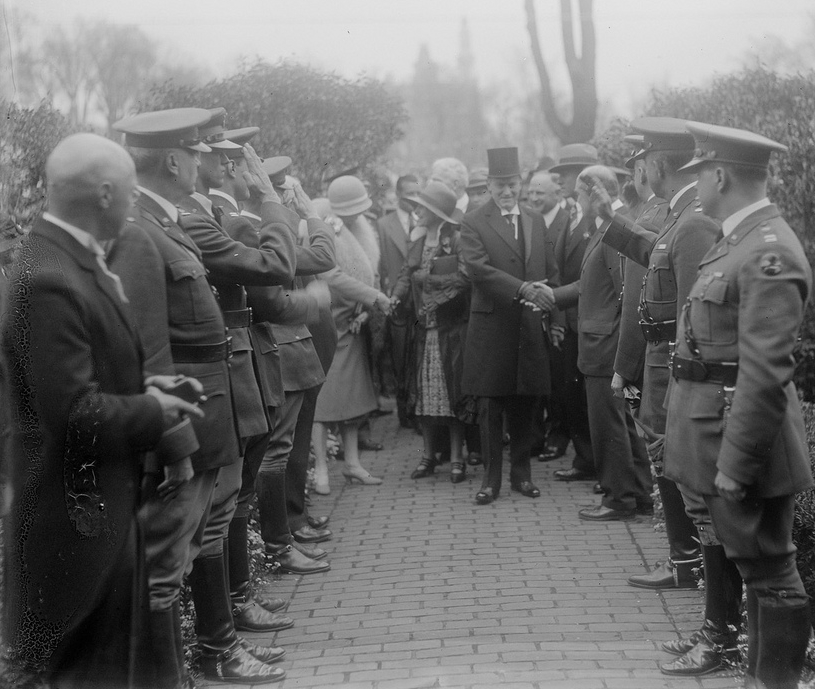
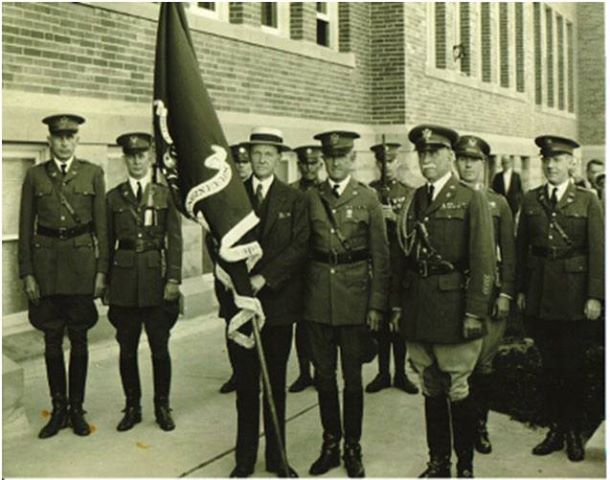
998243_10151699964766321_1262093981_n SD National Guard

On America’s Policy Toward Nations

Image

“Ultimately nations, like individuals, cannot depend upon each other, but must depend upon themselves. Each one must work out its own salvation. We have every desire to help…While we desire always to cooperate and to help, we are equally determined to be independent and free. Right and truth and justice and humanitarian efforts will have the moral support of this country all over the world. But we do not wish to become involved in the political controversies of others” — President Calvin Coolidge, in his message at the opening of the second session of the 68th Congress, December 3, 1924.

On the Consequences of Elections

Image

Calvin Coolidge, writing his column after the midterm elections of 1930 were known on November 4 of that year, observed, “Some people will be disappointed and some will be elated. But there will be enough representatives of different parties holding office during the next two years so that no very violent change in policy will be made…We make our own government. If we fail it is our own fault. Under our system a nation of good citizens cannot have a bad government.” The keyword for Mr. Coolidge was good. If citizens are doing what they are supposed to do — exercising their responsibilities seriously — no bad government would stand a chance of being elected. As he would say at other times, “government is what we make it.” It was a more profound way of saying elections have consequences. While Coolidge was largely correct that “no very violent change” would take place in the next two years, 1932 would transform everything. Burton Folsom, in New Deal or Raw Deal?, and Amity Shlaes, in The Forgotten Man, document the upheaval in domestic policy with the election and inauguration of Franklin D. Roosevelt. Foreign policy was no less submitted to drastic overhaul. Three instances illustrate this point.

First, the “Good Neighbor Policy” of “religious adherence” (as Cordell Hull, Roosevelt’s Secretary of State, would describe it in his Memoirs, p. 310) to nonintervention enabled ambitious and unscrupulous men to overthrow their native institutions and establish dictatorships, like the Somozas in Nicaragua. Preceding administrations, including the policy of President Coolidge, did not take American involvement off the table. Coolidge recognized that America possessed great moral responsibilities to others, especially in our hemisphere through the Monroe Doctrine. It was not justification for involvement in every dispute to come down the pike, as in Wilson’s call to make the world safe for democracy, but if her citizens were not defended and law and order not respected, especially in her backyard, the heritage of government by laws not men would be conceded away. Might would make right after all. The great accomplishment of 1776, shared by the younger republics of Latin America, was too valuable an inheritance to withhold help entirely.

When the Nicaraguan government petitioned for assistance in November 1926, Coolidge would inform Congress that Marines (2nd Battalion, 5th Regiment) were redeployed, landing January 10, 1927. Over the next few months, with reinforcements, the force of 2,000 Marines fought their way through to protect towns and rail lines from further attacks. In March Coolidge dispatched Henry L. Stimson to resolve the situation. In his first two weeks, he devoted his time to learning from all parties what was happening. In a month, by granting the request from both sides of the conflict for America to intervene, peace was renewed. Both sides agreed to allow the current President to finish his term according to law. Their laws also required an election occur in 1928. Stimson and Frank R. McCoy were commissioned to supervise the election, insuring a secret ballot and fair proceedings. By reaffirming law and administering medical help to those harmed in the conflict, Americans left the country on peaceful terms with only Sandino refusing to lay down arms.

Image

Henry L. Stimson, Coolidge’s representative to Nicaragua, 1927.

The last Marines were withdrawn in January 1933 after the election of Sacasa. It was in March of that year that conditions began to descend again. With the commitment not to intervene determined by the “Good Neighbor” Policy, there was little U.S. Minister Arthur Lane could do as Somoza would kill Sandino the following year and solidify his power by 1936.

Image

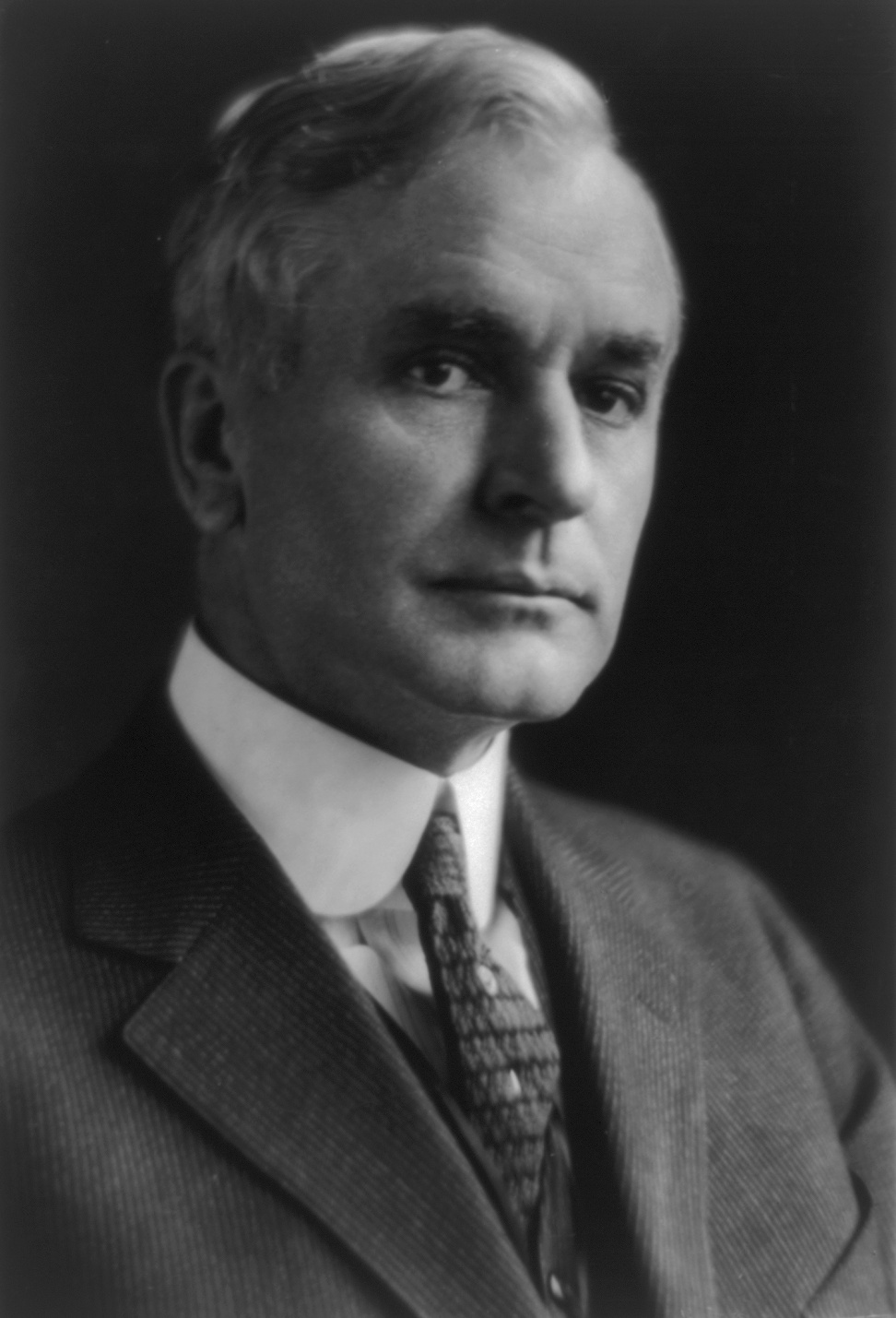
Cordell Hull, Secretary of State to Franklin D. Roosevelt (1933-1944)

Second, the commitment to nonintervention accepted the false premise of Argentina. When the diplomatic delegations of twenty Latin American countries met in Havana with the United States delegation led by Charles Evans Hughes in 1928, their instructions explicitly included the refusal of nonintervention. That point was not negotiable. The tension in the air was felt by all. President Coolidge would come down to speak, commending respect for law and pursuit of peaceful means of resolution between sister nations.

The next day, however, with the President gone, the simmering conflict boiled over in conference. Argentina was displeased that their beef, failing sanitary standards for importation, was being turned away by the United States. Citing the premise that America was improperly involved in Nicaragua, Mexico and Chile, however, combined with the past year of “anti-imperialist” sentiment, nonintervention came to the floor. The Argentine delegation led the way with the resolution, “No state has the right to intervene in the internal affairs of another.” A flurry of chaotic cheers, cries and rhetoric followed. The Americans, trying to avoid confrontation, sat increasingly apprehensive until Chairman Hughes stood to speak. The room went silent. Hughes began by reviewing the discussion of nonintervention in committee, the agreement that it would be discussed at the next Conference five years in the future, then laid out directly the reasons for each “intervention” in Latin America. While these were discussions best reserved between the U.S. and each nation concerned, Hughes methodically outlined the requests for intervention, the help provided by Americans and the threats to life and property when respect for law is discarded.

Image

Charles Evans Hughes, Secretary of State under both Harding and Coolidge (1921-1925), who came out of private life to lead the American delegation at the Pan-American Conference in Havana, Cuba, 1928.

As he finished, he appealed,

“I am too proud of my country to stand before you as in any way suggesting a defense of aggression or of assault upon the sovereignty or independence of any State. I stand before you to tell you we unite with you in the aspiration for complete sovereignty and the realization of complete independence.

“I stand here with you ready to cooperate in every way in establishing the ideals of justice by institutions in every land which will promote fairness of dealing between man and man and nation and nation.

“I cannot sacrifice the rights of my country but I will join with you in declaring the law. I will try to help you in coming to a just conclusion as to the law, but it must be the law of justice infused with the spirit which has given us from the days of [Hugo] Grotius this wonderful development of the law of nations, by which we find ourselves bound.”

The room sounded with applause from every delegation. Support for the resolution evaporated and the Conference closed with a better understanding between nations. By removing intervention entirely from United States’ relations in Latin America, the “Good Neighbor” Policy (adopted from 1933 onward) accepted the short-sighted premise that had been refuted by Hughes so powerfully five years before. It demonstrated that elections can change the world and not necessarily for the better, when it hamstrings the protection of lives, possessions and law.

Third, the commitment to withhold recognition of the Soviet Union was abandoned without meeting America’s longstanding criteria. Since the Revolution of 1917, the United States (through Presidents Wilson, Harding, Coolidge and Hoover) had withheld official recognition from the new communist regime. As long as Moscow funded, trained and encouraged activities that subverted our institutions, our laws and our government, the Coolidge administration would continue to refuse recognition. The revolutionaries, in confiscating properties owned by Americans living in Russia as well as failing to repay debts owed to the United States, the Soviet Union would not be received. Such were the requirements the United States required for sixteen years, until 1933, when the simple promise to stop interfering, either overtly or covertly, in the “internal affairs” of the United States, its citizens and its possessions, was accepted by the Roosevelt administration. While, as Hughes noted in 1944, “All the aims of Stalin’s diplomacy” were “not yet fully known,” the Venona Transcripts and seventy plus years of subterfuge and violence reveal what the regime was enabled to accomplish thanks to this official recognition of “Uncle Joe” Stalin’s regime.

Image

Prime Minister Winston Churchill, President Franklin D. Roosevelt, and “Uncle Joe” Stalin, meeting at Yalta in February 1945.

These are all reminders that good intentions alone do not make good policy. The mistakes of each administration are not only felt at home but around the world. A fundamental strength of the Coolidge era policy rested on the preeminent importance of law and order. The law presides over us all, in conflict and in peacetime alike. If we disrespect that law and turn away when our neighbors call for our aid, how is the principle of might does not make right discredited? By abandoning neighbors to ambitious and violent people who flout the law, how is the policy of nonintervention, at the expense of law and order, helping anyone?

The Coolidge administration reaffirmed the Monroe Doctrine in this hemisphere. It was not a universal call to police the world. It was a call to adhere to government by law and order. In contrast, Roosevelt’s “Good Neighbor” Policy was a plan intended for every continent. The removal of American leadership from the world scene articulated by this posture did more to encourage the storms of the twentieth century than anyone could have possibly intended.

Under Coolidge, we deferred to the authority of the sovereign nations of Europe to govern their own sphere. It is what independent nations do. As Coolidge understood well, every benefit carried with it an equal responsibility. The responsibility of Europe was to meet their obligations from the war and rebuild free and peaceful nations in their sphere. Shirking that obligation is how the matter of war debts and reparations became a burden largely assumed by the United States instead of responsibly paying it back as promised. Like the League of Nations did with Mussolini in 1935 and Hitler in 1938, however, Europe found it generally easier to shift their responsibilities to American shoulders. By placing constitutional law and orderly liberty as secondary to nonintervention, the Roosevelt administration illustrates the heavy costs of bad citizenship. Good policy starts with good citizens.

Image

Ironically, “Ding” Darling had been skeptical of Coolidge’s policy of intervention in Latin America. Cartoon published in A Ding Darling Sampler: The Editorial Cartoons of Jay N. Darling. Mt. Pleasant, SC: Maecenas Press, 2004.

References

Bemis, Samuel Flagg. The Latin-American Policy of the United States: An Historical Interpretation. New York: W. W. Norton & Company, 1967. pp. 242-255.

Hughes, Charles Evans. The Autobiographical Notes. Eds. David J. Danelski and Joseph S. Tulchin. Cambridge: Harvard, 1973. pp.261-279.

Hull, Cordell. The Memoirs of Cordell Hull. 2 vols. New York: Macmillan, 1948. pp.292-351.

Stimson, Henry L. American Policy in Nicaragua. Princeton: Markus Weiner, 1991.

Stimson and McGeorge Bundy. On Active Service in Peace and War. New York: Harper & Brothers, 1948. pp.111-116.