Remembering a President’s Inaugural

             Image

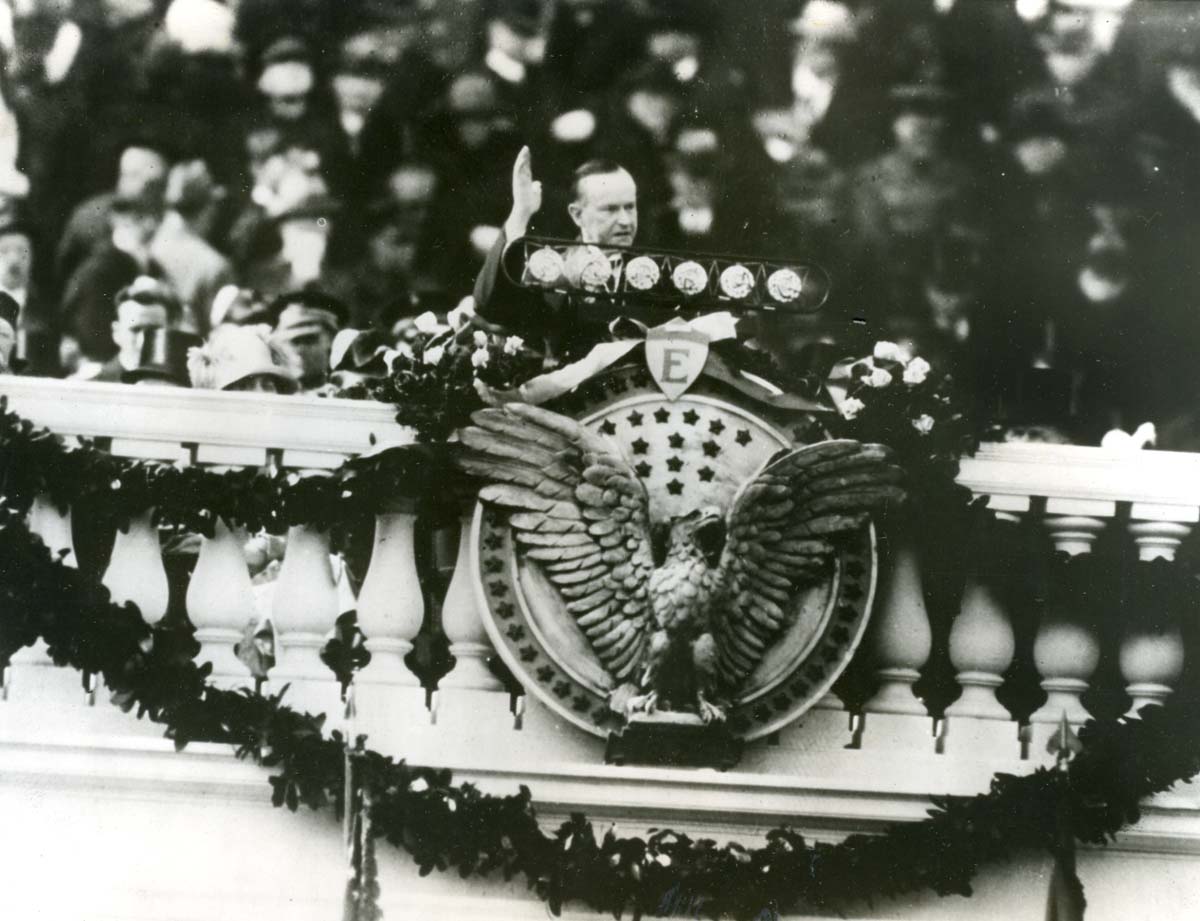
This morning while waiting in line, a news network reminded its viewers of the March 4, 1933 inaugural address of Franklin D. Roosevelt. To hear the reverence in the voices of those on the air, one would think any history worth remembering began with that infamously famous Presider over Depression, New Deal and World War. The thirty-six March 4th inaugurations before that time — 144 years of history — simply aren’t worth mentioning. One of those neglected thirty-six deserves mention here. In fact, it deserves our attention and study. It was March 4, 1925, the occasion of President Coolidge’s first formal inauguration after a resounding electoral victory in his own right the previous November. It is on this day, eighty-eight years ago, that he declared,

          If extravagance were not reflected in taxation, and through taxation both directly and indirectly injuriously affecting the people, it would not be of so much consequence. The wisest and soundest method of solving our tax problem is through economy. Fortunately, of all the great nations this country is best in a position to adopt that simple remedy. We do not any longer need war-time revenues. The collection of any taxes which are not absolutely required, which do not beyond reasonable doubt contribute to the public welfare, is only a species of legalized larceny. Under this Republic the rewards of industry belong to those who earn them. The only constitutional tax is the tax which ministers to public necessity. The property of the country belongs to the people of the country. Their title is absolute. They do not support any privileged class; they do not need to maintain great military forces; they ought not to be burdened with a great array of public employees. They are not required to make any contribution to Government expenditures except that which they voluntarily assess upon themselves through the action of their representatives. Whenever taxes become burdensome a remedy can be applied by the people; but if they do not act for themselves, no one can be very successful in acting for them.

Those are words worth remembering today. When self-government is responsibly exercised in this way, we have no reason to fear for the continuance of liberty under law.

On Law

A rigorous discussion of the purpose of law does not seem to engage Americans as it once did. That is not an indicator of either intellectual progress or societal maturity. It was once a pronounced characteristic observed not merely in the halls of higher education but in the daily interaction between Americans at work and at leisure. It is rarely asked, “Is this law necessary?” or “what does this law actually accomplish?” let alone “is this truly ‘law’ at all?” The thirtieth President’s thoughts on law came through this regular pursuit of first principles, to understand things in their essential nature and design. But he also learned through the practical experiences of watching his father at work in Plymouth as its law officer and representative and later, learning from his own work as a city councilman, city solicitor, mayor and state legislator, not to mention Governor of Massachusetts. This honest search to know the nature of law did not dissipate in his approach to problems as President. It was, in fact, common for Coolidge to meet legal conflicts with the simple, yet profound, question: “What does the law say?” To him, it was inconsequential to ask what political motives were involved, whose interests would be advanced, what this or that decision would mean for his reelection prospects or those of the Party. What mattered more than anything was the authority of law upon himself and those around him. It was not for him to reshape the law into what he preferred it to be or what made him more popular with a particular demographic. It was simply, “what is the law?” He explained its success in practice, writing in 1929,

          All situations that arise are likely to be simplified, and many of them completely solved, by an application of the Constitution and the law. If what they require to be done, is done, there is no opportunity for criticism, and it would be seldom that anything better could be devised. A Commission once came to me with a proposal for adopting rules to regulate the conduct of its members. As they were evenly divided, each side wished me to decide against the other. They did this because, while it is always the nature of the Commissioner to claim that he is entirely independent of the President, he would usually welcome presidential interference with any other Commissioner who does not agree with him. In this case it occurred to me that the Department of Justice should ascertain what the statute setting up this Commission required under the circumstances. A reference to the law disclosed that the Congress had specified the qualifications of the members of the Commission and that they could not by rule either enlarge or diminish the power of their individual members. So their problem was solved like many others by simply finding out what the law required (‘The Autobiography,’ pp.201-2).

Once again, the obvious is brought into focus by President Coolidge. When the calls were loudest for new rules and greater restrictions, Coolidge brought the matter back to its simplest form with that thoughtful admonition to find what the law says. As it turned out, rules already existed and the matter was resolved. All too often, the search for what the law says is missing today in the rush to legislate and regulate. In the process, not only is enforcement of existing laws neglected but the very authority of law upon all alike, including the President and his Cabinet, falls into disrepute. The question that echoes through the years is not “what do we want the law to be in this instance” or “which laws do we prefer to enforce” but “what is the law”? Once that question is answered, the next step is clear. The duty upon all, including the highest officers of the national government, is the same as it was for Coolidge, “Well, follow it.”

                      Image

“Calvin Coolidge and Race: His Record in Dealing with the Racial Tensions of the 1920s”

This excellent essay by Alvin S. Felzenberg highlights in bold relief how courageous and characteristically sensible Mr. Coolidge was when it came to race. It is widely unknown that he was the first President to push forward a national discussion on these issues, not Lyndon Johnson or any of Coolidge’s five predecessors. But that is not all he did. He also publicly confronted the Klan in public speeches and events around the nation, he acted decisively to end segregation policies inherited from the Wilson years and he reminded Congress of their Constitutional duty to uphold equality under the law through anti-lynching legislation. Even more, his correspondence with various folks looks like a “who’s who” of minority leaders of the 1920s. He commuted the prison sentence of Marcus Garvey. He detested the veiled racism of affirmative action and made sure that his appointment of people like Perry Howard to the Justice Department were made for their character and competence not their color. He kept an open door in his pursuit of advice from attorneys like Ruth W. Whaley and educators like Howard University’s Emmett Scott, who praised Coolidge’s defense of “ordered liberty,” understood by Americans at the time as responsible self-government. “Law and order” for “blacks” was not a racist code phrase, it was that wonderful coupling of freedom with responsibility. Scott continued,

This address brought great encouragement to thoughtful representatives of the twelve million colored people of the United States. The principles above stated by you include most or all of what they hold near and dear in connection with their citizenship. The one thing for which they have struggled since the Republican Party conferred upon them … freedom and enfranchisement has been this American ideal of “ordered liberty.” The colored people suffer many disabilities among them persecution by a hooded order which seeks to exclude them from the privileges of American citizenship. They also suffer from discrimination in the Federal service and from segregation in many Departments of our government. This discrimination is a legacy which has come to your administration. They know Calvin Coolidge. They know his traditional friendship and they know of his distinguished services in behalf of their race.

Perhaps most importantly, while one President (Woodrow Wilson) was promoting a truly bigoted spin on America’s past, the novel turned film “The Birth of a Nation,” Senator Coolidge was instrumental in shutting it down in Boston theaters. His unbiased respect for all people was simply who he was, not a device to win political power. He is ignorantly attacked today as another racist relic of our prejudiced past. The truth, if actually sought however, shows that minorities had few friends as brave and loyal as Mr. Calvin Coolidge.