On Legislative Power

Image

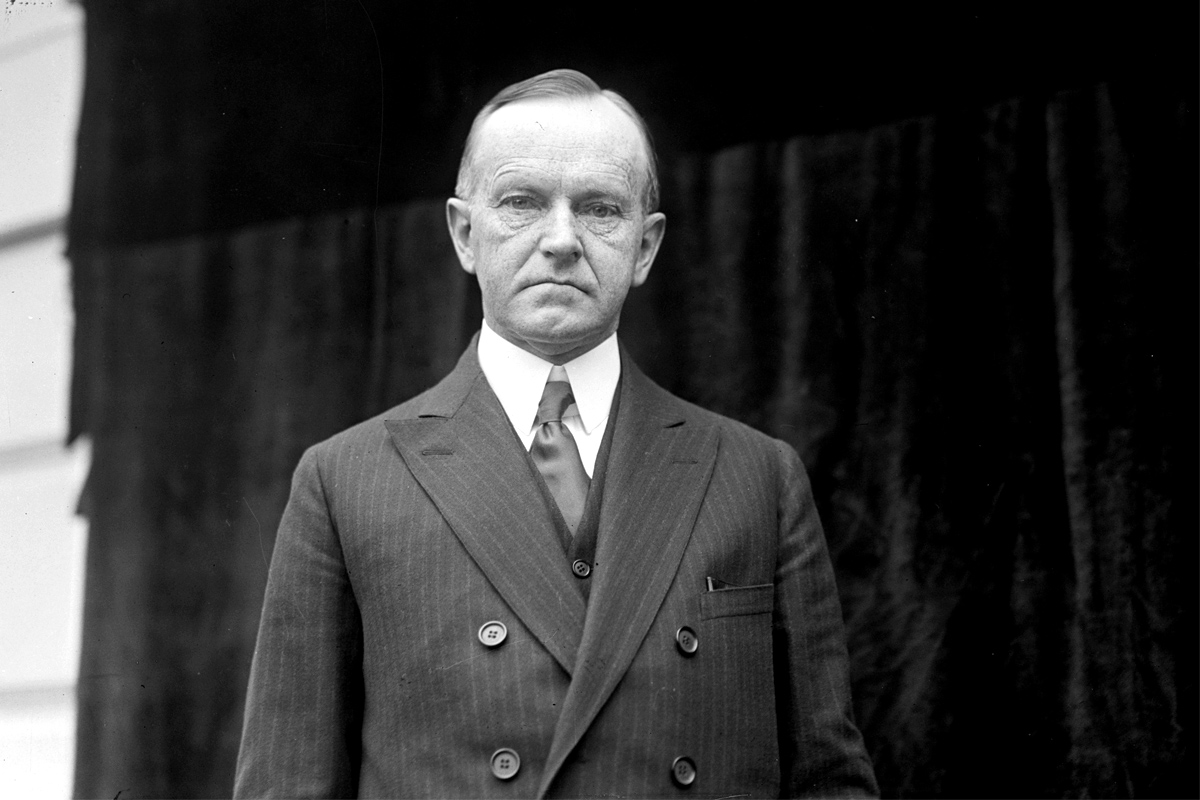
Coolidge knew how to exercise the energy of executive power in calculated doses for maximum effect. Despite the stereotypical impression that he slept through the White House years, a false impression attributed to a later Chief Executive by the name of Ronald Reagan, he understood the use of authority better than most, especially of the executive variety. The independence of Congress, a co-equal in the division of power, was no less imperative to Coolidge.

As a freshman state legislator, Coolidge was not exactly a greenhorn to politics. He had already served as a town councilman, bank legal counsel, city solicitor, clerk of courts and chairman for the Northampton Republican Committee, all by age 34. He had crafted municipal policy before, represented the interests of others both in his practice and in his duties as legal council and city solicitor, learning the law well. Always an active listener and continual thinker, he said little because he truly believed, “He who gives license to his tongue only discloses the content of his own mind. By the excess of words he proclaims his lack of discipline.” Even as he would come to build a record that included direct election of Senators, minimum wage laws, women’s suffrage, transportation regulation, restriction of child labor and other matters, he was not simply running with the “legislative herd” in order to keep pace with a clamor to legislate. While some were running headlong into heavy regulation of rails and Morgan steel, Coolidge refrained. He was not suckered into the movement, quite popular at the time, of breaking up “big business” simply because it was “too big.” He represented the folks back home, to be sure, but was doing so with an informed and conscientious judgment of matters. Even then the full price of what was done would not be understood for years. He knew destroying the mobility of capital and people’s ability to adapt to market conditions, even when it meant unpopular rate increases, hurts not helps everyone, especially the poorest. Legislatures were poor stand-ins for people free to make their own decisions in the marketplace. They may act with good intentions but would leave a trail of havoc that could have been avoided.

Coolidge would later summarize the impact of this period,

The power of legislation has been to a large extent recast, for the old order looked on these increased activities with much concern. This has proceeded on the theory that it would be for the public benefit to have government to a greater degree the direct action of the people. The outcome of this doctrine has been the adoption of the direct primary, the direct election of the United States senators, the curtailment of the power of the speaker of the House, and a constant agitation for breaking down the authority of decisions of the courts. This is not the government which was put into form by Washington and Hamilton, and popularized by Jefferson. Some of the stabilizing safeguards which they had provided have been weakened. The representative element has been diminished and the democratic element has been increased; but it is still constitutional government; it still requires time, due deliberation, and the consent of the States to change or modify the fundamental law of the nation.

It is that slow, deliberate consideration that keeps legislative power independent and people’s liberty preserved. When the Congress abandons that exercise of deliberation and attempt to speed the process without full consideration of the bill, the independence of legislative power is lost. The distinct functions of government are tipped in favor of only one aspect: an energetic executive. Without legislative deliberation, Congress surrenders its central check upon executive abuses. It places decisions that deserve time and thought into the “fast track,” disregarding what harm may come. Coolidge recognized the peril of this transformation to sound lawmaking and people’s freedoms. He differentiated productive collaboration — Congress passing and the President enforcing measures only after thorough consideration –from legislative subservience to executive power.

Speaking in Northampton on Memorial Day, May 30, 1923, Vice President Coolidge articulated the essential distinction this way,

The chief repository of power is in the legislature, chosen directly by the people at frequent elections. Is it this body, which is particularly responsive to the public will, and yet, as in the Congress, is representative of the whole nation. It does not perform an executive function. It is not, therefore, charged with the necessity of expedition. It is a legislative body, and is, therefore, charged with the necessity for deliberation. Sometimes this privilege may be abused, for this great power has been given as the main safeguard of liberty, and wherever power is bestowed it may be used unwisely. But whenever a legislative body ceases to deliberate, then it ceases to act without due consideration. That fact in itself is conclusive that it has ceased to be independent, has become subservient to a single directing influence or a small group, either without or within itself, and is no longer representative of the people. Such a condition would not be a rule of the people, but a rule of some unconstitutional power…An independent legislature never deprived the people of their liberty.

In the haste to “pass the bill to see what is in it” and “prevent deadlock,” the point of properly applied legislative power is being missed on a grand scale. In such an environment, no one can be assured of their freedoms. As Coolidge would say, “A good measure can stand discussion. A bad bill ought to be delayed…Open debate is the only shield against the irretrievable action of a rash majority.”

On Executive Power

Image

Surveying the years of public service that prepared Coolidge for the Presidency, Robert A. Woods, in his instructive book on the thirtieth president, reminds us how extensively trained Coolidge was in statecraft. Very few chief executives can lay claim to as broad a span of experience in local, state and national governance as Calvin Coolidge. Yet, through it all he retained an enduring sense of perspective toward himself and the specific duties of each particular office. As Coolidge transitioned from a state legislator to executive leadership in the Massachusetts Senate and from there to Lieutenant Governor, Governor, Vice President and President, he continued to adjust to the constitutional limits of the role. It was all grounded in his respect for and grasp of the office he held. The powers of government were separated for an incontrovertible reason. The powers of making law and enforcing them were not safe in the hands of one man, even if he was that man. The people’s liberties were safeguarded by limiting the reach of each branch and assigning powers not easy to consolidate by any single group or individual.

In the State House, Coolidge became the best-informed legislator by listening and carefully studying each issue himself. When the time came to act, he was decisive and thorough, gaining a reputation as a master of legislative procedure and vote getting. He not only knew the content of the legislation under consideration but had weighed its consequences on those to whom it would apply. It is a measure of scrutiny all but missing in legislators today.

When the time came to direct the Senate, he did so with complete command not through coercive tactics, for that was not his way. He led by understanding his task fully, applying what he had learned with political acumen and exemplifying service. When others paraded their abilities to influence men, Coolidge demonstrated what he expected and let the actions do the talking.

As he moved upward in executive responsibilities, Coolidge continued to observe and learn. He saw firsthand the effects of excessive legislation. He began to speak up on the detriments of passing laws without giving enforcement time to catch up. It also became increasingly clear that executive power carries even greater limits than legislative authority. It was not up to the President or Governor to drum up votes for his own array of proposals and add to the excess of laws pressing down on the people. It was part of the Framer’s deliberate design that wisely diffused power into co-equal, yet distinct, branches of government.

The President was not to fill in with his own preferences what was lacking in the laws either. He was bound by oath to enforce even the laws with which he did not agree, from prohibition in the Volstead Act to the Japanese exclusion in the Johnson-Reed Act. The Congress could not always see the impact of what was being passed nor could it execute legislation without the President’s authority. Both had to work toward laws that would protect what was good for all citizens, not a few preferred above others. This principle took immense self-discipline to an extent that no Roosevelt or Wilson would have easily held to it. It was too tempting for Presidents to be legislator-executives. Coolidge restored the Framer’s balance and showed it can work when tried.

As Coolidge continued to be prepared in proper administration, he came to see ahead of Congress, as his Vice President, Charles Dawes, would point out. He would recognize the appropriate powers of Congress to craft laws but he was equally as determined to protect the powers of the President, as his victories over the removal of Cabinet officials, full exercise of the veto, and foreign affairs bear out.

Mr. Woods, summarizing the Coolidge way, writes,

The impression made by him upon the country is not merely that of the capable executive. His whole front toward life appeals to those who are bearing the responsibilities of existence and know that they must continually reckon with them. He instinctively and conscientiously represents the kind of progress, the advancing moral standards, which the people can agree to, and the Government can embody…He holds that ‘leadership should not be by force, but by service.’

      But we are told that he has fallen short because Congress has so little followed his lead…One sort of man might have sought to utilize on a large scale the leverage of government patronage; another might have thrown the gauntlet to Congress as a whole, and to recalcitrant Republicans, whether radical or conservative. Neither of these methods goes with Mr. Coolidge’s type of leadership; and no one can say that either would have been more productive of results…In the conflict with Congress, he acted throughout on the basis of the principle which was well-established in his mind by experience, that in a disagreement between the legislature and the executive, the latter is always at a great advantage with the public… (pp.268ff).

Coolidge would not see the legislature assume the powers of his Office any more than he would take on the role of a lawmaker, venturing into the jurisdiction of Congress. Woods continues,

     But it is not difficult to see in Mr. Coolidge, amid all the administrative complexities of his office and all the pressure of material demands upon him, his strong characteristic tendency toward what will advance the higher well-being of the Nation.

Coolidge understood that executive power, used sparingly and with respect for its limits, ensured the full weight of its authority was not dispensed at every press conference or public appearance. Such would only undermine and dilute the potency of Presidential authority. If every utterance was heralded as a monumental event or an historic agenda-setting occasion, it would only impair executive power and cheapen its moral credibility. To Coolidge, the enforcement of the “moral relationship of things” was paramount to the President’s role. Any personal sense of importance or superiority was immaterial. It was not his greatness involved here but it was the sacred trust laid upon the Office that was to honor, protect and maintain the moral precepts of the people from whom he was chosen, merely first among equals (Johnson, “Why Coolidge Matters,” chapter 5). He was not at liberty to supplant those principles with his own notions of “morality.” To do so would squander that inheritance making one unfit for the Office and a threat to the health of a republic.

On Federalism

Coolidge does not seem to have fully perceived the harm done by his youthful support for the Seventeenth Amendment, which stripped the influence of the states on the national government and removed the insulation of the Senate from the same popular impulses pressuring the House. In fact, how costly have been the consequences (in both obstructing good legislation and passing the bad) of so drastic a transformation to this unique body? The two houses of Congress were not intended by the Framers to serve the same purpose. The distinct differences between House and Senate were thrown away too hastily by those who did not thoroughly consider the costs of changing the constitutional design.

Despite his earlier support of the Senate’s alteration, Coolidge is unique among modern presidents for consistently holding a high regard for the Constitutional balance of federalism, defining a sufficient sphere of authority for the States, limiting the scope of national governance and preserving the responsibility of local decision-makers over their own affairs. By so doing, the balance of orderly liberty is kept. For Coolidge, this was more than pandering for votes. It was a necessary mechanism to ensure government remained limited especially in times of emergency. It was not to be bartered away but existed for just such occasions when the temptation was greatest to seize the reins from state or local authorities. The danger to people’s liberties was too great, even were he to exercise such powers cautiously. Coolidge knew that with the best of intentions, government would not remain limited for long even when the storm passed.

But for Coolidge, the threat of national overreach was not the only potential problem, the prospect that the States would abuse their authority was also very real. Remembering his experiences with State politics in Boston, Coolidge knew legislatures and municipalities could pass equally as reckless regulations against an individual’s freedoms. The restrictions imposed by Mayor Bloomberg of New York City and by Governor Hickenlooper of Colorado on “gun control” are but two examples of such abuses.

It was on the 150th anniversary of the Virginia Resolutions for Independence, that President Coolidge came to the College of William and Mary on May 15, 1926, summing up the value of that federalist balance with these words,

“While we ought to glory in the Union and remember that it is the source from which the States derive their chief title to fame, we must also recognize that the national administration is not and can not be adjusted to the needs of local government. It is too far away to be informed of local needs, too inaccessible to be responsive to local conditions. The States should not be induced by coercion or by favor to surrender the management of their own affairs. The Federal Government ought to resist the tendency to be loaded up with duties which the States should perform. It does not follow that because something ought to be done the National Government ought to do it. But, on the other hand, when the great body of public opinion of the Nation requires action the States ought to understand that unless they are responsive to such sentiment the national authority will be compelled to intervene. The doctrine of State rights is not a privilege to continue in wrong-doing but a privilege to be free from interference in well-doing. This Nation is bent on progress. It has determined on the policy of meting out justice between man and man. It has decided to extend the blessing of an enlightened humanity. Unless the States meet these requirements, the National Government reluctantly will be crowded into the position of enlarging its own authority at their expense. I want to see the policy adopted by the States of discharging their public functions so faithfully that instead of an extension on the part of the Federal Government there can be a contraction.”

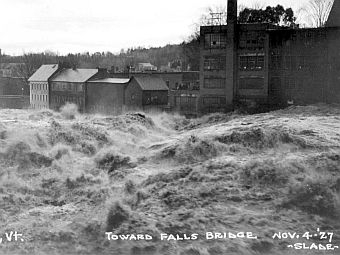
The following year would test this principle to its limits as floods would devastate first the Mississippi River Basin in April and then New England, including Coolidge’s beloved state of Vermont, in November. The damage came not only in the property destroyed but the lives lost. The most intense pressure fell on Coolidge to visit the areas, spearhead the effort to aid and rebuild and otherwise take decisive action. He deliberately held back. He dispatched Secretary Hoover to collaborate with state and local officials, not always successfully or deferentially. Those who do not understand our Constitutional system condemn Coolidge as “cold” and “unfeeling,” for his decision. They overlook the strength it took to withstand the urge to involve himself, especially when it concerned his home state. Principles mattered more. There would be no recovering the balance lost to local decision-making once he, the President, used powers he could not rightly claim. It was the burden of free people to exercise responsibilities over their lives and property, even when nature interjected. National Government was not there to spare folks from life’s consequences, however unpleasant the price.

The fight to grant flood relief would not subside quickly and while Coolidge kept much of the spending down, the drive to appropriate money, especially with an even larger surplus expected in 1928, was too much for both House and Senate to resist. Interestingly, the argument that convinced Coolidge to finally relent on a smaller relief bill was the fact that States and local governments were already paying into the sum being levied (Barry, ‘Rising Tide,’ p. 406). Federalism was working. The States and local authorities were taking responsibility for their own expenses. Had the Senate remained less constrained by public passions, as the Framers intended, it is not improbable that even the drastically reduced $296 million (which would become closer to $1 billion, in reality) flood relief measure could have been struck down before reaching the President’s desk.

Image

      The waters roaring through Springfield, Vermont in 1927

Image

              Forty foot deep floods along the waterfront of Cape Girardeau, Missouri, spring of 1927

Image

                     When the levees broke and the Mississippi flooded, it is estimated some 300,000

                     people were displaced in as many as ten states. Coolidge would not see their

                     freedoms eroded further with government’s good intentions supplanting local

                     oversight.

“Every dollar that we carelessly waste means that their life will be so much the more meager. Every dollar that we prudently save means that their life will be so much the more abundant. Economy is idealism in its most practical form” — President Coolidge, March 4, 1925