On Political Parties

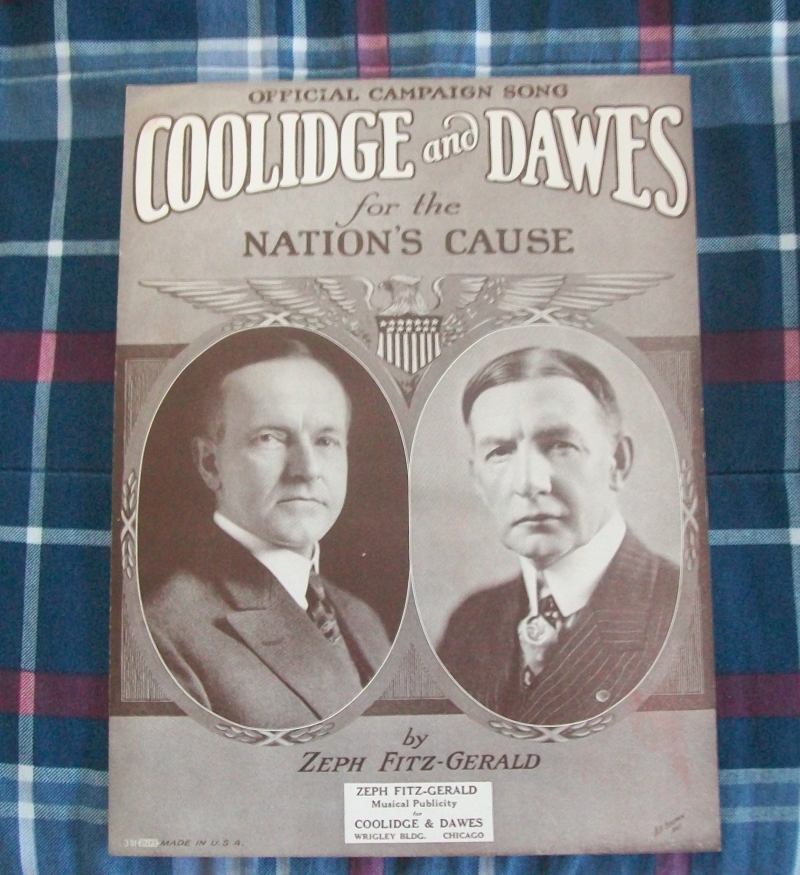
The campaign song, "Keep Cool with Coolidge" underscored the steady leadership and calm reliability of the 1924 Republican team and its Party platform.

The campaign song, “Keep Cool with Coolidge,” underscored the steady leadership and calm reliability of the 1924 Republican team and its Party platform.

As the train wrecks converge of “Obamacare” and the Federal Government’s refusal to account for its criminally reckless spending habits — except by the “band-aid” of Continuing Resolutions and debt limit increases, Americans are more and more proving to be the last constituency with any political representation in Washington. This is a grave disservice, especially to those who backed the party platforms for “tough budgetary decisions across the board” (for Democrats) and passing a Balanced Budget Amendment to the Constitution that would make it so “future Congresses cannot balance the budget by raising taxes” (for Republicans).

Realizing, as the Supreme Court confirmed last summer, “Obamacare” is an overt tax, at least for everyone who does not reside in the District of Columbia. The costs about to fall upon everyone across the Country, especially the poorest among us, are still multiplying as the contents of its regulations begin implementation in less than two weeks.

This is why political parties, as expressions of the sovereign people’s will, serve an imperative purpose in our Republic. Ours is not a mere democracy of simple majorities deciding every political question for us. Ours is a representative Republic, setting two fundamentally opposing agendas before the people who express their support or disapproval through the ballot box. These agendas are implemented by political parties and outlined in platform promises every four years.

Calvin Coolidge recognized the obligation of that party system to carry out the pledges and policies for which each Party stands, declaring, “…[I]t is necessary under our form of government to have political parties. Unless some one is a partisan, no one can be an independent. The Congress is organized entirely in accordance with party policy. The parties appeal to the voters in behalf of their platforms. The people make their choice on those issues. Unless those who are elected on the same party platform associate themselves together to carry out its provisions, the election becomes a mockery. The independent voter who has joined with others in placing a party nominee in office finds his efforts were all in vain, if the person he helps elect refuses or neglects to keep the platform pledges of his party…”

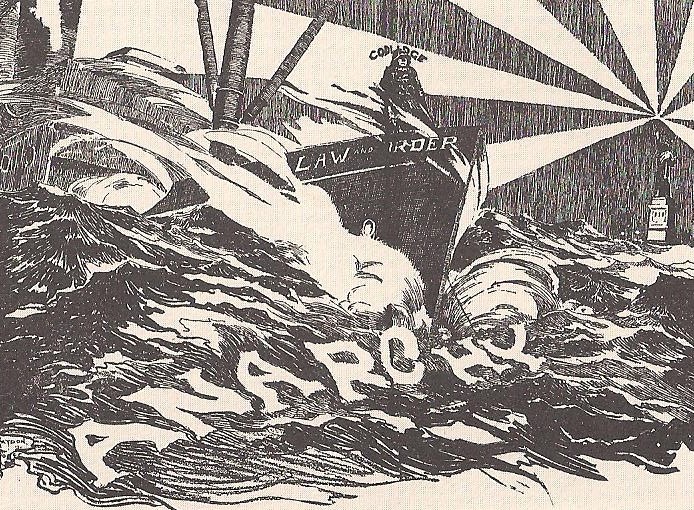
It is the reason why he did not immediately overturn the Cabinet or alter the policy direction started under Harding until the people voted again in 1924. Even then, he conscientiously upheld the Party platform, despite some in his own Party abandoning him for political convenience. For Coolidge, Party platforms were serious contracts between the voter and the candidate. The candidate is not empowered to break his promises when he gets to Washington. Facing unforeseen circumstances, the principles of the Party define the fixed channels and hazardous shoals wise leaders must navigate to accomplish the goals of one’s Party. The principles are not to be jettisoned when storms hit, they are the compass to reach harbor.
Image

The House vote to defund “Obamacare” and the efforts by Senator Cruz in the Senate are simply attempts to keep the Republican Party honest about its own platform, carrying out the political promises made to those who supported the issues of repeal and balanced budgets last year. Republicans who want to help implement the Democrat Party’s platform are in the wrong business. It is no different in any other area of life: If everyone agrees, something is seriously missing. Ours is not a one-party system for that reason.

Real legislators, contrary to the wishes of David Brooks, are those who furnish principled opposition to the other Party’s agenda in order that the expressed will of the other side has a voice in the direction the Country is to take. Our system is not a pure democracy of mere majorities settling every political question, be it Democrat or Republican.

Senators like Cruz are doing what much of the GOP is too timid to do — uphold Party principles.  Republicans were not supported last year to rubber stamp the other Party’s agenda, they were sent to be Republicans, a Party in opposition to the agenda of Obama and his small majority in the Senate. Republicans, like Cruz, are expected to represent those who chose them to obstruct and defeat the Democrat Party’s persistent commitment to spending, avoid actual budgeting and expedite the outright conquest of one-sixth of America’s economy by government control of our health care.

This means Republicans are obligated and expected to act in unison, especially on so fundamental an issue as now stands before the Senate — the defunding of “Obamacare” linked with the long overdue halt on government spending. Coolidge affirmed this as a principle for any party which intends to remain effective for long,

[i]f there is to be responsible party government, the party label must be something more than a mere device for securing office. Unless those who are elected under the same party designation are willing to assume sufficient responsibility and exhibit sufficient loyalty and coherence, so that they can cooperate with each other in the support of the broad general principles of the party platform, the election is merely a mockery, no decision is made at the polls, and there is no representation of the popular will. Common honesty and good faith with the people who support a party at the polls require that party, when it enters office, to assume the control of that portion of the Government to which it has been elected. Any other course is bad faith and a violation of the party pledges. 

By "Ding" Darling November 14, 1924

By “Ding” Darling November 14, 1924

The Democrat Party, conveniently ignoring the “tough budget decisions” it promised last year are not winning issues, they are silencing any effective opposition through fear and intimidation, counting on our ignorance to blame Republicans for others’ actions. Instead of joining Democrats in this evasion of who they are and what they really believe, Republicans need to be boldly and unashamedly Republican. Instead, the “experts” are urging Republicans to just stop being Republicans and conform to a one-party system so that the White House can achieve Utopia for us all.

Coolidge knew better. He knew that, “[s]ince its very outset, it has been found necessary to conduct our Government by means of political parties. That system would not have survived from generation to generation if it had not been fundamentally sound and provided the best instrumentalities for the most complete expression of the popular will.” Neither party perfectly represents, nor can it, the popular will in everything. Opposing parties serve as an indispensable check upon political power (whichever Party is in office), continually reminding both sides that principles (not holding government powers) matter most and no majority however strong can defy the people’s will indefinitely.

It serves a continual reminder that parties are not empty vessels to be shattered and remade on the whim of politicians for the expediency of the moment but rather they are the instruments through which the people speak, enacting the principles we expect of our government. They are to stand for very specific and irreconcilable directions. To silence, deny and dispense with that difference is a betrayal of every last one of us, every time we vote and every choice we make, Republican, Democrat, or otherwise.
On the Limbaugh Theorem

Image

It is unimaginable that America would ever see, let alone re-elect, such a dearth of leadership as we now experience. It is a far fall from the Presidential strength of character demonstrated on either side of the aisle from Reagan and F.D.R. to Coolidge and  Cleveland. It tests the bounds of reality to try to understand why someone so hostile to America’s history and institutions could find such prevalent support.

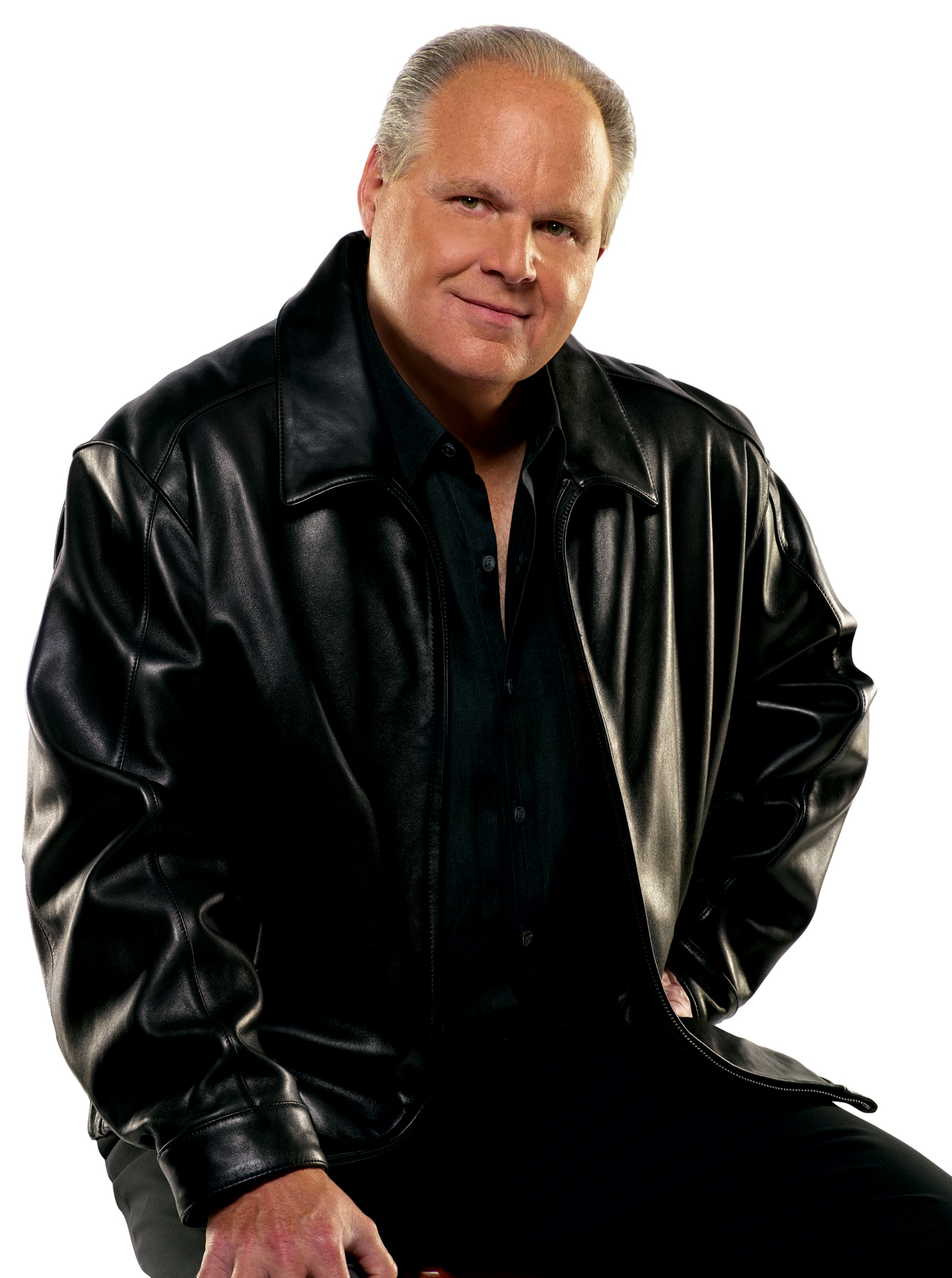
Rush Limbaugh has proffered an explanation for this utterly irrational disconnect between Obama and any accountability for his own policies with the “Limbaugh Theorem.”

Image

Instead of tracing effects directly to their causes, too many are willing defenders of policies that are indefensible. The not too distant past would indict this attitude. Coolidge appreciated that history was more than a dry series of dates and dead people. He said, “If we could better understand what they said and did to establish our free institutions, we should be less likely to be misled by the misrepresentations and distorted arguments of the hour, and be far better equipped to maintain them [our free institutions].”

Professing to finally espouse the colorblindness of an enlightened modernity, this current attitude claims to be free at last from what mired past generations in racism and ignorance. In reality, this politically correct culture has camped atop a mountain piled high with the soft bigotry of low expectations. Unable to see beyond the irrelevant color or race of the President to properly discern the destructiveness of this man’s political agenda — his own policies free of any opposition for the last five years — this culture seems ready and willing to declare one preeminent political axiom, “As the first black President, he can do no wrong.”

Should it ever be whispered that his actions were less than irreproachable, the fact that he has a certain skin color cancels out any criticism. This ultimate form of affirmative action should be insulting to anyone, regardless of color, race or political persuasion. It is an insult to reason.

Any disagreement is dismissed as racially-driven. He cannot be wrong or else we are instantly back to an unredeemed “Jim Crow” America, as opposed to the peace and unity in which we now live, this new day hailed to be the transformational age of Obama. The popular perception that all progress would be undone by pointing out the failures of one who happens to be a certain color is too much for this culture to allow. Obama cannot be blamed for anything he has done because…he inherited it, he is being obstructed by Republicans, he is not being understood, he was forced to work with a deck stacked against him by the Founders or any number of contorted explanations that try to justify him at all costs. This lone individual is too big to fail, even if it means America is to be sacrificed for his sake. 

The Limbaugh Theorem further explains that faith in America is what is being lost, instead of the credibility of absentee leadership. In time past, people were able to know failure when they saw it and reverse course at the ballot box. Hoover in 1932 and Carter in 1980 are prime examples. Now, as Coolidge himself struggled to understand, the artificial world of the political mind is becoming reality by perception.

Still, the perpetual campaign of this administration shows that even the President knows he has yet to fully convince a large cross-section of the electorate. The Office has known reprobates and autocrats before but it has never known anyone quite like this man. The combination of ambition for power with arrogance and animus toward the nation over which he has been elected makes him unlike anyone else who has occupied the White House. Yet, he is merely human. It is the pervasive force of political correctness maintained by those who carry his water (the First Lady is not the only one carrying water these days) that has kept him insulated from the consequences of his policies. Without the smoke and mirrors, the Wizard is no more immune from consequences than the rest of us in Oz are.

As Coolidge reflected upon his time in Washington, he observed there are two minds at work with which the President must deal. “One is the mind of the country,” he noted, “largely intent upon its own personal affairs, and, while not greatly interested in the government, yet desirous of seeing it conducted in an orderly and dignified manner for the advancement of the public welfare. Those who compose this mind wish to have the country prosperous and are opposed to unjust taxation and public extravagance…In general, they represent the public opinion of the land.”

“The immediate authority with which the President has to deal is vested in the political mind. In order to get things done he has to work through that agency…It is a strange mixture of vanity and timidity, of an obsequious attitude at one time and a delusion of grandeur at another time, of the most selfish preferment combined with the most sacrificing patriotism. The political mind,” Coolidge discerned, “is the product of men in public life who have been twice spoiled. They have been spoiled with praise and they have been spoiled with abuse. With them nothing is natural, everything is artificial.”

Then Coolidge draws a conclusion that forms the basis for the Limbaugh Theorem. The political mind, given to the artificial as it is, readily connects the Congress with all that is wrong with inside-the-Beltway thinking. Consequently, Coolidge identifies, “the President comes more and more to stand as the champion of the rights of the whole country.” This ability to equate the President with responsibilities outside, even transcendent of, the inner workings of Washington “is one of the reasons that presidential office has grown in popular estimation and favor, while the Congress has declined.” Moreover, the perception, however real or fake it may be, that “the President is willing to assume responsibility, while his party in the Congress is not,” makes the country feel that he is able to resolve the gridlock as the people’s “champion.”

Coolidge would be appalled at the extent of the destruction through lawless coercion this President has unleashed. Coolidge made clear that the President, whoever it may be, is rightly “held solely responsible for his acts.” Mr. Coolidge would never have condoned the repeated and flagrant disregard for the Office, the shirking of daily responsibilities owed to the country or the systematic protection this President continues to receive from any substantive criticism of his policies. Coolidge does help explain how the Limbaugh Theorem became possible. He does so by describing how the perception of the Presidency as “the champion of the people” easily translates into its corrupted form as the perpetual Washington outsider, able to fix the nation’s problems free of partisanship, free of the corruption of politics, and now free of both Constitutional limits and electoral consequences.

On Patriotism

Image

Yesterday marked twelve years since the despicable attacks against the innocent thousands at their jobs in the World Trade Center Towers, the Pentagon and against the passengers of Flights 175, 11, 77, and 93. The depth of hatred for this country by those who withhold freedom from their own people and choose death as a weapon against all who oppose them, is unfathomable. There is no reforming it, there is no justifying it, there is no understanding it. There can be no conciliation with evil.

Many of us still remember the shock we felt from that day. Despite best efforts to the contrary, we are forever changed by it. But the way we responded as Americans deserves equal remembrance. We joined together, united in our common identity as Americans, comforting those in grief but resolute in who we are and what justice demanded be done. We flew the flag proudly, without shame or apology because we were not to blame for the wrongs inflicted among us. We knew America was the moral force for good in this world. It was not a blind refusal to see her faults, but it was not a psychotic inability to see the immense good America represented. It was the power of its ideals that rekindled a genuine and nationwide patriotism.

It was not long before a small percentage of the population — members of the modern Left — embarrassed and disgusted with this “corny” love for country, began a drumbeat that would not only discredit President Bush but dispirit and divide the nation again. The flag has long been offensive to them and so it ought to be intolerable to others, they intoned. For these unhappy souls there is nothing to love without complete and absolute perfection. It is no wonder they are so unhappy here. The appreciation of what is good and beautiful in this imperfect world must be quite lost on such sad people. Even with confronted with the only Perfection ever to visit earth, they reject Christ, ridiculing anyone who wears the name Christian.

It was clear patriotism had to be redefined if the Democrat Party was ever going to win another election. A simple love for country was too much to espouse for these discontented folks. Hillary Clinton stepped forward to laud true patriotism as dissent, the courage to see and criticize America’s faults. Howard Dean screamed the mantra that the flag belongs to everyone, not just Rush Limbaugh, despite the fact that the only persons burning it, cheering for its defeat and encouraging our enemies were Democrats like Dean. Of course, we recall Michelle Obama’s profession of pride in America only after electing her husband. Nothing remotely good or praiseworthy preceded this, apparently. Unprecedented liberty, opportunity, the individual exceptionalism that recurred for millions coming to America, our fight over slavery and the protection of civil rights, the story of our march from the political, religious and economic tyranny of the Old World did not count, it seems. Then there is the President’s distinction, when asked September 4 whether his credibility was on the line, between himself and America, saying, “My credibility is not on the line.  The international community’s credibility is on the line.  And America’s and Congress’s credibility is on the line.” So America has to fend for itself when it comes to credibility? The President has no role in upholding American credibility now? Patriotism should not be exclusive to any political party in this country. It speaks to how far the Democrat Party has strayed from its roots.

Patriotism was not so confused a concept to Coolidge.

For Calvin Coolidge, “[p]atriotism is easy to understand in America. It means looking out for yourself by looking out for your country. In no other nation on earth does this principle have such complete application…Patriotism does not mean a regard for some special section or attachment for some special interest, and a narrow prejudice against other sections and other interests; it means a love of the whole country.”

Coolidge did not live blissfully unaware of America’s short-comings, but neither did he insist all flaws be removed forthwith before disbursing love and admiration for his country. He always found a greater number of reasons existed to love, not hate, America. He refused to see only the negative. He lived in reality and as such knew patriotism inspires improvement through the pursuit of ideals. It has defined America’s entire history.

Coolidge would drive the point home when he said, “Not to know and appreciate the many excellent qualities of our own country constitutes an intellectual poverty which instead of being displayed with pride ought to be acknowledged with shame.” It is the systematic ostracism of showing our patriotism that should shame the modern Left. The love for America they refuse to understand or at least respect, exhibits a spirit not of enlightenment and objectivity but of closed-mindedness and intolerance. Coolidge expressed respect for our flag and what it represents even more frankly, when he said, “He who lives under it and is loyal to it is loyal to truth and justice everywhere. He who lives under it and is disloyal to it is a traitor to the human race everywhere.”

They would mock and scorn what Coolidge said next about encouraging patriotism, “We must eternally smite the rock of public conscience if the waters of patriotism are to pour forth. We must ever be ready to point out the success of our country as justification of our determination to support it.” Or, when he said to the National Education Association concerning American children, “patriotism is always to be taught.” Or, finally, when he spoke to immigrants in 1925, saying, “Our America with all that it represents of hope in the world is now and will be what you make it. Its institutions of religious liberty, of educational and economic opportunity, of constitutional rights, of the integrity of the law, are the most precious possessions of the human race. These do not emanate from the Government. Their abiding place is with the people. They come from the consecration of the father, the love of the mother, and the devotion of the children. They are the product of that honest, earnest, and tireless effort that goes into the rearing of the family altar and the making of the home of our country. They can have no stronger supporters, no more loyal defenders, than that great body of our citizenship which you represent.”

Image