On Promises

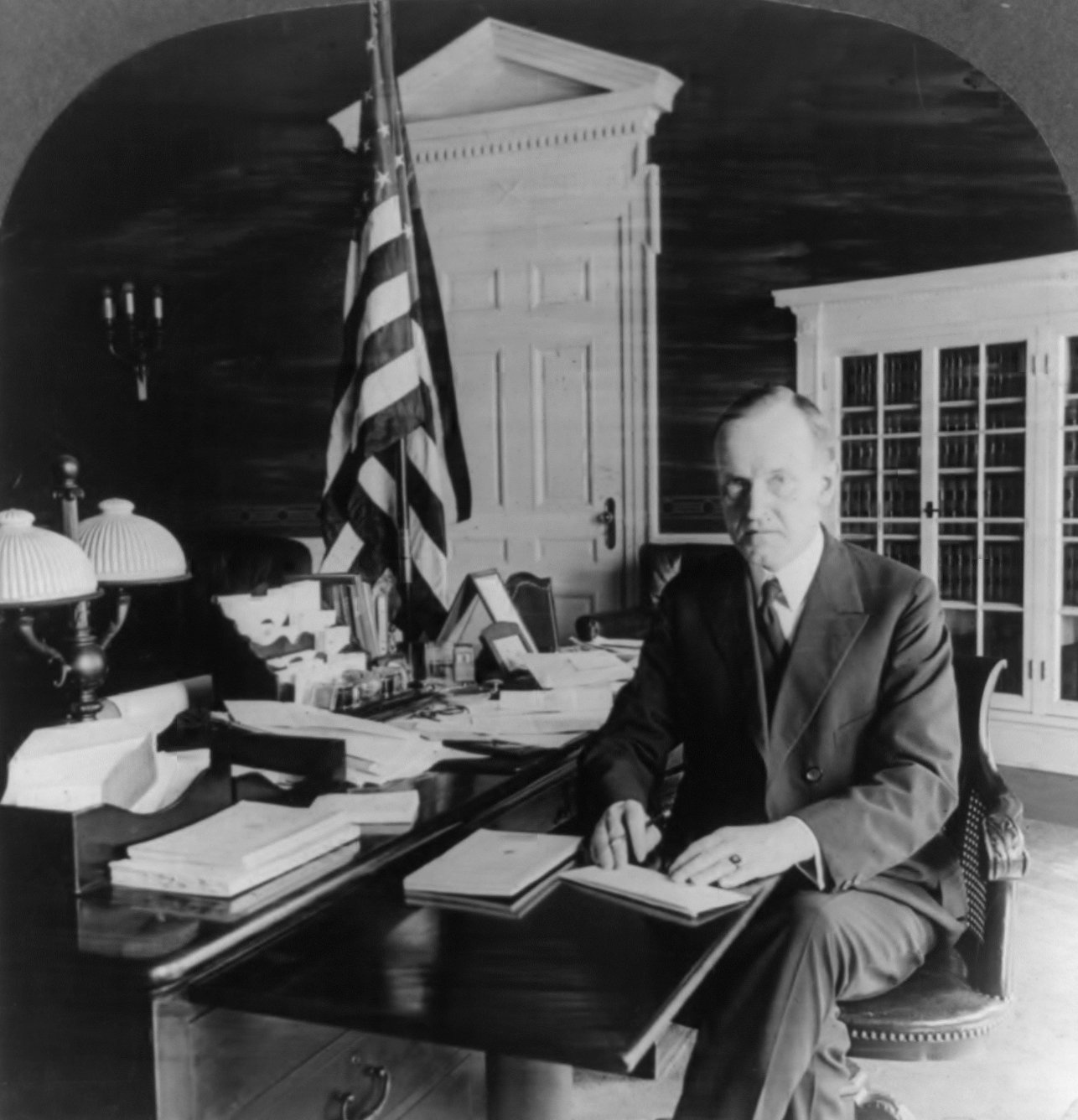
While self-serving and deceptive politicians are not new in our time, the past year has exposed many for who they are. The hypocrite is one who campaigns with soaring ideals but when circumstances demand principled courage and competent integrity, substance must be bluffed and ability feigned. The hypocrite is flush with lofty promises but when the time comes to deliver, the facade is revealed for all its emptiness. Coolidge identified it well, when he said, “When you substitute patronage for patriotism, administration breaks down. We need more of the Office Desk and less of the Show Window in politics. Let men in office substitute the midnight oil for [in place of] the limelight.”

Let’s review some of the promises made over the past five years. Obama, during the 2008 campaign, rejected NSA wiretapping to uphold national security. Turns out President Obama has not only approved domestic wiretapping of political opponents and government officials but also 35 foreign heads of state.

Obama promised not to govern by executive orders, signing “statements to nullify or undermine duly enacted law.” Turns out that only applies to the laws he agrees with enforcing, failing to uphold Federal law regarding border enforcement, marriage and even waiving provision after provision of Obamacare, except the individual mandate, just to name a few.

Obama promised his $787 billion stimulus would ensure 5.4% unemployment if passed. Turns out it went on to unleash 43 consecutive months above 8%, not reporting total numbers.

President Obama promised “My Administration is committed to creating an unprecedented level of openness in Government. We will work together to ensure the public trust and establish a system of transparency, public participation, and collaboration. Openness will strengthen our democracy and promote efficiency and effectiveness in Government.” Turns out Obama’s administration has been one covert decision after another, from “Fast and Furious” to Benghazi to passing Obamacare to “see what is in it” then engaging in a contrived government “shutdown” to coerce full funding for its implementation.

President Obama said we could keep our current insurance plans. Turns out that will not be the case for millions of families being dropped by their providers, faced with multiplying premiums, forced to pay fees or fall into a single-payer system, as was the intention all along.

President Obama said this bill was not a tax. Turns out costs are already skyrocketing for both the insured and uninsured as the Supreme Court majority agreed last summer was a legitimate part of the law.

President Obama drew a red line August of last year on Syrian chemical weapons. Turns out the red line was not a unilateral declaration of war, as he conveyed, but was a meandering debacle of indecision and moral surrender.

Obama promised to end budget deficits and restore surpluses. Turns out, after incurring over $6 trillion in debt without a single budget passed in five years, he alone is responsible for over one third of what has taken two hundred and thirty years to accumulate.

Finally, President Obama promised leading up to October 1, the new health care website would “make shopping for health insurance as easy as ‘buying a plane ticket on Kayak or TV on Amazon.’ ” Turns out the “glitches” of a site that took three years and $93.7 million to build are not going to be worked out until the end of November and perhaps later. Yet, when they cannot even properly execute something so simple as a webpage, are the people to be trusted with providing our medical well-being?

When it came to promises, Coolidge held to a practice diametrically opposed to this repeated inconsistency between word and deed. In stark contrast, Coolidge under-promised but over-delivered. As he made clear, “The conduct of public affairs is not a game.” It is the sober execution of responsibilities humbly and competently. “Governments are not founded upon an association for public plunder,” Coolidge would continue, “but on the cooperation of men wherein each is seeking to do his duty.” That duty meant telling the truth, a practice missing altogether vacant in this current administration. Coolidge would declare his duty to truth inherent to sound government, “I am not one of those who believe votes are to be won by misrepresentations, skilful presentations of half truths, and plausible deductions from false premises. Good government cannot be found on the bargain-counter.” Coolidge knew that promises, to be of any value, were not mere words uttered in the heat of a campaign, they were actions. What was done about a problem meant something far more than what was said or felt about it.

In Roland D. Sawyer’s excellent book “Cal Coolidge, President,” the author devotes space exploring how Coolidge worked when it came to political favors and promise-making. In short, he never made promises. Yet, he stands in an exclusive few among politicians, in general, and Presidents, in particular, for his ability to produce results far beyond what others expected. Sawyer writes,

“Coolidge…had the faculty of doing, in a quiet and unostentatious way, a lot of favors for people. We representatives and senators have may appeals for this and that from constituents. Governors are always affable, they give us the glad hand and–promises. Coolidge would hear us with little comment–and if favorably impressed would merely say, ‘I will see, Representative, if I can do anything on that,’ and generally the matter would be attended to at once. It was his habit to make the next visitor wait while his secretary was called and the wheels were set in motion on the thing wanted. Such treatment was so unusual in an office-holder that Mr. Coolidge soon had a lot of smaller ‘Frank Stearnses’ rooting for him. In my own case, for instance, I entered the House the same day Mr. Coolidge was sworn in as president of the senate. The next week we rode into Boston together. I had been introduced to Mr. Coolidge the week before, and had not been favorably impressed by his cold exterior. This Monday morning I was walking down the car, and merely nodding to Mr. Coolidge, when he said, ‘Representative, I see you have a road bill in; sit in here a minute, perhaps I can help you a little on it.’ Gladly I sat in. And in a few words Mr. Coolidge explained to me, a green legislator and member of the opposition party, the methods of legislation, and the way of getting favorable consideration. The brief and well chosen sentences finished, Mr. Coolidge turned his head to look from the car window, and to smoke his stogie. My estimate of the man was at once changed,–I saw at once he was a man of kindly nature, interested in his fellow men, but unable to make trivial conversation, and not caring to try. Such was the method of the man, and such his temper.”

Such was the Coolidge way. By refusing to multiply promises, guarantees and assurances, he prevented the disappointment of failure before those to whom he was accountable. As he would say, “I don’t recall any…that ever injured himself very much by not talking.” By taking up each matter promptly, acting decisively without fanfare or empty rhetoric, Coolidge accomplished far more with fewer words than most do with mountains of promises.
3a22398u

On “Negative” Liberties

For Coolidge, when the Constitution said “no” it not only meant what it said, it said so for a good reason. It said “no” in order to preserve good liberties. Much maligned these days is the importance of saying “no,” when it is much easier to say “yes.” While facing the consequences of saying “no” is undeniably unpleasant to the officeholder in the present, it yields good fruit down the road to those who remain unmoved by the intense pressures to relent on behalf of this or that interest.

Much in vogue in recent decades is the academic ridicule of saying “no” when it comes to constitutional governance. It simply is not fashionable to preserve, protect and defend a charter believed to be obsolete and pre-modern. By dubbing them as “negative liberties,” the freedoms articulated by the Bill of Rights (our first ten amendments to the Constitution), it is hoped that a stigma will attach to them without having to explain in what way they somehow lack soundness or credibility.

It is fascinating to consider that a man so widely proclaimed by far too many historians to be an embodiment of presidential shortsightedness was far more prescient and, especially, honest than they. Calvin Coolidge, long before Justice Brennan pined for a “living” Constitution, struck at the heart of this argument. It was not that the Constitution was so old or its provisions so inept at relating to modern Americans, the essence of the complaint went deeper than that. Seeing the essential nature of the matter, Coolidge explained what was really bothering the proponents about a constitution that said “no” rather than “yes.” He first described the grievance, “We often hear people say that our Constitution is antiquated, that it might have been suited to the conditions existing when it was adopted, but we have had so many changes in our mode of life since then that it is not now applicable to our needs.” Some today even go so far as to claim the Constitution “reflects deep flaws in American culture,” remedied not by better application of its principles or through the process of amendments (outlined within the document itself) but by transforming society through unilateral government power.

When specifics are sought, however, the complaint unravels. It unravels because the loudest proponents of replacing the Constitution do not understand the timelessness of human nature. The same reality we face today confronted the Framers two hundred years ago. They grappled with the same issues of individual responsibility versus government power. The Constitution, addresses all of human nature’s weaknesses and strengths to form a framework of principles on which to build now and into the future. Steeped in direct experience with unchecked power, those men and women of two centuries ago preserved a balance of sovereignty decisively with the people not government. Explaining how this framework is “deeply flawed” confuses the imperfections of human nature with the best means ever attained of restraining that human tendency to abuse power and destroy the liberty of others.

For Coolidge, like those men and women of colonial America, “negative” liberties were not a bad thing. They were not to be mocked, maligned or feared. They were safeguards against depriving liberties so precious to all. They kept government in check, limited to specific tasks delegated to it by the states and individuals. Coolidge knew the “beef” with the Constitution went deeper than its supposed flaws. As he would say, “When such people are pressed for particulars, it often develops that they do not want to be limited to raising taxes for public purposes, they despise due process of law, they desire to apply confiscation to other people, impair the obligation of contracts and take property for public use without just compensation.”

The root of the problem, then, was not in the Constitution but in a government hungering to live outside its limits and lawful confines. It is a decidedly positive thing that liberties are denied under such circumstances by our Constitution. When liberties are regarded not as constructive freedoms but as stifling obstructions, it is well that a constitution be zealously supported to say “no.” Granting a power unrestrained by any “no,” to what is, by nature, a hungry Leviathan (as Hobbes coined absolute government) imperils the very real and practical liberties we exercise every day. By performing our liberties dutifully the freedom which government assumes to act for us is correspondingly negated. Coolidge reminds us that such a circumstance is not a negative at all. It restrains those who need restraint and frees those best equipped to exercise liberty. Each of us is infinitely better off as a result.

Image

“Calvin Coolidge and civility”

“Calvin Coolidge and civility”

Here is a worthy piece by Rick Sincere, Jr., illustrating Coolidge’s graciousness and civility, even toward those who ran against him for office. A mutual respect existed not merely because of Coolidge’s heartfelt kindness for others but also because his opponents still cherished the virtue of forbearance. It is that self-restrained tolerance, that allowance for disagreement without plummeting to personal vilification that exemplified the ideal that we are Americans first. The Kennedy who defeated Coolidge would not have recognized his Party today. Were Coolidge, or Kennedy for that matter, able to witness politicians today exchange the vitriol we hear for this or that fellow Representative or Senator they would find it a reprehensible and disgusting perversion of the noble duty of public service. The mentality that impugns and mocks our common foundation as Americans is why politics, no less lively and spirited in Coolidge’s day, now shamelessly mislabels opponents “terrorists,” “legislative arsonists,” “hostage-takers” and as virtual “enemies of the human race,” the last label being virtually ascribed by the Supreme Court majority in United States v. Windsor this last summer against those who support the Federal Defense of Marriage Act.

While the case can be clearly made that one side is predominantly given to such childish name-calling, the personal attacks against those who are simply trying to do what is right, represent the people and work faithfully come from opponents in both parties. These conscientious public servants among us deserve no less the civility Coolidge displayed.

Americans have never entirely agreed on every point. What made peaceful co-existence possible in the past came down to a healthy respect for those who believe and think differently. We may disagree but we are still Americans who love our country, our institutions and our liberties. The tone has changed not because opposition to Administration policy is new, unjustified or “all opposition is uncivil” but because that respect for others and commitment to America first is no longer paramount in the actions and words of certain politicians.

Civility never muzzled Coolidge from taking clear, controversial or principled stands. Each time he did so, he ran the risk of offending someone. He kept to ideas, not personalities. He campaigned for principles, not against people. He championed convictions that met with partisan opposition but demonstrated that civility did not mean surrendering the fight. He led the way back toward a kindly forbearance to be shared by all, Republican, Democrat or otherwise, made possible by an abiding sense of obligation to America’s people, institutions and morals.