On Political Correctness or Government by the Few

ImageThough Calvin Coolidge preceded most of the “culture war” in which we are now surrounded, the roots of its existence were on the move in subtle ways in his time, particularly in higher education. The instigators of political correctness, always an intolerant and discontented minority, have rewritten much of our history, overturned the true meaning of our institutions and traditions and are well underway toward stripping the remaining vestiges of basic moral standards, and thus the political and economic liberties, from anything approaching an outward manifestation. The sanctity of religious freedom, the rights of individual conscience, upon which this New World was established finds itself under assault in ways never before known in America.

The trail of tyrannical violence by government suppression and mandated conformity in the Old World is well-worn and readily witnesses to how unjust and evil a series of crimes it perpetrates, regardless of who holds the reigns of power, against every individual to come under its wrenching grasp. America was the exception to this rule. Learning from history’s wealth of experience, our ancestors confirmed for any and all who would come after them the blessings of self-government, a framework of checks upon the power of government and protections upon the freedom of the individual, made possible by each person’s practice of virtue and informed citizenship. Being a full participant in the freedoms America has to offer requires first a sober acceptance of its obligations. It is not a tolerance of lawlessness or an undermining of the institutions that preserve responsible liberty. It means concrete standards of decency and morality must be met.
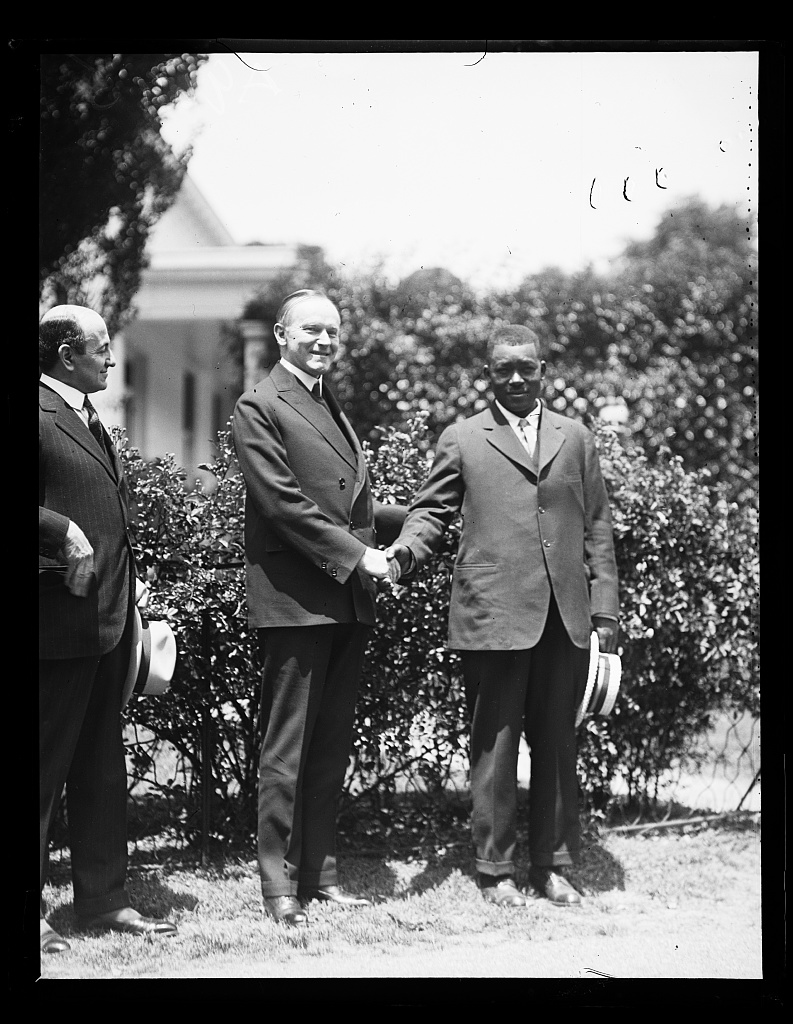
Mississippi River hero Thomas Lee, in saving the lives of those caught under the capsized M. E. Norman was honored by President Coolidge, May 28, 1925

Mississippi River hero Thomas Lee, in saving the lives of those caught under the capsized steamboat M. E. Norman was honored by President Coolidge, May 28, 1925

The power accorded political correctness has taken on an authority even more potent and intrusive than many of our statutes, codes, customs and charters. This is a perversion of America’s extraordinary foundations and, ultimately, a repudiation of lawful and orderly self-government for the absolute control by a few self-appointed guardians. These gatekeepers are not content to simply agree to disagree but deploy the full powers of every branch of government to eliminate any action, any behavior and, as we now see, any word or even thought which fails to accord with their imaginary view of the world. It is a control so expansive in scope and so insidious in aim that despots from the “Reign of Terror” under Robespierre to the “sterilizations” under Soviet direction could not have better prepared the ground for absolute tyranny as well as the members of the American Left have in education, politics, journalism and popular culture over the past eighty years.

It was nowhere near the full-blown warfare against a free conscience and Christian morality that it is now, but Coolidge’s words on October 6, 1925, could be speaking to the current intolerance of political correctness that presides over every corner of Americans’ lives. As with any mere opinion, political correctness possesses the power we give to it. Though long ago, Coolidge still speaks because the nature of humanity has not progressed beyond itself. It is still struggling with the same fundamental problems of relating to others with which we may disagree. The problem is hardly a new one. Everyone has always had differing opinions, divergent convictions. What is relatively new is that some opinions are less worthy than others to even deserve utterance for nothing more than the superficial basis of skin color, political affiliation and religious belief. Merely the chance that someone somewhere is offended silences any further comment. It is now granted to a select few, living to be offended, to suppress and destroy dissent however benign or logical it is.
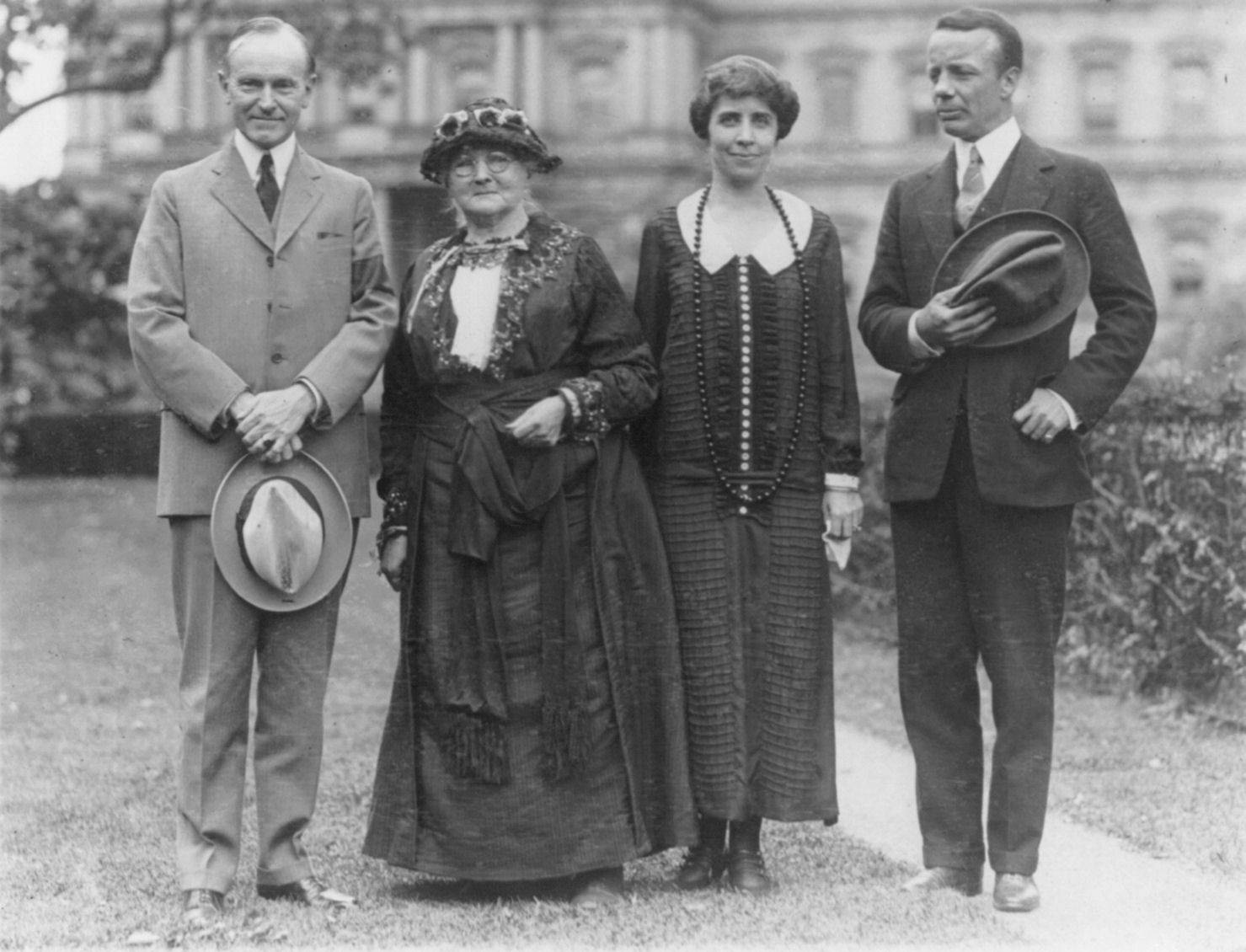
The Coolidges meet Mother Jones and Theodore Roosevelt, Jr., at the White House in 1924.

The Coolidges meet Progressives Mother Jones and Theodore Roosevelt, Jr., at the White House in 1924.

It was no less the man who has come to be called “Silenced Cal” because of the decades-old attacks to his credibility, accomplishments and character, who declared,

“Progress depends very largely on the encouragement of variety. Whatever tends to standardize the community, to establish fixed and rigid modes of thought, tends to fossilize society. If we all believed the same thing and thought the same thoughts and applied the same valuations to all the occurrences about us, we should reach a state of equilibrium closely akin to an intellectual and spiritual paralysis. It is the ferment of ideas, the clash of disagreeing judgments, the privilege of the individual to develop his own thoughts and shape his own character, that makes progress possible. It is not possible to learn much from those who uniformly agree with us. But many useful things are learned from those who disagree with us; and even when we can gain nothing our differences are likely to do us no harm.

“…It is not easy to conceive of anything that would be more unfortunate in a community based upon the ideals of which Americans boast than any considerable development of intolerance as regards religion. To a great extent this country owes its beginnings to the determination of our hardy ancestors to maintain complete freedom in religion. Instead of a state church we have decreed that every citizen shall be free to follow the dictates of his own conscience as to his religious beliefs and affiliations. Under that guaranty we have erected a system which certainly is justified by its fruits. Under no other could we have dared to invite the peoples of all countries and creeds to come here and unite with us in creating the State of which we are citizens” (emphasis added).
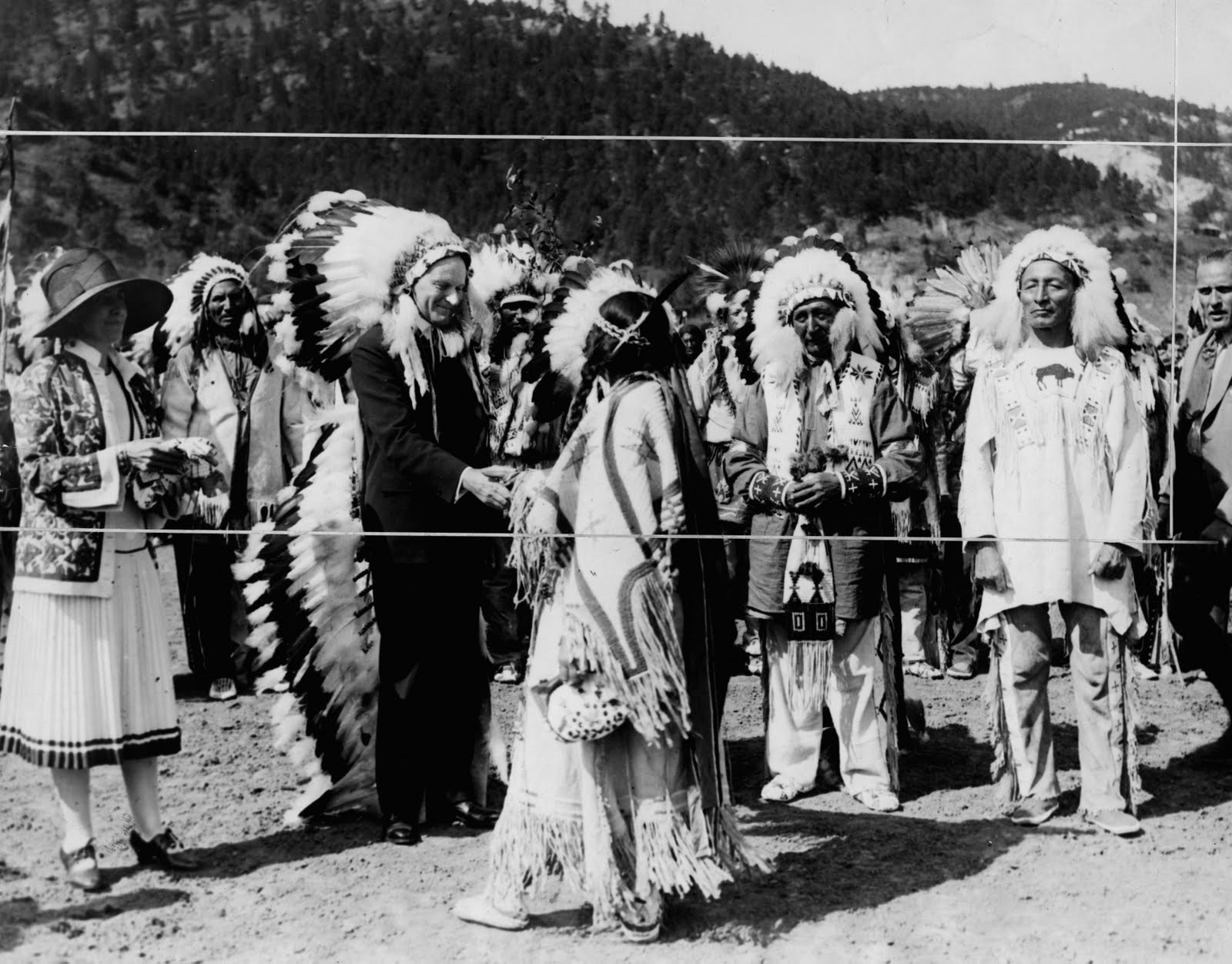
Marked for cropping, this photograph was taken upon President Coolidge's honorary induction into the Sioux, 1927. Dubbed Wamble-To-Ka-Ha (Chief "Leading Eagle"), Coolidge also accepted the ceremonial headdress he is wearing. One of the Sioux chiefs said to Coolidge, "They tell us you are the thirtieth President of this great country, but to us you are our first President."

Marked for newspaper formatting, this photograph was taken upon President Coolidge’s honorary induction into the Sioux, 1927. Dubbed Wamble-To-Ka-Ha (Chief “Leading Eagle”), Coolidge was gifted the ceremonial headdress he is wearing. One of the Sioux chiefs said to Coolidge, “They tell us you are the thirtieth President of this great country, but to us you are our first President.”

Calvin Coolidge understood that the greatest threat to our system of freedom came not through foreign invasion or even a direct political coup, it came in the attack on the conscience and religious belief. Perhaps that is why the current minority engaging in orchestrated intolerance of Phil Robertson’s reasonably held convictions is so harmful to the peace and strength of America’s life. Threatened by a lone man’s views, they would muzzle and ostracize the person rather than meet him or her in the arena of ideas. Tolerant only of perfect conformity to their views, no one dares be so bold as to whisper a contrary notion. Unable to cope with ideas with which they do not agree, the solution is to turn loose the politically correct attack machine to so defame the latest dissenter that any future departures from the modern Left’s plantation of thought conformity are humiliated to silence.

The Founders in Federalist Numbers 48, 51 and 54, addressing the problem of majority versus minority rights strike upon the dangers that occur when a numerical minority obtains enough political power to dominate the numerical majority. This “elective despotism…was not the government we fought for,” Madison would assert in Federalist No. 48. Echoing the Federalist, Calvin Coolidge would warn of this very development in his time. We are now living that threat under Government by a few, maintained through the political correctness that subordinates and removes all competing ideas, not through reasoned exchange but through the very force of government imposed on the individual’s body, mind and soul.
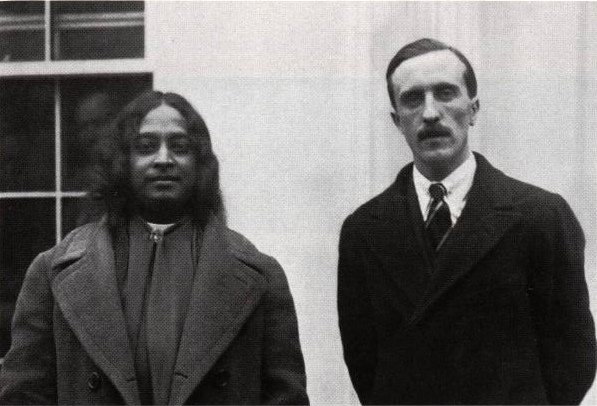
Yogananda just after visiting with President Coolidge, January 24, 1927. If you look closely over the Yogi's right side, the President is taking one last look at his visitor.

Paramhansa Yogananda just after visiting with President Coolidge, January 24, 1927, during his visit to America. If you look closely over the Yogi’s right side, the President is taking one last look at his visitor through the window.

Coolidge said, “No minority is good enough to be trusted with the government of a majority.” It was why, as the authors of the Federalist explain, the broad differences of America’s people were to be encouraged and fostered, not stifled and denied. It would be a deadly thing when any minority assumed enough of the powers of government in a few hands to become a political majority, unrestrained in the arbitrary will of pure democracy that had destroyed the greatest civilizations in history. As constituted, our system of government allowed neither the minority nor the majority to assume control of the other, thereby denying rights not in the interest of whoever held control. In this way, power was to remain checked and liberty preserved. To give the balance to one over the other would end in despotism and, ultimately, an absence of any law or order at all.

President Coolidge dedicating the cornerstone of the Jewish Community Center, Washington, D.C., May 3, 1925.

President Coolidge dedicating the cornerstone of the Jewish Community Center, Washington, D.C., May 3, 1925.

Coolidge continued, “We have never seen, and it is unlikely that we ever shall see, the time when we can safely relax our vigilance and risk our institutions to run themselves under the hand of an active, even though well-intentioned, minority.” Coolidge was simply saying what the Founders understood from all of human history.

It was a truth, as Christian philosopher C. S. Lewis once observed, easily cloaked in the form of good intentions, when he said, “Of all tyrannies, a tyranny sincerely exercised for the good of its victims may be the most oppressive.” For this reason, Patrick Henry would aver, “Guard with jealous attention the public liberty. Suspect everyone who approaches that jewel. Unfortunately, nothing will preserve it but downright force. Whenever you give up that force, you are inevitably ruined.” That force finds expression every time we stop empowering the politically correct few with the authority and legitimacy to dictate social, cultural and political rules for the rest of us outside our traditional and constitutional processes.
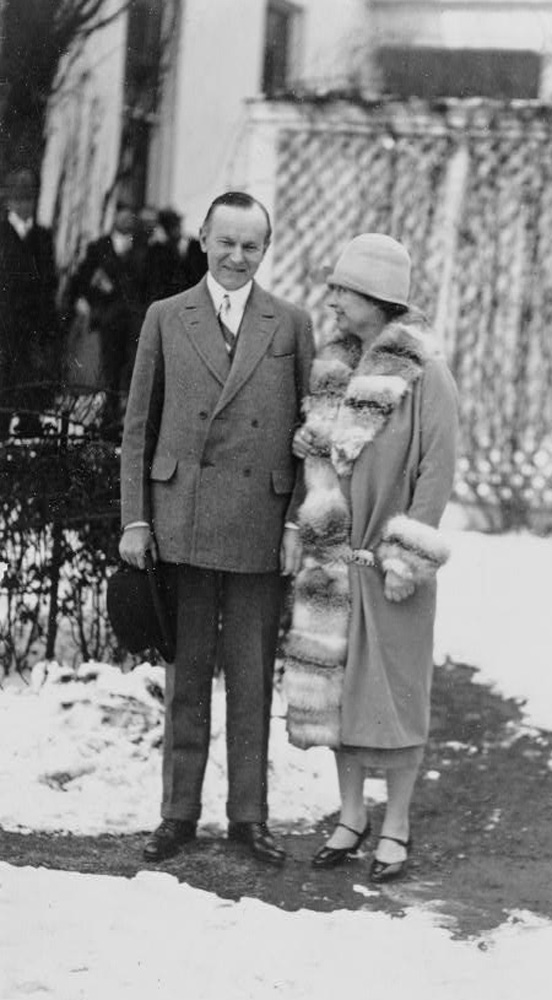
President Coolidge meeting political activist Helen Keller, at the White House, January 11, 1926.

President Coolidge meeting Socialist Party activist Helen Keller, at the White House, January 11, 1926.

The Federal Government has already passed enough laws shackling people to a double standard, we have no moral imperative binding us to a systematic surrender of liberty before an amorphous and extra-legal “court” of political correctness. We can simply refuse to participate in the “game” of what others consider socially permissible at the current moment. The force to counter it, Coolidge would reiterate, is found in the individual, exemplifying the light of informed conscience, before the hostilities of an ignorant and hate-filled world. “In the end,” Coolidge, citing Scripture in his daily column on May 12, 1931, reaffirmed what both nations and individuals require: “to do justice, love mercy and walk humbly” (Micah 6:8). It means living the love of Christ, no less when it is met with prejudice and enmity. It means having the courage to restore moral standards to public life, “putting good government” back into the ballot box and exercising the duties, not merely the privileges, of self-governing citizenship.
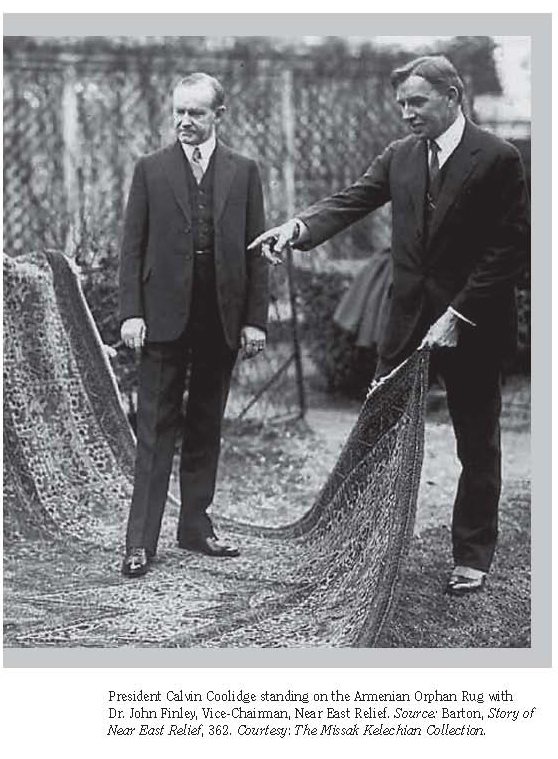
It was President Coolidge who graciously accepted the gift of this rug made by the Armenian orphans rescued by Americans from genocide under the Turks.

It was President Coolidge who graciously accepted the gift of this rug made by the Armenian orphans rescued by Americans from genocide under the Turks.

As Coolidge said in 1926, the Founders’ “intellectual life centered around the meeting-house. They were intent upon religious worship. While there were always among them men of deep learning, and later those who had comparatively large possessions, the mind of the people was not so much engrossed in how much they knew, or how much they had, as in how they were going to live. While scantily provided with other literature, there was a wide acquaintance with the Scriptures. Over a period as great as that which measures the existence of our independence they were subject to this discipline not only in their religious life and educational training, but also in their political thought. They were a people who came under the influence of a great spiritual development and acquired a great moral power.

“No other theory is adequate to explain or comprehend the Declaration of Independence. It is the product of the spiritual insight of the people. We live in an age of science and of abounding accumulation of material things. These did not create our Declaration. Our Declaration created them. The things of the spirit come first. Unless we cling to that, all our material prosperity, overwhelming though it may appear, will turn to a barren sceptre in our grasp. If we are to maintain the great heritage which has been bequeathed to us, we must be like-minded as the fathers who created it. We must not sink into a pagan materialism. We must cultivate the reverence which they had for the things that are holy. We must follow the spiritual and moral leadership which they showed. We must keep replenished, that they may glow with a more compelling flame, the altar fires before which they worshiped.”
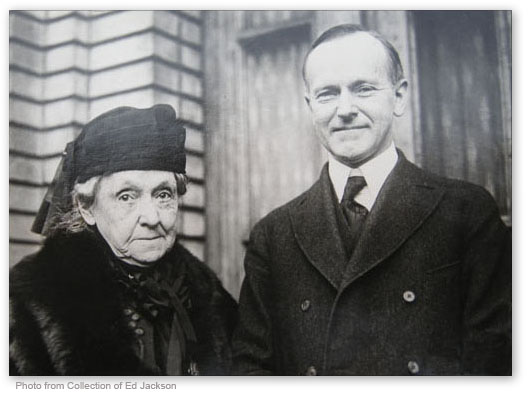
Vice President Coolidge, just after taking the oath of office, is snapped next to Rebecca Felton, the overtly prejudiced Senator from Georgia, November 21, 1922.

Vice President Coolidge, just after taking the oath of office, is snapped next to Rebecca Felton, the overtly prejudiced Democrat Senator from Georgia, November 21, 1922.

A refusal to submit to the unlawful exercise of power is precisely what prompted the Founders to act and commended those actions to men like Coolidge, who understood what motivated them was not hatred, bigotry or selfishness. What compelled the Founders was the bulwark of religious freedom, the rights God gave the conscience of the individual, inspiring the men and women of that time to resist tyrants when they appeared. That same principle, in our hearts and minds now, has but to be exercised if genuine and constructive political corrections are to take place.
On Aviation

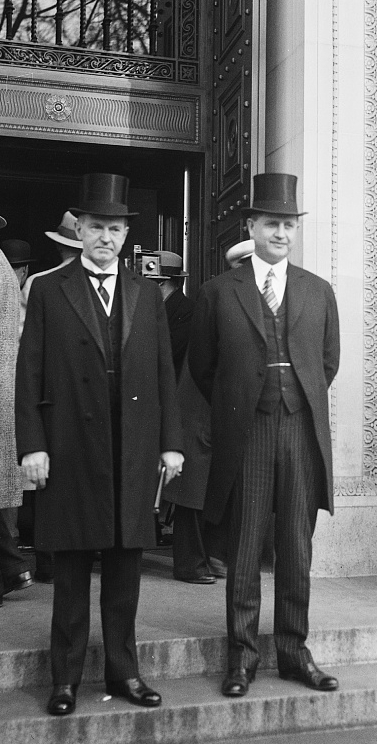
President Coolidge with Secretary Everett Sanders at the International Civil Aeronautics Conference, December 12, 1928.

President Coolidge with Secretary Everett Sanders at the International Civil Aeronautics Conference, December 12, 1928.

Appearing on the opening day of the International Civil Aeronautics Conference on December 12, 1928, President Coolidge marked the first quarter of a century for aviation. So much had been accomplished that seemed absolutely unattainable, except in myth and fable, for all of human existence. That first 12 second flight of a heavier-than-air machine accomplished by Wilbur and Orville Wright on the beaches of Kitty Hawk, North Carolina, opened a world of what was now possible. It would never have happened and certainly never have flourished had not visionary men and women worked to achieve it, perfect it and preserve private ingenuity as the moving force of its future development.

Without President Coolidge’s decisive role in shaping air policy, a strong case could be made that there would have been no private or commercial aviation. It could have remained exclusively under the control of a military establishment. Certainly a civil aeronautics conference would not have occurred. It was through his well-timed deployment of the Morrow Board, his encouragement of the commercial and national defense potential of air technology along independent lines, and his superlative political skill in shepherding and signing the Air Commerce Act in May 1926 brought order out of the chaos in coordinating aviation while keeping the doors of opportunity open to private innovation (Komons, Bonfires to Beacons, p.88). As had been accomplished with the Radio Act of 1927, President Coolidge left a distinct imprint not only on the early development of modern communications but also on the success of air travel.

President Coolidge, speaking to the 441 aviators, inventors, and delegates present (including Orville Wright and Charles Lindbergh), began:

“Members of the Conference:

“This year will mark the first quarter century of the history of human flight. It has been a period of such great importance in scientific development that it seems fitting to celebrate it with appropriate form and ceremony. For that purpose this conference has been called, and to the consideration of the past record and future progress of the science of aeronautics, in behalf of the Government and people of the United States, I bid you welcome.

The first flight at Kitty Hawk by the Wright brothers, December 1903.

The first flight at Kitty Hawk by the Wright brothers, December 1903.

“Twenty-five years ago, at Kitty Hawk, North Carolina, occurred an event of tremendous significance. It was the first extended flight ever made by man in a power-driven heavier-than-air machine. How more appropriately could we celebrate this important anniversary than by gathering together to consider the strides made throughout the world in the science and practice of civil aeronautics since that day, and to discuss ways and means of further developing it for the benefit of mankind?

“Others, whose names will long be remembered, had done much to solve the problem, but it remained for the able, persistent, and modest brothers from Dayton to demonstrate completely the possibility of a machine raising itself by its own power and carrying a man in sustained flight.

“Human flight with wings, which had intrigued the imagination since the beginning of time, became a practical reality on the day that the airplane of Wilbur and Orville Wright rose from the windswept dunes of the Atlantic coast. The elder brother lives with us only in memory, but Orville Wright, who piloted that first plane, is still actively interested in that science. We are glad to have him as one of our delegates to this conference.

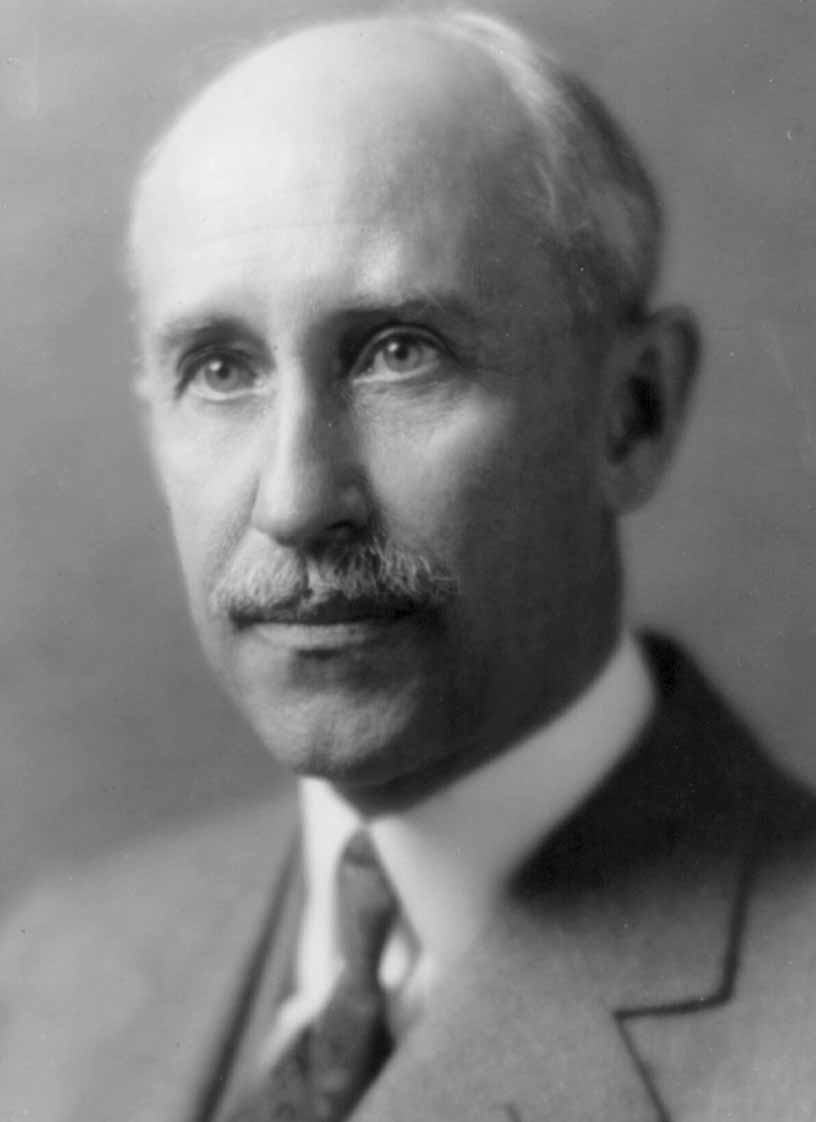
Orville Wright in 1928, at the time of the Conference.

Orville Wright in 1928, at the time of the Conference.

“No achievement of man in the progress of civilization has had a more rapid expansion…Even within our memory utter impossibility was expressed by saying: ‘Might as well try to fly’…

“With genius, indomitable perseverance, and a will to overcome obstacles, the Wrights, mindful of what had gone before, applied themselves to the solution of the problem. They experimented at Kitty Hawk for three seasons; and in the fourth, on December 17, 1903, success crowned their efforts…That first flight lasted only 12 seconds. Three more were made the same day. One of 59 seconds carried the plane a distance of 852 feet. It was wrecked by the wind and tests ended for the time. Further experiments were made in Dayton in 1904 and 1905. In the latter year a Wright plane traveled for 24 miles at the rate of 38 miles an hour. Three years later one was bought by the War Department, our Government being the first to utilize this new device.

“Other countries took up the idea and for a period rather outstripped us in flying…It is to the development of aeronautics as an aid to the peaceful pursuits of transportation, of commerce, and of trade that this conference is to direct its attention…In 1926 this Government officially recognized the importance of flying by establishing the post of Assistant Secretary for Aeronautics in each of the War, the Navy, and the Commerce Departments. Since then we have made remarkable progress. Then the value of the aeronautic industry in the United States was placed at less than $5,000,000. Today it is said to be in excess of $150,000,000. In 1925 the production of aircraft was valued at about $13,000,000; for 1928 the estimate is over $50,000,000…

“Regular flying in the United States, beginning with a short mail line, has increased until this year there are approximately 15,500 miles of airways…The daily mileage is estimated at 52,000 miles. We have three important national lines–New York to Montreal, Seattle to Vancouver, and Miami to Havana. Plans to extend the latter to the Isthmus and South America are under way…The airplane is used for fast day travel, with a transfer to a railroad for the night journey…

“The twentieth century will be known for the development of aeronautics and air transport. The airways of the world now have a greater mileage than the railways did in 1850, the twenty-fifth anniversary of the opening of the first railroad built by Stephenson…

“The country-wide tour of Lindbergh in the United States, following his wonderful and spectacular flight to Paris, did much to make Americans air-minded. A large amount of civil flying is now being done here, and the civilian-owned aircraft number over 6,000…

Charles Lindbergh receives the Harmon Trophy, the annual award for air aces, at the Conference. Beside him, to his left, stands Orville Wright.

Charles Lindbergh receives the Harmon Trophy, the annual award for air aces, at the Conference. Beside him, to his left, stands Orville Wright.

“Air transport means much to the United States, divided as it is in the West by lofty mountain ranges and deserts. In the early days it took six months to go from Missouri to the Pacific coast. An airplane traveled across the continent in less than 24 hours. We are stretching out our arms through the air to Canada and to our other friends and neighbors in the South.

“All nations are looking forward to the day of extensive, regular, and reasonably safe intercontinental and interoceanic transportation by airplane and airship. What the future holds out even the imagination may be inadequate to grasp. We may be sure, however, that the perfection and extension of air transport throughout the world will be of the utmost significance to civilization. While the primary aim of this industry is and will be commercial and economic and the prosperity of the world will be immeasurably advanced by it, indirectly, but no less surely, will the nations be drawn more closely together in bonds of amity and understanding.”

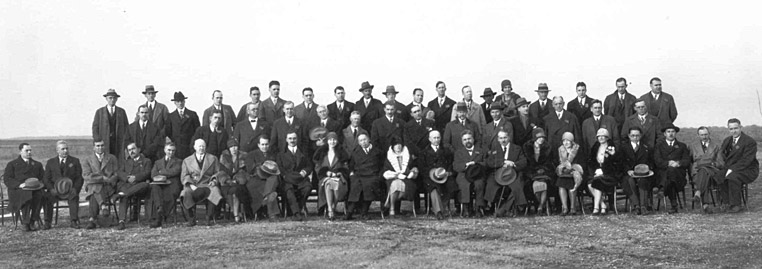
Delegates pose for a group photograph on December 15th, at Langley Memorial Aeronautical Laboratory. Orville Wright is seated in the front row to the right of the woman with the white fur collar.

Delegates pose for a group photograph on December 15th, at Langley Memorial Aeronautical Laboratory. Orville Wright is seated in the front row to the right of the woman with the white fur collar.

The delegates of the Conference made the journey on December 17, 1928, to the site where it all began, Kitty Hawk, North Carolina.

The delegates of the Conference made the journey on December 17, 1928, to the site where it all began, Kitty Hawk, North Carolina.

On “The Farmer and the Nation,” Part 3

The Sherman Hotel in Chicago where President Coolidge delivered his address on the farmer and the nation, December 7, 1925.

The Sherman Hotel in Chicago where President Coolidge delivered his address on the farmer and the nation, December 7, 1925.

The American Farm Bureau Federation, meeting for its seventh convention in December 1925, had begun five years earlier to accomplish three objectives: (1) extending the terms of credit to allow farmers more time to market what they produce; (2) supporting a high protective tariff which guarded American markets from cheap imports; and (3) advancing a cooperative marketing method for individual farmers to manage ordinary surpluses.

After three years of legislative successes, the Federation chose new leadership in 1922, electing Oscar Bradfute, an Ohio rancher, who took the helm with a commitment to the cooperative approach against the price-fixing program advocated by tireless lobbyist George N. Peek and others. As President Bradfute introduced President Coolidge, he reminded the thousands overflowing the ballroom how important a statement on behalf of agriculture was being made. President Coolidge had traveled two thousand miles to reach the opening day of not merely a Midwestern farm meeting, but downtown Chicago, the headquarters of an organization at the center of all agricultural business. The audience, eager to hear what the President had come so far to say, would find themselves divided in two basic camps after his forty minute address. There were those who wanted immediate results through government price-fixing and those who were confident that America’s farmers, just as Coolidge had said, were best able to emerge on their own from depressed prices, debt and overproduction with the patience, independence and rugged determination that had defined the nation’s farms from the beginning.

The Coolidges are standing with Oscar Bradfute, to the President's left, in a picture taken in Chicago before Coolidge's address.

The Coolidges are standing with Oscar Bradfute, to the President’s left, in a picture taken in Chicago before Coolidge’s address.

Government-controlled price-fixing would only harness and undermine the farmer, not improve his circumstances. Changing tariff policy, which already provided immense help to agriculture, would likewise be a step backward not forward. If these would not work, what would, in President Coolidge’s estimation?

First, the President recognized the importance of turning capital loose so that farmers can obtain loans as participants of cooperatives. Cooperatives would cut out the middle men (distributors and marketers) standing between the farmer and the consumer, thereby liberating the transaction of goods with a lowered price and increased profit margin. Of course, distributors and advertisers played a role as well in the market but by freeing up capital and furnishing resources for “sound business advice,” farmers could better help themselves out of agriculture’s preventable difficulties. It was the reason why Coolidge had supported the Norbeck-Burtness bill in 1923 addressing crop and livestock diversification to help farmer’s avoid the cycle of overproduction, price decline and waste. It was also why Coolidge would support the Tincher bill in 1926 to supply $100 million in revolving loans to co-operatives. Connecting the producer with the consumer, supplying capital where it was most needed and efficiently used, did more to aid farmers than any government price-plan could yield.

Second, President Coolidge identified the important part co-operatives played in handling “accidental surpluses.” No real solution should be made into a crutch, to incentivize purposefully wasteful overproduction or subsidize reckless decision-making on the part of farmers. Only reducing production could solve excessive supplies of any given crop. No proposal could replace the initiative or judgment of the individual farmer. Co-operatives, handling roughly one-fifth of total agricultural produce annually, were there not to supplant the sense people were to exercise for themselves. The co-operative was there to help when weather bestowed higher yields than expected. The farmer was not to lean upon the co-operative as his permanent safety net, substituting its storage and resources for his own failure to sow, cultivate and reap wisely.

“To have agriculture worth anything, it must rest on an independent business basis. It can not at the same time be part private business and part Government business. I believe the Government ought to give it every assistance, but it ought to leave it as the support, the benefit, and the business of the people…Government ought not to undertake to control or direct, it should supplement and assist all efforts in this direction.” As Coolidge masterfully demonstrated throughout his Administration, the greatest help government can render starts by removing itself — the biggest obstruction to initiative and independence — from participation in the market. Coolidge was not the laissez-faire “purist” that New Deal revisionists later depicted him to be. He knew no market was absolutely free and that limited regulation was a Constitutional mechanism. But, he also understand that government power was wisely and very properly confined by the Founders so that problems found solutions from the people themselves, looking to one another, instead of Washington, for answers. Explaining the legislation he endorsed for agriculture, President Coolidge sided not with the “artificial support” of prices but with whatever rested firmly in “sound economic principles.” “The fundamental soundness” of the bill for co-operative marketing “rests on the principle that it is helping the farmer to help himself.”

Charles L. McNary, of Oregon, and Gilbert N. Haugen, of Iowa, both Republicans, co-authored the bills bearing their names which advocated government mandating an "equalization fee," buying crops overproduced by American farmers to be resold at artificial prices on foreign markets.

Charles L. McNary, of Oregon, and Gilbert N. Haugen, of Iowa, both Republicans, co-authored the bills bearing their names which advocated government controls on agriculture, mandating an “equalization fee,” and buying crops overproduced by American farmers to be resold at artificial prices on foreign markets.

Maintaining this conviction did not come from a lack of sympathy for the difficulties the farmer faced. The exact opposite was true, especially for Coolidge. The responsibilities of leadership demanded something more than simply indulging the short-sighted and mistaken wishes of the electorate, however politically powerful the “Farm Bloc” proved to be. It was not leadership to follow the misled and uninformed. Agriculture needed to “consider the encouraging features of their situation” not deny them, perpetuating a perception of crisis. “Human nature is on their side,” the President reminded them. “We are all consumers of food.” As Coolidge recapped the rise and fall of prices since 1820, historical perspective made clear that farming continued to advance, even the setback of 1921 was temporary. Agriculture was going to see a return. It was not, as George N. Peek opined, an “us versus them” mentality where industry was concerned, like when he asked “[S]hall agriculture exist merely to feed the mouth of industry?” President Coolidge could not disagree more. The growth of industry meant the progress of agriculture because we all have to eat.

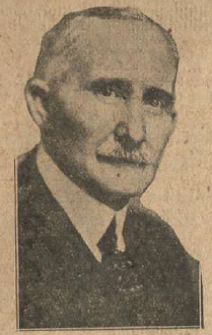
George N. Peek, President of Moline Plow Company and tireless lobbyist on behalf of government joining with corporations to fix agricultural prices. After Coolidge thwarted his efforts to make McNary-Haugen the law, Peek became a Democrat and eventually, a supporter of FDR's Agricultural Adjustment Act.

George N. Peek, President of Moline Plow Company and tireless lobbyist on behalf of government joining with corporations to fix agricultural prices. After Coolidge thwarted his efforts to make McNary-Haugen the law, Peek became a Democrat and, eventually, a supporter of FDR’s Agricultural Adjustment Act.

Our economy had not been built overnight. It was the result of incremental effort by every part of the Nation’s economy. As the other areas of economic endeavor prospered, what the farm produced would only increase exponentially to meet demand. At the head of it all would be the farms and ranches across America who would lead because everyone requires what they produce. After all, as the President reiterated, the farm is not only the source of food nor is it merely in the pursuit of material aims. “The ultimate result is…the making of people. Industry, thrift, and self-control are not sought because they create wealth, but because they create character. These are the prime product of the farm. We who have seen it, and lived it, we know.”

In that high and noble purpose, the farm reconnects and renews the Nation with both a “true relation to nature” and an individual’s importance to the Divine Plan at work in this world. The blessings afforded by the farm have included “the life of freedom and independence, of religious convictions and abiding character. In its past it has made and saved America and helped rescue the world.” With these astounding accomplishments, it was no exaggeration for Coolidge to see the time ahead for America as still brighter yet. In upholding these principles cultivated through life on the farm, the future “holds the supreme promise of human progress.”

As the President departed so hastily he forgot to grab his overcoat, the chilly reception to his principles would continue in a protracted battle long after he left the White House. Two days later, Southern delegates led by Alabama would unseat President Bradfute and elect Sam H. Thompson, an Illinois farmer who had taken part in much of the legislative fight to pass McNary-Haugen the previous year and wanted to expedite its passage into law now. Bradfute had upheld his promise to encourage co-operative marketing and resist government manipulation of prices, “equalization fees” and all the accessories for Federal control of agriculture. The President’s determined leadership, even when the pressure to surrender to the McNary-Haugen bill rose to deafening levels, Coolidge remained on course because he knew he was right and that the people would come to understand that. His second veto would be the last word on the matter until Hoover conceded with the creation of the Farm Board, superficial price-boosting and a revived “equalization fee.”

Newly elected President of the American Farm Bureau Federation, Sam H. Thompson, who would move to push McNary-Haugen all the way to President Coolidge's desk in 1927.

Newly elected President of the American Farm Bureau Federation, Sam H. Thompson, who would move to push McNary-Haugen all the way to President Coolidge’s desk in 1927.

For now, though, Coolidge fearlessly went into the arena, articulated the reasons why this popular trend toward government intervention in agriculture would fail, leaving the farmer worse under its provisions. Departing the room with his confident and unapologetic defense of rugged individualism and personal initiative still ringing in their ears, President Coolidge, a farmer, descended from a long line of farmers, walked from the Sherman Hotel a living confirmation that what he said was true: as long as agriculture maintains its independence from government’s attempts to “help.”

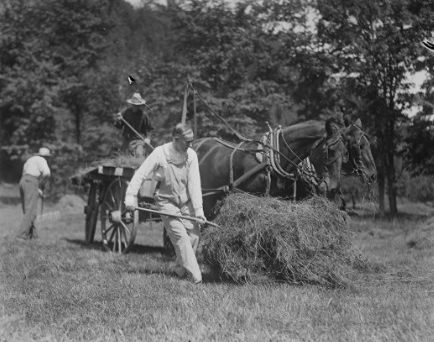
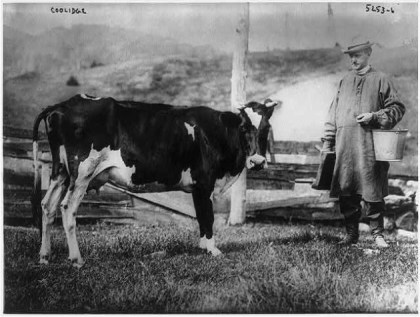
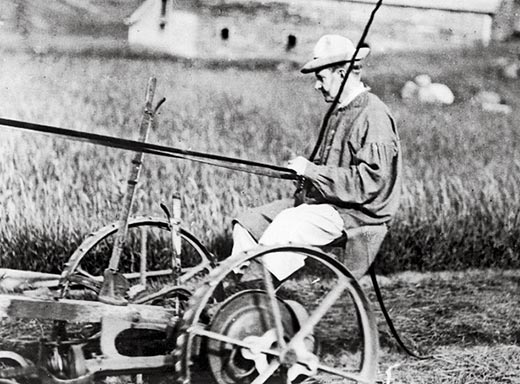
CC pitching haycalvin-coolidge-cow-e1359473649623DA-Vermont-Calvin-Coolidge-1920-family-farm-Vermont-9

Coolidge, Calvin. “The Farmer and the Nation,” December 7, 1925, cited in Foundations of the Republic. Honolulu: University Press of the Pacific, 2004.

Fite, Gilbert C. George N. Peek and the Fight for Farm Parity: A vivid story of the farmers’ campaign for agricultural equality and of the man who led it. Norman: University of Oklahoma Press, 1954.

Hansen, John Mark. Gaining Access: Congress and the Farm Lobby, 1919-1981. Chicago: University of Chicago, 1991.

Michigan Farm Bureau News, “Elect Sam Thompson President of American Farm Bureau,” http://archive.lib.msu.edu/DMC/MFN/1925/December%2018%201925.pdf.