On Unemployment Benefits

Back when unemployment insurance came with built-in incentives to get off the dole, compensation not to work was something to be overcome rather than expanded and extended indefinitely. Now in its fifth year of “temporary emergency benefits,” the administration is asking us yet again to equate economic growth with more money to those who are not working. Some who know better, like Senator Durbin and President Obama, expect us to believe that job creation does not lead to growth, prosperity and plenty for ourselves, our children and even the poorest among us. Instead, they want us to accept the notion that the engine of economic recovery resides in government redistributing money to whom it wishes. Equating unemployment benefits with economic growth is not only patently absurd but willfully ignorant, understanding neither how prosperity happens nor who works to earn it. It is not government who creates wealth but industrious people who make a profit through the work they do. The more profitable the enterprise, the greater the opportunity to employ more people and improve everyone’s lot. Calvin Coolidge identified the source of real benefits to all when he said, “It is the number at work, not the number out of work, that measures our business prosperity.”

To tell America that recovery occurs by enhancing the number of those not working is dishonest. It is a failure to inform people of the fundamental truths of economics. By obfuscation and distraction the Democrat leadership continues hurting the very people it claims to advocate. The truth could be easily understood but to explain it honestly would liberate those who rely on others, especially Washington, rather than themselves for better lives. “The problem of the wage earner,” as Coolidge explained it, “would be simplified by remembering he works not for money but for goods and services. Wages come out of production. The employer cannot get them permanently out of any other source. Wages are raised or lowered with production.” President Obama hopes we fail to see why taking from the wages of those who work to provide “benefits” to those who do not is never going to create jobs or increase opportunity.

Coolidge knew that a sound system of meeting unemployment is not so easily solved by the Democrat method of throwing money at the problem. “If unemployment insurance were like life and accident insurance the problem would be simple,” he observed. “Each would take what he wanted and pay for it. But it is generally proposed that the employer and the public treasury should pay part of the cost as in workmen’s compensation. If when unemployed he is to receive something he did not pay for, no one can say how that would affect the will of the wage earner to hold his place by doing his best. Evidently, the morale would be lowered.” Coolidge identified local institutions as the ones to assist the individual return to what he, on another occasion, called “normal,” the freedom of self-support. He rejected the falsehood that without National Government “help,” no help would be given to those in true need. “The duty,” at the local level, “to relieve unemployment is plain, but not even the unemployed have a right to what they do not earn. Charity is self-existent. Employer and employee are on a business, not a charitable relationship.” Remaining such enables greater opportunity for everyone, especially in depression.

Coolidge understood that what was ultimately being considered was not actually helping those who needed, it was about “government ownership,” exercising the power to make the decisions and direct the material means of life, death, prosperity and poverty as political considerations dictated. In contrast, the free enterprise makes opportunity for everyone with the industry and perseverance to improve one’s lot, bettering the lives of those around him or her. It is the means to feeding the hungry, clothing the naked, and raising life’s standards. “Healthy and normal employment consists of serving another for his personal satisfaction or profit. As the government is not personal, its proper business would be for those serving for its profit…If it is assumed that payment of wages will go on without work, that is not employment, but relief. Then no one should work. The government has never shown much aptitude for real business…The most free, progressive and satisfactory method ever devised for the equitable distribution of property is to permit the people to care for themselves by conducting their own business. They have more wisdom than any government.”

The eternal truth of that statement remains in force even now. The genuinely unprecedented success of the Coolidge Era was not something for which he ever took credit. He did not boast of contributing to the latest stellar job creation numbers because individual Americans accomplished them. Free individuals build prosperity. He simply “minded his own business,” removing the hindrances to the full and just reward for one’s labor neither resorting to the public treasury — the income of our neighbors — nor funding redistribution schemes rooted, then as now, in vague and destructive conceptions of equality.
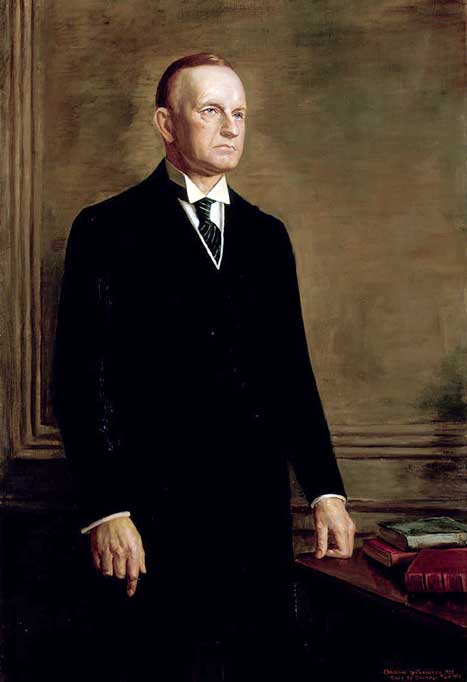
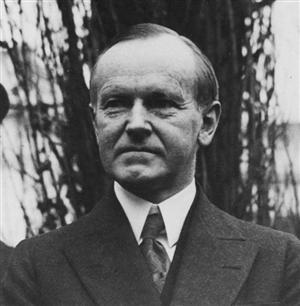
Joseph E. Burgess copy of Ercole Cartotto original

On Calvin Coolidge

CC photo

Though no eulogies were uttered for Calvin Coolidge officially, a massive outpouring of voluntary tributes spread across the country in the months following his death, funeral and burial. Just as Americans had spontaneously raised him to a Vice Presidential candidacy, so now they held services, wrote editorials and considered anew the substance of Coolidge’s leadership and legacy. Three such tributes are especially worth noting not only because these three were on the opposite side of Mr. Coolidge politically, but, having studied the culture for so long, were not speaking as novices but veterans of great influence around the nation.

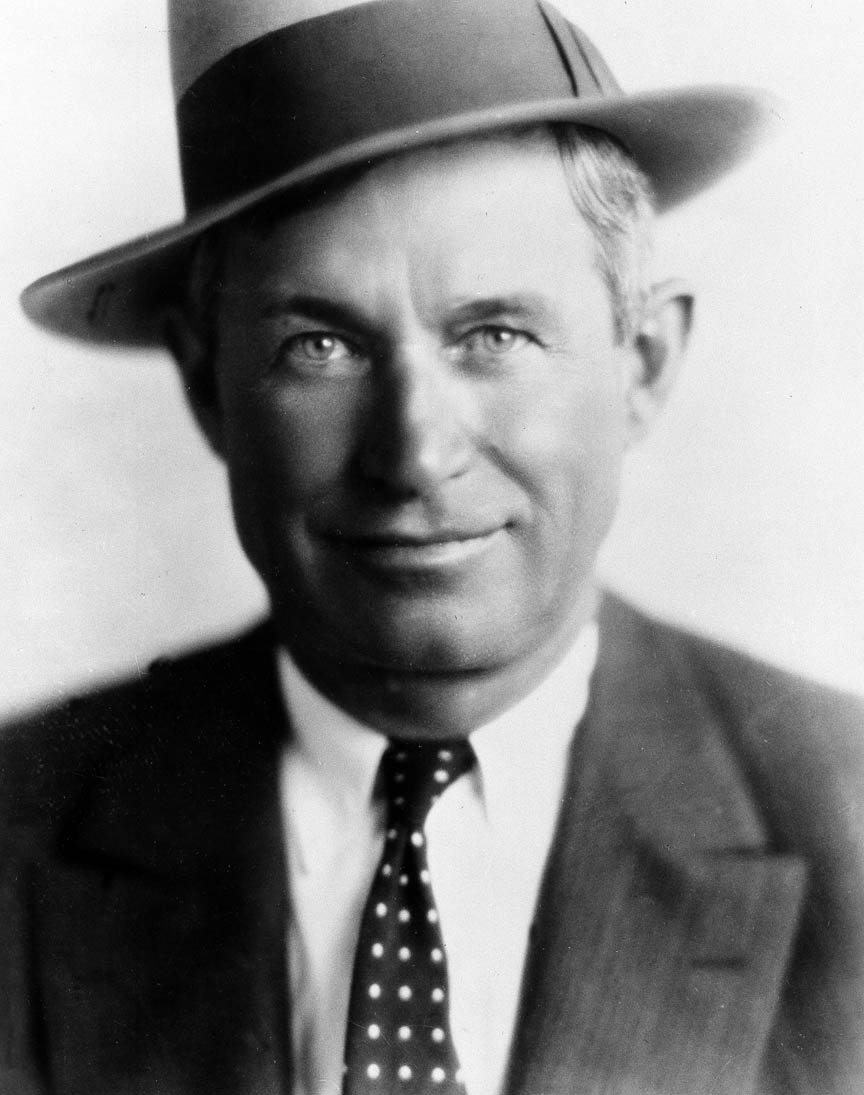
Comedian Will Rogers

Comedian Will Rogers

The first was comedian and columnist Will Rogers, who wrote on January 5,

“Mr. Coolidge, you didn’t have to die for me to throw flowers on your grave. I have told a million jokes about you but every one was based on some of your splendid qualities. You had a hold on the American people regardless of politics. They knew you were honest, economical and had a native common sense. History generally records a place for a man that is ahead of his time. But we that lived with you will always remember you because you was ‘with’ your times. By golly, you little red-headed New Englander, I liked you. You put horse sense into statesmanship and Mrs. Coolidge’s admiration for you is an American trait” (The Autobiography of Will Rogers, p.307).

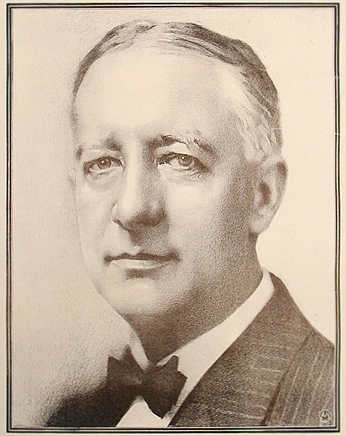
1928 Presidential candidate and Governor of New York, Al Smith

1928 Presidential candidate and Governor of New York, Al Smith

The second had been a presidential candidate, in fact, Al Smith had been nominated in 1928 to run against Coolidge’s successor, President Hoover. The “Happy Warrior,” Al Smith, had served with Coolidge on more than occasion in their retirement from public service. Mr. Smith offered one of the fairest assessments of Coolidge, all the more commendable given the fact that he was a loyal and life-long Democrat. He shatters the mistaken perception of Coolidge with something far more than another cliched attempt to speak kindly of the dead. Smith was offering a sincere and honest judgment,

“I had a great liking and respect for him. Beneath a chilly, reserved, and dignified exterior, he was keen, kindly and entirely free from conceit, pompousness, and political hokum. We are often told politics in a republic produced only demagogues. Calvin Coolidge was a most successful and popular politician, but he had nothing of the demagogue in him.”

Coolidge rightly belonged “in a class of presidents who were distinguished for character more than for heroic achievements. His great task was to restore the dignity and prestige of the presidency when it had reached the lowest ebb in our history, and to afford in a time of extravagance and waste, a shining public example of the simple and honest virtues which came down to him from his New England ancestors. These are no small achievements, and history will not forget them.

“Calvin Coolidge was a salty, original character, an unmistakable home-grown, native, American product, and his was one of those typically American careers, which begin on the sidewalks, or on the farm, and prove to the youth of the nation that this is still the land of unbounded opportunity” (cited by Robert Sobel in Coolidge: An American Enigma, pp.418-9).

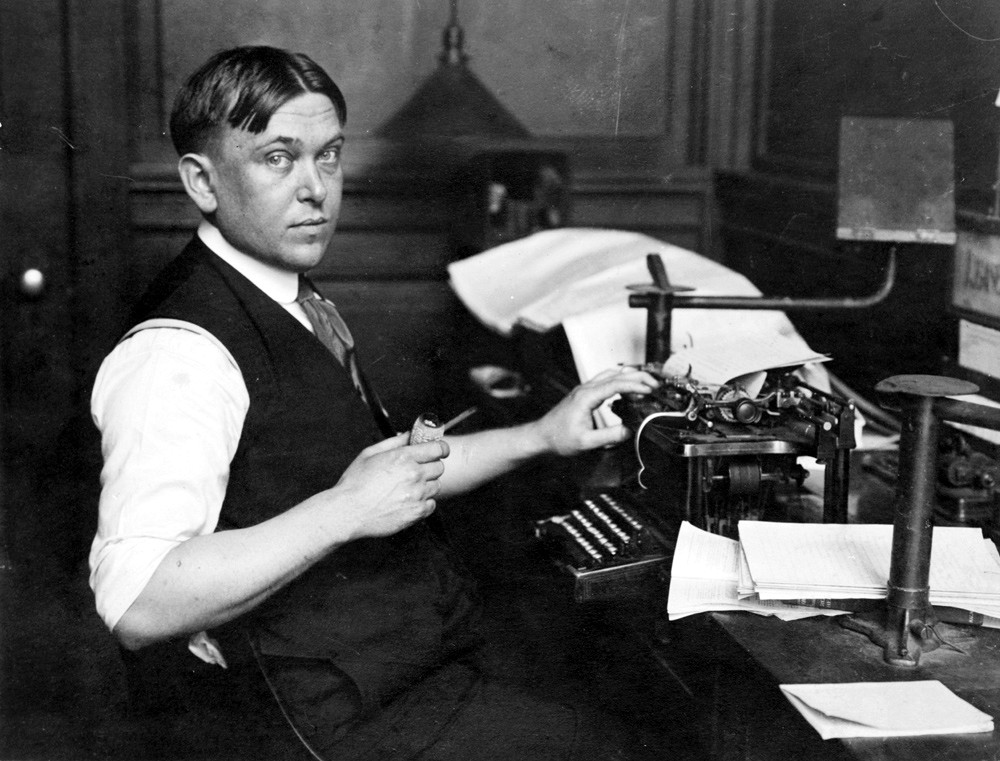
Journalist and critic Henry L. Mencken, the "Sage of Baltimore"

Journalist and critic Henry L. Mencken, the “Sage of Baltimore”

Finally, the third man was a critic and journalist, one who had cynically followed politics for years and who was not one to give praise to anybody, especially to the dead. Yet, of Coolidge’s legacy H. L. Mencken finally wrote, all the more timely given that F. D. R. was already a month into his New Deal program of legislation,

“We suffer most when the White House busts with ideas. With a World Saver preceding him (I count out Harding as a mere hallucination) and a Wonder Boy following him, he begins to seem, in retrospect, an extremely comfortable and even praiseworthy citizen. His failings are forgotten; the country remembers only the grateful fact that he let it alone. Well, there are worse epitaphs for a statesman. If the day ever comes when Jefferson’s warnings are heeded are last, and we reduce government to its simplest terms, it may very well happen that Cal’s bones now resting inconspicuously in the Vermont granite will come to be revered as those of a man who really did the nation some service” (H. L. Mencken, A Carnival of Buncombe, p.136).

Indeed, it may and not a moment too soon.

Book Discussion on “Coolidge: An American Enigma,” August 11, 1998

http://c-spanvideo.org/program/Enig

A superb presentation by the late, but great, Mr. Robert Sobel on Calvin Coolidge. While not a recent work, it is a fresh contribution to respect and appreciate the thirtieth president even now. It was my first read on Mr. Coolidge. Scholar Sobel presents him as he was, without apology, without pretense, without facade.

Though Mr. Coolidge may finally be gaining a semblance of regard for who he was and the principles he embodied, this interview, not that long ago in the grand scheme of events, reminds us that an unwarranted prejudice and close-minded suspicion has prevailed so long about Coolidge and his kind of leadership. The host’s almost awkward incredulity illustrates this engrained, yet mistaken, impression of who Coolidge was and is supposed to remain.

Sobel’s work demands that we open our minds to the profound value of Coolidge’s legacy, rejecting the utterly false perception of his weakness and ineffectiveness assumed as fact by an intellectually narrow and politically biased academia. Sobel expects us to reckon with this intricate, and even potent leader, instead of keeping our eyes closed for fear of seeing something that contradicts what we are now supposed to believe as irrefutable, politically, culturally and economically. He has much to teach us about leadership in general and the Presidency in particular. Don’t merely read the book and shelve it, take the time to study it in order to better grasp what makes Coolidge important now.

Sobel book