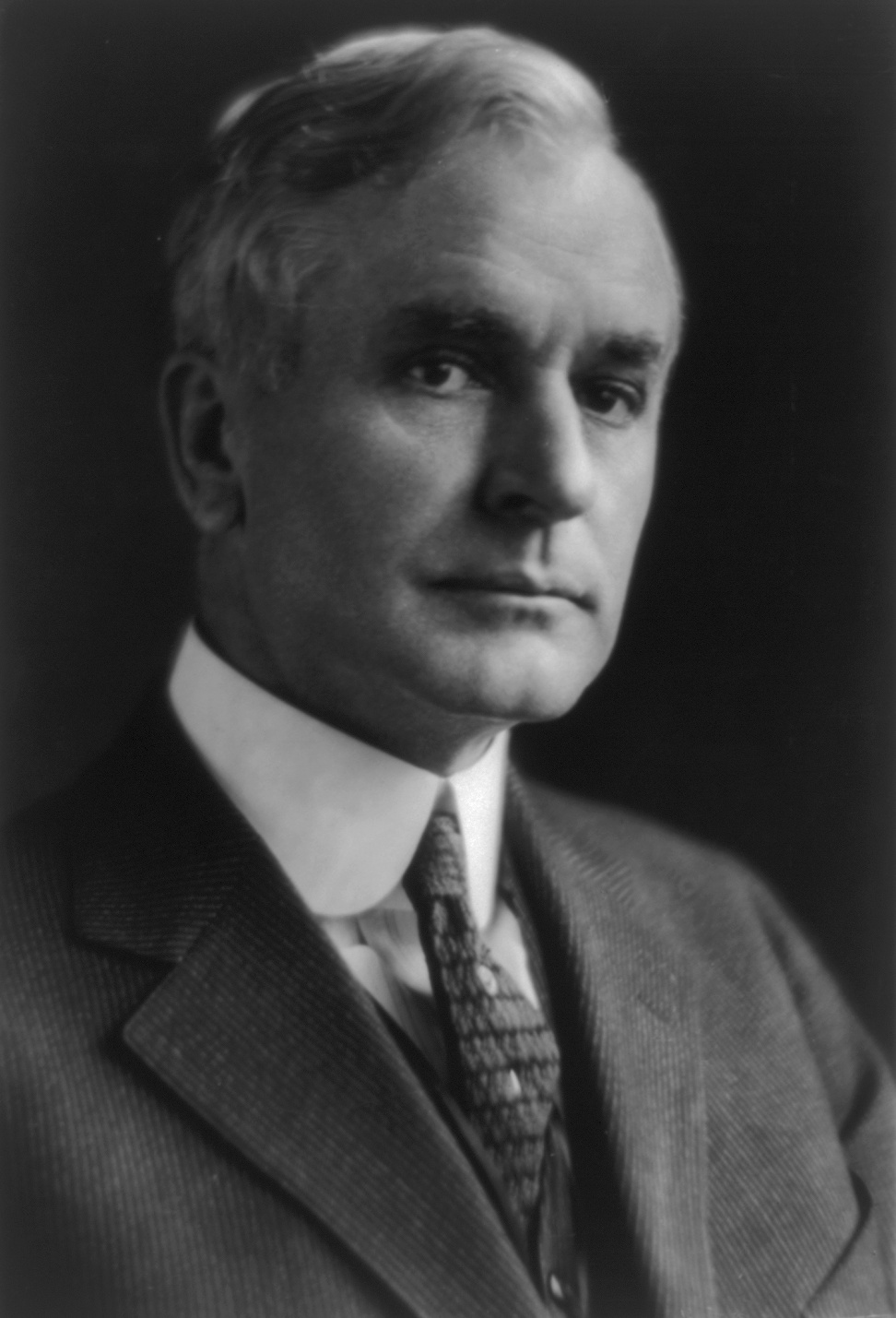
On those Roaring Twenties

Image

Historian Paul Johnson


It is fitting that those who helped drive the Reagan Revolution forward humbly credit their inspiration to the shy, quiet man from Vermont, Calvin Coolidge. In a very real way he bequeathed the essential recipe for the successes of the 1980s. While the ingredients were not precisely followed in every respect, especially concerning the payment of debt, the principles contained such power that even Congressional spending could not slow it down.

President Reagan’s combination of political saavy, biting wit, unassuming competence and ability to cut through the complex and see the simple essence of an issue derived not merely from his life’s experiences, they found inspiration from his study of Coolidge. Reagan, after all, like several of the men and women who comprised his team of “revolutionaries,” first came to understand the world during the Coolidge Era and in the years shortly thereafter. The lessons “Silent Cal” taught in both word and action left abiding impressions on future Secretaries of the Treasury (Donald T. Regan) and Defense (Caspar Weinberger) and future Attorney General Edwin Meese III, along with many others.

Two scholars, in particular, were returning to Coolidge’s record in order to reassess his very real achievements. In 1982, Thomas B. Silver, in Coolidge and the Historians, would lead this effort and unearth most of the shoddy and partisan reporting against the thirtieth president and the 1920s. In 1984, Paul Johnson, in the sixth chapter of his Modern Times: The World from the Twenties to the Nineties, would roll back the shroud thrown over not only the genuine triumphs of the Roaring Twenties but also the legacy of Mr. Coolidge. As Mr. Johnson would reflect on this reserved and disciplined leader, he would not only find him to be “the most internally consistent and single-minded of modern American presidents” but he, like all of history’s great men, was not an intellectual. To Mr. Johnson, that is a very good thing because “[a]n intellectual is somebody who thinks ideas are more important than people.” Wilson and Hoover approached the world this way while Coolidge, and Reagan, did not. To Coolidge and Reagan, people were the preeminent focus of their policies. The “smartest ones in the room” miss that all-too-obvious truth. People were genuinely benefited by Coolidge’s leadership.

Johnson could accurately survey the Twenties not as an aberration of gross materialism or empty gains but as an unprecedented prosperity that was both “very widespread and very solid” (p.223). “It was,” Johnson corrects, a prosperity “more widely distributed than had been possible in any community of this size before, and it involved the acquisition, by tens of millions, of the elements of economic security which had hitherto been denied them throughout the whole of history. The growth was spectacular.”

As a direct result of Coolidge prosperity, national income jumped from $59.4 to $87.2 billion in eight years, with real per capita income climbing from $522 to $716. Millions of workers purchased insurance for the first time, a phenomenon of a healthy economy Obama is deliberately ignoring. Savings quadrupled during the decade. Ownership in fifty stocks or more reveals the vast majority were not “the rich,” but housekeepers, clerks, factory workers, merchants, electricians, mechanics and foremen. Union membership plummeted from just over 4 million at the outset of the 1920s to 2.5 million by 1932. As small and large businesses succeeded, people were able to provide holidays with pay, insurance coverage and pensions as well as other benefits, giving substance to Coolidge’s dictum that “large profits mean large payrolls” thereby making “collective action superfluous,” as Johnson observes (p.225). Home ownership skyrocketed to 11 million families by 1924.

Perhaps the most obvious index of prosperity could be seen in automobile ownership. What began as a novelty for just over 1 million Americans in 1914 (with less than 570,000 produced annually) exploded into 26 million owners with over 5.6 million autos produced annually by 1929. Air travel was fast becoming the normal mode for “regular” folks and classes were rapidly dissolving from upward mobility. In 1920 a meager $10 million was spent on radios. By 1929 that figure had surpassed $411 million, which was itself small compared to the $2.4 billion spent on electronic devices as a whole in the Twenties.

These years were not, as some would claim later, removed from an appreciation of the past. The expansion of education is “[p]erhaps the most important single development of the age” (Johnson 225). Spending on education increased four times what it was in 1910, from $426 million to $2.3 billion. But unlike today’s habit of throwing money at the problem, it brought results. Illiteracy actually went down over fifty-percent. A “persistent devotion to the classics,” with David Copperfield at the head of the list, defined the decade. Culture was reaching the homes of those who had once been the least connected Americans through reading clubs, youth orchestras and “historical conservation” movements that would restore sites like Colonial Williamsburg.

“The truth is the Twenties was the most fortunate decade in American history, even more fortunate than the equally prosperous 1950s decade, because in the Twenties the national cohesion brought about by relative affluence, the sudden cultural density and the expressive originality of ‘Americanism’ were new and exciting” (p.226).

The problem, as Mr. Johnson concludes, with the expansion of the Twenties was not that it was “philistine or socially immoral. The trouble was that it was transient. Had it endured, carrying with it in its train the less robust but still (at that time) striving economies of Europe, a global political transformation must have followed which would have rolled back the new forces of totalitarian compulsion, with their ruinous belief in social engineering, and gradually replaced them with a relationship between government and enterprise closer to that which Coolidge outlined…” More of the same policies would have prevented much of what followed in the 1930s and beyond. “[M]odern times would have” indeed “been vastly different and immeasurably happier.” The purpose served by Coolidge “minding his own business,” as he put March 1, 1929, was perhaps more a forecast of his successors than an introspection. If only Hoover had been listening more carefully. The downturn in 1929 would certainly have more closely resembled the depression of 1921 and, with the Harding-Coolidge recipe of “masterful inactivity,” have spared millions of lives the terrible suffering and avoidable loss brought on by Hoover’s spending and Roosevelt’s “New Deal.”

On America’s Policy Toward Nations

Image

“Ultimately nations, like individuals, cannot depend upon each other, but must depend upon themselves. Each one must work out its own salvation. We have every desire to help…While we desire always to cooperate and to help, we are equally determined to be independent and free. Right and truth and justice and humanitarian efforts will have the moral support of this country all over the world. But we do not wish to become involved in the political controversies of others” — President Calvin Coolidge, in his message at the opening of the second session of the 68th Congress, December 3, 1924.

On the Consequences of Elections

Image

Calvin Coolidge, writing his column after the midterm elections of 1930 were known on November 4 of that year, observed, “Some people will be disappointed and some will be elated. But there will be enough representatives of different parties holding office during the next two years so that no very violent change in policy will be made…We make our own government. If we fail it is our own fault. Under our system a nation of good citizens cannot have a bad government.” The keyword for Mr. Coolidge was good. If citizens are doing what they are supposed to do — exercising their responsibilities seriously — no bad government would stand a chance of being elected. As he would say at other times, “government is what we make it.” It was a more profound way of saying elections have consequences. While Coolidge was largely correct that “no very violent change” would take place in the next two years, 1932 would transform everything. Burton Folsom, in New Deal or Raw Deal?, and Amity Shlaes, in The Forgotten Man, document the upheaval in domestic policy with the election and inauguration of Franklin D. Roosevelt. Foreign policy was no less submitted to drastic overhaul. Three instances illustrate this point.

First, the “Good Neighbor Policy” of “religious adherence” (as Cordell Hull, Roosevelt’s Secretary of State, would describe it in his Memoirs, p. 310) to nonintervention enabled ambitious and unscrupulous men to overthrow their native institutions and establish dictatorships, like the Somozas in Nicaragua. Preceding administrations, including the policy of President Coolidge, did not take American involvement off the table. Coolidge recognized that America possessed great moral responsibilities to others, especially in our hemisphere through the Monroe Doctrine. It was not justification for involvement in every dispute to come down the pike, as in Wilson’s call to make the world safe for democracy, but if her citizens were not defended and law and order not respected, especially in her backyard, the heritage of government by laws not men would be conceded away. Might would make right after all. The great accomplishment of 1776, shared by the younger republics of Latin America, was too valuable an inheritance to withhold help entirely.

When the Nicaraguan government petitioned for assistance in November 1926, Coolidge would inform Congress that Marines (2nd Battalion, 5th Regiment) were redeployed, landing January 10, 1927. Over the next few months, with reinforcements, the force of 2,000 Marines fought their way through to protect towns and rail lines from further attacks. In March Coolidge dispatched Henry L. Stimson to resolve the situation. In his first two weeks, he devoted his time to learning from all parties what was happening. In a month, by granting the request from both sides of the conflict for America to intervene, peace was renewed. Both sides agreed to allow the current President to finish his term according to law. Their laws also required an election occur in 1928. Stimson and Frank R. McCoy were commissioned to supervise the election, insuring a secret ballot and fair proceedings. By reaffirming law and administering medical help to those harmed in the conflict, Americans left the country on peaceful terms with only Sandino refusing to lay down arms.

Image

Henry L. Stimson, Coolidge’s representative to Nicaragua, 1927.

The last Marines were withdrawn in January 1933 after the election of Sacasa. It was in March of that year that conditions began to descend again. With the commitment not to intervene determined by the “Good Neighbor” Policy, there was little U.S. Minister Arthur Lane could do as Somoza would kill Sandino the following year and solidify his power by 1936.

Image

Cordell Hull, Secretary of State to Franklin D. Roosevelt (1933-1944)

Second, the commitment to nonintervention accepted the false premise of Argentina. When the diplomatic delegations of twenty Latin American countries met in Havana with the United States delegation led by Charles Evans Hughes in 1928, their instructions explicitly included the refusal of nonintervention. That point was not negotiable. The tension in the air was felt by all. President Coolidge would come down to speak, commending respect for law and pursuit of peaceful means of resolution between sister nations.

The next day, however, with the President gone, the simmering conflict boiled over in conference. Argentina was displeased that their beef, failing sanitary standards for importation, was being turned away by the United States. Citing the premise that America was improperly involved in Nicaragua, Mexico and Chile, however, combined with the past year of “anti-imperialist” sentiment, nonintervention came to the floor. The Argentine delegation led the way with the resolution, “No state has the right to intervene in the internal affairs of another.” A flurry of chaotic cheers, cries and rhetoric followed. The Americans, trying to avoid confrontation, sat increasingly apprehensive until Chairman Hughes stood to speak. The room went silent. Hughes began by reviewing the discussion of nonintervention in committee, the agreement that it would be discussed at the next Conference five years in the future, then laid out directly the reasons for each “intervention” in Latin America. While these were discussions best reserved between the U.S. and each nation concerned, Hughes methodically outlined the requests for intervention, the help provided by Americans and the threats to life and property when respect for law is discarded.

Image

Charles Evans Hughes, Secretary of State under both Harding and Coolidge (1921-1925), who came out of private life to lead the American delegation at the Pan-American Conference in Havana, Cuba, 1928.

As he finished, he appealed,

“I am too proud of my country to stand before you as in any way suggesting a defense of aggression or of assault upon the sovereignty or independence of any State. I stand before you to tell you we unite with you in the aspiration for complete sovereignty and the realization of complete independence.

“I stand here with you ready to cooperate in every way in establishing the ideals of justice by institutions in every land which will promote fairness of dealing between man and man and nation and nation.

“I cannot sacrifice the rights of my country but I will join with you in declaring the law. I will try to help you in coming to a just conclusion as to the law, but it must be the law of justice infused with the spirit which has given us from the days of [Hugo] Grotius this wonderful development of the law of nations, by which we find ourselves bound.”

The room sounded with applause from every delegation. Support for the resolution evaporated and the Conference closed with a better understanding between nations. By removing intervention entirely from United States’ relations in Latin America, the “Good Neighbor” Policy (adopted from 1933 onward) accepted the short-sighted premise that had been refuted by Hughes so powerfully five years before. It demonstrated that elections can change the world and not necessarily for the better, when it hamstrings the protection of lives, possessions and law.

Third, the commitment to withhold recognition of the Soviet Union was abandoned without meeting America’s longstanding criteria. Since the Revolution of 1917, the United States (through Presidents Wilson, Harding, Coolidge and Hoover) had withheld official recognition from the new communist regime. As long as Moscow funded, trained and encouraged activities that subverted our institutions, our laws and our government, the Coolidge administration would continue to refuse recognition. The revolutionaries, in confiscating properties owned by Americans living in Russia as well as failing to repay debts owed to the United States, the Soviet Union would not be received. Such were the requirements the United States required for sixteen years, until 1933, when the simple promise to stop interfering, either overtly or covertly, in the “internal affairs” of the United States, its citizens and its possessions, was accepted by the Roosevelt administration. While, as Hughes noted in 1944, “All the aims of Stalin’s diplomacy” were “not yet fully known,” the Venona Transcripts and seventy plus years of subterfuge and violence reveal what the regime was enabled to accomplish thanks to this official recognition of “Uncle Joe” Stalin’s regime.

Image

Prime Minister Winston Churchill, President Franklin D. Roosevelt, and “Uncle Joe” Stalin, meeting at Yalta in February 1945.

These are all reminders that good intentions alone do not make good policy. The mistakes of each administration are not only felt at home but around the world. A fundamental strength of the Coolidge era policy rested on the preeminent importance of law and order. The law presides over us all, in conflict and in peacetime alike. If we disrespect that law and turn away when our neighbors call for our aid, how is the principle of might does not make right discredited? By abandoning neighbors to ambitious and violent people who flout the law, how is the policy of nonintervention, at the expense of law and order, helping anyone?

The Coolidge administration reaffirmed the Monroe Doctrine in this hemisphere. It was not a universal call to police the world. It was a call to adhere to government by law and order. In contrast, Roosevelt’s “Good Neighbor” Policy was a plan intended for every continent. The removal of American leadership from the world scene articulated by this posture did more to encourage the storms of the twentieth century than anyone could have possibly intended.

Under Coolidge, we deferred to the authority of the sovereign nations of Europe to govern their own sphere. It is what independent nations do. As Coolidge understood well, every benefit carried with it an equal responsibility. The responsibility of Europe was to meet their obligations from the war and rebuild free and peaceful nations in their sphere. Shirking that obligation is how the matter of war debts and reparations became a burden largely assumed by the United States instead of responsibly paying it back as promised. Like the League of Nations did with Mussolini in 1935 and Hitler in 1938, however, Europe found it generally easier to shift their responsibilities to American shoulders. By placing constitutional law and orderly liberty as secondary to nonintervention, the Roosevelt administration illustrates the heavy costs of bad citizenship. Good policy starts with good citizens.

Image

Ironically, “Ding” Darling had been skeptical of Coolidge’s policy of intervention in Latin America. Cartoon published in A Ding Darling Sampler: The Editorial Cartoons of Jay N. Darling. Mt. Pleasant, SC: Maecenas Press, 2004.

References

Bemis, Samuel Flagg. The Latin-American Policy of the United States: An Historical Interpretation. New York: W. W. Norton & Company, 1967. pp. 242-255.

Hughes, Charles Evans. The Autobiographical Notes. Eds. David J. Danelski and Joseph S. Tulchin. Cambridge: Harvard, 1973. pp.261-279.

Hull, Cordell. The Memoirs of Cordell Hull. 2 vols. New York: Macmillan, 1948. pp.292-351.

Stimson, Henry L. American Policy in Nicaragua. Princeton: Markus Weiner, 1991.

Stimson and McGeorge Bundy. On Active Service in Peace and War. New York: Harper & Brothers, 1948. pp.111-116.