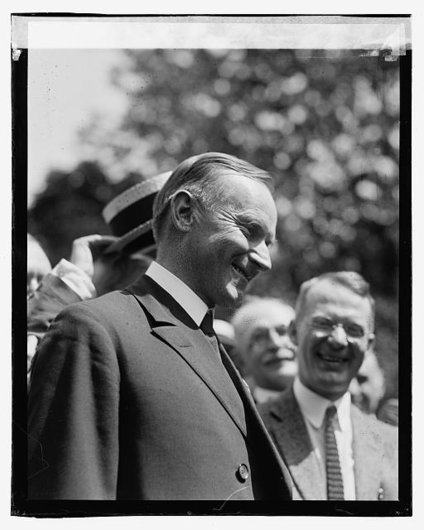
A sizable group of visitors had arrived to be photographed with President Coolidge on the South lawn. Having made clear to them long before their arrival that the President would have no formal remarks, Coolidge’s secretary Everett Sanders could not convince the head of the delegation, who stubbornly believed a Presidential address was imminent, saying, “I am delighted to learn that the president is to make us a little speech.”
What was Sanders to do? If he failed to convince the man that President Coolidge would not be speaking, the meeting might fail, support might be lost or worse, the President would be forced to go back on his prior arrangement. The secretary recounts what happened,
“I went in and explained to the president how many times I had told them he could not make a speech, so that if they called on him he would understand.”
Did Coolidge “play along” in order to save face, avoid a public relations fallout or back-pedal on his agreement? Sanders continued, “As he started to join them, the president said to me, with a smile, ‘If they have not understood, I will elaborate on what you have said by saying nothing.’ ”
Coolidge did not live in the artificial world of those who constantly brood over and adjust identity to cater to public perceptions. He remained himself and if people understood that, fine…if not, the opportunity to understand it remained in their hands. He would not go back on his word to conform to a mistaken impression. He was his own man and people could take it or leave it. Infusing levity into the situation was important as well because it introduced a healthy sense of proportion, a return to reality. He understood people eventually see through the fake and fraudulent. He resolved to remain authentic from the start, knowing that people respect sincerity and honesty. This requires disciplined confidence and personal courage. It is what sets the statesman apart from the politician. Coolidge understood what far too many officeholders, waffling in expediency, have yet to learn about themselves, people in general or the fundamentals of statecraft.

President Coolidge with his secretary, Everett Sanders, outside the International Civil Aeronautics Conference, December 12, 1928.


 The Importance of the Obvious