“Seems to be opposition to my administration already”

Photo of Coolidge and his Cabinet, taken in the winter of 1924. Notice the changes in personnel from the ones inherited from Harding at Attorney General and the Navy and Agriculture Departments.

Photo of Coolidge and his Cabinet, taken in the winter of 1924. Back Row: Andrew Mellon, Treasury; Harlan Stone, Attorney General; Curtis Wilbur, Navy; Howard Gore, Agriculture; James J. Davis, Labor; Front Row: Charles Evans Hughes, State; John Weeks, War; Harry New, Postmaster General; Hubert Work, Interior; and Herbert Hoover, Commerce. Notice there are three changes in personnel since Coolidge succeeded to the Presidency, replacing Daugherty at the Justice Department, Denby at Navy and Wallace at Agriculture. Lincoln’s portrait hangs above the mantle.

The President sat at the head of the table with the entire Cabinet assembled for the first time on August 14, 1923. The Coolidges, never ones to nurse grudges or harbor retaliation (despite Mrs. Harding’s refusal to accept the donation of a Vice Presidential residence on behalf of the Coolidges), gave the widow time and a full use of White House rooms before moving in themselves in late August. As the Department officers sat around the table they had known for two years, there was much upon which to reflect. There was especially much for which to be appreciative, despite the loss of their great chief. It was indeed fortunate that someone so capable was there to step into the late President’s chair, not only cleaning up the multiple messes inherited but building on the work begun by Harding. Applying greater resolve, consistency and substance than anyone around that table initially anticipated, Coolidge, fully in command, would present his expectations for how things would operate in the days and months ahead.

Enthusiasm gave way to sober introspection as one man proposed a cheer for new President Coolidge only to be firmly shut down by the others. The other Department heads quickly responded that this was not the time for effusion but silence, especially with Mrs. Harding still in the White House. It was at such a remark that the new President replied with what would prove to be the first of many dry retorts. It was precisely the time to laugh a little before returning to the work awaiting everyone. Coolidge knew that levity served a necessary purpose, especially in the difficult times. He would face some intense opposition in the coming years, but he set the tone at the outset with an effective supply of ready humor and humble self-deprecation. Just as important as laughing at the humor in a situation is being strong enough to laugh at one’s self. Coolidge could do both. The serious and whimsical qualities of his nature were, as Colonel Starling noted, “mixed, so that the one interpenetrated the other.” To Starling, “it seemed a step forward in evolution, for the serious side of life needs to be looked at with the tolerance and understanding which a sense of humor provides, and our laughter should be grounded in an understanding of the spiritual purpose of our existence” (Morris K. Udall, Too Funny to Be President, p. 233).

Chaplin and Sennett seen together in The Fatal Mallet, 1914. Mabel Normand stands between them.

Charlie Chaplin and Mack Sennett seen together in The Fatal Mallet, 1914. Mabel Normand stands between them.

The thirtieth President, as someone has observed, was “not only the master of the understatement but commander of the punch line” (Sloane, Humor in the White House, p.51). As director Mack Sennett, the original “King of Comedy,” once said, Coolidge was an “expert practitioner” when it came to the art of “deadpan” humor. Coolidge’s brand of comedy consisted not merely of the Vermonter’s grasp of comedic expression but also a “highly developed sense of timing,” as Sloane observes (p.50). Coolidge applied a unshakable seriousness of mind and tenacity to his work that would markedly set him apart from most of his predecessors, especially Harding. Yet, through it all, he also injected a healthy balance of good humor from a deep reservoir of dry wit to lighten burdens, entertain himself and, most importantly, to bring a sense of proportion back to the situation. As Coolidge had learned from his days in Massachusetts and throughout those first few years under President Harding, Washington needed perspective then as it does now, an ample dose of truthful insight combined with a readiness to make light of the absurd, even when the source of that absurdity is policy, Parties, politicians or the President himself.
“Discovering An Old Treasure” by Dan Ponder

“Discovering An Old Treasure” by Dan Ponder

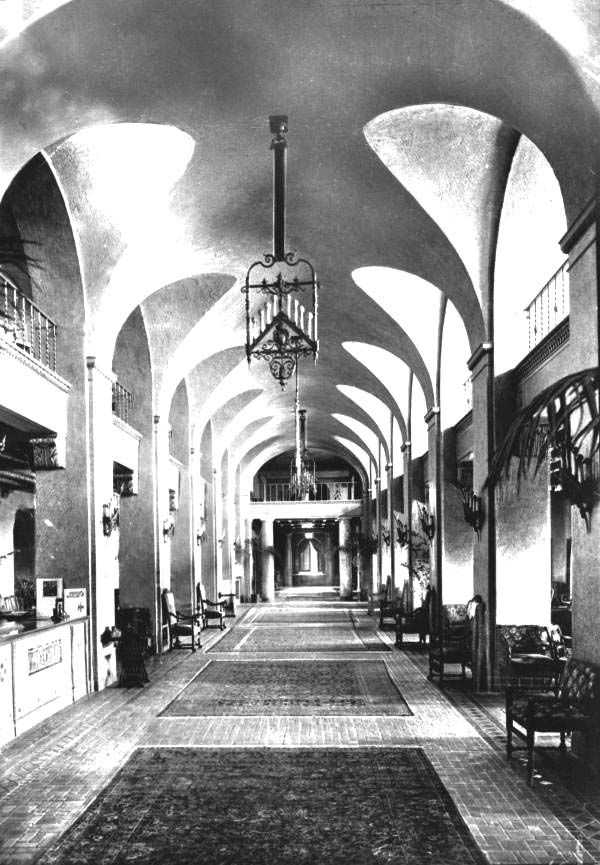
The Vinoy Hotel lobby, as it appeared during the 1920s.

The Vinoy Hotel lobby, as it appeared during the 1920s.

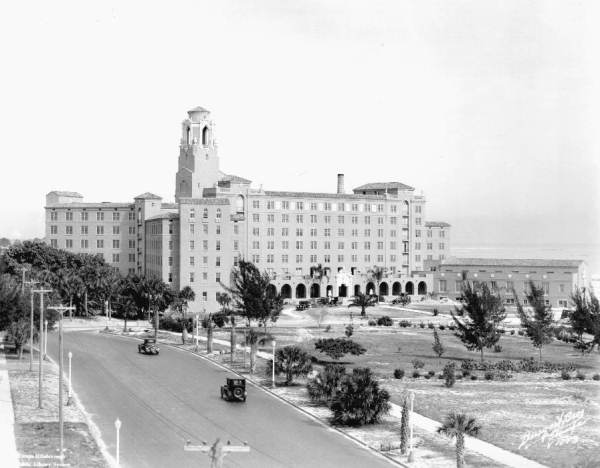
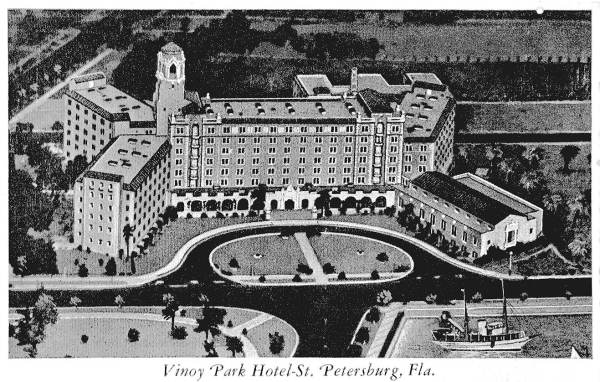
St. Petersburg's Vinoy from the air, 1920s.

St. Petersburg’s Vinoy from the air, 1920s.

The Hotel in 1926, overlooking Tampa Bay.

The Hotel in 1926, overlooking Tampa Bay.

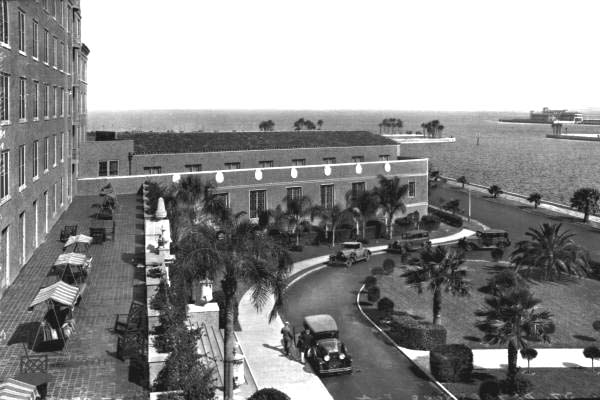
View from the balcony above the front entrance.

View from the balcony above the front entrance.

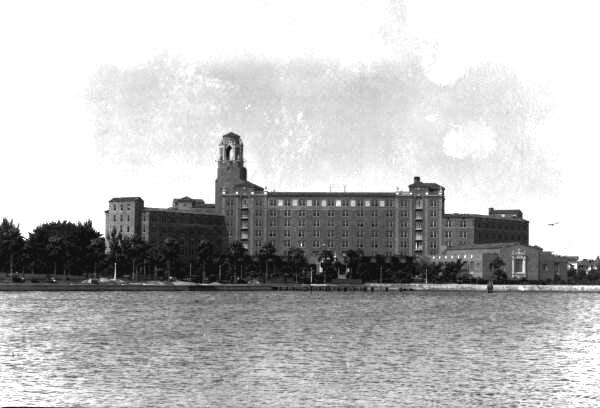
Vinoy from yacht basin 1920s

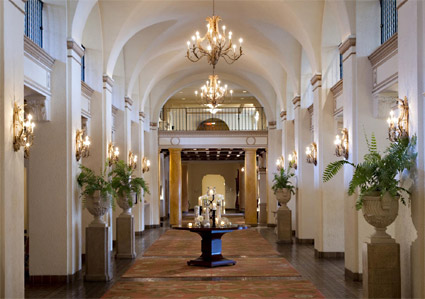
The Lobby of the Renaissance Vinoy today.

The Lobby and Front Entrance (with the old Viewing Tower) of the Renaissance Vinoy today

St. Petersburg-20131016-00094

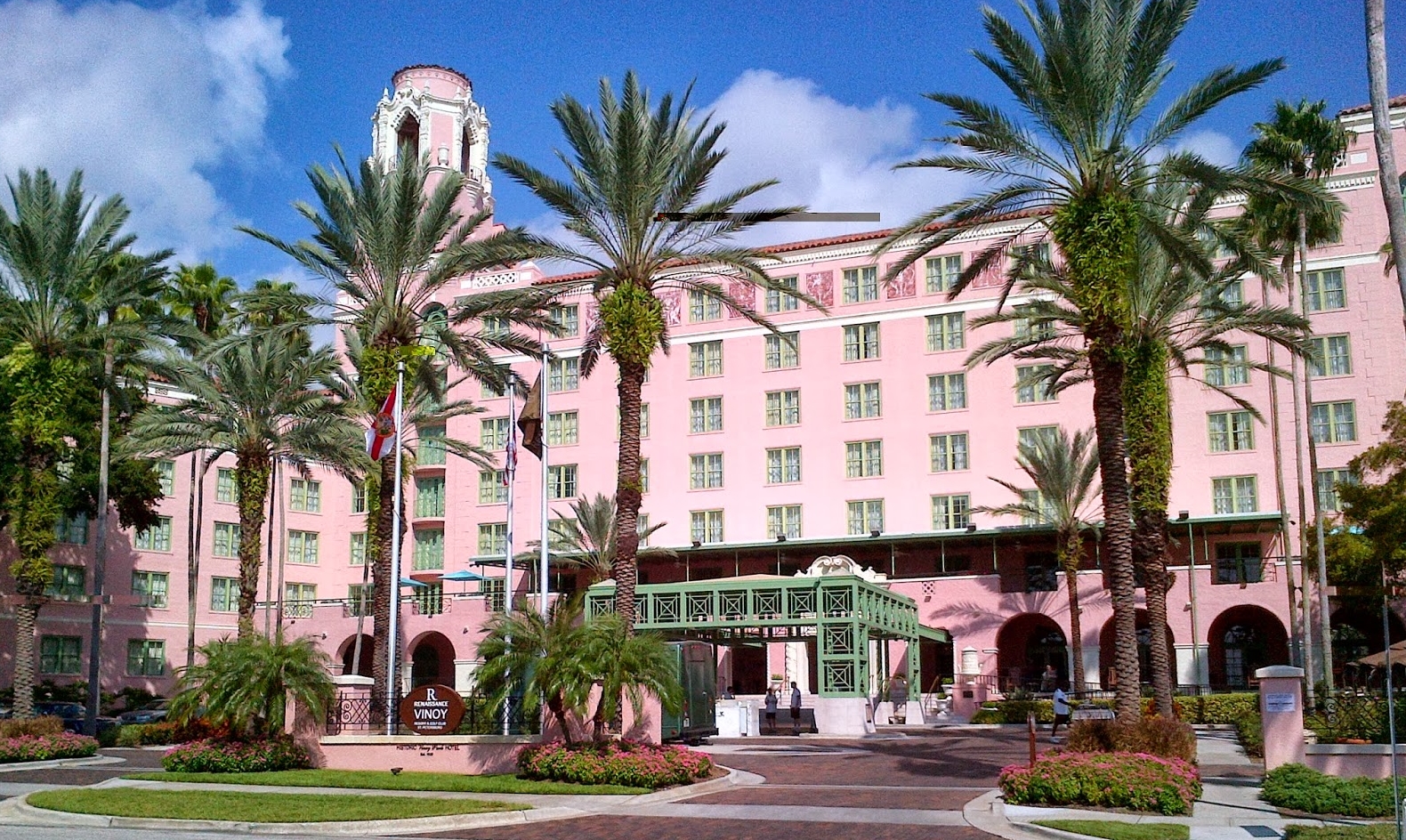
This article from Friday, January 24th, recounts the beginnings of the Vinoy Hotel in St. Petersburg, Calvin Coolidge’s visit there in January 1930 and its modern rediscovery. Time has seen rescue of the place where the former President spoke via radio hookup on the “Economics of Life Insurance,” before heading north, with Mrs. Coolidge, to stay in Mount Dora on their way to the west coast. Mr. Ponder’s recounting of Coolidge’s dislike for the fancier food may or may not be genuine. Apocryphal or not, it speaks to the truth that Coolidge was an unabashedly simple man with unpretentious tastes and humble manners. He never did care for “special treatment,” wishing to be just another American, free to come and go without fanfare or attention, as biographer Claude M. Fuess recounts in his book, Calvin Coolidge: The Man From Vermont,

“In harmony with the other phases of his character, Coolidge had simple tastes. The living conditions under which he had been brought up were good enough for him, and he was in no danger of being corrupted by self-indulgence…Coolidge had himself no affectations and despised people who, as he said, ‘put on airs’…He had been taught as a child the evil of waste, and the lesson persisted. In July 1925, he went to Camp Devens to review the 26th Division, and thorough preparations were made for his reception. In his washroom General Logan had placed two immaculate towels for the President’s personal use; but just before he arrived a hot and dusty aide dashed into headquarters, visited the lavatory, and naturally dried his hands with one of the special towels. When the President was escorted to the washroom, his companion noticed that one of the towels was streaked with dirt, and proffered him the remaining one, but Coolidge waved him aside, saying, ‘Why soil it? There’s one that’s been used. That’s clean enough’ ” (pp.485, 487).

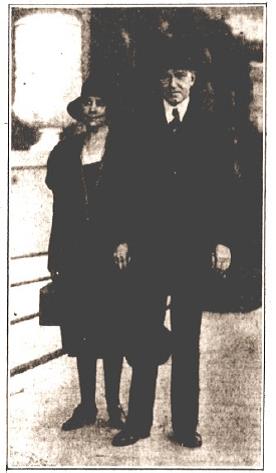
The Coolidges arrive in St. Petersburg, January 8, 1930. Coolidge addressed the 200 delegates convened at the Vinoy Hotel on the "Economics of Life Insurance," January 9, carried at 9:30PM on WJZ out of New York and WBZ out of Boston. It was the first time Coolidge spoke publicly after the Presidency.

The Coolidges arrive in St. Petersburg, January 8, 1930, photographed for the St Pete Times, January 9, 1930. Coolidge addressed the 200 delegates convened at the Vinoy Hotel on the “Economics of Life Insurance,” January 9, carried at 9:30PM on WJZ out of New York and WBZ out of Boston. It was the first time Coolidge would speak publicly after the Presidency.

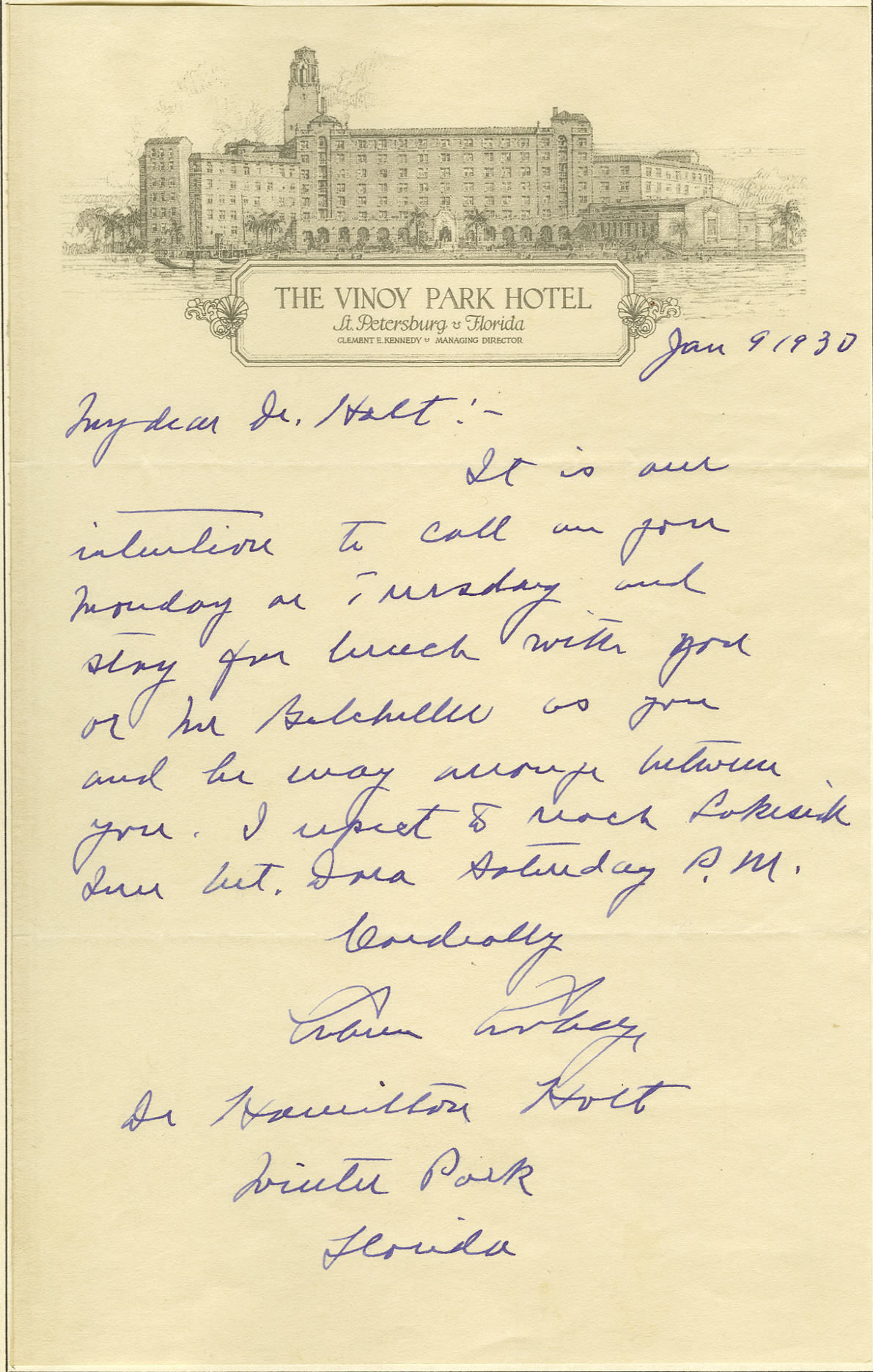
Coolidge letter to the President of Rollins College, Mr. Holt, written on January 9, 1930, on Vinoy stationary. The Coolidges would visit Rollins during their stay in Florida.

Coolidge letter to the President of Rollins College, Dr. Hamilton Holt, dated January 9, 1930, on Vinoy stationary. The Coolidges would visit Rollins during their stay in Florida. The letter, in Coolidge’s unmistakable hand, says: “My dear Dr. Holt: –  It is our intention to call on you Monday or Tuesday and stay for lunch with you or Mr. Bacheller [long-time trustee of Rollins College] as you and he may arrange between you. I expect to reach Lakeside Inn Mt. Dora Saturday P.M.   Cordially  Calvin Coolidge.”

The Coolidges in Florida, January-February 1930

The Coolidges in Florida, January-February 1930

Having visited Florida near the end of his term to dedicate Bok Tower in Lake Wales, February 1, 1929, Calvin, and his wife Grace, came back to visit the state from January 8-February 13, 1930.

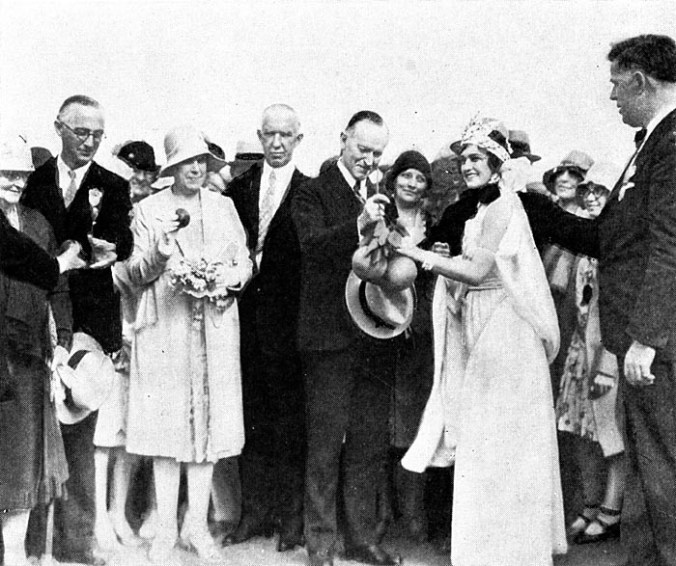
They visited a number of places during their brief time here before heading West, reaching California by February 19th. In this picture, snapped on the 24th of January, Mr.  Coolidge is touring the Orange Festival in Winter Haven while Mrs. Coolidge is not present, having remained in Mount Dora to plant a cypress for the local Garden Club that day. The Citrus Queen, Ruth Snyder, is presenting former President Coolidge with grapefruit while Mrs. Trumbull, wife of the Connecticut Governor and mother-in-law of Cal’s son John, samples an orange. Lakeside Inn manager, Archie Hurlburt, stands between them and at the far right of the photo, then-Major James Van Fleet, former head coach of the Gators and ROTC director for the University of Florida, Gainesville, watches the informal ceremony.

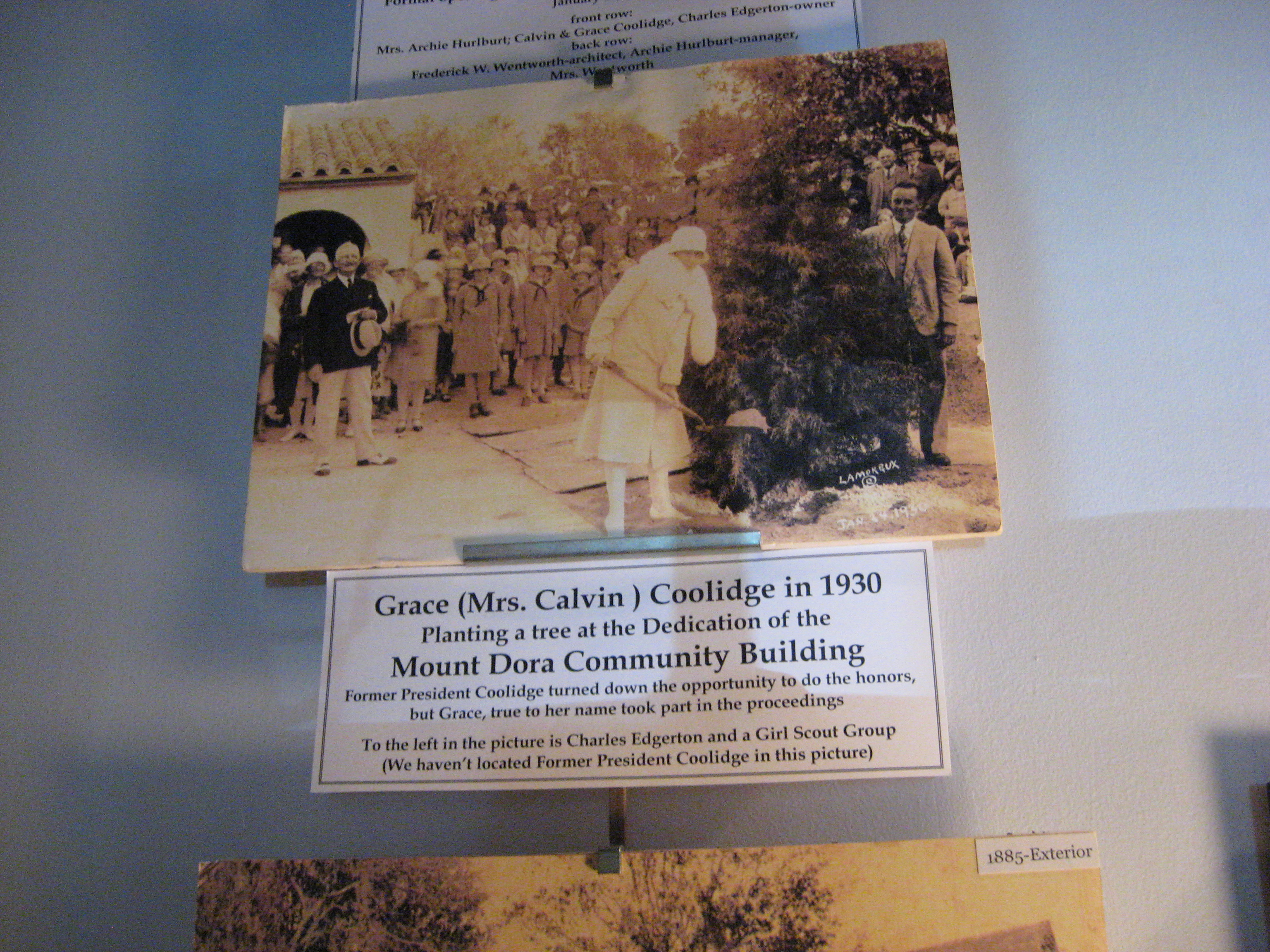
The same day, January 24th, Mrs. Coolidge remained behind in Mount Dora (where they stayed at Lakeside Inn for a month) to plant this cypress for local Garden Club, dedicating the Community Center.

The same day, January 24th, Mrs. Coolidge remained behind in Mount Dora (where the Coolidges stayed at Lakeside Inn for a month) to plant this cypress for the local Garden Club, dedicating the Community Center.

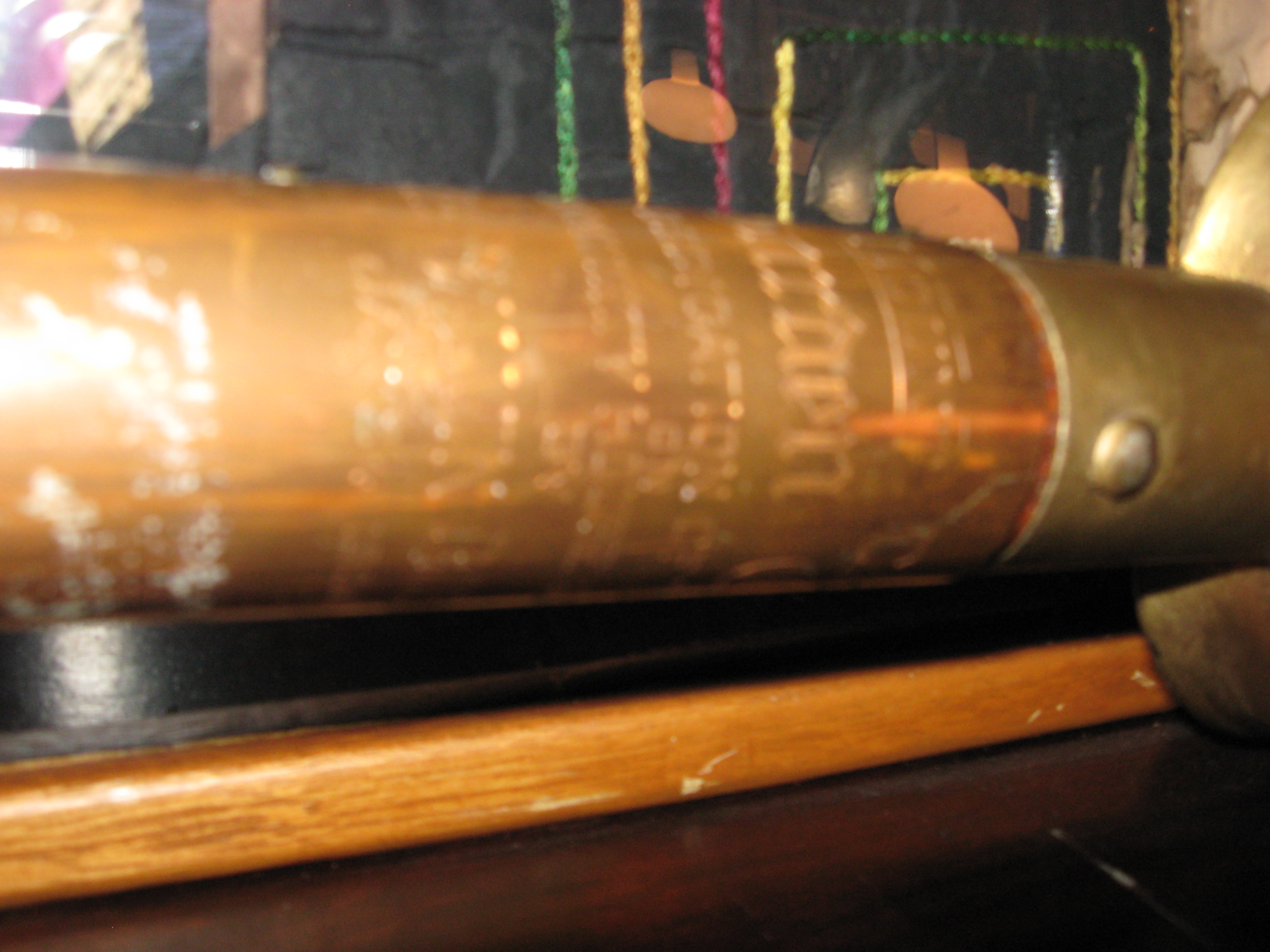
While the inscription is blurred, it was assumed that Calvin, not Grace, would dedicate the Community Building. As it turned out, he was out of town at the Orange Festival, while she planted the tree. Unfortunately, it did not last long being a variety of cypress that did not adapt well to the Florida climate.

While the inscription is blurred, it reads “Dedication…By Calvin Coolidge.” This is not actually the case. It was assumed that Calvin, not Grace, would dedicate the Community Building. As it turned out, he was out of town at the Orange Festival in Winter Haven, while she planted the tree. Unfortunately, the tree did not last long, being a variety of cypress that did not adapt well to Florida climes.

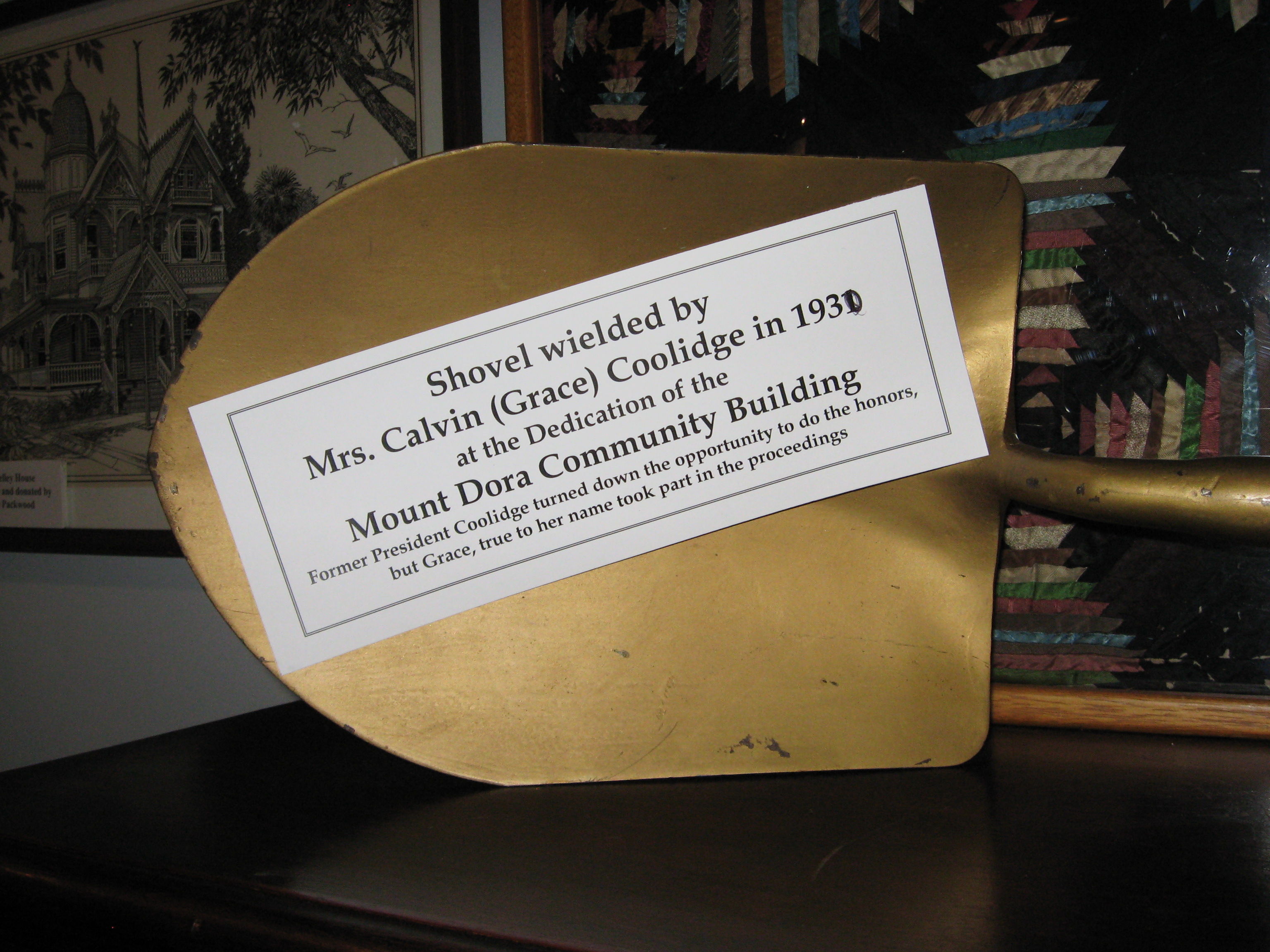
This note corrects the inscription on the handle but beware when taking the tour at the Mount Dora Historical Society Museum: They characterize Cal as too mean and rude to participate in the ceremony. They omit that he was not even there...but spent the afternoon in Winter Haven that day.

This note corrects the inscription on the handle but beware when taking the tour at the Mount Dora Historical Society Museum: They characterize Cal as too mean and rude to participate in the ceremony. They neglect to mention that he was not even there…but spent the afternoon in Winter Haven that day, as pictured above.