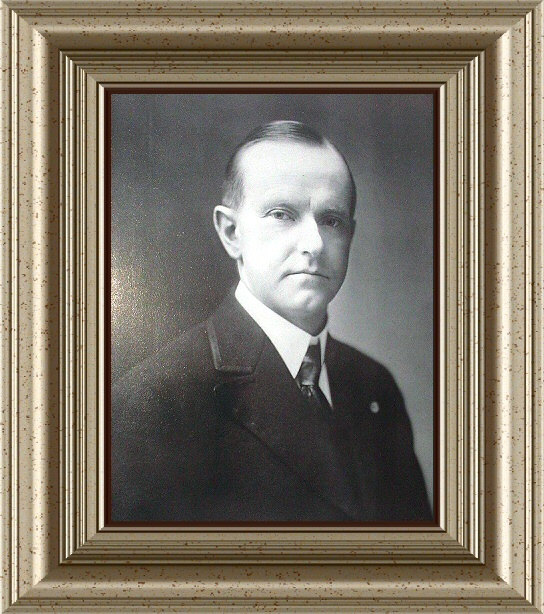
“I will elaborate…by saying nothing”

A sizable group of visitors had arrived to be photographed with President Coolidge on the South lawn. Having made clear to them long before their arrival that the President would have no formal remarks, Coolidge’s secretary Everett Sanders could not convince the head of the delegation, who stubbornly believed a Presidential address was imminent, saying,  “I am delighted to learn that the president is to make us a little speech.”

What was Sanders to do? If he failed to convince the man that President Coolidge would not be speaking, the meeting might fail, support might be lost or worse, the President would be forced to go back on his prior arrangement. The secretary recounts what happened,

“I went in and explained to the president how many times I had told them he could not make a speech, so that if they called on him he would understand.”

Did Coolidge “play along” in order to save face, avoid a public relations fallout or back-pedal on his agreement? Sanders continued, “As he started to join them, the president said to me, with a smile, ‘If they have not understood, I will elaborate on what you have said by saying nothing.’

Coolidge did not live in the artificial world of those who constantly brood over and adjust identity to cater to public perceptions. He remained himself and if people understood that, fine…if not, the opportunity to understand it remained in their hands. He would not go back on his word to conform to a mistaken impression. He was his own man and people could take it or leave it. Infusing levity into the situation was important as well because it introduced a healthy sense of proportion, a return to reality. He understood people eventually see through the fake and fraudulent. He resolved to remain authentic from the start, knowing that people respect sincerity and honesty. This requires disciplined confidence and personal courage. It is what sets the statesman apart from the politician. Coolidge understood what far too many officeholders, waffling in expediency, have yet to learn about themselves, people in general or the fundamentals of statecraft.

President Coolidge with his secretary, Everett Sanders, outside the International Civil Aeronautics Conference, December 12, 1928.
President Coolidge with his secretary, Everett Sanders, outside the International Civil Aeronautics Conference, December 12, 1928.
On the Gettysburg Address

To express our devotion we have come to the field of Gettysburg. It ranks as one of the great historic battle grounds of this continent. In the magnitude of its importance it compares with the Plains of Abraham, with Saratoga, and with Yorktown. It is associated with a great battle between the Union and Confederate forces and with one of the greatest addresses ever delivered by one of the greatest men ever in the world, Abraham Lincoln. – See more at: http://www.calvin-coolidge.org/address-at-gettysburg-battle-field.html#sthash.LvYMuGW1.dpuf
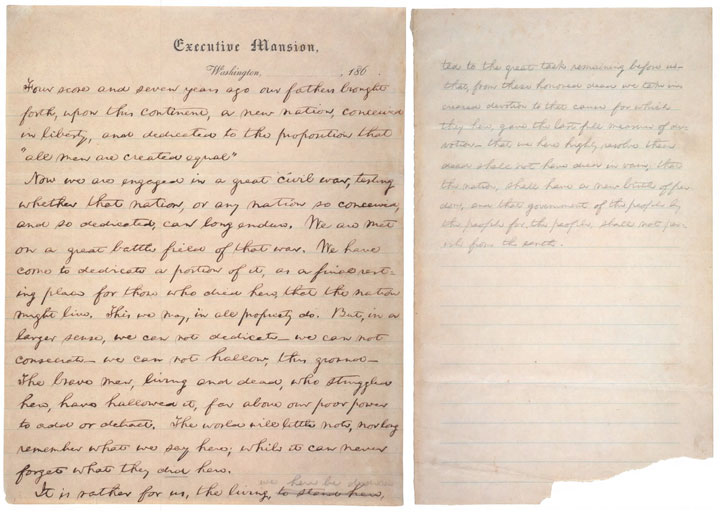
The "Nicolay Copy," earliest known handwritten version of the Gettysburg Address.

The “Nicolay Copy,” earliest known handwritten version of the Gettysburg Address.

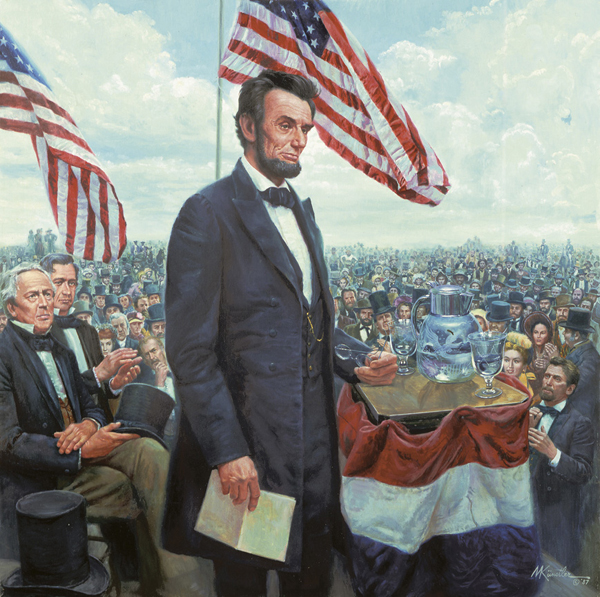
One hundred and fifty years ago, President Lincoln ascended the speaker’s platform to give over the course of two, short minutes one of the most eloquent speeches ever uttered. His words stand in timeless tribute to those, on both sides of those vast fields and hills of Gettysburg, who gave all they had to preserve freedom and government by consent.

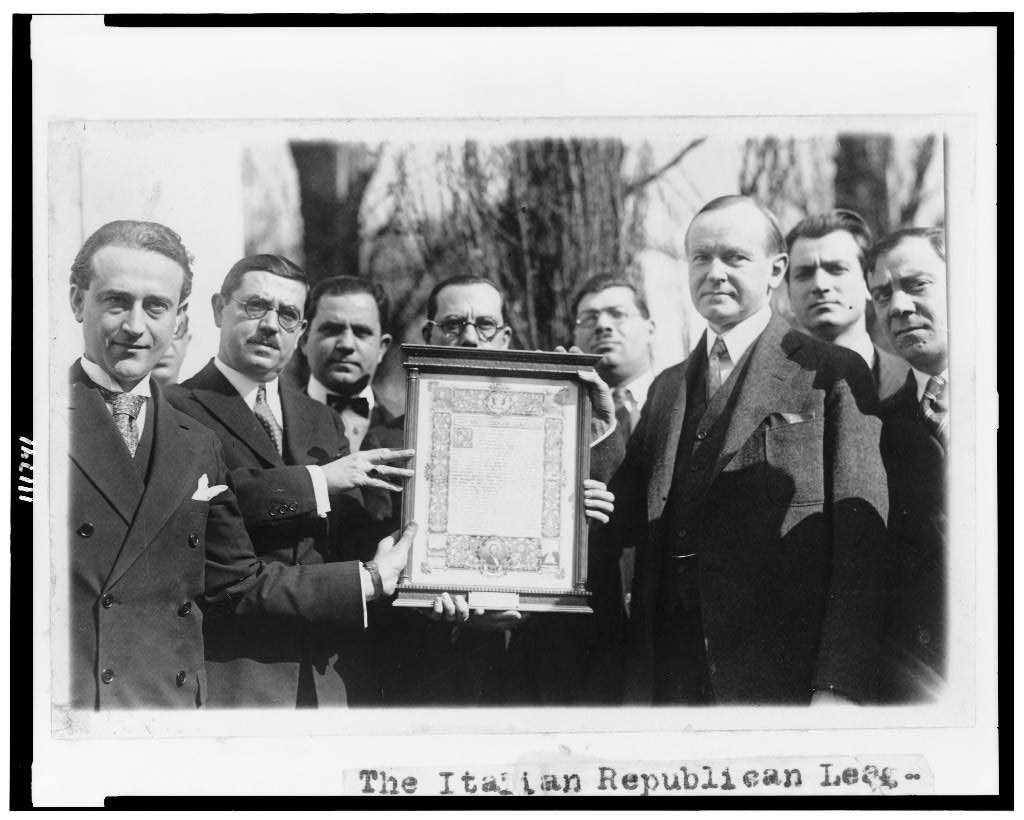
President Coolidge being presented an original parchment of the Gettysburg Address by the Italian Republican League of New York, February 12, 1927.

President Coolidge being presented an original parchment of Lincoln’s Gettysburg Address by the Italian Republican League of New York, February 12, 1927.

One of six Presidents to visit the battlefield at Gettysburg up to that time, Calvin Coolidge came here in 1928, honoring not only what brave men did there but what one man said there,

“We do not come to lament, but to give thanks. With one acclaim the people bestow upon them all that divine salutation, ‘Well done, thou good and faithful servant.’ To express our devotion we have come to the field of Gettysburg. It ranks as one of the great historic battle grounds of this continent. In the magnitude of its importance it compares with the Plains of Abraham, with Saratoga, and with Yorktown. It is associated with a great battle between the Union and Confederate forces and with one of the greatest addresses ever delivered by one of the greatest men ever in the world, Abraham Lincoln.”

Image

To express our devotion we have come to the field of Gettysburg. It ranks as one of the great historic battle grounds of this continent. In the magnitude of its importance it compares with the Plains of Abraham, with Saratoga, and with Yorktown. It is associated with a great battle between the Union and Confederate forces and with one of the greatest addresses ever delivered by one of the greatest men ever in the world, Abraham Lincoln. – See more at: http://www.calvin-coolidge.org/address-at-gettysburg-battle-field.html#sthash.LvYMuGW1.dpuf

“It isn’t”

The Massachusetts General Court was in the midst of debate on a bill that drew spirited support from one especially long-winded legislator. He elaborated each point of the legislation and detailed its merits. Having introduced each argument for it with the affirmation, “It is,” the legislator was sure he had thoroughly made his case to the House.

Then Representative Coolidge was given the floor. He stood up and, with the room absolutely quiet, replied, “Mr. Speaker: It isn’t,” immediately sitting back down. A relieved House went up with laughter.

Needless to say, for all the words spent on the bill by the previous legislator, Coolidge’s simple refutation illustrates how the true course to follow is often the most direct, forthright and obvious. It does not take an expert to discern truth for us, it is within everyone’s reach to see and understand it. The bill died upon call of the roll.

Image