On the Gifts of Christmastime

President Coolidge receiving Scouts on the South Lawn of the White House, 1926. Photo credit: Library of Congress.

“It seems a very short time ago that I was a boy and in the midst of farm life myself, helping to do the chores at the barn, working in the corn and potato fields, getting in the hay and in the springtime doing what most of you have never had an opportunity to see–making maple sugar.

“I did not have any chance to profit by joining a Scout organization or a 4-H club. That chance ought to be a great help to the boys and girls of the present day. It brings them into association with each other in a way where they learn to think not only of themselves, but of other people. It teaches them to be unselfish. It trains them to obedience and gives them self-control.

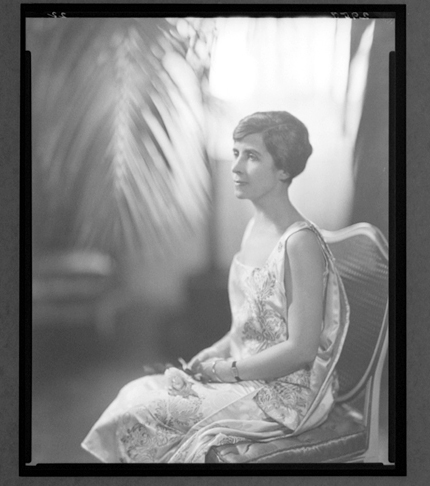
First Lady Grace Coolidge presenting gifts in December 1927. Photo credit: Library of Congress.

“A very wise man gave us this motto–‘Do the duty that lies nearest you.’ It seems to me that this is the plan of all your organizations. We need never fear that we shall not be called on to do great things in the future if we do small things well at present. It is the boys and girls who work hard at home that are sure to make the best record when they do away from home…There is a time for play as well as a time for work. But even in play it is possible to cultivate the art of well-doing.

“It is in all these ways that boys and girls are learning to be men and women, to be respectful to their parents, to be patriotic to their country and to be reverent to God. It is because of the great chance that American boys and girls have in all these directions that to them more than to the youth of any other country, there should be a merry Christmas.” — President Calvin Coolidge to the youth of 4-H, the Boy Scouts, and the Lone Scouts, delivered from the White House, December 21, 1925.

Mrs. Coolidge welcoming the Girl Scouts of Troop 42 to the White House, October 1923. Photo credit: Library of Congress.
The Coolidges, dedicating the community Christmas tree on the Ellipse, Washington, D. C. Photo credit: Library of Congress.

On Proving Worthy of Future Prosperity

Photo Credit: Library of Congress

“We have been blessed with much of material prosperity. We shall be better able to appreciate it if we remember the privations others have suffered, and we shall be the more worthy of it if we use it for their relief. We will do well then to render thanks for the good that has come to us, and show by our actions that we have become stronger, wiser, and truer by the chastenings which have been imposed upon us. We will thus prepare ourselves for the part we must take in a world which forever needs the full measure of service. We have been a most favored people. We ought to be a most generous people. We have been a most blessed people. We ought to be a most thankful people.”

Calvin Coolidge, excerpt from the 1923 Thanksgiving Proclamation, November 5, 1923

“We approach that season of the year when it has been the custom for the American people to give thanks for the good fortune which the bounty of Providence, through the generosity of nature, has visited upon them. It is altogether a good custom. It has the sanction of antiquity and the approbation of our religious convictions. In acknowledging the receipt of divine favor, in contemplating the blessings which have been bestowed upon us, we shall reveal the spiritual strength of the nation…Ways have been revealed to us by which we could perform very great service through the giving of friendly counsel, through the extension of financial assistance, and through the exercise of a spirit of neighborly kindliness to less favored peoples. We should give thanks for the power which has been given into our keeping, with which we have been able to render these services to the rest of mankind…As the nation has prospered let all the people show that they are worthy to prosper by rededicating America to the service of God and man.”

Calvin Coolidge, excerpts from the 1924 Thanksgiving Proclamation, November 5, 1924

Our thanks go out to all our readers, fellow Coolidgeans, and especially to everyone who helped bring Salient Cal’s America: Reappraising the Harding & Coolidge Era to final completion on the centennial year Americans chose decisively to return Coolidge to Presidential leadership in his own right. A gratitude-filled Thanksgiving to everyone in Coolidge Country!

On New Year’s Receptions

The President’s House, December 1800 (Tom Freeman, 2000). Photo credit: White House Historical Association.

When the first New Year’s reception opened the doors of the President’s House to the American people in 1801, the Adamses, with two months left in office, had just ushered in a quintessential expression of popular access and established custom. It lasted, with some wartime disruption, for the next one hundred thirty-one years. New Year’s Day would long continue in this country as the fitting time to make calls on friends, reconnect with neighbors, and begin the year by visiting those who ought to matter to us. For the American public, it afforded the most opportune occasion to greet the nation’s executive couple face-to-face.

While the crowds averaged 4,000 during the Coolidge years, the President was well-acquainted with lines of 5,000 people from his days as Governor of Massachusetts. Shepherded through the historic Blue Room of the White House, the single-file lines easily continued past Executive Mansion grounds down the street along the old State, War, and Navy Department offices (today’s Eisenhower Executive Office Building) and beyond, most waiting hours for the chance to meet the President and First Lady. Calvin and Grace Coolidge were the last Presidential couple to observe this cherished tradition all six years of their tenure. The Hoovers, out of concern for economic exigencies, discontinued the reception in 1932.

Though President Coolidge, ever the numerophile, clocked both the times and number of handshakes given at these receptions, he enjoyed the human import of what these receptions meant to so many. The 3,891 people in 1924 was the first of his statistical tallies in that category. He noted the decrease in 1927 to 3,185. Nevertheless, he was a consummate public relations professional. He understood how definitive it was to maintain more than the perception of open access to the President but also how necessary to maximize that genuinely direct approachability to as many individuals as possible. Conscious of the time others were investing in one of the most personally and institutionally vital meetings of a person’s life — the greeting of a head of state by a citizen — Cal relished when he could keep a self-important matron impatiently waiting. When official decorum permitted, he prolonged the necessarily brief visit with any of those old Civil War veterans, small town mothers, and unostentatious folks from the heartland of the nation, knowing down the line was some public official’s wife annoyed that her more important visit with the Coolidges had been postponed by even a few moments. Cal never telegraphed any of his jokes and pranks. This is what made him, for some, so hard to read. Yet, as Colonel Cheney and Captain Brown, two of the President’s military aides, witnessed at the close of one of those formal receptions: As the official couple ascended the stairs one evening to their private rooms, Cheney and Brown witnessed Coolidge elaborately bow to his lady, who returned it with an exaggerated curtsy followed by a few feigned steps of a minuet. As the officers remarked, perhaps the Coolidges enjoyed those evenings more than they let on at the time.

In 1924, the eighty-seven-year-old former doorkeeper of the White House, German immigrant and Civil War veteran Major Carl David Adam Loeffler, the proud father of seven children including the future Secretary of the Senate, was brought to the front of the line to be one of the first to enter the Blue Room on this day a century ago. He had served in the Quartermaster’s Department during the War, returned to civilian life, and then taken up service as doorkeeper under Grant in 1872 remaining until TR after the turn of the century. Holding a billet as doorkeeper that required salute, even by senior ranking officers, Major Loeffler passed away in 1926 at the age of ninety-one.

At the 1925 reception, President Coolidge held up the line for seventy-nine-year-old Colonel Robert Graham Scott, veteran of the 24th Iowa, who had been stationed on the Executive Mansion grounds during the War and had met Lincoln in a similar New Year’s reception in 1864. Colonel Graham lived another ten years, passing in 1935 at the age of ninety.

At the 1926 reception, the longstanding tradition of hosting the oldest citizens of the Washington, D. C. area continued with a quiet luncheon on the second floor of the White House. No less full of storied memories was New Hampshire house painter John William Hunefeld, who took his post at 9:30 in the morning to ensure he preserved his place at the head of the public line. In what came to be every year since 1924 (achieving first place in 1926, 1928, 1930, and 1931 to enter on New Year’s Day), Mr. Hunefeld became an institution in his own right. He would also be among the last on hand in 1934, waiting outside the gates to “make sure the president hadn’t changed his mind” about New Year’s Day receptions.

The New Year’s Day reception stood apart without comparison abroad. No equivalent head of state enjoyed such proximity to citizens. The protocol for restricted, exclusive interaction — citizens rarely even seeing their leaders outside of formal occasions – represented the norm around the world. This was true whether that leader was the Soviet chairman, the French premier, the German chancellor, the British king, or the Japanese emperor. Americans were the exception to that rule. Nor, for the Coolidges, did it entirely wait for the customary New Year’s visitations. The range of visitors between 300 to 500 persons daily became the new tradition. The Harding and Coolidge White House opened for Americans to an extent foreign to the Wilson and Hoover administrations on either side of them. It marked a sharp departure from usual custom when Harding made clear he wanted to return to an open, approachable Presidency, both symbolically and literally. However imperfect that ideal proved in practice, it became a policy the Coolidges intentionally expanded through the end of the decade.

It was true that three Presidents had been killed by assassins up to that time. That none had been perpetrated on the White House grounds was hardly cause for complacency, as the vigilant Secret Service Detail well understood. At the same time, neither was the risk of danger enough of a justification to overcome the openness due American citizens. It ran against that very principle to enclose the Executive residence inside palisaded ramparts as if it were to be a sealed citadel, behind unapproachable cordons. The greater obligation remained the ongoing access Americans deserved to their Presidents. It is regrettable that the New Year’s Day reception is now something of a distant past. Coolidge comprehended the connection of access to accountability. Insulation, both physical and institutional, would ultimately deprive the nation of a necessary avenue of civic participation, undermining the preservation and protection of popular oversight. Cutting off the ongoing involvement and investment available to all citizens, however great or small, would secure power in fewer hands who could now act unhampered by the inconveniences of representative procedures and democratic protocols.

In the interest of security, what else has been lost? What more constraints on unseen, invisible authority are citizens ready to delegate away? As Coolidge saw it, “We draw our Presidents from the people. It is a wholesome thing for them to return to the people…Although all our Presidents have had back of them a good heritage of blood, very few have been born to the purple.” He could also say at the time, “Fortunately, they are not supported at public expense after leaving office, so they are not expected to set an example encouraging to a leisure class.” Though such support is now accepted, Coolidge could freely declare that Presidents (and First Ladies) “have only the same title to nobility that belongs to all our citizens, which is the one based on achievement and character, so they need not assume superiority.”

Perhaps it is time to bring back some long neglected New Year’s Day traditions. Happy 2024!