On Shutting Down Opportunity

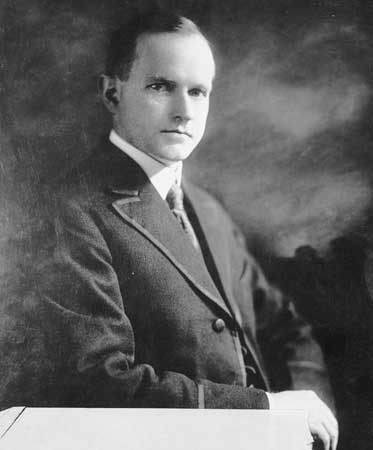
“If the Federal Government should go out of existence, the common run of people would not detect the difference in the affairs of their daily life for a considerable length of time” — President Calvin Coolidge, “States Rights and National Unity,” given at the College of William and Mary in Williamsburg, Virginia, May 15, 1926.

As a perverse enthusiasm for the “Government Shutdown” pervades mainstream media coverage, the total mischaracterization of the issue is propagating confusion and fear, not clarity and sound information. The press, having long ago shed the veneer of objective journalism, is no longer upholding its obligation to arm people with accurate and honest information.

The issue is skewed from the outset as a picture of vast human suffering all caused by a callous, unfeeling opposition to the President and his Party’s agenda. Disagreement with that agenda, instead of the agenda itself, is blamed as the problem. In actuality, the problem is never connected to its real cause: the President’s own policies. The cause is never attributed to a Government that has overgrown its very limited and specific Constitutional role. The problem is those lousy Republicans who want Government to shut down and people to die because they want to see “Obamacare,” the law of the land, undone, or so goes the absurd mantra.

Temporarily furloughing those the Government already deems “non-essential” while keeping Congressional and Executive offices open is not a shutdown. Suspending the online stream of the National Zoo’s “Panda Cam” is not a shutdown. Closing the gates of a few parks is not a shutdown. It makes it appear all those indispensably wonderful services Government provides us are going away permanently. It is political manipulation designed to force people yet again to justify a vast, all-encompassing Government in their lives. To believe an apocalypse awaits via Government “shutdown” demands the ultimate credulity. Threatening to withhold military checks while entitlement programs still keep the checks mailing out does not even begin to approach the genuine shutdown this economy is already experiencing directly because of this President’s decisions.

Playing a game of smoke and mirrors, the President and Senate leadership would rather provoke more suffering especially as it helps advance their permanent campaign against Republicans. The focus is never on the 90 million Americans no longer in the work force because of this President’s agenda. The concern is only ever how does the latest Labor statistics make the President look?

The attention is never on the creation of one “unprecedented” crisis after another to force by legislation what would never be passed if calmly and deliberately vetted.  The angst is only ever on how can we survive without Government?

The entire emphasis is turned on its head. The priority is not upon removing the obstacles to ingenuity, opportunity and individual freedom. The priority is ever only on keeping Government alive and growing by “revenue neutral” tax schemes, continuing resolutions, and an endless debt, $17 trillion and counting, which our great grandchildren will still be paying! Add to this “Obamacare” exemptions for Congress ordered by President Obama, the reaffirmation of “quantitative easing” by Chairman Bernanke and now even “shutdowns” are tools to threaten any attempt to restraint this Administration and its agenda for the rest of the country. It is the transfer of authority from a self-governing people to subjects serving an autocratic elite. The focus is all in the wrong direction. The questions should be: How is liberty faring? Are the people being served? How does life look for the people with inflation, massive unemployment and generational indebtedness? Can we survive with Government as it is now, unlimited and absolute?

While Government was significantly smaller in Coolidge’s time, the temptation to encroach on people’s lives was no less alluring. It was leadership that made the difference. Moral character, humble perspective and faith in the institutions and ideals that make America have no substitute when it comes to our leaders. There is nothing that can possibly replace the lack of these qualities in order to lead and lead responsibly. But there is also a fundamental, even natural limitation to any Government which tries to do too much. Opportunity’s door invariably closes whenever and wherever Government gets involved. Consequently, nature itself will rebel against this offense. That is what we are seeing in our time. This is why there remains cause for renewed confidence in our ideals not a lazy and pessimistic resignation to circumstances. The status quo in Washington has already lost. Not living in reality, however, the establishment led by President Obama, does not realize it…yet.

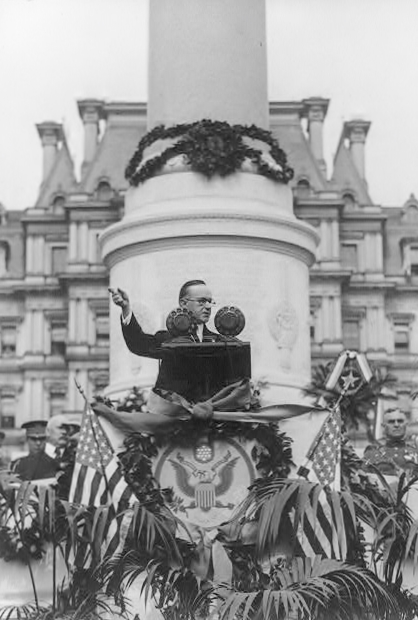
Speaking to those who came to honor their fellow, fallen veterans of the heroic First Division in the American Expeditionary Forces, President Coolidge reflected on the cause for which they fought, saying,

…I cannot let this occasion pass without expressing my most strong and emphatic commendation for the reverence which your words and actions constantly express for the liberty-giving provisions of the fundamental law of our land. You have supported the Constitution and the Flag which is its symbol, not only because it represents to you the homeland, but because you know it is the sole source of American freedom. You want your rights protected by the impartial judicial decisions of the courts where you will have a right to be heard and not be exposed to the irresponsible determination of partisan political action. You want to have your earnings and your property secure. You want a free and fair opportunity to conduct your own business and make your way in the world without danger of being overcome by a Government monopoly.

Such freedom is what we now desire and expect. Government fails when it assumes the life of the individual can best be managed from its halls and corridors. Coolidge went on to explain what happens when Government ventures into the people’s business,

When the Government goes into business it lays a tax on everybody else in that business, and uses the money that it collects from its competitors to establish a monopoly and drive them out of business. No one can compete. When the Government really starts into a line of business that door of opportunity is closed to the people. It has always been an American ideal that the door of opportunity should remain open.

Coolidge saw the road Government takes every time it asserts itself in people’s choices. Opportunity closes. Freedom contracts. It is this road we are now on, with destinations including a single-payer scheme for American healthcare promised by the Government and paid by the rest of us, including generations not yet born. This latest frenzy over “shutting down” the Government is but the latest attempt to distract with fear and obtain by coercion the desired result of greater control and more of the same from an autocratic few. If people will simply stop opposing this Administration then the crisis will evaporate and all our pain will go away, they claim. This President is counting on both ignorance and addiction to the need for Government.

Coolidge reminds us to distinguish between what seems essential from what actually is. When we view it this way, it becomes obvious that the Federal Government needs us, not we it. If Washington ceased to be tomorrow, we would survive. We would even do better than we think. The importance rests with the individual and then his local and state authorities. The Federal Government would not leave a gaping hole which none could fill. The people, exercising their own judgment and creative abilities, would fill that hole. In fact, we would witness the return of choices, opportunity and freedom to our lives impossible when Government tries to “help” us.

Coolidge kept his faith in the ultimate triumph of the people to retain their liberties. The truly intimidating challenges faced by Americans of every time, place and background vindicates his faith. The confidence he had bore no time constraints, it was a faith firmly placed in the strength of ideals we share even now. The assurance of their truth and power for good rests on the conviction not only treasured by Coolidge but by millions of those who build, from nothing, lives of success and quiet excellence without a Washington subsidy. It is the solemn charge of our generation to ensure that door of opportunity remains open.
Image

On How America is Special

Much has been discussed in recent years about America’s specialness in history, especially with the advent of an administration that seems content to deny what makes us different from the rest of the world. In place of this outright humiliation and shame toward America’s exceptional accomplishments, these latest advocates of nihilism and pessimism would revert us all back to before a New World was known, to when tyrannical government and daily subsistence were the best for which anyone could hope. Such is the “fundamental transformation” Obama has had in mind since he said those words five years ago. It is the same throwback dreamed by Vladimir Putin who wishes we Americans would give up our arrogant adherence to individual rights and government by consent and just follow the dysfunctional frameworks of the rest of the world.

Our exceptionalism is not a claim to genetic superiority. It is not a boast that we are somehow better people of superior knowledge, ability, or social standing than everyone else. It is not even a claim that we are in some way closer to perfection than others.

What so many confuse with schoolyard pride, we understand as foundational principles of equality before God, liberty under law, freedom of the individual, and a limited government by consent. The norm all around the world has, and continues to be, one of oppressive government power by an elite few self-endowed with the right to rule over subjects. In this normal environment, the individual lives at the behest of the State. The inequality, warfare, lawlessness and crippling lack of opportunity all trace from the institutionalized denial that the individual possesses any liberties not granted by their masters, the Government. It is the same whatever era of time, whatever name it wears and wherever it is allowed to take root. Given the power, this normal rule strangles liberty and supplants an individual’s sacred freedoms.

America deliberately departed from that dominant system, enshrining — in the very foundation — protections for those God-given rights to individuals through a written constitution. Further defining, limiting, and curtailing what government could not do insulated those individual liberties from the erosion of time and corruption by human ambitions. It is the best attainable foundation ever built and the strongest basis upon which to construct an exception to the rule governing the rest of the world.

As usual, Coolidge said it best,

“The new country offered not only material opportunities, but possibilities of a spiritual and intellectual emancipation which they ardently wished their friends on the other side to share. Citizenship in the New World meant something that it had not meant in the Old. It was seen that the New World offered something new. There was increasing realization that many burdensome traditions and institutions had somehow been shed. Here at last the individual was lord of himself, master of his own destiny, keeper of his own sovereignty. Here he was free.”

Or again, when he said,

“The fundamental principles on which American institutions rest ought to be clearly understood. Being so understood, they can never lack for defenders. They had been thought out and fought out by the original settlers of the colonies, and whenever they have been in jeopardy they and their successors have not failed to rise and make whatever sacrifice was necessary for their preservation and, from time to time, for their extension. It would be idle to claim that our country has yet reached the goal toward which they plainly lead, but more idle still to deny that the path is open and that the people are continuing to make progress in that direction…”

Coolidge, reflecting on defeat of Spain and the rise of the Dutch and then the English, continues, “Despotism lost. The material power of the sword, of riches, and of arbitrary rule was vanquished. The spiritual power of freedom of conscience, of personal judgment, of personal responsibility, of religious and political liberty was victorious…”

But what about those bigoted, greedy, violent, ignorant whites who came to an already settled land to pollute and despoil it? As usual, recasting history through so biased a prism may serve the current political agenda but it does not serve truth. History is a study of the whole picture not merely selecting deviants. It searches for essentials, timeless truths and fundamental principles. To skip those in order to discredit them is neither honest nor instructive. Coolidge explains the real lessons that resulted when individuals lived up to America’s special ideals, “These settlements were at first trading-stations. They required little in the way of government and absolutely nothing in the way of protecting themselves against any infringement of their rights by the authorities at home. They needed no independent establishment to guard their liberties. They were not unmindful of religion. It is related that after holding a council of peace with the Indians, where the tomahawk was buried, the Dutch promised to build a church over it so that it could not be dug up, an evidence that, in their opinion, peace was supported by religion…Religion was followed by education.”

“…Joined to these Dutch and English defenders of liberty, differing from them in particulars but agreeing in the broad essentials of human freedom, were the French Huguenots. America became the common meeting-place of all those streams of people, great and small, who were undertaking to deliver themselves from all kinds of despotism and servitude, and to establish institutions of self-government and freedom.”

Ultimately, these ideas of “personal judgment” came to religious matters and “set the common people to reading the Bible. There came to them a new vision of the importance of the individual which brought him into direct contact with the Creator. It was this conception applied to affairs of government that made the people sovereign. It raised up the common man to the place which, heretofore, had been reserved for a privileged class in church and state. It ennobled the people. The logical result of this was the free man, educated in a free school, exercising a free conscience, maintaining a free government. The basis of it all, historically and logically, is religious belief. These are the fundamental principles on which American institutions rest…It was because religion gave the people a new importance and a new glory that they demanded a new freedom and a new government. We cannot in our generation reject the cause and retain the result.”

Image

On a Story Worth Repeating

Image

It is readily discovered that shy people are not reticent with everyone all the time. There is usually at least one subject that draws even the most introverted soul out to talk freely, openly and uninterruptedly. We know meeting new people was difficult for the shy Mr. Coolidge. As one of his earliest biographers describes, American history touched the Vermonter so profoundly that merely mentioning the obscurest pilgrim, pioneer or adventurer would provoke “Silent Cal” to speak volumes. Roland Sawyer, who had served in the Massachusetts General Court with Coolidge, recounts this instance during one of their weekly train rides home from Boston,

     Personal shyness, Yankee reticence, mental pre-occupation, Vermont reserve–these all combined to make Mr. Coolidge no travelling companion for anyone, in the average sense of the word.     

     Imagine the surprise one day among that group of legislators, when Cal unbuckled and for a cool half four talked as much as the average man. Now it all happened in this wise. Cal asked me to ‘sit in a minute’ on a matter of Hampshire county legislation, and after a brief discussion of the various points, Cal turned as usual to light another cigar, and look from the car window. We were just entering the old town of Rutland in central Massachusetts. Here had lived Rufus Putnam, a Revolutionary soldier, legislator, and one of the pioneers of the settlement of Ohio. I chanced to make some remark about the career of Col. Putnam, and, without removing his eyes from the window, Cal began to talk. Now I have ever had a keen interest in Massachusetts and New England colonial history, and have considerable information, and can carry on a conversation upon the matter with fair intelligence. And so I ventured some ideas upon some of the earliest customs of the colonial people: of their courage and other qualities. And Cal came back–and for a full half hour we talked about the pioneers of New England and the Middle West; of old customs and events; of the heroism of the men and women who were founders of America. Before we knew it, so engrossed were we in our talk, we had reached Hudson, where an influx of passengers broke into our seats, and I went back to my colleagues, to find an excited group of men who wanted to know, ‘What in the devil ails Cal this morning?’

Sawyer answers their question in the biography,

     Now what had happened was this–Cal had found a kindred spirit, who was interested in, and full of admiration for that group of pioneers in whom he was so interested, and for whom he felt such admiration; and there sprang up for a time an intellectual and spiritual fellowship which was strong enough to break the bonds of a native reticence (Cal Coolidge, President, pp. 95-96).

What America is and in what way it stands as the exception to the rule of human history inspired him to express in volumes the admiration he held in his mind and heart. This admiration was not merely some “revisionist” nostalgia, it was honest appreciation of real history and what it had to teach. Moreover, this admiration was shared by Mr. Sawyer himself, who, though politically a Socialist, could still genuinely agree that America’s story furnished reason to love and learn from it.

America’s story is worth repeating. It is truly a great story. It deserves to be recounted in our time with the same honesty and respect for what so many men and women accomplished in order to give us America’s exceptional inheritance.