On those Roaring Twenties

Image

Historian Paul Johnson


It is fitting that those who helped drive the Reagan Revolution forward humbly credit their inspiration to the shy, quiet man from Vermont, Calvin Coolidge. In a very real way he bequeathed the essential recipe for the successes of the 1980s. While the ingredients were not precisely followed in every respect, especially concerning the payment of debt, the principles contained such power that even Congressional spending could not slow it down.

President Reagan’s combination of political saavy, biting wit, unassuming competence and ability to cut through the complex and see the simple essence of an issue derived not merely from his life’s experiences, they found inspiration from his study of Coolidge. Reagan, after all, like several of the men and women who comprised his team of “revolutionaries,” first came to understand the world during the Coolidge Era and in the years shortly thereafter. The lessons “Silent Cal” taught in both word and action left abiding impressions on future Secretaries of the Treasury (Donald T. Regan) and Defense (Caspar Weinberger) and future Attorney General Edwin Meese III, along with many others.

Two scholars, in particular, were returning to Coolidge’s record in order to reassess his very real achievements. In 1982, Thomas B. Silver, in Coolidge and the Historians, would lead this effort and unearth most of the shoddy and partisan reporting against the thirtieth president and the 1920s. In 1984, Paul Johnson, in the sixth chapter of his Modern Times: The World from the Twenties to the Nineties, would roll back the shroud thrown over not only the genuine triumphs of the Roaring Twenties but also the legacy of Mr. Coolidge. As Mr. Johnson would reflect on this reserved and disciplined leader, he would not only find him to be “the most internally consistent and single-minded of modern American presidents” but he, like all of history’s great men, was not an intellectual. To Mr. Johnson, that is a very good thing because “[a]n intellectual is somebody who thinks ideas are more important than people.” Wilson and Hoover approached the world this way while Coolidge, and Reagan, did not. To Coolidge and Reagan, people were the preeminent focus of their policies. The “smartest ones in the room” miss that all-too-obvious truth. People were genuinely benefited by Coolidge’s leadership.

Johnson could accurately survey the Twenties not as an aberration of gross materialism or empty gains but as an unprecedented prosperity that was both “very widespread and very solid” (p.223). “It was,” Johnson corrects, a prosperity “more widely distributed than had been possible in any community of this size before, and it involved the acquisition, by tens of millions, of the elements of economic security which had hitherto been denied them throughout the whole of history. The growth was spectacular.”

As a direct result of Coolidge prosperity, national income jumped from $59.4 to $87.2 billion in eight years, with real per capita income climbing from $522 to $716. Millions of workers purchased insurance for the first time, a phenomenon of a healthy economy Obama is deliberately ignoring. Savings quadrupled during the decade. Ownership in fifty stocks or more reveals the vast majority were not “the rich,” but housekeepers, clerks, factory workers, merchants, electricians, mechanics and foremen. Union membership plummeted from just over 4 million at the outset of the 1920s to 2.5 million by 1932. As small and large businesses succeeded, people were able to provide holidays with pay, insurance coverage and pensions as well as other benefits, giving substance to Coolidge’s dictum that “large profits mean large payrolls” thereby making “collective action superfluous,” as Johnson observes (p.225). Home ownership skyrocketed to 11 million families by 1924.

Perhaps the most obvious index of prosperity could be seen in automobile ownership. What began as a novelty for just over 1 million Americans in 1914 (with less than 570,000 produced annually) exploded into 26 million owners with over 5.6 million autos produced annually by 1929. Air travel was fast becoming the normal mode for “regular” folks and classes were rapidly dissolving from upward mobility. In 1920 a meager $10 million was spent on radios. By 1929 that figure had surpassed $411 million, which was itself small compared to the $2.4 billion spent on electronic devices as a whole in the Twenties.

These years were not, as some would claim later, removed from an appreciation of the past. The expansion of education is “[p]erhaps the most important single development of the age” (Johnson 225). Spending on education increased four times what it was in 1910, from $426 million to $2.3 billion. But unlike today’s habit of throwing money at the problem, it brought results. Illiteracy actually went down over fifty-percent. A “persistent devotion to the classics,” with David Copperfield at the head of the list, defined the decade. Culture was reaching the homes of those who had once been the least connected Americans through reading clubs, youth orchestras and “historical conservation” movements that would restore sites like Colonial Williamsburg.

“The truth is the Twenties was the most fortunate decade in American history, even more fortunate than the equally prosperous 1950s decade, because in the Twenties the national cohesion brought about by relative affluence, the sudden cultural density and the expressive originality of ‘Americanism’ were new and exciting” (p.226).

The problem, as Mr. Johnson concludes, with the expansion of the Twenties was not that it was “philistine or socially immoral. The trouble was that it was transient. Had it endured, carrying with it in its train the less robust but still (at that time) striving economies of Europe, a global political transformation must have followed which would have rolled back the new forces of totalitarian compulsion, with their ruinous belief in social engineering, and gradually replaced them with a relationship between government and enterprise closer to that which Coolidge outlined…” More of the same policies would have prevented much of what followed in the 1930s and beyond. “[M]odern times would have” indeed “been vastly different and immeasurably happier.” The purpose served by Coolidge “minding his own business,” as he put March 1, 1929, was perhaps more a forecast of his successors than an introspection. If only Hoover had been listening more carefully. The downturn in 1929 would certainly have more closely resembled the depression of 1921 and, with the Harding-Coolidge recipe of “masterful inactivity,” have spared millions of lives the terrible suffering and avoidable loss brought on by Hoover’s spending and Roosevelt’s “New Deal.”
On Federalism

Coolidge does not seem to have fully perceived the harm done by his youthful support for the Seventeenth Amendment, which stripped the influence of the states on the national government and removed the insulation of the Senate from the same popular impulses pressuring the House. In fact, how costly have been the consequences (in both obstructing good legislation and passing the bad) of so drastic a transformation to this unique body? The two houses of Congress were not intended by the Framers to serve the same purpose. The distinct differences between House and Senate were thrown away too hastily by those who did not thoroughly consider the costs of changing the constitutional design.

Despite his earlier support of the Senate’s alteration, Coolidge is unique among modern presidents for consistently holding a high regard for the Constitutional balance of federalism, defining a sufficient sphere of authority for the States, limiting the scope of national governance and preserving the responsibility of local decision-makers over their own affairs. By so doing, the balance of orderly liberty is kept. For Coolidge, this was more than pandering for votes. It was a necessary mechanism to ensure government remained limited especially in times of emergency. It was not to be bartered away but existed for just such occasions when the temptation was greatest to seize the reins from state or local authorities. The danger to people’s liberties was too great, even were he to exercise such powers cautiously. Coolidge knew that with the best of intentions, government would not remain limited for long even when the storm passed.

But for Coolidge, the threat of national overreach was not the only potential problem, the prospect that the States would abuse their authority was also very real. Remembering his experiences with State politics in Boston, Coolidge knew legislatures and municipalities could pass equally as reckless regulations against an individual’s freedoms. The restrictions imposed by Mayor Bloomberg of New York City and by Governor Hickenlooper of Colorado on “gun control” are but two examples of such abuses.

It was on the 150th anniversary of the Virginia Resolutions for Independence, that President Coolidge came to the College of William and Mary on May 15, 1926, summing up the value of that federalist balance with these words,

“While we ought to glory in the Union and remember that it is the source from which the States derive their chief title to fame, we must also recognize that the national administration is not and can not be adjusted to the needs of local government. It is too far away to be informed of local needs, too inaccessible to be responsive to local conditions. The States should not be induced by coercion or by favor to surrender the management of their own affairs. The Federal Government ought to resist the tendency to be loaded up with duties which the States should perform. It does not follow that because something ought to be done the National Government ought to do it. But, on the other hand, when the great body of public opinion of the Nation requires action the States ought to understand that unless they are responsive to such sentiment the national authority will be compelled to intervene. The doctrine of State rights is not a privilege to continue in wrong-doing but a privilege to be free from interference in well-doing. This Nation is bent on progress. It has determined on the policy of meting out justice between man and man. It has decided to extend the blessing of an enlightened humanity. Unless the States meet these requirements, the National Government reluctantly will be crowded into the position of enlarging its own authority at their expense. I want to see the policy adopted by the States of discharging their public functions so faithfully that instead of an extension on the part of the Federal Government there can be a contraction.”

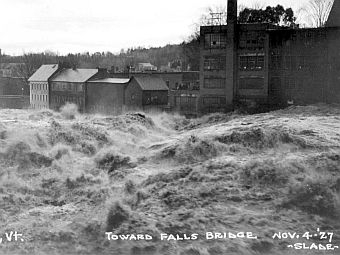
The following year would test this principle to its limits as floods would devastate first the Mississippi River Basin in April and then New England, including Coolidge’s beloved state of Vermont, in November. The damage came not only in the property destroyed but the lives lost. The most intense pressure fell on Coolidge to visit the areas, spearhead the effort to aid and rebuild and otherwise take decisive action. He deliberately held back. He dispatched Secretary Hoover to collaborate with state and local officials, not always successfully or deferentially. Those who do not understand our Constitutional system condemn Coolidge as “cold” and “unfeeling,” for his decision. They overlook the strength it took to withstand the urge to involve himself, especially when it concerned his home state. Principles mattered more. There would be no recovering the balance lost to local decision-making once he, the President, used powers he could not rightly claim. It was the burden of free people to exercise responsibilities over their lives and property, even when nature interjected. National Government was not there to spare folks from life’s consequences, however unpleasant the price.

The fight to grant flood relief would not subside quickly and while Coolidge kept much of the spending down, the drive to appropriate money, especially with an even larger surplus expected in 1928, was too much for both House and Senate to resist. Interestingly, the argument that convinced Coolidge to finally relent on a smaller relief bill was the fact that States and local governments were already paying into the sum being levied (Barry, ‘Rising Tide,’ p. 406). Federalism was working. The States and local authorities were taking responsibility for their own expenses. Had the Senate remained less constrained by public passions, as the Framers intended, it is not improbable that even the drastically reduced $296 million (which would become closer to $1 billion, in reality) flood relief measure could have been struck down before reaching the President’s desk.

Image

      The waters roaring through Springfield, Vermont in 1927

Image

              Forty foot deep floods along the waterfront of Cape Girardeau, Missouri, spring of 1927

Image

                     When the levees broke and the Mississippi flooded, it is estimated some 300,000

                     people were displaced in as many as ten states. Coolidge would not see their

                     freedoms eroded further with government’s good intentions supplanting local

                     oversight.

“Every dollar that we carelessly waste means that their life will be so much the more meager. Every dollar that we prudently save means that their life will be so much the more abundant. Economy is idealism in its most practical form” — President Coolidge, March 4, 1925

“Does cutting taxes really shrink government?”

“Does cutting taxes really shrink government?”

Three weeks before the passage of the Revenue Act of 1928, the President was analyzing the results of his administration’s formula: cut taxes, enforce constructive economy and retire debt with surplus. The President was not pleased, however. The reason was not in making the case for cuts and shrinking expenditures. The reason was not in retiring the national debt, which would be reduced $5.4 billion over the course of five and a half years, a feat not replicated since. Had the rate of reduction been constant, the debt would have been eliminated in just over fifteen years. The reason was in the incessant temptation by those around him to spend the “surplus revenue.”

The administration’s plan had worked beyond everyone’s expectations. It had worked so well that Congress was eager to start spending all that extra money. The President wanted it returned in cuts and put toward the debt. It was becoming increasingly clear that tax cuts were going to be tougher and tougher to sell as surpluses grew larger and larger. Ironically, thanks to Coolidge being “too successful,” spending would be even harder to restrain in the future than it was in the present.

The fiscal year would yield a surplus of $398,000,000, well beyond even the President’s initial figures. But as Coolidge lists all the projects Congress wanted, it not only made future tax reductions impossible but would have overturned them with increases to cover government profligacy: the flood bill, $500 million, the farm bill, $400 million, the Boulder Dam bill, $125 million, the pension bill, $15 million, the salary bill, $18 million, the Muscle Shoals bill, $75 million, the Post Office pay bill, $20 million, a reduction of post payments costing another $38 million, the corn borer, $7 million, and $6 million for “vocational training,” just to name a few. Meanwhile, the President observed, tax reduction between $203 and $289 million remained before Congress as he spoke. “If all these bills went through and became law I should think it would not only endanger tax reduction at the present time, but would make necessary the laying of additional taxes.” This was an impermissible step backward, not forward. As the President reminded reporters early the following month, “the surplus was secured, of course, by very careful management of expenditures…” not by spending it all away. 

The size of the surplus and the urge to spend it, however strong, did not make indulging the desire any more responsible with the people’s money than in lean years. Government, not unlike children, has to learn self-control. The existence of “more somewhere” does not free government to find it and spend it with impunity.

“We must have no carelessness in our dealings with public property or the expenditure of public money. Such a condition is characteristic either of an undeveloped people, or of a decadent civilization…We must have an administration which is marked, not by the inexperience of youth, or the futility of age, but by the character and ability of maturity. We have had the self-control to put into effect the Budget system, to live under it and in accordance with it. It is an accomplishment in the art of self-government of the very highest importance. It means that the American Government is not a spendthrift, and that it is not lacking in the force or disposition to organize and administer its finances in a scientific way. To maintain this condition puts us constantly on trial. It requires us to demonstrate whether we are weaklings, or whether we have strength of character” — President Coolidge, June 30, 1924.

Amity Shlaes’ thought-provoking piece recalls that even good policies can carry unintended side effects that have the potential to destroy the gains made. Tax cuts are but one part of the whole. President Coolidge knew this firsthand and if trends back toward expansive government are to be checked, it will demand from us, informed and engaged citizens, the same unwavering self-restraint and courage he demonstrated. The times also require statesmen, mature men and women, who take the whole task seriously of restoring limited government, not merely one element of tax policy. Tax cutting without the people’s determination for making government shrink can be cast aside when expediency calls it time to spend. Such was the bitter pill of the Reagan years. When what is easy is allowed to prevail over what is right, self-government suffers and liberty loses.