The Coolidge Men

The Coolidge Men

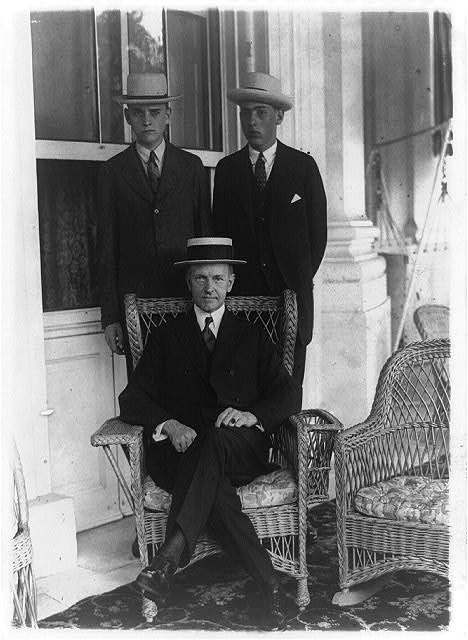
Calvin Jr. and John with their father in 1924. Only the Colonel is absent.

John and his grandson, Christopher Coolidge Jeter, leaving the 4th of July celebrations at Plymouth Notch, 1972. ("The Real Calvin Coolidge," volume 15, 2000).

John and his grandson, Christopher Coolidge Jeter, leaving the 4th of July celebrations at Plymouth Notch, 1972. (“The Real Calvin Coolidge,” volume 15, 2000).
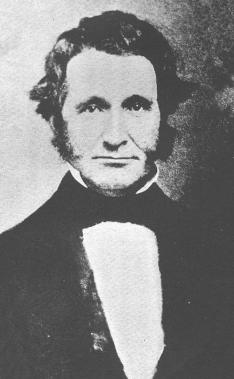
The President's grandfather, Calvin Galusha Coolidge. "He was a spare man over six feet tall, of a nature which caused people to confide in him, and of a character which made him a constant choice for public office...He was an expert horseman and loved to raise colts and puppies. He kept peacocks and other gay-colored fowl and had a yard and garden filled with scarlet flowers. But he never cared to hunt or fish. He found great amusement in practical jokes and could entice a man into a nest of bees and make him think he went there of his own accord...In his mind, the only real, respectable way to get a living was from tilling the soil."

The President’s grandfather, Calvin Galusha Coolidge. “He was a spare man over six feet tall, of a nature which caused people to confide in him, and of a character which made him a constant choice for public office…He was an expert horseman and loved to raise colts and puppies. He kept peacocks and other gay-colored fowl and had a yard and garden filled with scarlet flowers. But he never cared to hunt or fish. He found great amusement in practical jokes and could entice a man into a nest of bees and make him think he went there of his own accord…In his mind, the only real, respectable way to get a living was from tilling the soil.”

The father of the President

The father of the President, of whom the Calvin said, “He knew how to perform all kinds of delicate operations on domestic animals. The lines he laid out were true and straight, and the curves regular. The work he did endured. If there was any physical requirement of country life which he could perform, I do not know what it was. From watching him and assisting him, I gained an intimate knowledge of all this kind of work.”

On Belief in God

Long before Jefferson’s “wall of separation” was reinterpreted to mean a systematic removal of public expression of Christian faith, Robert A. Woods eloquently summarizes the faith Calvin Coolidge held firmly in God. He was not afraid to praise God yet a deep sense of humility kept him from flaunting his devotion and reliance on Him. He would never utilize religion as a tool to gain votes. His convictions were his own but he also knew they were grounded in reason. The strength to bear the responsibilities of office, including the deaths of his son and father, came from an Almighty Creator. As Woods would say,

“Any attempt to understand President Coolidge will go far amiss which does not take the fullest account of the great power of religious faith which has been continuous and increasing in his life. Beginning with his early nurture, greatly strengthened and broadened at Amherst, rising steadily as the responsibilities of life so steadily and so broadly increased — his faith in God with its correlative of faith in men, his sense of sustaining and uplifting spiritual realities, is, in modern terms, not less real to him and not less definite in its command and its reenforcement to righteousness than it was to the Puritans of old. He told an interviewer: ‘I have found that when a man does right, he is increasingly supported. I believe in God.’ There were some at least in the great audience that listened to his address at the dinner of the National Republican Club in New York City who understood him when, at its close, he paused and almost startled his audience with the words of the psalm: ‘He that keepeth Israel shall neither slumber nor sleep.’

“It too often seems in our public affairs that ‘belief and loyalty have passed away, and only the cant and false echo of them remain; and all solemnity has become pageantry.’ Whatever else may be set down as the final estimate of Calvin Coolidge, he will be among those leaders of the people whose reliance upon divine guidance is a part of the very fabric of their being. With a mind so clear, so free of pretence, this means not only a constant and vital constraint to righteous judgment, but as constant an aspiration toward a more righteous and more human order of the common life” (“The Preparation of Calvin Coolidge,” 1924, pp.234-5).