A Coolidge Christmas

It was clear that the Coolidges kept Christmas in an exceptionally special way. The President described the occasion in his Autobiography, “Christmas was a sacrament observed with the exchange of gifts, when the stockings were hung, and the spruce tree was lighted in the symbol of Christian faith and love.” For the Coolidges, Christmas seemed to kindle an extra sense of the magical power inherent in its omnipotent roots, bringing everyone a little closer to those things of the spirit that no force can destroy, no will crush, no darkness extinguish. As we are underway in the kitchen, wrapping gifts, and remembering that Christmas is, as Cal put it, “more than a season but a state of mind,” here are some of the hallmarks of a Coolidge Christmas:

Carols sung at the Coolidge White House, 1923. Photo credit: Library of Congress.

I. Carols and Hymns: The initiation of musical performances became a staple of Christmas during the Coolidge years. Nor were these programs limited to Sousa’s Marines or small groups of musicians but featured what became an annual — and beloved — custom: the singing, without accompaniment, of carols. The high point of these programs usually consisted of the sixty-member choir of the First Congregational Church under the direction of the talented Mrs. Ruby Smith Stahl. Alongside a full collection of established favorites, the lineup came to include Dr. Jason Noble Pierce’s “The Bells of Christmas,” composed in 1925 and dedicated to Mrs. Coolidge. When the Coolidges opened the grounds to the public and encouraged guests to sing along, they were tapping the power of music to reach souls.

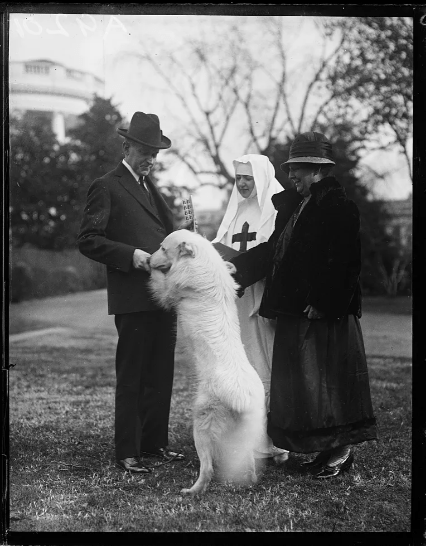
II. Service and Charity: The spirit of service found rightful expression also in the preparations and distribution of food baskets and gift parcels. The President inaugurated the first community Christmas Tree lighting over one century ago in honor of community. Together the Coolidges launched the Christmas Seals campaign each year to support the work of the National Tuberculosis Association. No year went by without the Coolidges inaugurating some public effort to render time and care for children, hurting veterans, and those in need of Christ’s love for all humanity.
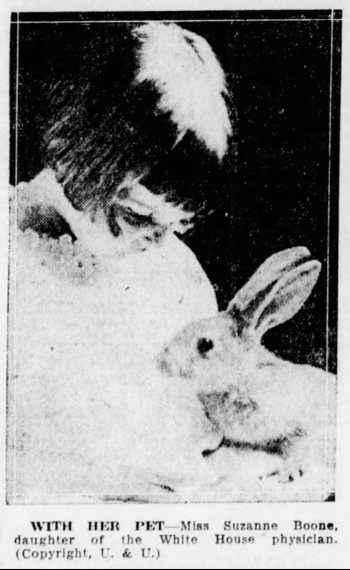
III. The Food that Brings Together: The Coolidges understood not every gift was tangible. Joining their inner official family, which included Mary Randolph and Laura Harlan, the First Lady’s secretaries, Ted and Henrietta Clark, the President’s personal secretary, Colonel Starling, the President’s Secret Service agent, Frank and Emily Stearns, Chef Lee Ping Quan, and Dr. Joel and Helen Boone, assistant White House physician, was the Boones’ six-year-old daughter Suzanne, giving (in a real sense) the Coolidges their own little girl. She became a regular recipient of the Coolidges’ adoration and generosity. When she learned from Dr. Boone that a Washington family had lost a father around Christmas, she gave up her presents to comfort the mourning children. Dr. Boone later remarked, “It gratified me, at her age to have her demonstrate her philanthropic disposition, which she has maintained throughout her life,” and whether acquired or born with that quality, he noted, “She was always most thoughtful of other people.” Without the Boones and the closely knit inner circle of extended Coolidge family, Christmas in the years to come would not have been as rich. We are shaped not only by the families in which we are born but also by the families which form by choice and circumstance. Without, however, that highest debt paid for us and which we owe everyone — selfless love — can Christmas be said to live, truly, in each of us?

Here is one of Cal’s favorites, per Lee Ping: the Custard Pie recipe from 1924

3/4 cup Sugar 2 Eggs. well beaten

2 tablespoons Flour 2 1/2 cups Milk

1/8 teaspoon Salt 1 teaspoon Vanilla

Pour into pie plate with thin layer after mixing ingredients well together. Bake a 450 degrees F for 10 minutes to set the rim. Reduce heat to 325 degrees F, continue baking for 30 minutes or until custard set. Sprinkle a little grated coconut on top when removed from oven.

We find the Coolidges are even nearer to us at this time of the year, especially as we bake the legendary Coolidge Custard. A very Merry Coolidge Christmas to you and yours!

On Proving Worthy of Future Prosperity

Photo Credit: Library of Congress

“We have been blessed with much of material prosperity. We shall be better able to appreciate it if we remember the privations others have suffered, and we shall be the more worthy of it if we use it for their relief. We will do well then to render thanks for the good that has come to us, and show by our actions that we have become stronger, wiser, and truer by the chastenings which have been imposed upon us. We will thus prepare ourselves for the part we must take in a world which forever needs the full measure of service. We have been a most favored people. We ought to be a most generous people. We have been a most blessed people. We ought to be a most thankful people.”

Calvin Coolidge, excerpt from the 1923 Thanksgiving Proclamation, November 5, 1923

“We approach that season of the year when it has been the custom for the American people to give thanks for the good fortune which the bounty of Providence, through the generosity of nature, has visited upon them. It is altogether a good custom. It has the sanction of antiquity and the approbation of our religious convictions. In acknowledging the receipt of divine favor, in contemplating the blessings which have been bestowed upon us, we shall reveal the spiritual strength of the nation…Ways have been revealed to us by which we could perform very great service through the giving of friendly counsel, through the extension of financial assistance, and through the exercise of a spirit of neighborly kindliness to less favored peoples. We should give thanks for the power which has been given into our keeping, with which we have been able to render these services to the rest of mankind…As the nation has prospered let all the people show that they are worthy to prosper by rededicating America to the service of God and man.”

Calvin Coolidge, excerpts from the 1924 Thanksgiving Proclamation, November 5, 1924

Our thanks go out to all our readers, fellow Coolidgeans, and especially to everyone who helped bring Salient Cal’s America: Reappraising the Harding & Coolidge Era to final completion on the centennial year Americans chose decisively to return Coolidge to Presidential leadership in his own right. A gratitude-filled Thanksgiving to everyone in Coolidge Country!

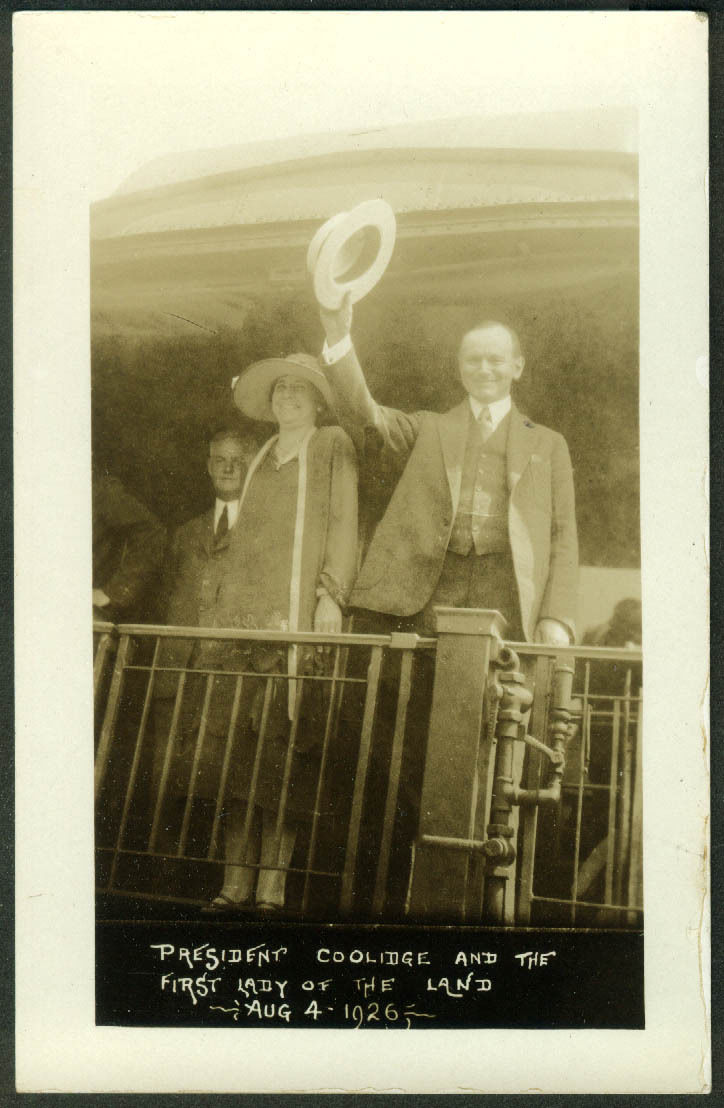
On the Road Again, August 4, 1926

On the Road Again, August 4, 1926

En route back to the Homestead at Plymouth, the President and Mrs. Coolidge are reconnecting with family roots, leaving most of the artificial world of Washington behind and keeping closer to realities, where the country lives, works, worships and creates. Here rested the body of his father, recently buried in March, his youngest son, who passed two years before, his stepmother, sister and mother, surrounded by the generations who preceded them of the Coolidge family. Here was a wholesome relief from the political mentality of the District to the comfort of hearth, surrounded by the family he loved, the hills he cherished and the tasks awaiting solutions on the farm.

As much they desired to the contrary, they ceased to be “ordinary” citizens and could no longer “use the regular trains which are open to the public.” Looking back on the years, he once wrote, “While the facilities of a private car have always been offered, I think they have only been used once, when one was needed for the better comfort of Mrs. Coolidge during her illness. Although I have not been given to much travel during my term of office, it has been sufficient, so that I am convinced the government should own a private car for the use of the President when he leaves Washington. The pressure on him is so great, the responsibilities are so heavy, that it is a wise policy in order to secure his best services to provide him with such ample facilities that he will be relieved as far as possible from all physical inconveniences. It is not generally understood how much detail is involved in any journey of the President” (Autobiography pp.217-8). These intricate arrangements meant expense to the rest of the country, costs of going long distances with the Presidential retinue which made it prohibitive in Calvin’s high sense of propriety and moral obligation to the people for his office. It was not simply okay that gratuitous travel was chargeable to the public Treasury, even when prosperous times could have handled the burden. It was enough to escape from the National Capital every summer, to get away to Plymouth as often as possible and to keep other travel limited to specific destinations instead of the flagrant spending of continual cross-country tours or incessant vacations to luxurious places. It is telling that the Coolidges, who wanted to travel more, would not take that coast-to-coast trip until in retirement as private citizens again.

However, there is something more compelling than the singular dimension of a President morally committed to economy at its most practical, personal and ideal. What prompts him to support a government-owned private car for Presidential use is not to enhance official dignity, endorse government ownership in general nor is it to live grander than the hoi polloi, but it is to “secure his best services.” We have, after all, hired him to accomplish a task of leadership, we have delegated power for a limited time with specific ends, contractually obligating ourselves and the President to obtain the best within him while we exercise the best within us as citizens. It is for this reason he is compensated with such means of private travel, not to abuse it but in pouring it back into better and better public service, he is upholding the terms of that sacred agreement. By obtaining “the best of his ability” he upholds his oath to God and man and justifies the public faith entrusted to his care.

Leaving the social dramas and political flurries of Washington for the comfort of being at home surrounded by America’s people and countryside, is it any wonder that they are smiling?